• العربية
  • فارسی
Brand
  • Iran Insight
  • Politics
  • Economy
  • Analysis
  • Special Report
  • Opinion
  • Podcast
  • Iran Insight
  • Politics
  • Economy
  • Analysis
  • Special Report
  • Opinion
  • Podcast
  • Theme
  • Language
    • العربية
    • فارسی
  • Iran Insight
  • Politics
  • Economy
  • Analysis
  • Special Report
  • Opinion
  • Podcast
All rights reserved for Volant Media UK Limited
volant media logo
INSIGHT

Can Iran's plan for a $7 monthly cash handout calm the streets?

Behrouz Turani
Behrouz Turani

Iran International

Jan 6, 2026, 03:00 GMT+0
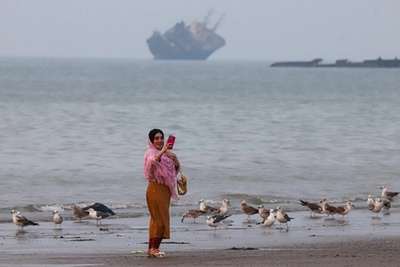
A farmer sits on top of a load of watermelons in Iran's southern province of Hormuzgan, December 18, 2025

Tehran’s plan to distribute cash handouts to nearly the entire population appears aimed at calming protests driven by relentless price increases. Whether it will work remains an open question.

Officials say the payments are meant to offset the elimination of a subsidized exchange rate previously used to import essential goods, a policy shift that has already pushed prices higher.

Under the plan, the government would issue monthly coupons worth one million tomans—about $7 at the open-market rate—to every Iranian.

Some economists have questioned whether the measure can achieve its stated aim.

In an editorial published on January 5, the daily Setareh Sobh described the policy as an “economic gamble,” warning that similar efforts in the past had failed to stabilize prices or restore public confidence.

The paper noted that Iran’s currency has lost roughly 20,000 percent of its value since the 1979 revolution, when the dollar traded at seven tomans.

“This devaluation,” the daily wrote, “is the result of policies such as hostage-taking, hostility toward the West and Israel, mismanagement and the exclusion of experts from parliament and government.”

Questions of feasibility

Mahmoud Jamsaz, a leading Iranian economist, went further, arguing that the handouts risk aggravating the very pressures they are meant to relieve.

“Under current conditions,” he wrote, “the president knows very well he lacks the executive power even to pay government employees’ salaries.”

The government has acknowledged inflationary risks. Fatemeh Mohajerani, a government spokeswoman, told reporters on Sunday that the policy could raise prices of some essential goods by 20 to 30 percent.

Labor Minister Ahmad Maydari said the payments would be issued as coupons redeemable for basic commodities, rather than cash transfers, in an effort to limit price pressures.

Still, critics question whether the state has the fiscal capacity to sustain such a program, particularly as tax revenues are already under strain.

A broader breaking point

Public reaction has been largely dismissive.

On social media, many pointed to continued protests despite the announcement, stressing that rising prices were only one factor behind demonstrations that have spread across more than 200 cities and towns.

Sociologist Taghi Azad Armaki told the Shargh newspaper that the unrest reflected “accumulated, unresolved social and political challenges,” adding that economic hardship had exposed deep divides within Iranian society.

“These gaps,” he said, “have eroded the government’s social capital and heightened concerns about the country’s future.”

Reformist commentator Abbas Abdi echoed that concern in Etemad, warning that Iranian society had reached a critical threshold. “Society has a breaking point,” he said, “and Iran is rapidly approaching it.”

Even Iran’s tightly controlled press has increasingly described the demonstrations as political in character, reflecting broader dissatisfaction with governance rather than price levels alone.

For now, the government appears to be betting that targeted relief can buy time. Whether it can ease public anger—or instead accelerate inflation while leaving deeper grievances unresolved—remains uncertain.

Most Viewed

Iran negotiators ordered to return after internal rift over Islamabad talks
1
EXCLUSIVE

Iran negotiators ordered to return after internal rift over Islamabad talks

2
EXCLUSIVE

Iran’s central bank warns economy may take 12 years to rebuild after war

3
INSIGHT

Iran's digital economy battered by prolonged blackout

4
ANALYSIS

US blockade enters murky phase as tankers spoof signals and buyers hesitate

5
PODCAST

Iran-US ceasefire nudges sidelined Arab states toward Israel, expert says

Banner
Banner

Spotlight

  • Hardliners push Hormuz ‘red line’ as US blockade tests Iran’s leverage
    INSIGHT

    Hardliners push Hormuz ‘red line’ as US blockade tests Iran’s leverage

  • Ideology may be fading in Iran, but not in Kashmir's ‘Mini Iran'
    INSIGHT

    Ideology may be fading in Iran, but not in Kashmir's ‘Mini Iran'

  • War damage amounts to $3,000 per Iranian, with blockade set to add to losses
    INSIGHT

    War damage amounts to $3,000 per Iranian, with blockade set to add to losses

  • Why the $100 billion Hormuz toll revenue is a myth
    ANALYSIS

    Why the $100 billion Hormuz toll revenue is a myth

  • US blockade targets Iran oil boom amid regional disruption
    ANALYSIS

    US blockade targets Iran oil boom amid regional disruption

  • Iran's digital economy battered by prolonged blackout
    INSIGHT

    Iran's digital economy battered by prolonged blackout

•
•
•

More Stories

Trump’s 'Make Iran Great Again' photo fuels anticipation over next moves

Jan 5, 2026, 22:00 GMT+0
•
Negar Mojtahedi

A new photo of US President Donald Trump posing with a “Make Iran Great Again” hat is ramping up suspense over US intentions as protests there which Trump vowed to protect are being met with deadly force.

The photo, posted on Senator Lindsey Graham’s account on X, shows the two men smiling aboard Air Force One as Trump holds the hat which he has signed.

Trump first deployed the slogan at the height of a 12-day war in June, saying that if Iran’s rulers couldn’t “make Iran great again,” regime change should be on the table.

“God bless and protect the brave people of Iran who are standing up to tyranny,” Graham wrote, referring to nationwide protests now in their ninth day.

Holly Dagres, an Iran expert at the Washington Institute, told Iran International that while the photo leaves room for interpretation it at least shows the Iran issue is on the president's radar.

“While much of the world’s focus is squarely on Venezuela, President Donald Trump’s comments about the ongoing protests and posing with the MIGA hat suggest his mind is also on Iran,” Dagres said.

“It’s hard to interpret what the president’s next steps are, but the clerical establishment won’t be resting easy," she said.

Demonstrators across Iran continue to chant slogans against the country’s supreme leader in protests which entered their ninth day.

Trump has twice warned that the United States will respond forcefully if Iranian authorities kill protesters. According to the Human Rights Activists News Agency (HRANA), at least 19 protesters and one member of the security forces have been killed so far.

Behnam Ben Taleblu, a senior fellow at the Foundation for Defense of Democracies, suggested the message could ripple beyond the White House.

“Hopefully his statement has a contagion effect in the Congress and helps the administration adhere to its own red line about standing by the Iranian people and taking down their apparatus of repression,” he told Iran International.

Others see the moment as part of a broader warning directed at Tehran. Kamran Matin, who teaches International Relations at Sussex University in Britain, described Trump’s messaging as layered and intentional.

“More broadly, the remarkable success of Trump in leading targeted and consequential operations, from the assassination of Qassem Soleimani to the bombing of Iran’s nuclear sites to the seizure of Nicolas Maduro has likely increased Trump’s appetite for using limited military force to achieve political ends in Iran now that the regime is in its weakest point,” he told Iran International.

The image has fueled anticipation online about whether Trump might pursue tougher measures toward Tehran, particularly after the US seizure of Venezuela and previous strikes on Iran’s nuclear facilities.

Greg Brew, an Iran analyst with the Eurasia Group, told Iran International the symbolism of the photo could suggest a willingness to go further.

“Trump has already secured for himself a legacy of doing what no other president would do — bombing Iran’s nuclear program. But recent protests and the success of the Maduro operation suggest he may go further,” Brew said.

What the fall of Maduro means for Venezuela's vast debt to Iran

Jan 5, 2026, 18:31 GMT+0

The US capture of Nicolas Maduro, a staunch ally of Iran's theocratic rulers, has cast doubt on whether Venezuela will ever pay its reported two-billion debt to Tehran should Caracas flip into an ally of Washington.

Following a US attack on Venezuela on January 3 and the arrest of Maduro, its economic muddle is unchanged. Unpaid debts, legal claims and arbitration rulings total between $150 billion and $170 billion.

The scale of liabilities far exceeds the capacity of Venezuela’s collapsed economy, casting doubt on whether creditors will recover their losses.

Iran is among the countries exposed to the fallout. Analysts say the Islamic Republic is not just a conventional creditor but potentially one of the main financial losers of any transformational change in Caracas, especially as it is sanctioned by the United States.

Over nearly two decades, Tehran spent around 2 billion of dollars in Venezuela according to Iranian media.

The economic projects ranged from joint automobile production projects launched in 2007, housing schemes estimated at about 23,000 units, banking cooperation and oil and logistical exchanges carried out under sanctions.

Iran also used Venezuela as a political and logistical base to bypass international sanctions and advance regional objectives.

According to Heshmatollah Falahatpisheh, a former head of Iran’s parliamentary national security commission, Venezuela's debts to Iran reflect only officially recorded investments and assistance.

No estimates exist for the value of undeclared financial flows linked to what the US calls smuggling networks or military and security cooperation between the two allies, due to their classified nature.

Venezuela’s debt crisis dates back to large-scale nationalizations carried out between 2007 and 2012 under Hugo Chávez and the early years of Maduro’s rule, when foreign oil, mining and industrial assets were seized. Western companies later secured arbitration rulings, which Venezuela failed to pay.

From 2018 onward, US courts recognized those rulings as enforceable debt, allowing creditors to pursue Venezuelan assets abroad. Venezuela’s first bond default in 2017 accelerated the crisis, with unpaid principal and interest accumulating into tens of billions of dollars.

The International Monetary Fund estimated Venezuela’s nominal GDP at about $82.8 billion in 2025, far below its total external debt. Creditors have since focused on foreign assets, particularly Citgo Petroleum in the United States, whose ownership has been contested in US courts since 2019.

With Maduro removed from power, Venezuela’s debt case has moved out of political limbo. However, it is unlikely that losses tied to Iran’s investments in Venezuela will be recovered through US courts, given Iran’s own sanctioned status and the scale of competing claims.

Maduro’s shock fall echoes uneasily in Tehran

Jan 5, 2026, 17:15 GMT+0
•
Maryam Sinaiee

The seizing of Venezuela’s Nicolas Maduro by US forces over the weekend has sharpened debates in Tehran about President Donald Trump’s endgame in Iran, as anti-government protests across the country enter a second week.

The episode has prompted comparisons—sometimes uneasy, sometimes fiercely rejected—between Venezuela’s trajectory and Iran’s own.

Strikes and protests have spread to dozens of Iranian cities in recent days, sharpening questions about economic exhaustion and public legitimacy.

Former Iranian diplomat Fereydoun Majlesi told the Shargh newspaper that Maduro’s detention reflected Washington’s current logic: maximal displays of power and deterrence. “Maduro’s arrest was not just a political act but a deterrent message to other players,” he said.

Foreign policy analyst Ali Bigdeli also told Shargh that while a direct U.S. attack on Iran would require congressional approval, the Venezuela episode showed that covert actions or security pretexts remained possible.

“Without a serious revision of foreign policy and adaptation to new global conditions, continuing the old path will not only fail but impose greater costs,” he warned.

‘Erosion of trust’

Even sources close to the establishment reflected unease, albeit more subtly.

Khabar Online, a moderate outlet close to security chief Ali Larijani, highlighted US sanctions on Venezuela while also pointing to mismanagement and corruption.

“Maduro’s fall was not the product of a single factor, but the outcome of accumulated crises long ignored,” the commentary argued, landing on a phrase widely used in reference to Iran’s own condition: “erosion of public trust.”

Political analyst Sadegh Maleki was more direct.

“Maduro, like (Syria’s) Assad, ruled without heartfelt popular backing,” he told Shargh. “Governments that create distance between themselves and the people are more vulnerable to external operations.”

‘Not comparable’

Conservative voices, however, moved quickly to dismiss any analogy. Gholamreza Sadeghian, editor-in-chief of the Revolutionary Guards-affiliated Javan daily, was blunt in his assessment. “Iran Is Not Comparable—Don’t Waste Your Time,” he headlined his Sunday editorial.

Washington’s threats, Sadeghian wrote, were not a sign of strength but part of a “repetitive and failed spectacle,” adding that “America neither has the capacity for final victory nor the ability to reshape the global order in its favor.”

Hardline newspapers denounced the US action as an “open kidnapping,” a “violation of the UN Charter,” and a “raid on Venezuela’s oil.”

Commentators argued that Washington’s aim was to gain leverage over global energy markets and consolidate geopolitical influence by controlling the country’s vast reserves.

The lesson, hardliners argued, was that Iran should never engage in talks with the United States, noting that Maduro was detained shortly after he signaled readiness to negotiate with Trump.

‘Military power not enough’

Kayhan newspaper, which is funded by the office of Iran’s Supreme Leader, claimed that Venezuelans had taken to the streets in support of Maduro and declared they would not allow their country to be occupied.

Ultraconservative lawmaker Javad Karimi-Ghodousi went further, predicting that Maduro would return to Venezuela “as a hero.” Trump, he added on X, would “be slapped by America’s revolutionary youth and fall into the dustbin of history.”

A more measured assessment came from the moderate outlet Rouydad24.

An editorial argued that the two countries’ situations were fundamentally different and rejected “fear of collapse,” while still suggesting that Maduro’s fate offered a lesson for Tehran on the need to address economic and social demands.

“Venezuela showed that even military structures cannot endure without sustainable social backing,” the site wrote.

Iran says food prices to jump as currency subsidies end

Jan 5, 2026, 14:10 GMT+0

Prices of basic goods in Iran are expected to rise by 20% to 30% in the coming weeks, with sharper increases likely for chicken, eggs and cooking oil, government spokesperson said on Monday.

Fatemeh Mohajerani said the increase was the result of the government’s decision to end subsidized dollars for essential imports in an effort to stabilize the foreign exchange market and curb corruption, a move that has pushed up the local-currency cost of imports of goods and raw material.

“It is evident that by ending or reducing subsidized and preferential official foreign currency exchange rates, the prices of some items will rise,” she said.

Earlier on Monday, parliament said it had approved the general outlines of the budget for the next Iranian year, which begins in March, after the bill was initially rejected and subsequently amended by the government.

  • As Tehran fixates on the dollar, protests move beyond it

    As Tehran fixates on the dollar, protests move beyond it

  • Iran president says government will stop subsidized dollar handouts

    Iran president says government will stop subsidized dollar handouts

  • From Tehran’s Bazaar to the middle class, anger outpaces government

    From Tehran’s Bazaar to the middle class, anger outpaces government

The government described the changes as reforms aimed at improving livelihoods, as authorities seek to ease ongoing anti-government protests and strikes.

The revisions are said to include a pay rise of up to 43% instead of 20%, a cut in value-added tax to 10% from 12%, and the allocation of $8.8 billion in subsidized foreign exchange to curb price rises for basic goods.

The budget was also reported to earmark funds for guaranteed wheat purchases to supply bread and for adjusting pensioners’ salaries.

Lawmakers approved the budget framework with 171 votes in favor, 69 against and six abstentions, out of 246 lawmakers present.

Meanwhile, nationwide protests entered a ninth day on Monday, with merchant strikes continuing in parts of the country.

The unrest began after the rial fell to record lows in late December and has since broadened into a wider test of the government’s ability to manage a country under sustained economic strain.

Iran's funds already withdrawn from Venezuela, chamber chief says

Jan 5, 2026, 12:12 GMT+0

Money held by Iran in Venezuela has already been withdrawn, the head of the Iran-China Joint Chamber of Commerce said on Monday, as questions grow over Iran’s investments following the arrest and transfer of Venezuelan President Nicolas Maduro by the United States.

“Anyone who had money in Venezuela has already taken it out,” Majidreza Hariri said, responding to concerns about Iranian assets worth an estimated two billion dollars.

He added that instability in Venezuela had been evident for at least five to six months, leaving ample time for Iranian funds to be withdrawn, and warned against attempts to use the crisis as a pretext to write off debts.

  • Ex-lawmaker urges action on Iran’s assets in Venezuela, citing Assad's fall

    Ex-lawmaker urges action on Iran’s assets in Venezuela, citing Assad's fall

  • US seizure of tanker off Venezuela may squeeze Iran's shadow oil trade

    US seizure of tanker off Venezuela may squeeze Iran's shadow oil trade

He said Iran-Venezuela Bank has not functioned as an effective commercial bank in recent years as financial transactions between the two countries were not conducted through this bank.

According to Iran’s foreign ministry on Monday, economic and diplomatic relations with Venezuela remain intact in the wake of Maduro’s arrest, and political developments do not automatically alter bilateral ties.

“Relations between states are based on mutual respect and interests,” said spokesperson Esmail Baghaei earlier in the day.

He said Iranian diplomats and citizens in Venezuela are safe and that Tehran continues to monitor the situation closely.