• العربية
  • فارسی
Brand
  • Iran Insight
  • Politics
  • Economy
  • Analysis
  • Special Report
  • Opinion
  • Podcast
  • Iran Insight
  • Politics
  • Economy
  • Analysis
  • Special Report
  • Opinion
  • Podcast
  • Theme
  • Language
    • العربية
    • فارسی
  • Iran Insight
  • Politics
  • Economy
  • Analysis
  • Special Report
  • Opinion
  • Podcast
All rights reserved for Volant Media UK Limited
volant media logo

US intervention not necessary for Iran regime change, exiled prince tells WSJ

Jan 5, 2026, 20:52 GMT+0Updated: 00:06 GMT+0

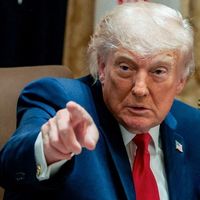
Exiled Prince Reza Pahlavi told The Wall Street Journal there is no need for a US military intervention to put an end to Iran's theocracy, as the ongoing protests in the country mark a “golden opportunity” for a regime change.

“I don’t think it’s a matter of any kind of outside intervention, either a military or a special ops kind, because I think the regime is collapsing. The regime is at its weakest. Iranians are on the streets protesting not just the economic misery but calling for an end to this regime."​

“What’s clearly different is that there’s an opportunity this time to get the job done and get rid of this regime. I think, in a way, the planets are aligned. The conditions are right on many levels for the regime to collapse,” he added.​

Asked about the role he might see for himself in any future executive branch, he said his purpose is to help heal the country.

“I think my role is much deeper and more valuable than to be cornered into one specific executive role. You know, it will take some time for the nation—really hurt, depressed, demoralized, cheated, lied to—to come back to normalcy,” Pahlavi said.

Most Viewed

100 days after carnage: Iran economy reels from war, inflation, unemployment
1
INSIGHT

100 days after carnage: Iran economy reels from war, inflation, unemployment

2
OPINION

The Hormuz get out of jail card turned to a grave

3

State media slam Araghchi's Hormuz tweet, say it let Trump claim victory

4
EXCLUSIVE

Iranian assaulted in London amid concern over threats to regime critics

5
PODCAST

Too early to tell who is winning Iran war, experts say

Banner
Banner

Spotlight

  • A nation in limbo: 100 days after the massacre, has the world moved on?
    INSIGHT

    A nation in limbo: 100 days after the massacre, has the world moved on?

  • 100 days after carnage: Iran economy reels from war, inflation, unemployment
    INSIGHT

    100 days after carnage: Iran economy reels from war, inflation, unemployment

  • The Hormuz get out of jail card turned to a grave
    OPINION

    The Hormuz get out of jail card turned to a grave

  • How Tehran bends its own red lines to boost state rallies
    INSIGHT

    How Tehran bends its own red lines to boost state rallies

  • Iran blackout cripples freelancer, small business incomes
    VOICES FROM IRAN

    Iran blackout cripples freelancer, small business incomes

•
•
•

More Stories

Chair of Austrian NATO lobby calls for ‘Free Iran’ and ‘regime change’

Jan 5, 2026, 20:09 GMT+0

Gunther Fehlinger, chairman of the Austrian Committee for NATO Enlargement, called for a “Free Iran” and said “we need regime change now” in a post on X on Monday.​

“I want Iran to be free, and Iranians want that as well. The regime of Khamenei must fall. He is a tyrant, and I call on America to intervene to liberate the Iranians,” Fehlinger said in a video post.

“Khamenei must go now, and I will do my maximum here on this podcast to endorse exactly that: the end of this terror regime. They are a key part of the axis of evil,” he added.

'Deterrence is back': Hegseth cites attacks on Houthis, Iran

Jan 5, 2026, 19:33 GMT+0

US Defense Secretary Pete Hegseth said on Monday that the capture of Venezuelan leader Nicolas Maduro over the weekend had restored deterrence of attacks by adversaries including Iran and its Houthi allies in Yemen.

"The world started wondering whether America really was strong, whether America really could lead. Well, that's over now. Just ask the Houthis and our ships that now sail freely," Hegseth said in a speech in Newport News, Virginia.

"That's peace through strength, same with Midnight Hammer, where our B-2s flew 37 hours down and back and were never seen by the Iranians, and dropped 14 precision munitions exactly where they were supposed to drop, obliterating Iran's nuclear capabilities, not to mention the tomahawks that came off of a beautiful submarine and delivered that decisive blow as well on one of the nuclear facilities," he added.

Hegseth was referring to the US title for its surprise attacks on June 22 which hit three key Iranian nuclear facilities.

"Deterrence is back," he said.

German MEP says Iran protests show ‘breaking point’

Jan 5, 2026, 19:30 GMT+0

German Green MEP Hannah Neumann said on Monday that eight days of nationwide protests and student strikes across more than 78 cities show Iranians have reached a “breaking point.”​

“For eight days, people in Iran are protesting because daily life has become impossible. Protests and student strikes have continued across more than 78 cities. Despite intimidation, violence and death, people keep showing up. It’s not about a moment, it’s about a breaking point,” Neumann posted on X.

Neumann, who chairs the European Parliament’s Delegation for Relations with Iran, also addressed the violence in the streets against protesters.

“There are growing reports of live ammunition, pellet guns, mass arrests and targeted internet disruptions, cutting people off from each other and from the world. This is a regime afraid of its own people, turning fear into violence,” she said.​

“At its core, it’s simple: Iranians are asking for dignity, for safety, for the right to speak without being shot. Europe has a responsibility to stand clearly with people who are asking for rights that should never require courage, and to insist on accountability when those rights are denied,” Neumann said.

Former US ambassador to UN backs ‘powerful’ voices of Iranian protesters

Jan 5, 2026, 19:10 GMT+0

Former US ambassador to the UN Nikki Haley said on Monday that the Iranian people have endured decades under a “corrupt and extremist” system and praised their courage as “powerful,” voicing support for the latest protest wave in a post on X.

“The Iranian people have suffered tremendously under a corrupt and extremist regime for nearly fifty years. Their voices and their courage are powerful.”

What the fall of Maduro means for Venezuela's vast debt to Iran

Jan 5, 2026, 18:31 GMT+0

The US capture of Nicolas Maduro, a staunch ally of Iran's theocratic rulers, has cast doubt on whether Venezuela will ever pay its reported two-billion debt to Tehran should Caracas flip into an ally of Washington.

Following a US attack on Venezuela on January 3 and the arrest of Maduro, its economic muddle is unchanged. Unpaid debts, legal claims and arbitration rulings total between $150 billion and $170 billion.

The scale of liabilities far exceeds the capacity of Venezuela’s collapsed economy, casting doubt on whether creditors will recover their losses.

Iran is among the countries exposed to the fallout. Analysts say the Islamic Republic is not just a conventional creditor but potentially one of the main financial losers of any transformational change in Caracas, especially as it is sanctioned by the United States.

Over nearly two decades, Tehran spent around 2 billion of dollars in Venezuela according to Iranian media.

The economic projects ranged from joint automobile production projects launched in 2007, housing schemes estimated at about 23,000 units, banking cooperation and oil and logistical exchanges carried out under sanctions.

Iran also used Venezuela as a political and logistical base to bypass international sanctions and advance regional objectives.

According to Heshmatollah Falahatpisheh, a former head of Iran’s parliamentary national security commission, Venezuela's debts to Iran reflect only officially recorded investments and assistance.

No estimates exist for the value of undeclared financial flows linked to what the US calls smuggling networks or military and security cooperation between the two allies, due to their classified nature.

Venezuela’s debt crisis dates back to large-scale nationalizations carried out between 2007 and 2012 under Hugo Chávez and the early years of Maduro’s rule, when foreign oil, mining and industrial assets were seized. Western companies later secured arbitration rulings, which Venezuela failed to pay.

From 2018 onward, US courts recognized those rulings as enforceable debt, allowing creditors to pursue Venezuelan assets abroad. Venezuela’s first bond default in 2017 accelerated the crisis, with unpaid principal and interest accumulating into tens of billions of dollars.

The International Monetary Fund estimated Venezuela’s nominal GDP at about $82.8 billion in 2025, far below its total external debt. Creditors have since focused on foreign assets, particularly Citgo Petroleum in the United States, whose ownership has been contested in US courts since 2019.

With Maduro removed from power, Venezuela’s debt case has moved out of political limbo. However, it is unlikely that losses tied to Iran’s investments in Venezuela will be recovered through US courts, given Iran’s own sanctioned status and the scale of competing claims.