• العربية
  • فارسی
Brand
  • Iran Insight
  • Politics
  • Economy
  • Analysis
  • Special Report
  • Opinion
  • Podcast
  • Iran Insight
  • Politics
  • Economy
  • Analysis
  • Special Report
  • Opinion
  • Podcast
  • Theme
  • Language
    • العربية
    • فارسی
  • Iran Insight
  • Politics
  • Economy
  • Analysis
  • Special Report
  • Opinion
  • Podcast
All rights reserved for Volant Media UK Limited
volant media logo

Legendary Iranian playwright and filmmaker Bahram Beyzaie dies at 87

Dec 27, 2025, 16:40 GMT+0Updated: 22:28 GMT+0
Bahram Beyzaie
Bahram Beyzaie

Bahram Beyzaie, one of the most influential figures in modern Iranian theater, cinema and literature, has died on his 87th birthday, according to a statement by the Stanford Iranian Studies Program, where he served as a visiting professor for the past 15 years.

Beyzaie passed away on December 26 or the 5th of Dey in the Iranian calendar, a date observed in Iran as Playwrights’ Day in recognition of his birthday and the legacy of dramatic literature, the Stanford statement said on Saturday.

In 2010, Beyzaie relocated to the United States, where he joined Stanford University as a visiting professor. There, he taught courses on Persian theater, cinema and mythology, introducing new audiences to Iranian cultural traditions while continuing his own research and writing.

The announcement described his death as a profound loss for Iranian culture, noting that he remained creatively active into his final years.

"He often said that his true home and calling were the realm of culture. He had a profound love for Iran and, despite the narrow-mindedness directed against him and his family, he never ceased to promote, protect, and preserve Iran’s cultural heritage."

Born in Tehran in 1938, Beyzaie was a playwright, filmmaker, researcher and scholar whose work bridged ancient Persian myths and contemporary social themes. His plays and films are widely regarded as milestones in Iran’s modern cultural history, combining rigorous scholarship with innovative narrative forms.

Beyond his artistic output, Beyzaie was also a leading intellectual voice on Iranian culture and identity. He devoted decades to the study of Persian mythology, ritual theater and epic literature, particularly the Shahnameh (Book of Kings) by Ferdowsi, influences that permeated much of his writing and filmmaking.

Before starting his filmmaking career in 1970, Beyzaie had already established himself as a dominant force in theater—as both a playwright and historian—and is frequently described as the foremost dramatist in the Persian language, earning him the sobriquet “the Shakespeare of Persia.”

Although he entered filmmaking relatively late, Beyzaie is widely regarded as a trailblazer of the group of directors later associated with the Iranian New Wave. His film Bashu, the Little Stranger (1986) was named the greatest Iranian film of all time in a 1999 Picture World poll of 150 Iranian critics and industry figures.

Ballad of Tara (1979), Death of Yazdgerd (1982), Maybe Some Other Time (1988), Travellers (1992), and Killing Mad Dogs (2001) are among his other widely-acclaimed films.

Despite years of professional restrictions in Iran that limited the staging of his works, he continued to advocate for the preservation and promotion of Iran’s cultural heritage.

According to the Stanford statement, Beyzaie completed the text of “Dash Akol According to Marjan” five years before his death, a project described as a demanding and luminous culmination of his late creative period.

The program also expressed gratitude to Mojdeh Shamsaie, Beyzaie’s wife and longtime collaborator, for her role in supporting him in his later years.

A memorial gathering to celebrate Beyzaie’s life and work is expected to be announced by Stanford in the coming weeks, according to the Facebook statement.

Most Viewed

The Hormuz get out of jail card turned to a grave
1
OPINION

The Hormuz get out of jail card turned to a grave

2

State media slam Araghchi's Hormuz tweet, say it let Trump claim victory

3
INSIGHT

How Tehran bends its own red lines to boost state rallies

4
INSIGHT

100 days after carnage: Iran economy reels from war, inflation, unemployment

5
PODCAST

Too early to tell who is winning Iran war, experts say

Banner
Banner

Spotlight

  • A nation in limbo: 100 days after the massacre, has the world moved on?
    INSIGHT

    A nation in limbo: 100 days after the massacre, has the world moved on?

  • 100 days after carnage: Iran economy reels from war, inflation, unemployment
    INSIGHT

    100 days after carnage: Iran economy reels from war, inflation, unemployment

  • The Hormuz get out of jail card turned to a grave
    OPINION

    The Hormuz get out of jail card turned to a grave

  • Too early to tell who is winning Iran war, experts say
    PODCAST

    Too early to tell who is winning Iran war, experts say

  • How Tehran bends its own red lines to boost state rallies
    INSIGHT

    How Tehran bends its own red lines to boost state rallies

  • Iran blackout cripples freelancer, small business incomes
    VOICES FROM IRAN

    Iran blackout cripples freelancer, small business incomes

•
•
•

More Stories

Iran psychiatrists warn of surge in drug-induced psychosis among teens

Dec 25, 2025, 21:50 GMT+0

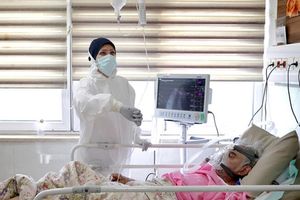
Iranian psychiatrists are warning of a sharp rise in acute psychiatric emergencies linked to drug use, particularly among adolescents, raising concerns that the country may face a wave of long-term psychotic disorders if the trend continues.

Doctors working in public and private psychiatric hospitals told Tehran-based daily Etemad that they are seeing growing numbers of patients with no prior mental illness who develop severe psychotic symptoms after using narcotics and synthetic stimulants.

Many require emergency hospitalization, and some go on to develop lasting psychiatric disorders.

A senior psychiatrist at a 100-bed psychiatric hospital in southwest Tehran said that typically 15 to 20 percent of inpatient beds are occupied by patients admitted after drug-induced psychosis.

“Acute symptoms mean a crisis – self-harm, violence toward others, suicidal behavior, severe delusions and hallucinations,” the doctor said, adding that most arrive in an aggressive and disoriented state.

“These patients must often be physically restrained during transfer because they pose an immediate danger to themselves and others,” the psychiatrist said, noting that many families cannot afford private ambulances and that treatment costs are not covered by insurance.

Teens increasingly at risk

The most troubling shift is the age profile, doctors say. While hospitals previously treated mostly adult men, adolescents now make up a growing share of emergency admissions.

“More than half of pediatric psychiatric admissions are teenagers who have used heavy substances,” one psychiatrist said, adding that cannabis derivatives are now “circulating like chewing gum” among youths.

  • A black market drug seller: The price of black mushroom medicine goes up by one million a day

    A black market drug seller: The price of black mushroom medicine goes up by one million a day

  • No taste, no memory: rape drugs are quietly on the rise in Iran

    No taste, no memory: rape drugs are quietly on the rise in Iran

  • Sipping on syrup in Iran: homemade codeine drink gains Gen Z users

    Sipping on syrup in Iran: homemade codeine drink gains Gen Z users

Another doctor described a rise in cases involving homemade drug mixtures and hallucinogens such as LSD and mushrooms. “Some teenagers believe they are entering a spiritual world,” he said. “Instead, they arrive with persistent hallucinations that can last for years.”

A resident psychiatrist at a public hospital said that in the past year, 10–20% of emergency psychiatric visits involved first-time psychosis triggered by drug use. “Some test negative for substances by the time they reach us, yet they are hallucinating and delusional,” he said. “Even if symptoms subside after treatment, continued drug use puts them at high risk of developing chronic disorders.”

Warnings of long-term fallout

Stimulants such as methamphetamine and cocaine sharply increase the risk of severe behavioral changes, Mohammadreza Shalbafan, head of mental health and addiction at the Iranian Ministry of Health told Etemad. “These reactions are not limited to people with a psychiatric history,” he said. “No drug user is immune.”

Toxicologist Kambiz Soltaninejad, speaking at a medical workshop in September 2025, warned that high-potency cannabis strains pose the greatest risk. “With teenage use rising, we should expect a schizophrenia tsunami in the near future,” he said.

Advocacy groups say the warnings confirm what they have long observed. Rising use of hallucinogens has already pushed hospital admissions higher, Tayebeh Dehbashizadeh, head of the Association for the Support of Schizophrenia Patients said.

“Global estimates suggest one percent of any population has schizophrenia,” she said. “In Iran, that number is climbing.”

100%

Doctors caution that hospital data capture only the most severe cases. “We are seeing just the tip of the iceberg,” one psychiatrist said. “Many more are deteriorating quietly at home, unnoticed – until it’s too late.”

Cases that haunt clinicians

Doctors interviewed by Etemad described cases that continue to trouble them years later. One psychiatrist recalled a 27-year-old man who developed vivid, shifting hallucinations after consuming a small amount of psychedelic mushrooms. He remained trapped in a fantasy world for nearly two years before briefly regaining clarity, only to spiral into severe post-traumatic stress and later schizophrenia after renewed stress, requiring lifelong treatment.

Another case involved a 16-year-old girl from a family affected by addiction, who began injecting drugs in early adolescence. She was admitted after fearing a fatal overdose and asking for help but disappeared days after being discharged from a pediatric ward.

“No one knows what happened to her after she walked out of the hospital,” a doctor said.

Clinicians also described patients who returned repeatedly after discharge, only to die from overdoses weeks later. “Some survive the psychosis, but not the next relapse,” one psychiatrist said. “That is the most devastating part.”

Mysterious tunnels beneath Tehran’s Grand Bazaar raise eyebrows

Dec 25, 2025, 21:15 GMT+0

A network of tunnels formed by illegal underground excavations beneath Tehran’s Grand Bazaar has triggered official warnings over serious safety risks, while raising questions about their purpose and those behind the digging.

The Grand Bazaar, one of Tehran’s most important commercial and historic areas, is facing a crisis that has developed below ground rather than at street level.

Iranian media reported the discovery of excavations beneath the Azadi (Dastmalchi), Ziba and Naderi caravanserais within Tehran’s Grand Bazaar in the capital city's downtown.

Given that the buildings are physically interconnected, damage to one structure can affect the others.

Size and extent of excavations

No official measurements have been released on the length or size of the underground spaces.

Tehran-based Payam-e Ma reported that unknown excavators had dug a deep and narrow tunnel covering about 5,000 square meters beneath the Grand Bazaar, close to the historic core of central Tehran. The report did not cite a source for the figure.

The estimate was attributed elsewhere to a bazaar shopkeeper identified as Mr. Fili, who was quoted by the semi-official ISNA as saying the operation included around 5,000 underground spaces and nearly 12 exit points, making the work easier to conceal.

100%

When did the work begin?

Mohammad Amini, mayor of Tehran’s District 12, said the illegal construction likely began in the mid-2010s and continued until the end of last year.

If accurate, the timeline raises questions about how such large-scale activity could have gone undetected by municipal and oversight bodies for years.

Some Tehran bazaar traders have disputed that assessment.

One long-time shopkeeper told Iran International that continuous police monitoring makes any nighttime activity in the bazaar without official permits effectively impossible.

Another shopkeeper said that due to oversight by municipal authorities, police and cultural heritage bodies, bringing any construction materials into the bazaar — even a single bag of cement — requires official approval.

Amini said no new violations have been reported since the issue was identified sometime between late March and mid-April this year.

It remains unclear why the municipality did not publicly address the issue earlier, despite being aware of the violations since then.

100%

Purpose of the excavations

Officials say the main aim of the excavations was to create a new underground level, likely intended for storage or commercial use outside formal oversight.

Ali Nasiri, head of Tehran’s Crisis Management Organization, said a new level had been created within part of the building foundation without technical feasibility or structural resistance.

The Research Center of the Ministry of Roads, Housing and Urban Development, the body responsible for assessing building safety, said technical inspections showed the caravanserais had become structurally unstable.

Official reports cite damage including distorted ceilings and weakened or warped columns.

The Fire Department and the Crisis Management Organization said about 1,000 shops operate in the affected area, employing roughly 3,000 people on a permanent basis.

Authorities estimate that 5,000 to 6,000 people pass through the area daily and have warned that any incident could lead to a major human disaster.

Who is responsible?

Despite judicial orders and confirmation that violations occurred, authorities have not disclosed the identities of those responsible for the excavations.

City officials say individuals seeking to profit from the project have been identified and the case is under investigation, but no further details have been made public.

Some shopkeepers and experts continue to question how a project of this scale could have continued for months or years in one of Tehran’s busiest areas.

Against Iran’s politics of exclusion, pluralism is the point

Dec 24, 2025, 19:25 GMT+0
•
Tehran Insider

There is a cruel ritual in Iranian opposition politics: some voices abroad constantly interrogate the “purity” of activists inside—why they did not speak more sharply or endorse maximalist slogans, why survival itself looks insufficiently heroic.

What followed the recent detention of several dissidents, including Iranian Nobel Peace laureate Narges Mohammadi, illustrates the phenomenon starkly.

The detention itself was hardly surprising. It was entirely predictable that security forces would crack down on a gathering commemorating a human rights lawyer whose death many suspect was not natural.

What was revealing came afterward.

As debate swirled online over who chanted what at the memorial and which mobile footage proved what—arguments of limited consequence—it gave way to a far uglier spectacle.

A collage circulated featuring more than thirty activists, many of them former political prisoners, some previously tortured, a few still incarcerated. It questioned their credibility, belittled their records, and even deployed openly sexist insults.

Moral inversion

Ironically, the campaign appeared to be driven not by Tehran’s cyber army but by other dissidents—some quite prominent—residing in Europe and the United States. The charge was not collaboration or recantation, but something vaguer and more corrosive: that those targeted were not “radical” enough by the accusers’ measure.

This was not a disagreement over tactics or language. It was a moral inversion. Those who have endured interrogation rooms and solitary confinement were placed on trial by people whose politics have never required them to bear comparable risk.

I was briefly arrested and mistreated in Iran during the widespread protests of 2022—the Woman, Life, Freedom movement that propelled many of these purity police to their current position of influence.

That experience—minor compared with what many others have endured—has nonetheless made political participation more cautious and more difficult, and deepened my appreciation for those who continue to act, speak, and organize inside the country.

Accountability or cruelty?

History offers a familiar rhyme.

During the French Revolution, émigrés who fled abroad did more than oppose events unfolding inside France. From safety, they radicalized the standard of legitimacy itself, denouncing those who remained as insufficiently pure or insufficiently committed.

Distance hardened conviction into absolutism. Survival became evidence of betrayal and bitterness replaced solidarity.

The Iranian version is not identical, but the structure is unmistakable: exile politics rewards clarity, certainty, and denunciation; politics inside the country requires endurance and is shaped by action rather than words.

When the former judges the latter by its own risk-free standards, the result is not accountability but cruelty.

What may be particular to Iranians today is not the instinct to judge from exile, but the speed and savagery with which survival inside the country is treated as a moral flaw. Social media collapses context, erases risk, and turns the language of people still within reach of the state into a referendum on their character.

When even figures whose resistance is beyond dispute are subjected to this logic, the problem is no longer ideological disagreement. It is systemic.

Cherishing plurality

If prison is no longer proof of commitment, if torture earns no moral credit, and if survival itself is suspect, then the line between oppressor and accuser begins to blur.

A politics that demands ever harsher words from those still within reach of the state is not radical. It is parasitic—feeding on risks others are forced to take.

Our grievance with Iran’s theocratic rule is not only repression, but exclusion: the insistence that there is only one legitimate way to think, live, and speak.

The struggle against the Islamic Republic has always been about replacing that narrowness with something more tolerant and plural—something that allows for disagreement, variety, and a fuller expression of life.

Reproducing a different kind of monotone politics, one that polices language and delegitimizes difference, risks undermining that very aspiration.

Iran prosecutor calls drug and alcohol crackdown a national security priority

Dec 22, 2025, 10:00 GMT+0

Iran’s chief prosecutor said on Monday that combating drug abuse and alcohol consumption should be treated as a national security priority, arguing that Iran’s adversaries were seeking to exploit social harm to destabilize the country.

“The fight against narcotics and alcoholic beverages must be a priority, because the enemy is using these areas as tools to undermine security and strike at society,” Mohammad Movahedi said at a meeting of senior judiciary officials.

Speaking at a session focused on security and judicial coordination, Movahedi warned that after failing to achieve their aims through military confrontation, Iran’s enemies were shifting toward what he described as efforts to foment social dissatisfaction and ethnic tension.

He stressed the need for vigilance, closer cooperation with the public, and what he called “people-based intelligence” to counter internal threats.

Movahedi also urged tougher action against smuggling and economic corruption, called for stronger border controls including the expansion of X-ray screening at customs points, and highlighted the importance of reducing prison populations through alternatives to incarceration for non-security offenses.

  • Forbidden but flowing: alcohol slips quietly into public life in Iran

    Forbidden but flowing: alcohol slips quietly into public life in Iran

Alcohol is illegal in Iran under Islamic Republic law and carries penalties including fines, flogging and imprisonment, but it is widely consumed.

Despite periodic crackdowns, homemade and smuggled alcohol remains common, particularly in large cities, and alcohol poisoning outbreaks linked to illicit production have repeatedly highlighted the gap between strict legal bans and social reality.

One gram of gold now equals a month’s wage for Iranian workers

Dec 21, 2025, 10:14 GMT+0

An Iranian labor representative said soaring prices have eroded wages to the point where one gram of gold now equals a full month’s minimum pay for a worker.

“Today, one gram of gold is equal to a full month’s minimum wage for a worker,” said Habib Sadeghzadeh Tabrizi, an inspector with the country’s High Council of Islamic Labor Councils.

He added the collapse in real wages has reached a point where the traditional phrase “shrinking dinner table” no longer applies, adding that many workers effectively have no table left.

With gold trading at around 135.5 million rials per gram – roughly $104 at current exchange rates, and the dollar near 1.3 million rials, he said the gap between official wages and real living costs has become untenable.

He said runaway inflation has stripped Article 41 of Iran’s labor law – meant to link wages to inflation and living costs – of any practical meaning, adding that salaries now lose value even before they are paid.

Sadeghzadeh said wages for the current year were set when the dollar stood near 850,000 rials, but have since been overtaken by a sharp currency slide, leaving workers unable to plan even basic daily expenses.

“If this trend continues, it will not only destroy workers’ livelihoods but also undermine production and the wider economy,” he said, adding that fair tax exemptions and wage adjustments in line with real inflation are now a national necessity, not a sectoral demand.