• العربية
  • فارسی
Brand
  • Iran Insight
  • Politics
  • Economy
  • Analysis
  • Special Report
  • Opinion
  • Podcast
  • Iran Insight
  • Politics
  • Economy
  • Analysis
  • Special Report
  • Opinion
  • Podcast
  • Theme
  • Language
    • العربية
    • فارسی
  • Iran Insight
  • Politics
  • Economy
  • Analysis
  • Special Report
  • Opinion
  • Podcast
All rights reserved for Volant Media UK Limited
volant media logo

Iran remains undeterred after June strikes, US envoy to Israel says

Dec 22, 2025, 15:15 GMT+0Updated: 22:31 GMT+0
US Ambassador to Israel Mike Huckabee speaks during his credentials ceremony at the President's Residence in Jerusalem, April 21, 2025.

US Ambassador to Israel Mike Huckabee said Iran appears not to have fully absorbed the message of Washington’s strike on the Fordow nuclear facility during the Israel–Iran war in June.

“I don’t know that (Iran) ever took (US President Donald Trump) seriously until the night that the B-2 bombers went to Fordow,” Huckabee said in an interview at a conference hosted by the Israeli security and foreign policy think tank Institute for National Security Studies.

Addressing reports that Iran is attempting to rebuild Fordow, Huckabee said the apparent reconstruction efforts suggest the warning was insufficient.

“I hope they got the message, but apparently they didn’t get the full message because, as you mentioned, they appear to be trying to reconstitute and find a new way to dig the hole deeper and secure it more,” he said.

Israel launched strikes on Iranian nuclear and military targets on June 13, accusing Tehran of pursuing a covert nuclear weapons program — a charge Iran denies.

The attacks were followed by 12 days of hostilities, with the United States joining with a one-off strike on Iranian nuclear facilities on June 22. Iran responded with missile strikes on a US air base in Qatar, saying it did not seek further escalation.

'Threat to Europe'

Asked whether Washington would authorize another Israeli strike on Iran if Israel concluded such action was required, Huckabee referred to Trump’s repeated public position on Iran’s nuclear program.

“All I can do is point you to what (Trump) has said repeatedly, and he consistently has said Iran is never going to enrich uranium, and they’re not going to have a nuclear weapon,” Huckabee said.

Huckabee said any renewed effort by Iran to restore its nuclear or ballistic missile programs would have broader consequences beyond the region.

“It presents a real threat to all of Europe,” he said.

“And if the Europeans don’t understand this, then they’re even dumber than I sometimes think they are,” Huckabee added.

IAEA push for inspection

Huckabee’s remarks come as International Atomic Energy Agency (IAEA) Director General Rafael Grossi said last week that the agency remains unable to access several of the country’s most sensitive nuclear sites following the June strikes.

Grossi said the IAEA is “only allowed to access sites that were not hit” during the June war.

“These other three sites—Natanz, Isfahan and Fordow—are even more significant, since they still contain substantial amounts of nuclear material and equipment, and we need to return there,” Grossi said.

Huckabee warned that Tehran poses a threat to the United States as well.

“The president has made it clear this isn’t only about Israel,” he said. “Iran’s ultimate objective is the United States.”

Most Viewed

Iran negotiators ordered to return after internal rift over Islamabad talks
1
EXCLUSIVE

Iran negotiators ordered to return after internal rift over Islamabad talks

2
INSIGHT

Iran's digital economy battered by prolonged blackout

3
ANALYSIS

US blockade enters murky phase as tankers spoof signals and buyers hesitate

4
ANALYSIS

Why the $100 billion Hormuz toll revenue is a myth

5

US tightens financial squeeze on Iran, warns banks over oil money flows

Banner
Banner

Spotlight

  • Hardliners push Hormuz ‘red line’ as US blockade tests Iran’s leverage
    INSIGHT

    Hardliners push Hormuz ‘red line’ as US blockade tests Iran’s leverage

  • Ideology may be fading in Iran, but not in Kashmir's ‘Mini Iran'
    INSIGHT

    Ideology may be fading in Iran, but not in Kashmir's ‘Mini Iran'

  • War damage amounts to $3,000 per Iranian, with blockade set to add to losses
    INSIGHT

    War damage amounts to $3,000 per Iranian, with blockade set to add to losses

  • Why the $100 billion Hormuz toll revenue is a myth
    ANALYSIS

    Why the $100 billion Hormuz toll revenue is a myth

  • US blockade targets Iran oil boom amid regional disruption
    ANALYSIS

    US blockade targets Iran oil boom amid regional disruption

  • Iran's digital economy battered by prolonged blackout
    INSIGHT

    Iran's digital economy battered by prolonged blackout

•
•
•

More Stories

Iran holds missile drills in multiple cities as Tehran defends weapons program

Dec 22, 2025, 13:10 GMT+0

Iranian state media reported missile drills in several cities on Monday, as Tehran said its missile program was strictly defensive against the backdrop of rising regional tensions and warnings from Israel.

The semi-official Fars news agency, citing field observations and public reports, said missile tests were observed in multiple locations, including Tehran, Isfahan, Mashhad, Khorramabad and Mahabad.

Iran’s state broadcaster and the semi-official Nournews published videos that appeared to show missile launches, without specifying the exact locations. Other reports said launches took place in Tehran, Isfahan and Mashhad.

  • Israel warns US Iran missile drills may be cover for surprise attack - Axios

    Israel warns US Iran missile drills may be cover for surprise attack - Axios

Earlier in the day, Foreign Ministry spokesperson Esmaeil Baghaei rejected any discussion of Iran’s military capabilities, saying the country’s missile program had been developed solely to defend Iran’s sovereignty and was not subject to negotiation.

“Iran’s defensive capabilities are by no means an issue that can be discussed,” he said.

The reports came a day after Axios said Israel had warned the United States that recent Iranian missile drills could be used as cover for preparations for a surprise attack, citing Israeli officials.

US officials told Axios, however, that Washington currently saw no indication of an imminent Iranian strike.

Iran set to orbit three satellites in joint launch from Russia

Dec 22, 2025, 12:35 GMT+0

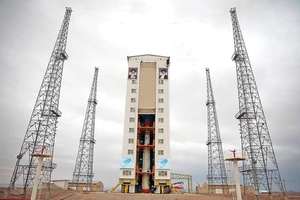
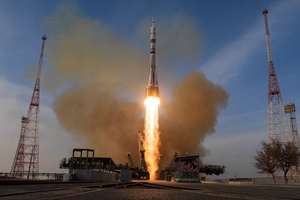
Iran is set to place three domestically built satellites into low Earth orbit on Sunday in a multi-payload launch from Russia, marking another step in Tehran’s expanding space program, which Western governments say relies on technologies applicable to long-range missiles.

Iranian media said the satellites would be launched at 1648 local time (1318 GMT) aboard a Russian Soyuz rocket from the Vostochny Cosmodrome in Russia’s far east. The payload includes Paya, also known as Tolou-3, Zafar-2 and a prototype satellite known as Kowsar-1.5.

Paya (Tolou-3) is Iran’s heaviest Earth-observation satellite to date, weighing about 150 kg, with imaging resolution of around five meters for black-and-white images and about 10 meters for color imagery, Iranian officials have said.

The satellite, made by the Iranian Space Agency, is designed for applications including agriculture monitoring, water resource management, environmental monitoring and disaster assessment.

Zafar-2, developed by Iran University of Science and Technology, is also an Earth-observation satellite intended for mapping, environmental monitoring and tracking natural hazards.

The Kowsar-1.5 satellite is a combined platform integrating imaging and internet-of-things capabilities, aimed primarily at smart agriculture and farm monitoring.

  • Iran plans first launch from Chabahar space center as three satellites near liftoff

    Iran plans first launch from Chabahar space center as three satellites near liftoff

  • Iran says three satellites to launch from Russia on December 28

    Iran says three satellites to launch from Russia on December 28

The Iranian satellites will be launched alongside a large cluster of mainly Russian spacecraft into a sun-synchronous low Earth orbit.

According to launch data, the mission also includes Russian Earth-observation satellites such as Aist-2T and Zorkiy-2M units, multiple Marafon and SITRO satellites designed for internet-of-things and ship-tracking services, as well as university-built and technology demonstration satellites from Russia and partner countries including Belarus, Kuwait and Montenegro.

Iran says its space activities are civilian and focused on scientific and economic uses, though Western governments argue that satellite launch technologies overlap with those used for long-range ballistic missiles.

Iran has increasingly relied on Russian launch services in recent years, even as it develops domestic launch sites and heavier rockets.

Israel warns US Iran missile drills may be cover for surprise attack - Axios

Dec 22, 2025, 01:22 GMT+0

Israel told the United States that the recent Iranian missile drills may conceal preparations for a potential strike, Axios said on Sunday, one day after Iran International reported unusual Iranian air activity spotted by Western intelligence agencies.

Israeli Chief of Staff Eyal Zamir raised the issue directly with Brad Cooper, head of US Central Command, warning that recent missile movements could serve as a cover for a surprise operation against the Jewish state.

The warning follows Iran International's report on Saturday which said Western intelligence agencies had identified unusual movements involving the Revolutionary Guard's Aerospace Force, including activity by missile, drone, and air-defence units beyond established patterns.

The developments could be linked to military exercises, Western officials with knowledge of the matter told Iran International but added that the scale and synchronization had drawn closer scrutiny.

Axios reported that Israeli intelligence assessed the movements as taking place within Iran’s borders but said Israel’s military risk tolerance has dropped significantly since Hamas’s surprise attack in October 2023.

"The chances for an Iranian attack are less than 50%, but nobody is willing to take the risk and just say it is only an exercise," the report said citing an Israeli source.

An American source, however, told Axios that the US intelligence currently sees no indication of an imminent Iranian attack.

In his conversation with the CENTCOM chief, Zamir urged closer coordination between Israeli and US forces on defensive preparations.

The phone call was followed by Cooper's visit to Tel Aviv on Sunday, where he met Zamir and top Israeli military officials to discuss the situation.

In June, Israel carried out airstrikes and covert operations against Iranian military and nuclear sites, killing more than 1,000 people including senior officials and nuclear scientists.

Iran retaliated by launching hundreds of missiles and drones at Israel, killing at least 33 people, among them an off-duty soldier.

The United States helped Israel intercept Iranian attacks and later joined the Israeli campaign, bombing three Iranian nuclear facilities on June 22.

Axios said that Israeli intelligence and the Mossad do not believe Iran’s current pace of rebuilding missile capabilities creates an immediate need for military action in the next two to three months, but warned the issue could become more urgent later next year.

Meanwhile, NBC News reported that Israeli officials plan to brief President Donald Trump at the end of the month on options for potential future strikes against Iran, amid concerns that Tehran is rebuilding ballistic missile production facilities and repairing air defenses damaged during the June conflict.

Low voter engagement casts doubt on Tehran’s maiden proportional council elections

Dec 21, 2025, 21:46 GMT+0
•
Maryam Sinaiee

Tehran’s upcoming city council elections will be held under a proportional representation system for the first time, but widespread voter apathy has raised concerns of an extremely low turnout outside conservative ranks.

The city and village council elections in May will also be held independently of the presidential race for the first time, a change that further distinguishes them from previous electoral cycles.

City council contests are significant to political figures and groups in Iran because they have repeatedly served as springboards to national power, particularly the presidency.

Tehran’s current hardline mayor, Alireza Zakani, rose through the city council before becoming mayor and later used that position as a launchpad for his bid in last year’s presidential election, though he was ultimately unsuccessful.

Before him, Mahmoud Ahmadinejad famously moved from the Tehran mayoralty to the presidency, underscoring the political weight of municipal office in Iran.

Voter disillusion and the risk of low participation

Unlike all other elections in Iran, city council races are not supervised by the Guardian Council, an unelected body widely accused by critics of “engineering elections” in favor of conservatives and hardliners through mass candidate disqualifications.

As a result, council elections have generally been freer than presidential and parliamentary contests over the past two decades.

Even so, political analysts and activists say the depth of public frustration with elections and governance makes it unlikely that large segments of the electorate will return to the polls, with some warning that turnout could fall below levels seen five years ago, when only around 25 percent of eligible voters participated in Tehran.

This is particularly true of the so-called “gray voters,” a broad and often decisive group whose participation has frequently tipped election outcomes in favor of reformists and moderates.

Recent electoral experience reinforces these concerns. In the 2021 parliamentary elections, after most reformist candidates were disqualified, turnout in Tehran hovered around 10 percent. The top candidate in the capital won roughly 580,000 votes—about six percent of eligible voters.

The reformist-leaning daily Arman-e Melli warned of the potential total marginalization of reformists and moderates under the new electoral model and prevailing voter apathy in an article titled “The Proportional Election Trap Facing Reformists.”

“If conservatives enter the race with two lists and split their organized votes between them, while reformists fail to mobilize their political base, the total reformist vote could fall to third place. In such a scenario, even the complete exclusion of reformists from Tehran’s city council would not be far-fetched.”

Uneven campaign energy

So far, there has been little visible enthusiasm among reformists for the upcoming vote. Conservatives and hardliners, by contrast, have been planning for months.

Meanwhile, according to the centrist website Asr-e Iran, three conservative camps are already maneuvering aggressively: Mehrdad Bazrpash, a long-time rival of Tehran Mayor Alireza Zakani, is reportedly has an eye toward becoming Tehran’s next mayor by placing allies in the council, while supporters of Saeed Jalili and members of the hardline Paydari Front, and neo-conservative allies of parliamentary speaker Mohammad-Bagher Ghalibaf, also push for maximum seats.

How proportional elections work—and why they matter

Under the new model, seats are allocated based on the share of the total vote won by each party or coalition list, with independent candidates assessed according to their percentage of overall ballots cast.

In practice, this means that in Tehran, organized political forces with disciplined voter bases—particularly conservatives and hardliners—are likely to benefit the most, while candidates without party backing face steep obstacles.

While many political groups agree that proportional representation can, in theory, improve the performance of councils and municipalities, some argue that introducing it under current political and institutional conditions may produce the opposite effect.

Skepticism across the political spectrum

Opposition to the new model is not limited to any single political camp.

Masoud Zaribafan, a former close ally of Mahmoud Ahmadinejad, has publicly warned against the risks.

He said that if ideologically rigid and unqualified individuals enter the council, it will “certainly face serious problems in selecting a mayor—especially someone who intends to use the mayoralty as a springboard to a higher position, including the presidency.”

He added: “Even if they manage to elect a mayor, I doubt they will be able to choose a powerful and efficient one.”

Mohammad Mehdi Tondgouyan, a former Tehran council member close to reformists, argued that proportional elections make little sense in a country without deeply rooted parties. “Our people have no real connection with parties,” he said.

Mahmoud Mir-Lohi, a senior member of the National Trust Party and a former deputy interior minister under President Mohammad Khatami, noted that Iran has around 200 registered parties, most of which function more like professional associations than genuine political organizations.

Former parliamentary candidate Tina Amin echoed this concern in a post on X: “If proportional elections are applied based on the current party landscape, they will not solve the problems of majoritarian elections. Instead, they will reproduce party-based rent-seeking and a lack of meritocracy in a different form.”

Norway confirms detention of its citizen in Iran

Dec 21, 2025, 21:01 GMT+0

Norway’s foreign ministry on Monday confirmed the detention of one of its citizens in Iran, a spokesperson for the ministry told Iran International.

"The Ministry of Foreign Affairs is aware that a Norwegian citizen has been arrested in Iran, but due to our obligation to respect confidentiality we cannot provide further details," the spokesperson said.

"The Ministry of Foreign Affairs advises against travel to Iran," the spokesperson added.

The ministry did not provide additional information, including the identity of the detainee or whether the person holds dual nationality.

On Sunday, US-based rights group Human Rights Activists News Agency (HRANA) reported that an Iranian–Norwegian dual national was detained after being summoned to the Intelligence Ministry office in Saqqez, in Iran’s western Kurdistan province.

HRANA identified the woman as Shahin Mahmoudi, whose name the rights group said appears as Shine Mahmoudi in Norwegian identity documents.

Mahmoudi was summoned by phone to the Intelligence Ministry office in Saqqez last Sunday and was detained around noon after reporting to the security body, HRANA said.

She was later transferred to the Intelligence Ministry’s detention center in the nearby city of Sanandaj.

According to HRANA, authorities have not informed Mahmoudi’s family of the charges against her.

Her relatives remain unaware of the reasons for her detention, her health condition, and the status of legal proceedings in her case, according to HRANA.

Mahmoudi had traveled from Norway to Iran on November 28, a move that was followed by her detention and the opening of a judicial case against her, according to the report.

The report comes just days after Sweden confirmed that one of its citizens was detained in Iran, after the country's judiciary disclosed details of a case involving an Iranian-Swedish dual national accused of spying for Israel.