Norway confirms detention of its citizen in Iran

Norway’s foreign ministry on Monday confirmed the detention of one of its citizens in Iran, a spokesperson for the ministry told Iran International.

Norway’s foreign ministry on Monday confirmed the detention of one of its citizens in Iran, a spokesperson for the ministry told Iran International.
"The Ministry of Foreign Affairs is aware that a Norwegian citizen has been arrested in Iran, but due to our obligation to respect confidentiality we cannot provide further details," the spokesperson said.
"The Ministry of Foreign Affairs advises against travel to Iran," the spokesperson added.
The ministry did not provide additional information, including the identity of the detainee or whether the person holds dual nationality.
On Sunday, US-based rights group Human Rights Activists News Agency (HRANA) reported that an Iranian–Norwegian dual national was detained after being summoned to the Intelligence Ministry office in Saqqez, in Iran’s western Kurdistan province.
HRANA identified the woman as Shahin Mahmoudi, whose name the rights group said appears as Shine Mahmoudi in Norwegian identity documents.
Mahmoudi was summoned by phone to the Intelligence Ministry office in Saqqez last Sunday and was detained around noon after reporting to the security body, HRANA said.
She was later transferred to the Intelligence Ministry’s detention center in the nearby city of Sanandaj.
According to HRANA, authorities have not informed Mahmoudi’s family of the charges against her.
Her relatives remain unaware of the reasons for her detention, her health condition, and the status of legal proceedings in her case, according to HRANA.
Mahmoudi had traveled from Norway to Iran on November 28, a move that was followed by her detention and the opening of a judicial case against her, according to the report.
The report comes just days after Sweden confirmed that one of its citizens was detained in Iran, after the country's judiciary disclosed details of a case involving an Iranian-Swedish dual national accused of spying for Israel.
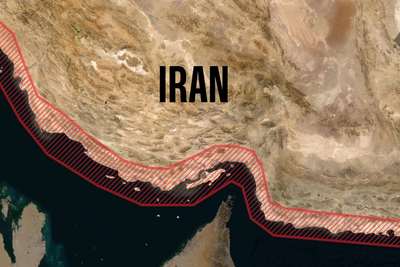

Israel is thinking about regime change in Iran as an option to avoid repeated rounds of conflict, former Israeli consul in Los Angeles said on Sunday.
“Israel is thinking about the regime change in Iran, because otherwise we’ll have to go to a round after round after round,” Yaki Dayan said on Israel’s i24NEWS The Rundown program.
Dayan said Israeli Prime Minister Benjamin Netanyahu will have to do significant convincing when he meets Trump later this month at Mar-a-Lago, particularly on backing further Israeli action against Iran.
"Netanyahu will have a lot of convincing here to do with Trump, not necessarily joining forces in another attack, but going to another attack and getting the defense capabilities from the Americans," he said.
Dayan said Trump is “much more in the peacemaking mode than attacking mode” on Iran and views the nuclear program as a more immediate threat than Iran’s ballistic missile program, which he said Tehran is currently prioritizing.
Dayan's remarks come as Israel Defense Forces’ (IDF) Chief of Staff Lt. Gen. Eyal Zamir said the force will strike its enemies “wherever required, on near and distant fronts alike,” in comments that appeared to allude to the possibility of further action against Iran.
Zamir said Iran had built what he described as a “ring of strangulation” around Israel, a reference to Tehran-backed groups operating across multiple fronts, and warned that the military was prepared to act both close to home and farther afield.

Senator Lindsey Graham on Sunday said the United States should strike Iran again if there is credible evidence that Tehran is rebuilding its nuclear enrichment program or expanding its ballistic missile capabilities following the June strikes.
Speaking to reporters in Tel Aviv, Graham said US and Israeli attacks had destroyed Iran’s nuclear facilities but had not changed the intentions of Iran’s leadership.
“We obliterated the Iranian nuclear facilities. We did not obliterate Iran’s desire to have a nuclear weapon,” he said.
“The regime hasn’t changed at all. They still want to kill all the Jews, consider America the great Satan, and purify Islam,” Graham added.
Graham said there were signs Iran could be attempting to regenerate its capabilities. “Are they regenerating their nuclear capability? Are they building more ballistic missiles that could hurt Europe and Israel? I don’t know, but there’s evidence that, yes, they are,” he said.
He said Washington should act before Iran is able to restore those capabilities.
“If there’s credible evidence that Iran is going back into the enrichment business at other sites, that they’re trying to build more ballistic missiles to terrorize Israel and maybe Europe, that we hit them before they can do that,” Graham said.
In an interview with NBC News on the same day, Graham took a more cautious tone when asked whether additional US strikes against Iran were necessary, saying he would defer to discussions between Israeli officials and President Donald Trump. “I’m going to let the Israelis talk to President Trump about it,” he said.
Graham’s remarks come a day after NBC News reported, citing Israeli officials, that Israel was preparing to brief President Donald Trump on options for possible new military strikes on Iran, amid concerns that Tehran is expanding its ballistic missile program.
The report said Israeli officials believe Iran is rebuilding facilities linked to ballistic missile production and repairing air defenses damaged in June strikes, which they view as more urgent than nuclear enrichment efforts.
Earlier this year, US airstrikes targeted three key Iranian nuclear sites at Fordow, Natanz, and Isfahan, following an Israeli air campaign that began on June 13 against Iranian military and nuclear-related sites.
Iran denies seeking nuclear weapons and has called the attacks illegal.
The United States has demanded Iran renounce domestic uranium enrichment while Tehran maintains its nuclear program is an international right.

Israeli officials are preparing to brief Donald Trump on options for possible new military strikes on Iran, citing concerns that Tehran is expanding its ballistic missile program, NBC News reported on Saturday.
“They are preparing to make the case during an upcoming meeting with Trump that it poses a new threat,” NBC News said, citing a person with direct knowledge of the plans and four former US officials briefed on the matter.
Israeli officials believe Iran is rebuilding facilities linked to ballistic missile production and repairing air defenses damaged in earlier strikes, which they view as more urgent than nuclear enrichment efforts, NBC reported.
“The nuclear weapons program is very concerning. There’s an attempt to reconstitute. It’s not that immediate,” one person familiar with the plans told NBC, referring to Iran’s nuclear activities.
Prime Minister Benjamin Netanyahu is expected to raise the issue when he meets Trump later this month, including options for US support or participation in any future action, the report said.
Trump's warning
Trump has repeatedly said US strikes in June destroyed Iran’s nuclear capabilities and warned Tehran against trying to rebuild.
“If they do want to come back without a deal, then we’re going to obliterate that one, too,” Trump said earlier this month. “We can knock out their missiles very quickly.”
A White House spokesperson said the International Atomic Energy Agency and Iran had corroborated the US assessment that the strikes “totally obliterated” Iran’s nuclear capabilities.
June strikes and inspections dispute
Israel launched strikes on Iran on June 13, targeting nuclear facilities, senior military figures and scientists, accusing Tehran of pursuing a covert nuclear weapons program. The US followed with strikes on three Iranian nuclear facilities on June 22.
Iran, which denied the accusations, responded with missile attacks including on a US base in Qatar.
The episode comes as the IAEA presses Iran for access to damaged nuclear sites at Natanz, Fordow and Isfahan, saying it must decide whether the sites are inaccessible, a demand Tehran has rejected as unreasonable.

The US State Department called on Iran to release people detained after a memorial ceremony for Iranian human rights lawyer Khosrow Alikordi, warning of risks of abuse and unfair treatment.
“After the arrest of 39 people at the memorial ceremony for Khosrow Alikordi, and even more afterward, including members of his family, authorities have refused to provide a full list of detainees, the charges against them, or where they are being held,” the department said in a post on its Persian-language X account.
“Without transparency and due process, the risk of torture and fabricated charges increases,” it said.
The State Department said detainees had been denied access to legal counsel, necessary medication and contact with their families, and were subjected to violence and threats.
“We call for their unconditional release, immediate medical care for those in need, an end to violent attacks on peaceful gatherings, and respect for the right of society to peaceful assembly and free expression,” it said.
US calls lawyer's death suspicious
The department earlier denounced what it called the suspicious death of Alikordi, a 46-year-old lawyer who represented jailed protesters and families of people killed during demonstrations.
“He devoted his life to defending Iranians who were fighting for freedom, even though he knew it meant putting his own life at risk,” the State Department said, calling his death “a stark reminder of the dangers faced by those who fight for their rights in Iran.”
Alikordi was found dead earlier this month in his office in Mashhad, according to Iranian media. A lawyers’ news outlet said he died of cardiac arrest, while other lawyers and activists questioned that account and called for an independent investigation.

Iran carried out the execution of an architecture student convicted of spying for Israel on Saturday, the judiciary announced, despite sustained concerns raised by rights groups over his detention, trial process and allegations of torture.
Aqil Keshavarz, a student at Shahroud University and a native of Isfahan, was executed after his death sentence was upheld by the Supreme Court, the judiciary said.
The announcement was made by Mizan News Agency, the judiciary’s official outlet, which said the sentence was implemented “after legal procedures were completed.”

Keshavarz’s family had held their final visit with him on Friday at Urmia Central Prison. In the hours leading up to the execution, student groups and human rights organizations had warned that authorities appeared poised to carry out the sentence, citing his transfer to solitary confinement.
Conflicting accounts of arrest and detention
Rights groups reported that Keshavarz was arrested earlier this year during heightened security measures linked to the 12-day war between Iran and Israel. He was transferred to solitary confinement on December 17 in preparation for execution.
The family was summoned from Isfahan on Thursday for what officials described as a final visit, the Kurdistan Human Rights Network said. According to a source cited by the group, Keshavarz’s mother fainted during the in-person meeting due to severe emotional distress.

Iran’s judiciary has provided conflicting information about the arrest. While rights groups previously identified the Islamic Revolutionary Guards Corps intelligence organization as the arresting body, Mizan reported that Keshavarz was detained by an army protection patrol, without specifying an exact date.
In its report, Mizan described Keshavarz as an “agent of Mossad and the Israeli military,” accusing him of espionage, intelligence cooperation with Israel and photographing military and security sites.
Human rights organizations rejected the official narrative, saying Keshavarz was subjected to coercive interrogations. The Kurdistan Human Rights Network reported that he was tortured for a week in an IRGC intelligence detention center in Urmia to extract a forced confession, before being transferred to Evin Prison and later back to Urmia.
Broader crackdown and international criticism
The execution triggered widespread condemnation on social media and renewed scrutiny of Iran’s use of capital punishment in security-related cases. The Hengaw Organization for Human Rights said at least 17 people have been executed in Iran since the start of 2025 on charges related to alleged cooperation with Israel, most of them after the recent war.
Iranian authorities have said more than 700 people were detained on suspicion of espionage or collaboration with Israel following the conflict.