• العربية
  • فارسی
Brand
  • Iran Insight
  • Politics
  • Economy
  • Analysis
  • Special Report
  • Opinion
  • Podcast
  • Iran Insight
  • Politics
  • Economy
  • Analysis
  • Special Report
  • Opinion
  • Podcast
  • Theme
  • Language
    • العربية
    • فارسی
  • Iran Insight
  • Politics
  • Economy
  • Analysis
  • Special Report
  • Opinion
  • Podcast
All rights reserved for Volant Media UK Limited
volant media logo

US accuses Iran of deploying death penalty to quash dissent

Sep 19, 2025, 17:34 GMT+1Updated: 00:38 GMT+0
Babak Shahbazi
Babak Shahbazi

The US State Department on Friday condemned the Islamic Republic's execution of political prisoner Babak Shahbazi this week as proof of what it called Tehran's use of the death penalty to scotch opposition.

Shahbazi, a father of two, was detained in January 2024 and later convicted of “spying for Israel” and “corruption on earth,” charges he denied before his execution early Wednesday.

The State Department said his execution "underscores the Iranian regime’s instrumental use of capital punishment to silence dissent and instill fear."

"Shahbazi, accused of espionage, was convicted in a grossly unfair trial based on forced confessions obtained under torture," it said in a post on its Persian-language X.

Rights groups have described the proceedings as grossly unfair and based on forced confessions obtained under torture.

His initial sentence was handed down in May 2025 by Judge Abolghasem Salavati, who was sanctioned by the United States in 2019 for presiding over unfair trials, extracting forced confessions, and imposing harsh sentences on political prisoners and journalists.

"Shahbazi’s case highlights the regime’s reliance on fabricated evidence and brutal tactics, including solitary confinement and physical abuse, to suppress opponents," the State Department said.

"The United States condemns this injustice and, while standing with the Iranian people in their struggle for freedom and dignity, remains committed to exposing the regime’s human rights violations."

Thousands of people in Iran face the risk of execution amid what Amnesty International on September 10 called a deepening execution crisis, with death sentences handed down after unfair trials and on vaguely worded charges such as enmity against God and corruption on earth.

The rights group said more than 800 people had been executed in 2025 so far, nearly double the pace of last year, and warned that thousands more remain under investigation or prosecution on capital charges, including drug-related offences and accusations of espionage.

Since the 2022 Woman, Life, Freedom uprising, Amnesty said, Iranian authorities have “weaponized the death penalty as a tool of oppression”.

In June, following Israel’s airstrikes and a 12-day war with Iran, officials intensified calls for swift trials and executions for those accused of collaborating with Israel. Parliament has also advanced legislation to expand the use of capital punishment, pending approval by the Guardian Council.

Most Viewed

Ghalibaf defends Iran-US talks amid hardline backlash
1
INSIGHT

Ghalibaf defends Iran-US talks amid hardline backlash

2
INSIGHT

Iran diplomacy wobbles as factions compete to avoid looking soft on US

3
VOICES FROM IRAN

Bread shortages, soaring prices strain households in Iran, residents say

4
ANALYSIS

The politics of pink: how Iran uses cuteness to rebrand violence

5

Scam messages seek crypto for ships’ safe passage through Hormuz, firm warns

Banner
Banner

Spotlight

  • Tehran moderates see ‘no deal–no war’ limbo as worst outcome
    INSIGHT

    Tehran moderates see ‘no deal–no war’ limbo as worst outcome

  • The future has been switched off here
    TEHRAN INSIDER

    The future has been switched off here

  • Lights out, then gunfire: Witnesses recount Mashhad protest crackdown
    VOICES FROM IRAN

    Lights out, then gunfire: Witnesses recount Mashhad protest crackdown

  • Family told missing teen was alive, then received his body 60 days later
    EXCLUSIVE

    Family told missing teen was alive, then received his body 60 days later

  • Is Iran entering its Gorbachev moment?
    INSIGHT

    Is Iran entering its Gorbachev moment?

  • Iran crackdown reaches cemeteries as graves of slain protesters defaced
    EXCLUSIVE

    Iran crackdown reaches cemeteries as graves of slain protesters defaced

•
•
•

More Stories

Security guards clash with visitors in northern Iran over compulsory hijab

Sep 19, 2025, 12:24 GMT+1

A video circulating on social media shows security guards clashing with visitors at the Marble Palace in Ramsar, after a hijab warning escalated into physical confrontation and police intervention.

The palace is a historic Pahlavi-era building built in 1937 by Reza Shah Pahlavi as a royal summer residence.

Iranian outlets reported the incident took place about a week ago. In the footage, a man with blood on his face lies on the ground while a guard holds a pepper spray canister. Eyewitnesses said guards used pepper spray against young women, creating panic among visitors.

The visitors were from the religious city of Mashhad, according to Entekhab News, citing a local journalist. A guard confronted one of the women at the entrance, and when her headscarf slipped inside the museum, he pushed her, sparking a fight that drew in police, the report said.

Social media users noted the recording date as September 11, days before the third anniversary of the death in custody of Mahsa Amini, detained in 2022 for alleged hijab violations.

Journalist and activist Masih Alinejad reacted on Instagram, writing: “This is the same government that stages concerts at night, executes by day, and assaults women over a few strands of hair.”

Wider crackdown

The video has renewed focus on violent enforcement of compulsory hijab, with calls for accountability and protection of women in public spaces. Confrontations have been documented before, with security forces, plainclothes agents, and civilians policing women’s dress. Rights advocates warn such practices intrude on privacy and fuel social violence.

Recent weeks have seen a wave of closures targeting businesses, cafés, hotels, and bookstores over alleged defiance of hijab rules. Rights group HRANA previously reported more than 30,000 women were stopped last year for non-compliance, and at least 536 commercial units were sealed.

Despite intensified state pressure, women’s acts of defiance persist. A video obtained by Iran International on September 16 showed a woman in Karaj standing unveiled atop a garbage container and shouting, “You have turned Iran into a prison.”

Belgian MPs summon Iranian ambassador over missing Swedish prisoner

Sep 19, 2025, 11:24 GMT+1

The Foreign Policy Committee of the Flemish Parliament in Belgium has called on Iran’s ambassador to clarify the fate of Ahmadreza Djalali, the jailed Iranian-Swedish academic whose whereabouts have been unknown since June.

“After three months without any news, concern about the condition of Prof. Ahmadreza Djalali is greater than ever. The MPs therefore want to obtain more information from the Iranian ambassador,” parliament chair Freya Van den Bossche and committee chair Bogdan Vanden Berghe said in a joint statement on Thursday.

Djalali, a disaster medicine specialist affiliated with the Free University of Brussels, was detained in April 2016 during a professional visit to Iran. In 2017 he was sentenced to death on charges of espionage and complicity in the killing of two Iranian nuclear scientists, accusations he and his family have consistently denied.

Earlier this year, he suffered a heart attack while held in Tehran’s Evin prison. After the Israeli bombing of that facility, he was transferred with other detainees to the Greater Tehran Penitentiary. From there, according to accounts shared by his family, he was taken away separately. Since June 23, there has been no trace of him.

Pressure builds in Belgium

Last week, the committee and parliament speaker Van den Bossche met Djalali’s wife, Vida Mehrannia, to discuss his situation. Following that meeting, MPs unanimously agreed to summon the Iranian envoy.

Djalali’s case has drawn international concern, with European institutions and human rights organizations urging Tehran to halt his death sentence and release him on humanitarian grounds.

For Belgian lawmakers, his disappearance has heightened alarm not only about his health but also about the Iranian authorities’ treatment of dual nationals, many of whom remain imprisoned under contested charges.

US bill aims to block sanctioned Iran officials from UN

Sep 18, 2025, 21:05 GMT+1

Senator Ted Cruz introduced a bill on Thursday to stop sanctioned Iranian officials from entering the United States for next week’s United Nations General Assembly (UNGA) meeting in New York.

The bill, called the “Strengthening Entry Visa Enforcement and Restrictions (SEVER) Act,” was introduced by the Republican senator from Texas.

The bill focuses on officials it says are linked to Iran’s Supreme Leader Ayatollah Ali Khamenei.

There was no immediate indication that such personnel were due to attend. Iran routinely sends scores of officials and staff to the annual meeting.

“The Iranian regime and the corrupt officials who run it are responsible for the murder, injury and kidnapping of thousands of Americans,” The Hill cited Cruz as saying.

“The Ayatollah means it when he chants ‘Death to America,’ and the United States has developed and imposed sanctions to counter the threats posed by him and those directly around him,” Cruz said.

The bill was initially introduced under the same name in 2022 but stalled due to lack of votes and political disagreements.

The current bill has new Republican sponsors, including Senators Tom Cotton, John Barrasso, Ashley Moody, Rick Scott and Joni Ernst.

Iran’s President Masoud Pezeshkian and Foreign Minister Abbas Araghchi are set to attend UNGA’s high-level meetings starting September 22 in New York.

A companion version of the SEVER Act was also introduced in the House of Representatives by New York Republican Representative Claudia Tenney.

The 80th session of the UN General Assembly opened on September 9, with world leaders due to arrive in New York on September 22.

The 1947 UN Headquarters Agreement requires the United States to grant visas to UN representatives, including world leaders, for UN-related activities in New York, with exceptions only for proven security threats.

The United States is considering special travel restrictions for the 2025 Iranian UNGA delegation, including State Department approval for shopping at Costco or Sam’s Club and limits on movement outside New York City.

Washington earlier this month revoked or denied visas for most Palestinian officials to attend the UNGA, in a move seen as a protest about Western allies' looming move to recognize a Palestinian state.

Unfinished yet irreversible: Iran's Woman, Life, Freedom three years on

Sep 18, 2025, 18:48 GMT+1
•
Jamshid Barzegar

Three years after the killing of Mahsa "Jina" Amini in the custody of Iran’s morality police, and in the shadow of the Islamic Republic’s recent 12-day war with Israel, the outlines of a durable social transformation are clear.

Commentators disagree on labels—uprising, movement, revolution—but most accept that the protests of 2022 and their afterlife have marked a foundational rupture. They drew in multiple strata of society, altered daily life and public discourse and forced the Islamic Republic into retreats that once seemed inconceivable.

The chant “Woman, Life, Freedom,” first voiced at Amini’s burial in the town of Saqqez in Iran's Kurdistan province, condensed demands for autonomy, dignity and equality into three words that spoke across class and region.

A society long fragmented by divide-and-rule tactics has moved toward solidarity. Women and men, Kurds and Persians, Baluch and Azeris, urban and rural citizens stood together in 2022, building a pluralism not seen in recent memory.

The movement challenged not only gender discrimination but the state’s entire normative order, and it did so through radically non-violent means. In compelling the regime to cede ground—above all on the legally-mandated hijab—it achieved changes that would once have been described as revolutionary in themselves.

Inside homes, younger generations have renegotiated relations with parents in ways that blunt the state’s intrusion into private life.

The state’s grip on the streets has been broken; unveiled women now walk freely in Tehran, Mashhad, Shiraz, and countless smaller cities. Equality and bodily autonomy, once dismissed as Western imports, have moved to the center of Iranian discourse.

An even more draconian hijab and chastity law passed by parliament was frozen by Iran's Supreme National Security Council in May out of concern it would spark unrest.

Not easy

But the obstacles remain—and repression is still lethal.

In 2022 at least 552 protesters were killed, thousands more jailed, and executions have mounted since. The ruling elite retain an effective coercive apparatus, even if their confidence has been shaken by war and domestic unrest.

Economically, decades of corruption, sanctions, inflation and environmental degradation have pushed both state and society into survival mode.

Families channel scarce energy into endurance, leaving less room for organized protest. A potential revolution’s strength—its horizontal, decentralized nature—has also limited its ability to produce leadership or coherent organization.

Opposition forces remain fragmented, particularly in the diaspora, and coordination inside Iran has faltered as street protests ebbed.

Even so, the balance of change is striking.

In just three years, the movement has embedded demands that no future order can ignore. Its art, slogans, and public faces have entered common life.

No credible opponent of the regime positions themselves against it; all align with or inherit from it.

Hopes for future

Looking forward, much will depend on four interlinked tasks.

Daily civil resistance appears to be institutionalized, above all the unveiled presence of women in public life.

Economic grievances and livelihood protests have yet to be joined to clear political demands. If and when they are, a broader front against misrule would come to life.

Fragmented opposition forces need to converge on a clearer vision for post–Islamic Republic Iran. And international sympathy must be translated into targeted support that strengthens civil society without dragging it into destructive conflict.

The Islamic Republic’s institutions still stand, but their legitimacy has been stripped to the bone. Voter participation has sunk to historic lows, public trust has collapsed, and governance has narrowed to the sheer mechanics of survival.

Those in power are now fixated on endurance rather than service. In this vacuum, civil society advances on a different track.

Three years on, “Woman, Life, Freedom” remains the principal engine of transformation. Street protests may have wound down, but the changes in culture and imagination look irreversible.

The revolution is unfinished, but it endures in daily defiance, in a pluralist solidarity that defies the state’s order, and in a vision of citizenship rooted in universal rights.

That, already, is an achievement historic in scale—one whose ultimate destination may yet be a secular, democratic Iran.

US fired $500mn in THAAD missiles defending Israel, Pentagon papers show

Sep 18, 2025, 11:34 GMT+1

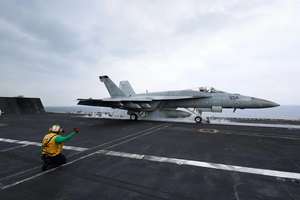
Pentagon budget documents seeking urgent new funding show that the US has fired around $500 million worth of its Terminal High Altitude Area Defense (THAAD) interceptor missiles to defend Israel, primarily during its June war with Iran.

"This reprogramming action provides funding for the replacement of defense articles from the stocks of the Department of Defense expended in support of Israel or identified and notified to Congress for provision to Israel," the document said.

The budget document dated August 1, is titled Israel Security Replacement Transfer Fund Tranche 9, and requested $498.265 million in funding for THAAD systems alone.

“Funds are required for the procurement of replacement THAAD Interceptors expended in support of Israel. This is a congressional special interest item. This is an emergency budget requirement,” the document said.

The War Zone reported that the US fired more than 150 THAAD missiles during the Iran war alone.

The publication also said details of US bombings of Iranian nuclear facilities, known as Operation Midnight Hammer, are only just coming to light now, though the full cost is still unknown.

  • US depleted quarter of THAAD interceptors in Israel-Iran war - CNN

    US depleted quarter of THAAD interceptors in Israel-Iran war - CNN

The US announced it had deployed THAAD defences in Israel in October, more than a year after the Gaza war broke out, seeing Iran's allies in the region firing on the Jewish state from Lebanon, Yemen, Iraq and Syria.

It also came after Iran's second direct attack on Israel when hundreds of missiles and drones were fired in a massive aerial barrage.

"This reprogramming action addresses funds for the replacement of defense articles expended in support of Israel through US combat operations executed at the request of and in coordination with Israel and for the defense of Israeli territory, personnel, or assets during attacks by Iran, and subsequent or anticipated attacks by Iran and its proxies," the document said.

The documents show the extent of the cost of the US military's defense of Israel and also the cost of weapons that American forces used during their extensive bombing of Iran’s three main nuclear facilities in June, Natanz, Fordow and Isfahan.

Among the funds requested were those to "replace GBU-39s expended during Operation Midnight Hammer in support of Israel", the document detailed. "This is a congressional special interest item. This is an emergency budget requirement."

Made by US defense contractor, Lockheed Martin, THADD intercepts short, medium and intermediate-range ballistic missiles, engaging targets directly at ranges of 93 to 124 miles both inside and outside the atmosphere.

Each THAAD battery system requires around 100 soldiers, and has been used to help defend Israel from ballistic missiles from both Iran and its military ally, the Houthis, in Yemen.

  • Houthis, short of Iranian missiles, ramp up drone strikes on Israel

    Houthis, short of Iranian missiles, ramp up drone strikes on Israel

  • Trump u-turn on Houthis driven by billions of dollars in financial losses - NYT

    Trump u-turn on Houthis driven by billions of dollars in financial losses - NYT

US Missile Defense Agency documents say that each THAAD interceptor costs roughly $12.7 million, and now there are concerns about insufficient American stockpiles.

In addition to Iranian attacks, Israel says dozens of drones and ballistic missiles have been fired from Yemen to Israel since the outbreak of the Gaza war. The Iran-backed Houthis say their actions are in allegiance with Iran’s ally Hamas in Gaza.

During the 12-day war in June, Iran fired over 500 ballistic missiles in response to Israel’s surprise attacks on June 13, in which dozens of military and nuclear figures were killed.