US bill aims to block sanctioned Iran officials from UN

Senator Ted Cruz introduced a bill on Thursday to stop sanctioned Iranian officials from entering the United States for next week’s United Nations General Assembly (UNGA) meeting in New York.

Senator Ted Cruz introduced a bill on Thursday to stop sanctioned Iranian officials from entering the United States for next week’s United Nations General Assembly (UNGA) meeting in New York.
The bill, called the “Strengthening Entry Visa Enforcement and Restrictions (SEVER) Act,” was introduced by the Republican senator from Texas.
The bill focuses on officials it says are linked to Iran’s Supreme Leader Ayatollah Ali Khamenei.
There was no immediate indication that such personnel were due to attend. Iran routinely sends scores of officials and staff to the annual meeting.
“The Iranian regime and the corrupt officials who run it are responsible for the murder, injury and kidnapping of thousands of Americans,” The Hill cited Cruz as saying.
“The Ayatollah means it when he chants ‘Death to America,’ and the United States has developed and imposed sanctions to counter the threats posed by him and those directly around him,” Cruz said.
The bill was initially introduced under the same name in 2022 but stalled due to lack of votes and political disagreements.
The current bill has new Republican sponsors, including Senators Tom Cotton, John Barrasso, Ashley Moody, Rick Scott and Joni Ernst.
Iran’s President Masoud Pezeshkian and Foreign Minister Abbas Araghchi are set to attend UNGA’s high-level meetings starting September 22 in New York.
A companion version of the SEVER Act was also introduced in the House of Representatives by New York Republican Representative Claudia Tenney.
The 80th session of the UN General Assembly opened on September 9, with world leaders due to arrive in New York on September 22.
The 1947 UN Headquarters Agreement requires the United States to grant visas to UN representatives, including world leaders, for UN-related activities in New York, with exceptions only for proven security threats.
The United States is considering special travel restrictions for the 2025 Iranian UNGA delegation, including State Department approval for shopping at Costco or Sam’s Club and limits on movement outside New York City.
Washington earlier this month revoked or denied visas for most Palestinian officials to attend the UNGA, in a move seen as a protest about Western allies' looming move to recognize a Palestinian state.


Former president Hassan Rouhani could face the death penalty if charges against him are proven in court, an Iranian lawmaker said on Wednesday, reviving threats against an architect of a 2015 nuclear deal loathed by hardliners.
“Some of the accusations are at the level of spreading corruption on earth, and if the court proves them, his punishment will be execution,” Kamran Ghazanfari said in an interview with Iran24, referring to a formal charge in the theocracy's law.
“He has already inflicted enough damage and loss on the country. One example is the nuclear deal, which was entirely a loss. He took pride in it.”
The remarks suggest increasing tension within Iran's ruling establishment as geopolitical uncertainty festers following a 12-day war with Israel in June, new international sanctions loom and economic hardship bites.
Ghazanfari said the previous parliament filed eight complaints against Rouhani which were all forwarded to the judiciary. He accused judiciary chief Gholamhossein Mohseni Ejei of failing to act, despite a legal obligation to give such cases priority.
“Was Rouhani tried? Was he punished or not? If so, explain. If not, explain why he has not been tried and punished.”
Ghazanfari also referred to another case sent to the judiciary by late President Ebrahim Raisi’s government, accusing Rouhani of involvement in the disappearance of 48 valuable carpets from the Saadabad Palace.

Rouhani’s office at the time rejected the allegation as a political distraction.
Criticism of nuclear deal
Ghazanfari again attacked the nuclear agreement, calling it “entirely a loss.”
“Rouhani should remain silent, rest at home, and not enter such matters,” he said, arguing that when no legal action is taken “He dares to talk big.”
His comments come as Britain, France, and Germany have triggered the nuclear deal’s snapback mechanism against Iran. Western governments have set conditions, including granting the International Atomic Energy Agency access to enriched uranium stockpiles, with a deadline at the end of September.
Under Resolution 2231, sanctions will automatically return after 30 days unless the Security Council votes otherwise.
Rouhani defends dialogue
Rouhani has re-emerged in recent weeks to call for reducing confrontation with the West, including the United States.
“Relations with Europe, our neighbors, and the East and the West, even tension with the US, if we can reduce it, if it is in our national interest, what is wrong with that? Not only is it not wrong, but it is also our duty and obligation,” he told advisers in late August.
Rouhani argued that Iran should pursue talks if they advance national interests and security. In comments on August 14, he described negotiations with the United States as necessary and obligatory.
His remarks was in apparent conflict with the supreme leader's position who on the same day warned against advocating talks with Washington. “Agents of America and Zionism sought to create division inside Iran,” Khamenei said.

Three years after the killing of Mahsa "Jina" Amini in the custody of Iran’s morality police, and in the shadow of the Islamic Republic’s recent 12-day war with Israel, the outlines of a durable social transformation are clear.
Commentators disagree on labels—uprising, movement, revolution—but most accept that the protests of 2022 and their afterlife have marked a foundational rupture. They drew in multiple strata of society, altered daily life and public discourse and forced the Islamic Republic into retreats that once seemed inconceivable.
The chant “Woman, Life, Freedom,” first voiced at Amini’s burial in the town of Saqqez in Iran's Kurdistan province, condensed demands for autonomy, dignity and equality into three words that spoke across class and region.
A society long fragmented by divide-and-rule tactics has moved toward solidarity. Women and men, Kurds and Persians, Baluch and Azeris, urban and rural citizens stood together in 2022, building a pluralism not seen in recent memory.
The movement challenged not only gender discrimination but the state’s entire normative order, and it did so through radically non-violent means. In compelling the regime to cede ground—above all on the legally-mandated hijab—it achieved changes that would once have been described as revolutionary in themselves.
Inside homes, younger generations have renegotiated relations with parents in ways that blunt the state’s intrusion into private life.
The state’s grip on the streets has been broken; unveiled women now walk freely in Tehran, Mashhad, Shiraz, and countless smaller cities. Equality and bodily autonomy, once dismissed as Western imports, have moved to the center of Iranian discourse.
An even more draconian hijab and chastity law passed by parliament was frozen by Iran's Supreme National Security Council in May out of concern it would spark unrest.
Not easy
But the obstacles remain—and repression is still lethal.
In 2022 at least 552 protesters were killed, thousands more jailed, and executions have mounted since. The ruling elite retain an effective coercive apparatus, even if their confidence has been shaken by war and domestic unrest.
Economically, decades of corruption, sanctions, inflation and environmental degradation have pushed both state and society into survival mode.
Families channel scarce energy into endurance, leaving less room for organized protest. A potential revolution’s strength—its horizontal, decentralized nature—has also limited its ability to produce leadership or coherent organization.
Opposition forces remain fragmented, particularly in the diaspora, and coordination inside Iran has faltered as street protests ebbed.
Even so, the balance of change is striking.
In just three years, the movement has embedded demands that no future order can ignore. Its art, slogans, and public faces have entered common life.
No credible opponent of the regime positions themselves against it; all align with or inherit from it.
Hopes for future
Looking forward, much will depend on four interlinked tasks.
Daily civil resistance appears to be institutionalized, above all the unveiled presence of women in public life.
Economic grievances and livelihood protests have yet to be joined to clear political demands. If and when they are, a broader front against misrule would come to life.
Fragmented opposition forces need to converge on a clearer vision for post–Islamic Republic Iran. And international sympathy must be translated into targeted support that strengthens civil society without dragging it into destructive conflict.
The Islamic Republic’s institutions still stand, but their legitimacy has been stripped to the bone. Voter participation has sunk to historic lows, public trust has collapsed, and governance has narrowed to the sheer mechanics of survival.
Those in power are now fixated on endurance rather than service. In this vacuum, civil society advances on a different track.
Three years on, “Woman, Life, Freedom” remains the principal engine of transformation. Street protests may have wound down, but the changes in culture and imagination look irreversible.
The revolution is unfinished, but it endures in daily defiance, in a pluralist solidarity that defies the state’s order, and in a vision of citizenship rooted in universal rights.
That, already, is an achievement historic in scale—one whose ultimate destination may yet be a secular, democratic Iran.

Snapback sanctions on Iran will be triggered at the end of this month, French President Emmanuel Macron said in an interview with Israel’s Channel 12 on Thursday.
Asked if the return of UN sanctions on Iran was a "done deal," Macron answered: “Yes, I think so. Because the latest news we have from the Iranians are not serious."
Iran’s Foreign Minister Abbas Araghchi, he added, “tried to make a reasonable offer” to reach a deal with European powers, but did not receive backing from other members of the Iranian ruling system.
Iran made a new proposal to the E3 nations Britain, Germany and France on Wednesday to avoid the return of UN sanctions, Wall Street Journal journalist Laurence Norman reported on X earlier on Thursday.
The E3 views the proposal as insufficient because it seeks major concessions without any concrete Iranian action, Norman added, citing an unnamed source.
Seperately, Axios journalist Barak Ravid wrote on X that a draft resolution to extend the suspension of UN sanctions on Iran will be circulated at the Security Council on Thursday, with a vote scheduled for Friday.
Barak said the resolution is not expected to pass, which would trigger the “snapback” mechanism, leading to the reimposition of sanctions on Iran at 8 p.m. ET on September 27.
The three European powers triggered the snapback process on August 28 under Resolution 2231, demanding Iran return to talks, grant wider access to inspectors, and account for its missing uranium stockpiles.
On Wednesday, European foreign ministers urged Iran to resume nuclear talks, allow inspections of sensitive sites and curb its stockpile of highly enriched uranium.
Last week, Iran's foreign minister Abbas Araghchi said that if the E3 move to activate the snapback mechanism to reimpose UN sanctions, "they will be excluded from nuclear negotiations with the Islamic Republic."

An association of independent Iranian filmmakers has called on the Academy of Motion Picture Arts and Sciences (AMPAS) to overhaul how it accepts films from countries under authoritarian rule, warning that the current system legitimizes state-controlled cinema bodies.
In a letter to the Academy this week, the Iranian Independent Filmmakers Association (IIFMA) said the Farabi Cinema Foundation, which oversees Oscar submissions from Iran, enforces censorship and sidelines independent voices at home and abroad.
The group proposed an international committee that could select Iranian films free of government influence, citing the cultural impact of the Woman, Life, Freedom protest movement.
The appeal came a day after Iran announced Ali Zarnegar’s Cause of Death: Unknown as its entry for the 98th Academy Awards.
The selection drew mixed reactions inside Iran, with the hardline daily Javan urging officials to choose a film that reflected “Islamic-Iranian values,” while veteran filmmaker Homayoun Asadian accused state authorities of trying to dictate the choice.


IIFMA argued that acclaimed works such as Jafar Panahi’s Palme d’Or-winning It Was Just an Accident -- which France has submitted this year -- demonstrate the global recognition of Iranian filmmakers when free of state oversight.
Panahi has long been barred from representing Iran, and supporters say his case highlights how government involvement excludes major artists.
Iran has a history of success at the Oscars, with Asghar Farhadi winning best international feature for A Separation (2012) and The Salesman (2017).

Pentagon budget documents seeking urgent new funding show that the US has fired around $500 million worth of its Terminal High Altitude Area Defense (THAAD) interceptor missiles to defend Israel, primarily during its June war with Iran.
"This reprogramming action provides funding for the replacement of defense articles from the stocks of the Department of Defense expended in support of Israel or identified and notified to Congress for provision to Israel," the document said.
The budget document dated August 1, is titled Israel Security Replacement Transfer Fund Tranche 9, and requested $498.265 million in funding for THAAD systems alone.
“Funds are required for the procurement of replacement THAAD Interceptors expended in support of Israel. This is a congressional special interest item. This is an emergency budget requirement,” the document said.
The War Zone reported that the US fired more than 150 THAAD missiles during the Iran war alone.
The publication also said details of US bombings of Iranian nuclear facilities, known as Operation Midnight Hammer, are only just coming to light now, though the full cost is still unknown.
The US announced it had deployed THAAD defences in Israel in October, more than a year after the Gaza war broke out, seeing Iran's allies in the region firing on the Jewish state from Lebanon, Yemen, Iraq and Syria.
It also came after Iran's second direct attack on Israel when hundreds of missiles and drones were fired in a massive aerial barrage.
"This reprogramming action addresses funds for the replacement of defense articles expended in support of Israel through US combat operations executed at the request of and in coordination with Israel and for the defense of Israeli territory, personnel, or assets during attacks by Iran, and subsequent or anticipated attacks by Iran and its proxies," the document said.
The documents show the extent of the cost of the US military's defense of Israel and also the cost of weapons that American forces used during their extensive bombing of Iran’s three main nuclear facilities in June, Natanz, Fordow and Isfahan.
Among the funds requested were those to "replace GBU-39s expended during Operation Midnight Hammer in support of Israel", the document detailed. "This is a congressional special interest item. This is an emergency budget requirement."
Made by US defense contractor, Lockheed Martin, THADD intercepts short, medium and intermediate-range ballistic missiles, engaging targets directly at ranges of 93 to 124 miles both inside and outside the atmosphere.
Each THAAD battery system requires around 100 soldiers, and has been used to help defend Israel from ballistic missiles from both Iran and its military ally, the Houthis, in Yemen.

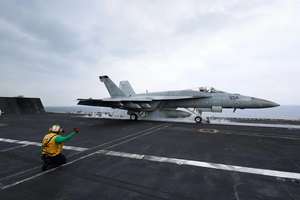
US Missile Defense Agency documents say that each THAAD interceptor costs roughly $12.7 million, and now there are concerns about insufficient American stockpiles.
In addition to Iranian attacks, Israel says dozens of drones and ballistic missiles have been fired from Yemen to Israel since the outbreak of the Gaza war. The Iran-backed Houthis say their actions are in allegiance with Iran’s ally Hamas in Gaza.
During the 12-day war in June, Iran fired over 500 ballistic missiles in response to Israel’s surprise attacks on June 13, in which dozens of military and nuclear figures were killed.









