• العربية
  • فارسی
BrandBrand
  • Iran Insight
  • Politics
  • Economy
  • Analysis
  • Special Report
  • Opinion
  • Podcast
  • Live TV
  • Iran Insight
  • Politics
  • Economy
  • Analysis
  • Special Report
  • Opinion
  • Podcast
  • Live TV
  • Theme
  • Language
    • العربية
    • فارسی
  • Iran Insight
  • Politics
  • Economy
  • Analysis
  • Special Report
  • Opinion
  • Podcast
  • Live TV
All rights reserved for Volant Media UK Limited
volant media logo

Khamenei-linked daily says Afghan expulsions failed to curb bread prices

Sep 18, 2025, 11:19 GMT+1
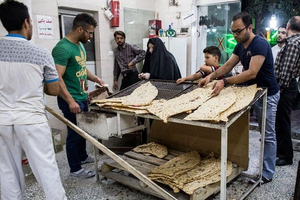
A bakery in Iran
A bakery in Iran

The Islamic Republic’s mass expulsions of Afghan migrants have not eased Iran’s economic strain nor slowed soaring bread prices, the hardline Kayhan newspaper, overseen by Iran's Supreme Leader Ali Khamenei, wrote on Wednesday.

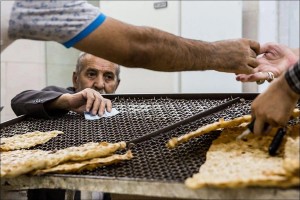
“The claim was that Afghan nationals were consuming so much bread that they were pushing prices higher. Yet even after more than 1.5 million have left, the price of Sangak [a popular traditional Iranian bread] has risen fourfold,” the paper said.

“Why should bread prices climb 300 percent compared to 2024 when no major shortage is expected?” the paper asked.

A loaf of subsidized Sangak bread cost 5,000 rials (about $0.05) in September 2024 but now sells for 200,000 rials (about $0.20), marking a 300-percent increase in one year.

Iran’s state news agency IRNA says that in Tehran Sangak priced at 100,000–150,000 rials has effectively disappeared; most customers now pay 200,000–500,000 rials per loaf, with sesame-topped bread commonly around 300,000 (about $0.30).

Official rates diverge from street prices, which vary by neighborhood and bakery. A government task force set a 600-gram sangak at 76,000 rials (about $0.07), but shoppers say loaves at that price are smaller and poorer quality.

Interior Minister Eskandar Momeni argued in August that expulsions reduced bread transactions by six percent, calling this a government achievement. Lower demand would help stabilize supply, he said.

Deportations tied to security rhetoric

The Islamic Republic intensified deportations in recent months, especially after the 12-day war with Israel, when authorities accused some foreigners, notably Afghans, of working with Mossad. Such allegations have been used to justify expulsions while deflecting blame for economic hardship.

Decades of economic mismanagement, sanctions, and currency collapse have eroded household purchasing power, leaving low-income families most exposed.

“If inflation remains unchecked … Iran could witness a bread riot,” economist Hossein Raghfar told the moderate outlet Rouydad24 earlier this month, warning that inaction could have consequences far beyond the economy.

Most Viewed

Iran is running out of economic escape routes
1

Iran is running out of economic escape routes

2
ANALYSIS

US strikes on Iran now serve the blockade

3

US says it can sustain Iran blockade for ‘foreseeable future’

4
ANALYSIS

Once US blockaded Iran, China’s ‘Malaysian’ oil imports dried up

5
ANALYSIS

Istanbul meeting: A new division of labor in the Iran war?

Banner
Banner
Banner
Banner
Banner

Spotlight

  • Baluch insurgency tests the limits of a war-weakened Islamic Republic
    PODCAST

    Baluch insurgency tests the limits of a war-weakened Islamic Republic

  • US strikes on Iran now serve the blockade
    ANALYSIS

    US strikes on Iran now serve the blockade

  • Salvation or tragedy? Iranians debate prospect of another war

    Salvation or tragedy? Iranians debate prospect of another war

  • More patrols, slower internet suggest Tehran is bracing for trouble
    VOICES FROM IRAN

    More patrols, slower internet suggest Tehran is bracing for trouble

  • Iran’s evasion network survives, but the crude feeding it has run dry

    Iran’s evasion network survives, but the crude feeding it has run dry

  • Once US blockaded Iran, China’s ‘Malaysian’ oil imports dried up
    ANALYSIS

    Once US blockaded Iran, China’s ‘Malaysian’ oil imports dried up

  • Istanbul meeting: A new division of labor in the Iran war?
    ANALYSIS

    Istanbul meeting: A new division of labor in the Iran war?

  • China values Iran but won't pay any price to defend it
    ONE-ON-ONE

    China values Iran but won't pay any price to defend it

  •  Iran sees steep bread price hikes as inflation bites

    Iran sees steep bread price hikes as inflation bites

  • Rampant inflation may ignite bread riots in Iran, economist warns

    Rampant inflation may ignite bread riots in Iran, economist warns