US fines freight forwarder over use of Venezuelan airline tied to Iran’s Mahan Air
File photo of an aircraft operated by Iran’s Mahan Air
The US Treasury Department said on Wednesday that international freight forwarder Fracht FWO Inc. has agreed to pay $1.61 million to settle violations of US sanctions, including dealings involving Iran’s Mahan Air, a carrier long accused by Washington of supporting terrorism.
Treasury’s Office of Foreign Assets Control (OFAC) said the Houston-based company contracted in May 2022 with Venezuela’s state-run airline EMTRASUR, a subsidiary of CONVIASA, to transport car parts from Mexico to Argentina.
The flight used an aircraft that had previously been blocked for being operated by Mahan Air and was crewed by Iranian nationals.
OFAC said the transactions amounted to apparent breaches of US sanctions on Iran, Venezuela, weapons proliferation and terrorism.
“Fracht conferred a direct financial benefit of approximately $935,000 to the blocked entity EMTRASUR, providing substantial revenue to the Maduro regime and specifically relating to use of an aircraft blocked for terrorism and proliferation,” the Treasury statement said.
Washington blacklisted Mahan Air in 2011, accusing it of supporting Iran’s Islamic Revolutionary Guard Corps. Although the aircraft later changed registration to a Venezuelan tail number, OFAC said it remained blocked property because of its origin and continuing links to the Iranian airline.
The Treasury added that Fracht executives disregarded internal compliance procedures and red flags, such as the aircraft’s Venezuelan registration and EMTRASUR’s ownership, when approving the charter. The case was deemed “egregious” and not voluntarily disclosed.
Still, the penalty was reduced from a potential $2.1 million after Fracht cooperated with investigators and undertook extensive compliance reforms, including firing the employee who arranged the deal and hiring nine sanctions specialists.
The United States has repeatedly accused Mahan Air of using commercial cover to move military equipment and personnel to support Tehran’s allies in the Middle East.
US Senator Tom Cotton on Wednesday called on the FBI and Defense Department to investigate what he called an Iranian campaign to influence US policy, branding it a serious national security concern.
The Arkansas Republican cited a joint investigation by Semafor and Iran International into the Iran Expert Initiative (IEI), an effort by Tehran's foreign ministry to cultivate ties with academics and think tank analysts to advance the Islamic Republic’s interests.
Cotton's letter focused on Ariane Tabatabai, a former aide to former US Special Envoy for Iran, Robert Malley. Her next post was as Pentagon Chief of Staff for the Assistant Secretary of Defense for Special Operations and Low-Intensity Conflict.
Cotton said in his letter that Tabatabai “is still working with the US intelligence community.”
"Tabatabai and other IEI affiliates should not have been in a position to influence US policy decisions and access our nation's most sensitive intelligence," Cotton wrote.
"While the Biden administration ignored repeated calls from Republicans to remove officials affiliated with IEI and the Iranian government, the Federal Bureau of Investigation (FBI) and the Department of Defense (DoD) should now correct this mistake."
It was not clear what spurred the senator, an outspoken Iran hawk, to issue the call.
"I urge the FBI and DoD to review this matter thoroughly for counterintelligence concerns and potential criminality, given that national security information may have been provided to a foreign government," Cotton continued.
He also called on the FBI and Pentagon to “investigate all current and former government officials affiliated with IEl and take appropriate actions to ensure such officials are no longer able to assist Tehran in damaging US national security.”
Last October, The Free Press reported that Tabatabai had taken on a new role in the defense department which gave her reduced access to intelligence, according to a former Pentagon official.
The Iranian-American academic in her new role oversaw force education and training within the defense secretary's office.
It is not clear if Tabatabai is still working in the same position under the Trump administration.
US President Donald Trump has repeatedly faulted his predecessors for perceived policy failings on Iran but has not explicitly alighted on the IEI in his criticisms.
Fellow Republican lawmakers have cast Iran as an implacable enemy after a justice department indictment sealed last year accused the country's Islamic Revolutionary Guard Corps of a plot to assassinate Trump - charges Tehran denies.
Iran’s judiciary has forcefully defended a disgraced oil tycoon from accusations by the central bank that he had not paid back his debts after he was convicted in one of the country's biggest ever corruption cases.
The clash over Babak Zanjani, whom Iranian media outlets say Tehran has recruited back into business as new sanctions loom, appears to indicate policy divisions among key institutions as the country reels from a damaging war in June.
Judiciary spokesman Asghar Jahangir on Wednesday rejected a statement last month by the central bank's governor saying Zanjani had only repaid about $15 million of a total $1.9 billion in oil revenue he was convicted of embezzling.
“At a time when the country needs calm, the judiciary cautioned central bank governor Mohammadreza Farzin to avoid comments that could disturb public opinion,” Jahangir added. The matter “rests solely with the courts," he said.
Zanjani's original 2016 conviction on fraud and money laundering charges earned him a death sentence, which was commuted to a 20-year prison term last year by Iran's Supreme Leader Ali Khamenei. He was released in April.
A wily evader of Western sanctions on Iran, Zanjani was widely reviled by many Iranians struggling in straitened economic circumstances but prized by officialdom for his craft in securing oil exports, the main source of state revenue.
“The defendant served his sentence without a single day’s leave until the introduction of his assets, which were even greater in value than the debt,” Jahangir said. “Claims that these assets were not returned have no valid legal basis.”
From air fresheners to oil billions
Babak Zanjani, born in 1951, was the prime defendant in one of Iran’s biggest corruption cases. He once said that during his military service he was the driver of the central bank governor and used the connection to trade hard currency—an account the bank has denied.
What is clear is that he developed ties with the Revolutionary Guards’ Khatam al-Anbia engineering arm through Ahmad Vahid Dastjerdi, then head of the IRGC cooperative foundation.
Babak Zanjani in front of a plane belonging to Qeshm Air, the airline he used to own before being jailed
Before that, Zanjani had worked in small businesses, from producing air fresheners on Kish Island to selling sheep hides abroad. His fortunes changed in 2007 when he began supplying parts for IRGC projects.
In 2010, Zanjani became a crucial oil broker under Oil Minister Rostam Ghasemi. He acquired Malaysia’s First Islamic Investment Bank to channel oil revenues and built a network of exchanges in the United Arab Emirates and Tajikistan.
A 2012 decree signed by three ministers and the central bank governor allowed 14.5 percent of oil revenues to flow into his bank—a key focus of his eventual indictment.
In the last year and a half of Mahmoud Ahmadinejad’s presidency, Zanjani not only took delivery of crude shipments offshore but also received that 14.5 percent of oil sales directly, leaving him with a large debt to the oil ministry.
At the same time, his Sorinet holding bought domestic carrier Qeshm Air, extending his empire into aviation.
Fall and rise
Only months before his downfall, Zanjani called himself an “economic Basij member,” a reference to a domestic enforcement militia loyal to the Islamic authorities.
In 2013, after disputes with then-President Hassan Rouhani's government, he was arrested. In March 2016 judiciary spokesman Gholamhossein Mohseni Eje’i announced that Zanjani and two associates had been convicted as so-called corruptors on earth and sentenced to death.
The Supreme Court upheld the ruling but allowed clemency if he returned the funds.
Babak Zanjani in a court session
“As the assets were returned and the debt was settled, the Supreme Leader granted clemency, reducing his sentence to 20 years,” his lawyer said in April 2024. He was released in December 2024.
Reports this year suggested Zanjani had resumed business activities, including launching an airline called Dot-One with 32 aircraft, as well as ventures in ride-hailing, shipping and rail imports.
In May, an $800 million contract between the transport ministry and a company linked to him marked his apparent full rehabilitation, sparking controversy.
President Donald Trump said his decision to bomb Iranian nuclear sites in June forestalled a nuclear war and provided a major boon to Israel, adding new superlatives to his positive assessment of the attacks.
“Nobody has done more for Israel than I have, including the recent attacks on Iran, wiping that thing out,” Trump said in an interview with Daily Caller published on Sunday.
Trump ordered a United States military campaign dubbed Midnight Hammer on June 22, targeting the nuclear sites at Esfahan, Natanz and Fordow in Iran.
“I stopped seven wars and wiped out a nuclear war that would have happened with Iran. That was going to happen,” Trump said.
The attack involved B-2 stealth bombers armed with 30,000-pound Massive Ordnance Penetrators (MOPs), so-called bunker buster bombs designed to destroy fortified underground facilities.
The Trump administration had set a 60-day deadline to secure a nuclear agreement with Iran. On day 61, with four rounds of negotiations completed and a fifth looming, Israel launched a surprise military attack on Iran on June 13.
France, Germany and the United Kingdom are pressuring Iran to resume talks with the US and resolve disputes over its nuclear program.
The European troika, which are party to a 2015 nuclear deal with Iran, had set a deadline for Tehran to make an effective and tangible move toward diplomacy by the end of August.
The E3 notified the United Nations in late August that they would pursue the reimposition of UN sanctions under the so-called "snapback" mechanism unless Iran returned to nuclear talks, granted inspectors wider access and provided details on its highly-enriched uranium stockpile.
European governments have stressed that there is still time for diplomacy before sanctions formally return.
The US Treasury on Tuesday imposed sanctions on an Iraqi-Kittitian businessman and a network of companies and vessels accused of smuggling Iranian oil disguised as Iraqi crude.
The sanctions target Waleed Khaled Hameed al-Samarra’i, based in the United Arab Emirates, along with his firms Babylon Navigation DMCC and Galaxy Oil FZ LLC, and nine Liberia-flagged tankers.
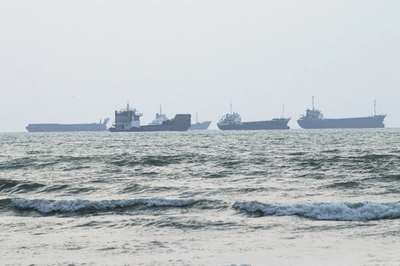
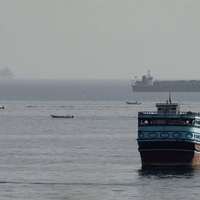
Washington said the network covertly blended Iranian and Iraqi oil through ship-to-ship transfers in the Persian Gulf and in Iraqi ports, marketing it as solely Iraqi in origin.
The Treasury estimated the operation generated about $300 million annually for both Iran and al-Samarra’i.
It accused the group of using shell companies in the Marshall Islands to obscure ownership of vessels and employing tactics such as night transfers and location spoofing to hide activity.
“Iraq cannot become a safe haven for terrorists, which is why the United States is working to counter Iran’s influence in the country,” Treasury Secretary Scott Bessent said in a statement.
“By targeting Iran’s oil revenue stream, Treasury will further degrade the regime’s ability to carry out attacks against the United States and its allies.”
The measures follow sanctions announced in July against another network accused of blending Iranian and Iraqi oil.
For two consecutive years, Chinese records show imports of “Iraqi” oil exceeding Iraq’s declared shipments by around 100,000 barrels per day—worth more than $2.5 billion annually.
The gap has grown since 2021, suggesting a persistent pattern of disguised flows, according to experts.
Iraq’s oil minister Hayyan Abdul-Ghani acknowledged earlier this year that Iranian tankers were using forged Iraqi documents and said the matter had been reported to the United States.
Iran is passing off its crude oil as Iraqi exports to evade US sanctions, according to new evidence that contradicts Baghdad’s denials.
Iraq’s national oil marketer, SOMO, rejected any involvement when the United States sanctioned an Iraqi businessman in July for allegedly profiting from smuggling Iranian oil disguised as Iraqi crude.
But customs data from China appears to point to a different reality.
For two consecutive years, Chinese records show imports of “Iraqi” oil exceeding Iraq’s declared shipments by around 100,000 barrels per day—worth more than $2.5 billion annually.
The gap has grown since 2021, suggesting a persistent pattern of disguised flows.
Spoofing, going dark
Tanker-tracking companies confirm that Iran uses a mix of tactics to conceal the true origin of its shipments. These include forged bills of lading and manipulation of AIS (automatic identification system) data, which allow vessels to broadcast false positions.
Some tankers simulate loading near Oman’s Sohar port, though the crude is actually taken on in Iranian waters. Similar tricks have enabled Iranian oil to reach China under the cover of Iraqi or Omani documentation.
“Iranian oil does reach China as ‘Iraqi’ oil in large volumes given the bogus SOMO documentation, but we’ve also seen the same with ‘Omani’ oil because of the spoofing off Sohar,” said TankerTrackers, a shipping intelligence company.
Kpler, another data firm, said very large crude carriers often “go dark” and later reappear, but rarely spoof Iraqi terminals directly.
For fuel oil, however, some spoofing to Iraq’s Al Basrah terminal has been observed—though only in small amounts.
Kpler estimates Iran exported about 245,000 barrels per day of fuel oil in 2024, worth nearly $6 billion. Almost half went to the United Arab Emirates, 22% to China, 10% to Malaysia and the rest to other East Asian states.
“Iran uses a number of tactics to evade sanctions, including forged bills of lading, which may lead many to believe they are transporting Iraqi oil when in fact it is Iranian,” Claire Jungman of Vortexa said.
Shifting political cost
These tactics keep Iran’s exports flowing, but they also export the political fallout.
By disguising shipments as Iraqi, Omani or Emirati, Tehran forces its neighbors to carry the political and reputational burden in Washington.
Iraq’s oil minister Hayyan Abdul-Ghani acknowledged earlier this year that Iranian tankers were using forged Iraqi documents and said the matter had been reported to the United States.
Meanwhile, nearly half of Iran’s exports to China are presented as Malaysian oil—an anomaly that has drawn US scrutiny of Kuala Lumpur.
In the first seven months of this year, Chinese customs data showed imports of 1.46 million barrels per day from Malaysia, even though Malaysia’s total production is only about one-third of that figure.
Enforcement challenge
The pattern highlights the difficulty the US and its allies face in enforcing sanctions.
Iran has developed a sophisticated playbook: falsifying documents, manipulating digital tracking systems and exploiting the names of neighboring states. Each maneuver allows Tehran to keep revenues flowing while leaving others to explain statistical discrepancies.
For Iraq, the reputational stakes are particularly high.
As Baghdad seeks deeper ties with Washington and international investors, being seen as a potential cover for Iranian smuggling undermines confidence in the transparency of its oil sector.
By exploiting its neighbors’ identities, Iran is eroding trust in the global energy system, where documentation and digital tracking are supposed to guarantee legitimacy.