Fungal toxins mar Iranian pistachio exports as EU rejections mount
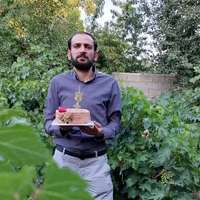
Iranian pistachios contaminated with aflatoxin
Iran’s pistachio industry, long a source of pride and badly needed revenue, is grappling with an export crisis after the European Union rejected over two dozen shipments over the presence of fungal toxins.
The rejections over unacceptably high aflatoxin levels sparked concerns over the future of Iran’s pistachio exports not only to Europe but also to other global markets.
The setback highlights systemic challenges within Iran's agricultural export policies including official negligence, poor quality controls and the entrance into the market by non-traditional players like the cash-strapped auto industry.
Early warnings ignored
In 2022, the EU announced stricter standards for aflatoxin levels in imported pistachios from Iran. However, Iranian officials failed to adequately address these warnings, in a delay that has proven costly.
Of the approximately 7,500 tons of pistachios Iran exports annually to the EU, 26 shipments were ultimately rejected.
“The main point is why have contamination levels increased over the past two years despite EU warnings and government follow-ups,” said Deputy Minister of Agriculture for Horticulture Affairs Mohammad Mehdi Boromandi.
“This issue should have been resolved six months ago instead of looking for solutions now,” said Abdollah Mohajer Darabi, a board member of the Iranian Chamber of Commerce earlier this month, criticizing the government’s reactive approach.
Quality decline and market disruption
Beyond aflatoxin concerns, Iranian pistachio exports have been disrupted by non-traditional players entering the market. Automotive companies, struggling to secure foreign currency for importing parts, have turned to pistachio exports to finance their operations.
These companies lack expertise in the pistachio trade, according to officials.
“They export the worst and lowest-quality pistachios, losing global markets and tarnishing the reputation of Iranian pistachios,” says Mohammad Ali Mohammad Mirzaian, head of the Export Development Commission of the Kerman Chamber of Commerce.
“Before the New Year, pistachios sold for $7,200 per ton in China. When automotive companies entered the market, they sold at about 5% below market value,” Mirzaian added.
Iranian pistachios at a processing facility
Mohammad Salehi, chairman of the Pistachio Association of Iran said the supply disruption caused exports to China to plummet from 200,000 tons last year to less than 20,000 tons this year.
External challenges
Compounding these issues are logistical challenges and energy shortages within Iran. In September 2024, widespread power outages in Kerman province, a major pistachio-producing region, led to significant crop losses.
20% to 40% of the province’s pistachio crop came in hollow due to power cuts, according to Hamidreza Torabi, chairman of the Agricultural Commission of the Kerman Chamber of Commerce.
Additionally, Ahmad Heydari, director of Agricultural Jihad in Rafsanjan, reported the destruction of 7,200 tons of pistachios in the city due to repeated power outages.
Missed opportunities
Efforts to address EU concerns were further stymied by a lack of cooperation. Iranian officials extended invitations for EU representatives to visit production facilities, but these were declined. Similarly, Iranian representatives were not granted permits to travel to Europe for discussions.
“The government’s misguided policies regarding exports and the involvement of non-specialists have pushed real exporters out of the market,” Boromandi said. He also warned that without changes, Iranian pistachios may disappear from global markets entirely within two years.
The stakes are high for Iran, which exports tens of thousands of tons of pistachios annually, making the crop a critical part of its non-oil export economy.
“Iran must align its pistachio export policies with international standards to ensure competitiveness,” Boromandi added.
Whether these measures can reverse the damage remains to be seen, but without significant reforms, the future of Iranian pistachios in global markets hangs in the balance.
The Iran hawks chosen by president-elect Donald Trump mark a major shift in US-Iran policy, signaling early steps toward change in Iran, a Middle East expert and former British Army officer told the Eye for Iran podcast.
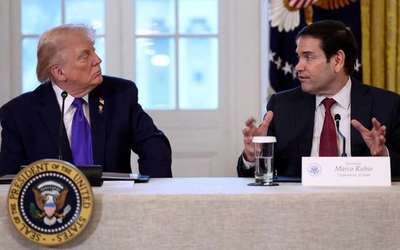
Major (ret) Andrew Fox, who completed tours in Afghanistan, including one attached to the US Army Special Forces, said the likes of Marco Rubio as Secretary of State spell trouble for Tehran but the road to regime change is not in the cards - at least for now.
“Regime change is exceptionally challenging because if you knock off a regime, then you create a vortex. And so, you must have something there to fill that vortex that is consistent and compelling because otherwise you end up spending 20 years there and for example, replacing the Taliban with the Taliban,” said Fox.
Fox acknowledged the strong anti-Islamic Republic sentiments both within Iran and abroad, as well as public calls for "regime change." However, he cautioned that this does not indicate a solid plan exists or that such change is feasible in the near term.
“I'm just sad that it's fairly pessimistic when it comes to Iran. I hope that there is a resolution to this in due course. And that's what I'll be hoping for the next four years under the new president,” added Fox.
Imposing extensive economic sanctions and increasing diplomatic isolation on Iran—steps that Fox and many Iran watchers view as Trump’s top priority—could significantly weaken the Islamic Republic.
Combined with Israel's near-elimination of Iran’s proxy deterrence, this suggests that Tehran is rapidly running out of options.
Depending on how Iran engages with the new US administration, it’s possible they may accelerate their push for nuclear power status as a strategy to regain the deterrence they have lost.
A weak Islamic Republic is the first step in a long process of "regime change," Fox told Eye for Iran. It’s all about ‘baby steps’, he added.
In a recent interview with Podcaster Patrick Bet David, Trump was asked about the possibility of supporting political change in Iran. "We can't get totally involved in all that," Trump said. The interview was conducted just weeks before he was elected president of the United States.
The priority of the new administration is on limiting Iran’s aggression in the region and preventing it from becoming a nuclear power.
Iran will be faced with a decision: deal with the United States or double down, Fox argued.
He referred to the concept of the so-called "Big Satan" (Iran's term for the US) and "Little Satan" (a derogatory term used by the Islamic Republic for Israel), suggesting that any talks would be unproductive and unlikely to progress meaningfully.
In 2019, Trump tasked then-Japanese Prime Minister Shinzo Abe to mediate talks in a trip to Iran that turned into a failed mediation effort. He was the first Japanese leader to visit Iran in four decades, but it ended in a rebuff when Supreme Leader Ali Khamenei told Abe, "No negotiations with Trump."
“I don't think we're at a point yet where we can articulate a clear pathway to Iran finding its way back to where it was in decades gone before. But what we must do is make sure that Iran can't destabilize outside its borders and then we can turn our attentions to a very long road to fixing what's going wrong inside its borders,” said Fox.
Talking may be in the books, but it might not lead anywhere, he emphasized.
That was evidenced by Elon Musk, a close advisor to President-elect, meeting recently with Iran's ambassador to the UN, Amir Saeid Iravani.
There has been a lot of backlash from the Iranian diaspora and confusion on the apparent Musk-Iran meeting. The goal might have been to test if there is a chance for Iran to back down and the administration to bring calm to the region.
Alex Vatanka, the founding Director of the Iran Program at the Middle East Institute, told Iran International in a previous interviewthat Trump’s refusal to appoint former Ambassador Nikki Haley, or former Secretary of State Mike Pompeo, may be due to his desire not to go to war.
So far, figures like Marco Rubio, Elise Stefanik, Pete Hegseth, and Mike Waltz have all aligned with the "America First" agenda, prioritizing domestic policy over international involvement—a stark contrast to neo-conservatives like Haley and Pompeo.
Fox sees an exception to that golden rule.
To him, America First is “America First except when it comes to Israel,” he said and added that the upcoming Trump Administration is the most pro-Israel administration in history.
“Mike Huckabee is to be the ambassador. He's a guy that said that Palestine doesn't exist. That's not helpful for a long-term peace process.” added Fox.
If Iran continues to strike Israel, the Americans will get involved in some sort of confrontation with Iran to protect Israel.
But again – "the goal would not be regime change" – but to scale back Iran’s aggression in such a matter.
Much of what will unfold, despite what the US has in the works, will depend on how Iran acts.
"If you make the regime poorer, this is going to be the first baby steps in some kind of regime change further down the line," said Fox.
French celebrity philosopher Bernard-Henri Lévy speaks to Iran International
Donald Trump's presidency could either bring Iran's rulers toward a grand bargain with the United States or a collapse rivaling that of Nazi Germany, French celebrity philosopher Bernard-Henri Lévy told Iran International.
"The creed of Trump, his ideology, is deals, making a deal, the art of a deal - the title of his book. You never know if he won't have the temptation to make a deal with Iran, with the regime - he's such a lover of deals," the public intellectual said in a TV interview.
"He thinks so much that the best way to deal with grand history is to make deals that we could have a big surprise - Israel could have a big surprise."
Trump said on election day this month that he wishes Iran no harm but that Tehran cannot have nuclear weapons.
“My terms are very easy ... (Iran) can't have nuclear weapons," Trump said. "I’d like them to be a very successful country,” he added, but declined to detail specific plans for US-Iran relations.
Trump has repeatedly expressed his desire to resolve US enmity with Iran through diplomacy and in a pre-election interview appeared to rule out seeking regime change there, saying: “We can't get totally involved in all that. We can't run ourselves".
But Trump in his first term withdrew the United States from an international deal over Iran's nuclear program, saying the Barack Obama-era agreement allowed Iran to shore up its finances and step up aid to armed allies in the Mideast.
His order to assassinate top Iranian general Qassem Soleimani in a drone strike in 2020 earned him the lasting ire of Iran's rulers, who according to US law enforcement have been seeking to assassinate Trump and key aides in retaliation.
If Israeli Prime Minister Benjamin Netanyahu can weather domestic political struggles, Lévy said, it is also possible Israel and a Hawkish new Trump administration could join forces and take down Iran's Islamic system.
"You may have a coalition helping not only to defeat Hezbollah and Hamas, but to liberate Iran," he said, referring to Iran-backed Lebanese and Palestinian armed groups.
"At the end of the day, the real stake, the real aim or target is the liberation of Iran. When Iran is free, it is like when Germany was free in 1945 - it was a moment of deliverance," he added.
Lévy said Iranian civil society opposed to its rulers was part of a "global West" along with Taiwan, Israel and human rights defenders in Turkey: "the West is a category of the spirit and Iranian civil society is one of the core parts of this world."
Those domestic forces for change had already made progress toward unseating Iran's theocracy, he added, despite repression and imprisonment.
"Nobody can doubt that the boiling forces of dignity, of spirit, of youth, of civilization are there and that they are already prevailing," he said, addressing Iranian civil society.
"Most of the road you already covered under the veil, alas, sometimes under the boot, under the roof of jails, under the roof of the rooms of torture. But you made it with an incredible bravery."
The US special envoy to Iran and international rights groups blamed Iranian authorities on Friday for the suicide of Iranian journalist and activist Kianoosh Sanjari, who faced repeated arrests and underwent years of abuse in custody.
Sanjari had posted on social media that he would take his own life if four prisoners—Fatemeh Sepehri, Nasreen Shakrami, Toomaj Salehi, and Arsham Rezaei—were not freed by 7pm local time on Wednesday.
Hours later, his death was confirmed by Iranian activists.
US special envoy to Iran Abram Paley described Sanjari’s death as a “tragic example of the regime’s repression,” citing his mistreatment at the hand of authorities.
“The regime repeatedly arrested and tortured Kianoosh for his work as a journalist,” Paley said in a post on X, adding, “We echo his call for the release of all political prisoners in Iran.”
Sanjari was imprisoned multiple times by Iranian authorities between 1999 and 2007, enduring solitary confinement and psychological abuse, including so-called white torture, or prolonged sensory deprivation.
After fleeing to Norway in 2007 with Amnesty International's help, he worked with human rights organizations and later became a journalist for Voice of America in Washington.
In 2016, Sanjari returned to Iran, where he was arrested again and sentenced to 11 years in prison. During this time, he suffered forced psychiatric hospitalization, electric shock treatments, and physical restraints, recounting how he was once injected with a substance that “locked [his] jaw” and left him chained to his bed.
Sanjari's death has drawn rebukes from international human rights organizations, each emphasizing the broader repression faced by journalists and activists in Iran.
Reporters Without Borders (RSF)underscored the severe toll that years of state harassment took on Sanjari’s health. Jonathan Dagher, head of RSF’s Middle East desk, called Sanjari’s death “a tragedy that could have been avoided” and remembered him as “a dedicated journalist and a courageous human rights defender.”
In a statement on Friday, RSF demanded an “independent investigation into his death” and held Iranian authorities responsible for the pressures imposed on journalists, adding that this repression ultimately contributed to Sanjari’s death. RSF said that Iran is among the world’s most hostile countries for journalists, with 25 currently imprisoned and others facing constant threats of detention or violence.
Index on Censorship also expressed sorrow, describing Sanjari’s death as a profound loss and highlighting his commitment to human rights. “We are deeply saddened to learn that Iranian activist Kianoosh Sanjari has taken his own life in protest against the Iran regime and its unjust persecution of political prisoners,” the organization said in a post on X Friday, offering condolences to his family and friends.
Sanjari’s case has once again highlighted the risks faced by journalists and activists in Iran, where authorities continue to crack down on dissent.
Earlier on Friday, Iran’s security forces blocked access to Section 250 of Tehran’s Behesht-e Zahra Cemetery, preventing mourners from attending Sanjari’s burial, according to information obtained by Iran International.
Those attempting alternative routes were also turned away by security forces. At least two individuals, including activist Hossein Ronaghi and PhD student Milad Kakavand, were briefly detained as they tried to attend the burial.
IAEA Director General Rafael Grossi pictured with Behrouz Kamalvandi, spokesperson for the Atomic Energy Organization, and Kazem Gharibabadi, Deputy Foreign Minister, at the Natanz nuclear site in Iran, 15 Nov 2024.
UN nuclear chief Rafael Grossi toured two of Iran’s key nuclear sites on Friday as Iran signaled readiness to restart negotiations over its disputed program in an effort to ease sanctions.
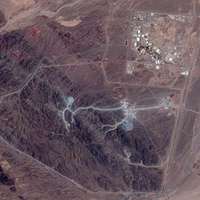
The Fordow site, located about 100 km south of Tehran, has been a focal point of tension due to its uranium enrichment activities. In February last year, inspectors discovered uranium particles enriched to 83.7% at the underground facility.
Iran said it started enriching uranium to 60% at Fordow two years ago, building on similar enrichment at the other site visited by Grossi, Natanz. This level, close to weapons-grade 90%, represented a significant escalation in its nuclear program.
Grossi’s trip to Tehran included meetings with key officials, including President Masoud Pezeshkian and Foreign Minister Abbas Araghchi.
President Pezeshkian signaled Iran’s willingness to cooperate with the IAEA to clarify ambiguities regarding its nuclear activities and again asserted the peaceful intentions of the program.
Meanwhile, Mohammad Eslami, head of Iran’s Atomic Energy Organization, warned that any resolution by the IAEA’s Board of Governors criticizing Iran’s nuclear program would prompt immediate retaliatory actions.
“We will not allow pressure to dictate the course of our peaceful nuclear activities,” Eslami said during a joint press conference with Grossi.
The IAEA’s Board of Governors is set to meet next week, and European powers are advocating for a resolution to increase scrutiny of Iran’s nuclear program and press Tehran to return to negotiations.
Simultaneously, the geopolitical landscape remains tense. Israeli strikes last month destroyed a nuclear weapons research facility in the Parchin military complex near Tehran, according to a report by Axios.
European powers, seeking to curb Iran’s nuclear advancements, are pushing for a comprehensive IAEA report detailing problem areas, including the discovery of unexplained uranium traces at undeclared sites.
Iranian state media, IRNA, emphasized the positive atmosphere during Grossi's visit, saying: "In Tehran, Grossi was met with goodwill from Iranian officials, who conveyed a message of readiness to negotiate and revive the path of constructive engagement."
This shift in tone is particularly striking given that just a year ago, Iran barred nearly one-third of the IAEA's monitoring team, a move Grossi described at the time as a severe impediment to oversight.
Tehran labeled the excluded inspectors as "extremists," further heightening tensions between Iran and the international community over its nuclear activities.
But, while Iran signals a willingness to cooperate, Washington remains wary.
“What we want to see from Iran is actual behavior change and action, not just signs of something or indications of something,” said Vedant Patel, Principal Deputy Spokesperson, adding that all options are on the table to prevent Iran from developing a nuclear weapon.
Iran’s diplomatic moves, including Grossi’s visit, appear aimed at de-escalating tensions ahead of the return of US President-elect Donald Trump, who is expected to adopt a hardline stance on Iran’s nuclear program.
The IAEA meeting next week may prove critical to gauge the direction of Iran’s nuclear program and any way forward for renewed negotiations.
People walk near a damaged site after what the Syrian state news agency said was an Israeli strike in the Damascus suburb of Mazzeh, Syria November 14, 2024.
Israeli airstrikes targeted the Mazzeh suburb of Damascus on Friday, intensifying an air campaign against Iran-linked targets in Syria.
Explosions which Syrian state news agency SANA said were Israeli airstrikes hit the Mazzeh area for the second day in a row and appeared to target personnel from Hezbollah and Iran's Revolutionary Guards, as well as leaders from Palestinian groups like Hamas and Islamic Jihad.
While the specific targets of Friday’s strikes remain unclear, they follow a pattern of escalating action against Iran and its allies.
On Thursday, similar strikes in Mazzeh and nearby Qudsaya claimed fifteen lives, targeting military sites and Islamic Jihad’s headquarters.
The airstrikes occurred shortly before Ali Larijani, a senior adviser to Iran’s Supreme Leader Ali Khamenei, was scheduled to meet with Palestinian representatives at the Iranian Embassy in Mazzeh.
The escalation in Syria reflects a broader regional dynamic. On Tuesday, the United States conducted successive airstrikes on Iranian-backed militia facilities in eastern Syria in retaliation for attacks on US personnel.
These strikes, combined with the Pentagon’s deployment of additional air and naval assets to the region, indicate increasing US involvement in countering Iranian allies.
Simultaneously, Israeli forces expanded their operations beyond Damascus, targeting strategic infrastructure along the Syrian-Lebanese border. A bridge near Qusayr in Homs was destroyed to disrupt weapons transfers to Hezbollah, further intensifying pressure on Iranian-aligned groups.
While Israel has long carried out airstrikes on Iran-linked targets in Syria, the frequency and intensity of these operations have grown significantly since the October 7 attack by the Palestinian group Hamas last year, which triggered the Gaza war.