Rescue team members at the scene of the helicopter crash carrying Iran's President Ebrahim Raisi, in Varzaqan, East Azerbaijan Province, Iran
Intense disputes continue as Iranian and Turkish officials debate which nation located President Ebrahim Raisi’s helicopter wreckage, with the Turkish Minister being the latest to weigh in on the issue.
Abdulkadir Uraloglu, Minister of Transport and Infrastructure, told CNN Turk TV that the Turkish drone Akinci found the wreckage, as the time and place of the Iranian-announced discovery corresponds to when and where the drone located it.
A helicopter carrying President Ebrahim Raisi and seven others, including foreign minister Hossein Amir-Abdollahian crashed near the border with Azerbaijan on Sunday, killing everyone on board.
Uraloglu said Iranian authorities contacted them for help but did not initially mention that the issue concerned Raisi. The Turkish official said they “successfully did what was asked of” them. “As neighbors, we rushed to help the country that requested assistance, and we did so completely and correctly.”
On Wednesday, the General Staff of Iran's Armed Forces played down the significance of the Turkish drone's involvement in locating the crash site, emphasizing the effectiveness of its drones instead as the issue became one of humiliation for the regime, currently blamed for a delayed and ineffective response to the crash of its president.
Iran's military stated that despite Turkey deploying a drone with advanced technology, adverse weather conditions hindered its effectiveness in locating the crash site.
Iran's own advanced drones were inaccessible in the Indian Ocean at the time but were recalled and ultimately located the crash site where the bodies of the president, foreign minister and other officials were recovered, the Iranian military statement said.
Earlier this week, Turkish President Recep Tayyip Erdogan also emphasized that the Akinci drone was dispatched at the Iranian government's behest. Erdogan highlighted the drone's resilience in adverse weather and detailed its extensive search efforts, which covered 2,100 kilometers over seven and a half hours.
Reports from Turkish media stated that following the Turkish drone's identification of the helicopter wreckage and heat signatures indicative of the crash site in Iran’s East Azerbaijan Province, Iranian search teams successfully located the downed helicopter and the bodies of Raisi and others in the mountainous area.
Turkish Anadolu news agency also broadcasted a live operation of the Turkish drone which was watched by over 2.5 million people tracking the operational data and flight path live. As it returned to the base, Akinci drew a crescent and a star in the shape of Turkey's flag.
Despite data from the Turkish drone corroborated by some Iranian news outlets, Pir Hossein Kolivand, head of the Iranian Red Crescent Society, dismissed claims of foreign assistance as mere speculation. Kolivand emphasized the Iranian team's perseverance through challenging conditions, asserting that their drone led them to the exact crash site within 40 minutes of locating the wreckage at an altitude of 2,500 meters.
In a sign of potentially souring relations as a result of the Iranian snub, Turkish media reported on Wednesday that President Erdogan would travel to Iran on Thursday for Raisi’s funeral. However, the Turkish government’s Directorate of Communications Center for Countering Disinformation dismissed these reports, stating that Erdogan has no plans to visit Iran in the near future.
Both Iran and Turkey have a large drone arsenal, a major export for both nations. Iran has been accused by Western powers of providing drones to Russia for its war in Ukraine.
As of mid-2022, Iran has supplied Russia with a substantial number of kamikaze Unmanned Aerial Vehicles (UAVs), which are being used to target civilian infrastructure and cities. Also, drones have been incorporated into large-scale missile attacks, overwhelming Ukrainian air defenses. Turkish drones have also been used by Azerbaijan in the years-long conflict against Armenia, in addition to Ankara’s NATO allies in Europe, Arab countries in the Gulf and North Africa, and sub-Saharan African countries.
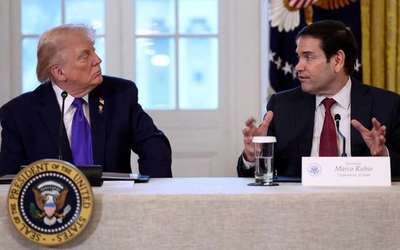
US President Joe Biden, flanked by Secretary of State Antony Blinken and Secretary of Defense Lloyd Austin, makes a statement to the news media ahead of a cabinet meeting at the White House in Washington, October 2, 2023.
The death of Iranian President Ebrahim Raisi on May 19 presented a moment of moral clarity for President Joe Biden, and he failed this test.
This incident has brought to light the profoundly insensitive reactions from Western leaders, particularly the United States. The Biden administration's rush toexpress condolences for the death of Raisi—an individual known as the "Butcher of Tehran" for his role in the mass execution of over 4,000 political prisoners in the 1980s—was deeply traumatic and insulting to Iranians.
In a surprising and unprecedented move, the US State Department issuedan official statement expressing condolences for the deaths of Raisi, Foreign Minister Amir-Abdollahian, and other members of their delegation in a helicopter crash in northwest Iran. At the United Nations, US Deputy Ambassador Robert Wood was seenstandingduring a moment of silence held for Raisi, further adding to the distress.
National Security Council spokesperson John Kirby attempted to justify the administration’s response, describing it as a "typical practice" following the death of a world leader. This defense, however, prompts a critical question: Would the United States feel obliged to offer similar condolences for the deaths of notorious figures like Bashar al-Assad or Vladimir Putin? In the past, the U.S. has refrained from such gestures towards leaders like Saddam Hussein, Muammar Gaddafi, or even Hugo Chavez, who were also responsible for egregious human rights violations.
Even in a similar case concerning Iran, when Ruhollah Khomeini, the leader of the Islamic Revolution, passed away, the White House did not directly offer condolences. Instead, it expressed hope that "With his passing, Iran would now move toward assuming a responsible role in the international community."
Upon the death of Kim Jong Il in 2011, the White House did not offer condolences but reaffirmed its "commitment to stability on the Korean peninsula, and to the freedom and security of our allies." While there are instances where the US did offer condolences, such as in the case of Hafez Assad in 2000, the practice of offering condolences is selective and far from typical. The response largely depends on the complexity of the relationship and the diplomatic agenda of the US. However, the issue with Iran is even more complicated. Unlike other cases, there is no formal relationship between the two countries, and more importantly, the Islamic Republic considers America the great Satan, actively chants "Death to America," and threatens American interests.
Perhaps a more significant difference is that at the time of Raisi's death, there has been an active democracy-seeking movement in Iran for at least six years, and an ongoing conflict between the Iranian people and the regime, which was not the case in other scenarios. Therefore, this inconsistency and selective sympathy reveal a troubling moral lapse, an inability to clearly distinguish between good and evil, and a strategy of appeasement designed to curry favor with the Iranian regime for future diplomatic negotiations. The recentmeeting of American officials with the regime in Oman only adds to these suspicions.
Even more shocking was the prayer offered by Senate Chaplain Barry Black for "the people of Iran who are mourning the death of Raisi," implying that the Iranian public grieves for a leader who spent 40 years issuing death sentences and suppressing dissent. This comes after videos circulating on social media showed Iranians bravely celebrating with fireworks, passing out sweets, and sharing pictures of themselves toasting drinks or dancing. In response to the wave of celebrations, Mohammad Movahedi Azad, the regime’s Attorney General,issued a directive threatening social media users with "swift, effective, and deterrent action."
Such messages are not only tone-deaf but also demonstrate a profound ignorance of the political realities in Iran and the aspirations of its people. The Biden administration’s reaction represents a severe moral backslide compared to that of his peers in the Democratic Party. When Pol Pot, the leader of the Khmer Rouge, died, President Bill Clinton not only refrained from expressing condolences but also used the occasion to call for justice for the victims and accountability for his accomplices.
For the past six years, Iranians have repeatedly taken to the streets, most notably in November 2019, which led to the deaths of 1,500 protesters, and during the nationwide uprising of 2022 known as the Woman, Life, Freedom movement, crying for freedom. Brave Iranian women have challenged a regime that has even worn-down great powers. The memory of Nika Shakarami, a 16-year-old protester who fought for her life, or Majidreza Rahnavard, who was hanged from a crane, should have reminded Western leaders to honor these struggles rather than sympathize with their oppressors.
This episode is especially demoralizing for President Biden, who rhetorically promised to bring human rights back to the forefront of US foreign policy and to restore America's global leadership. Instead, his administration's actions have further traumatized the oppressed Iranian society. The Biden administration’s response to Raisi's death reflects a profound moral failure and a disregard for the suffering of the Iranian people. The West must recognize the aspirations of those fighting for freedom and refrain from actions that inadvertently legitimize their oppressors.
King of Bahrain, Hamad bin Isa Al Khalifa attends a sign docs ceremony during his meeting with Russian President Vladimir Putin at the Kremlin in Moscow, Russia, 23 May 2024.
Bahrain's king has expressed a tentative willingness to resume diplomatic ties with Iran despite historical tensions and accusations against Tehran for inciting unrest within Bahrain’s Shi'ite majority.
The revelations were made during a dialogue with Russian President Vladimir Putin, King Hamad bin Isa Al Khalifa opening the door to ties in the wake of both United Arab Emirates and Saudi's thawing tensions.
Tiny but geopolitically significant Bahrain, hosting the US Navy's Fifth Fleet, has repeatedly accused Iran of destabilizing efforts by fueling dissent among its Shi'ite population against the ruling Sunni monarchy. The 2011 protests, a part of the broader Arab Spring movement, were suppressed by the government, with Iran being partly blamed for the upheaval—a charge Iran has consistently denied.
The kingdom has a long-standing alignment with US and UK interests, notably highlighted by its sole Persian Gulf state endorsement of the strikes against the Iran-aligned Houthis in Yemen following their Red Sea confrontations earlier this year.
The recent thaw in relations was marked by an Iranian parliamentary delegation's visit to Bahrain last year for the International Inter-Parliamentary Union Assembly, the first official Iranian presence in Bahrain in seven years after Manama’s severance of ties with Tehran in 2015, closely mirroring Saudi Arabia’s diplomatic break-off.
The tentative diplomatic rapprochement comes on the heels of a landmark agreement between Iran and Saudi Arabia, brokered by China last year, which ended a seven-year standoff by agreeing to reopen embassies and diplomatic missions.
In the previous year, ties had also mended between Iran and the United Arab Emirates, known as the region's 'little Sparta' for the power it wields relative to its size.
Iranian President Ebrahim Raisi speaks during a meeting with Azerbaijan's President Ilham Aliyev on the Azerbaijan-Iran border, May 19, 2024. Iran's Presidency/WANA (West Asia News Agency)
Turkish astrologer İlayda Aşkın's prediction of the helicopter crash that killed Iranian President Ebrahim Raisi has sparked a social media sensation.
Aşkın, known for her accurate forecasts including plane crashes and political outcomes, had foretold major upheavals for Iran, pinpointing the exact date of the late President's death as a significant date.
On April 13, 2024, just over a month before the incident, Aşkın tweeted, "The curtain will open for Iran after April 29, especially around May 19. The real agenda is then."
This prediction turned prophetic when President Raisi and his Foreign Minister, Hossein Amir-Abdollahian, died in a helicopter crash exactly on the day of the predicted upheaval, May 19.
The accuracy of her prediction, particularly the specificity of the dates involved, has fueled intense discussion and further propelled Aşkın's reputation as a seer amidst her followers and skeptics alike. Her previous predictions, which have included the outcomes of the 2023 Presidential elections in Turkey, added layers of credibility to her recent forecasts.
Mourners attend a funeral for victims of the helicopter crash that killed Iran's President Ebrahim Raisi, Foreign Minister Hossein Amirabdollahian and others, in Tehran, Iran, May 22, 2024.
Khamenei's biggest challenge is winning the nation's trust. Nearly nine out of ten social media comments about former President Ebrahim Raisi's death blame Khamenei or his political system for the loss.
This presents a dual challenge for Khamenei: first, regaining the trust of the general public, and second, reassuring political players, including his obedient supporters, that he values their well-being and contributions. His comments about Raisi were notably unappreciative, clearly stating that his absence would not change anything.
President Raisi’s death in a helicopter crash brought the Islamic Republic’s weaknesses to the fore. Hours after the incident, the government could not locate the crash site. Khamenei's government also seemed to lack a news dissemination and gatekeeping mechanism in place. The chaos in news dissemination about he helicopter crash alerted even regime insiders. Former presidential adviser and top security and intelligence expert Hesamoddin Ashna begged the core of the regime to conduct a serious investigation and not to rule out any possibility.
Hardline conservative member of the Iranian parliament, Mostafa Mirsalimsaid Raisi's loss was a catastrophe for the regime and called on Acting President Mohammad Mokhber to investigate all the flaws in the system that led to Raisi's death.
In the days after the incident, the only response by the government has been to bar the media from analyzing the possible reasons and scenarios that contributed to the death of the country's president, foreign minister and several other officials.
The next challenge is security. Even while the nation awaited news about the former President's fate, a gunman in Tehran killed three police officers, including two colonels. The IRGC's Telegram channel downplayed the incident, describing the gunman as "an evil man" and incorrectly stating that only one officer was a captain and the other two were non-commissioned officers. However, social media users pointed out, based on photos, that two of the victims were indeed colonels.
Another indication of security concerns was the widespread rumor in Tehran that Police Chief General Radan had been assassinated. A pro-government social media activist and former state TV producer urged the government to inform the public about the police chief's whereabouts and safety to restore a sense of security and reassurance.
Nothing has been done after three days.
Meanwhile, tight security measures around Khamenei during the funeral ceremony for Raisi was eye-catching. Many pointed that out on social mediaas bodyguards separated him even from the first row of Iranian dignitaries who are usually trusted insiders.
A more existential challenge facing Khamenei is the uncertainty that will most certainly lead to more economic problems for the people and the government. The issue of succession is one of the biggest reasons for the general uncertainty about what the future will bring. In the absence of a mechanism like choosing a crown prince in monarchies, no one can be sure that the succession will be smooth.
The suspicious death of Khomeini’s son, who was a serious contender to succeed the Islamic Republic's first supreme leader, clearly indicates that after the leader is dead there is no guarantee that his son would be taken care of by those who were loyal to him before his demise.
Meanwhile, in the short run, the June presidential election poses a threat to the coherence of the system, if not its strength. There are dozens of contestants who are uncertain of Khamenei's true support, with most believing he already knows who will succeed Raisi. Pundits suggest that the public is unlikely to welcome the election for this very reason.
Nonetheless, the rivalry among the contestants is already so fierce that it frightens the nation. Some hardliners accuse one of the most likely contenders, Mehrdad Bazrpash, of possibly being involved in a conspiracy to eliminate Raisi. Others, such as former President Ahmadinejad and former Majles Speaker Larijani, who have previously been disqualified, are almost certain that Khamenei is unlikely to forgive their past mistakes—Ahmadinejad for not being sufficiently obedient and Larijani for allegedly conspiring with Rouhani to share power in a post-Khamenei government.
Iran's late foreign minister Hossein Amir-Abdollahian speaks with chief nuclear negotiator Ali Bagheri Kani in Tehran, 23 June 2022 (Reuters/Majid Asgaripour/WANA)
Secret negotiations between Iran and the United States have been disrupted by the unexpected death of Iranian President Ebrahim Raisi.
Sources revealed to Middle East Eye, that the talks, held in Oman, where crucial discussions previously paved the way for the 2015 nuclear agreement, faced a sudden halt following the helicopter crash on Sunday that claimed the lives of several top Iranian officials.
Brett McGurk, President Joe Biden's senior Middle East adviser, and Ali Bagheri Kani, Iran’s lead negotiator, had been making progress in the first talks since January.
The discussions, which took place against a backdrop of escalating regional tensions, focused on several critical issues, including a mutual interest in altering the Israeli government, ending the Israeli military actions in Gaza, and preventing the conflict from spreading further in the Middle East. Analysts close to the Iranian regime suggested the talks might have also touched on a potential ceasefire between the US and Iran’s allies.
With the sudden leadership vacuum in Tehran, and with Iran poised to conduct presidential elections on June 28, the future of the high-stakes negotiations remains uncertain. The United States is also approaching its presidential elections in November, adding to the diplomatic standstill.
Sources also hinted that discussions might have extended to Iran's nuclear ambitions and the potential easing of oil sanctions, echoing elements of the previous nuclear deal, which the Trump administration abandoned in 2018. Despite a temporary agreement last year involving a prisoner exchange and the return of confiscated Iranian oil revenues, broader negotiations remain fraught with political challenges.