Some Iranian Officials Signal Their Fear Of Regime's Downfall

Statements by several Iranian officials lately show that despite often defiant rhetoric, they begin to fear that the Islamic Republic might be nearing its end.
Statements by several Iranian officials lately show that despite often defiant rhetoric, they begin to fear that the Islamic Republic might be nearing its end.
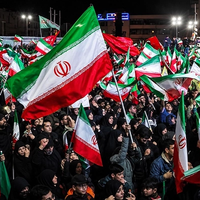
On Thursday, the escalation of unrest in Karaj, Tehran, Amol, Ghazvin, Esfahan and many other Iranian cities took the protests in Iran to a new height and intensity.
Zabihollah Khodaeian, the chairman of State Auditing Organization has said that "Enemies believe the Islamic Republic is finished." Like most other Iranian officials who have signalled their fear that the Islamic Republic's downfall might be near, Khodaeian blamed foreign governments for the uprising although he acknowledged that protests started after a young woman was murdered in mid-September while in police custody.
Although protests continue in tens of Iranian cities every day, Khodaeian claimed that only a handful of people take to the streets to voice their protest against the government. Meanwhile he called on the government to explain the events on social media platforms.
Ultra-conservative Lawmaker Mostafa Mirsalim also admitted that "Some Iranians do not believe in the Guardianship of Supreme Jurisconsult," or the concept of a Supreme Leader, which is the underlying principle of Khamenei's leadership of the Islamic Republic.
Chairman of Iran's Passive Defense Organization Gholamreza Jalali also blamed foreigners for what he called "A five-fold hybrid war" against Iran which he said will soon target the country's oil and energy sector, ANA news agency quoted him as saying. Jalali said that his organization has plans for emergency responses to these threats, as well as thinking of preventive measures.
Blaming the United States, Jalali said the level and scope of these threats are constantly changing. "Oil and energy sector are the first priority for our enemies. Last year's cyber-attack on our fuel distribution website was the first step in the enemy's hybrid war against Iran," Jalali said, adding that his organization is planning a cyber security course for the country's managers in a bid to prevent future cyber-attacks. He added that managers who lack Internet literacy should resign to minimize potential damage.
These attacks, he said, are meant to deal serious blows to the Islamic Republic. He added that cyber-attacks on the petrochemical plants can have far more dangerous implications.
Meanwhile, Gholamreza Soleimani, the commander of Basij militia, has claimed that the ongoing uprising is the outcome "the enemy's" attempt to slow down Iran's successes, however, he did not explain what those successes were. He added that "arrogant powers have always instigated seditions in Iran since a long time ago."
Vice President Amir-Hossein Ghazizadeh Hashemi also opined in interview with Didban Iran website that "The enemy, [a jargon coined by Supreme Leader Ali Khamenei to avoid naming the United States, Israel of Europe] has been working for several hundred years to wipe the Islamic civilization off the world."He said "the enemy's sedition" included bringing the new generation of Iranians into the scene of the struggle against the Islamic Republic.
The only Iranian political figure who did not blame foreigners for the uprising, was senior cleric Ayatollah Abdollah Javadi Amoli, who said in an interview with Shafaq news agency (Shafaqna) that "the inefficiency of some officials has prevented Iran's progress." Meanwhile, in a show of sympathy with the protesters Javadi Amoli said: "Feeding the people is not enough. They also want to live a life marked by dignity." He went further on to say that he respected the protesters "Life, Women, Freedom" slogan.