• العربية
  • فارسی
Brand
  • Iran Insight
  • Politics
  • Economy
  • Analysis
  • Special Report
  • Opinion
  • Podcast
  • Iran Insight
  • Politics
  • Economy
  • Analysis
  • Special Report
  • Opinion
  • Podcast
  • Theme
  • Language
    • العربية
    • فارسی
  • Iran Insight
  • Politics
  • Economy
  • Analysis
  • Special Report
  • Opinion
  • Podcast
All rights reserved for Volant Media UK Limited
volant media logo

Many Question Hardliners’ Sway In Iran Amid Rising Food Prices

Iran International Newsroom
May 5, 2022, 17:05 GMT+1Updated: 17:34 GMT+1
Supreme Leader Ali Khamenei and President Ebrahim Raisi after his election in 2021

Ten months after conservatives in Iran gained full control of the government, many are now complaining about lack of efficient governance amid economic crisis.

While the assumption behind the idea of creating a consolidated conservative government was to make it agile and efficient, even supporters of the government say a hardliner president and parliament have been unable to feed the people.

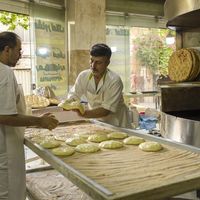
In recent weeks, prices of essential food items, such as cooking oil, flour and sugar have at least doubled.

According to moderate conservative Khabar Online, what was initially a dream, has become a challenge for the Islamic Republic. The heavy political cost of consolidation, wrote the website, fell on the shoulders of everyone including those who had designed the new system in which the main criterion for appointment of government officials is their loyalty to a single political group.

That group has one single trait and that is loyalty to the Supreme Leader Ali Khamenei.

The process started with facilitating a landslide victory for hardliners in the 2020 parliamentary elections and completed by doing the same in the 2021 presidential election, mainly by eliminating all the candidates that were not part of the hardliner conservative camp. Later in 2021, Khamenei appointed a well-known hardliner as Judiciary Chief, completing the handover of all power to loyal hardliners who soon got rid of anyone in the government who was not in their camp.

Ali Larijani, a leading moderate-conservative. May 2021
100%
Ali Larijani, a leading moderate-conservative was denied the chance to run for president in June 2021

The keyword throughout the entire process was "change." And what was to be changed was presumably the worsening economic situation. However, ten months later, government officials including the president still blame "those who created the current situation.”

However, few openly say that the economic crisis, reflected in rapidly increasing food prices, is to an extent the result of sanctions imposed by the United States that can only be lifted if Khamenei agrees to resolve Iran’s nuclear dispute with the West.

Analysts coming from various political factions, even those at the IRGC-linked Fars news agency were saying that "the root cause of the country's problems was corruption, coupled with plundering of national resources by a well-connected few." They also thought a consolidated government can put an end to all that by getting rid of political rivalries.

But rivalries did not end. Last week, Majles Speaker Mohammad Bagher Ghalibaf suggested that the controversy about his family's luxury shopping in Turkey was engineered by his political rivals with the assistance of some intelligence agencies. Later in the week, a letter signed by 233 out of the 290 lawmakers was sent to Khamenei expressing support for Ghalibaf. This week, several lawmakers complained that the letter was supposed to be containing a pledge of allegiance to Khamenei and that they were not told it was to express support for Ghalibaf.

Meanwhile, while Raisi had promised to form a non-factional cabinet, he chose nearly all his ministers from among the ultraconservative Paydari Party and the officials of former President Mahmoud Ahmadinejad's cabinet. The parliament also became divided into at least four factions of Paydari, Ahamdiejad's men, Ghalibaf's neo-con aides and traditional conservatives.

Former lawmaker Gholam Ali Jafarzadeh Imanabadi has said that the government has failed and now those who engineered the consolidated system should be held accountable. Some lawmakers includingMostafa Reza Hosseini Ghotbabadi have gone further and called on parliament to table a motion to unseat the President for incompetence. Ghotbabadi said that the Majles has been mulling the idea of Raisi's incompetency at least twice in recent months.


Most Viewed

Iran diplomacy wobbles as factions compete to avoid looking soft on US
1
INSIGHT

Iran diplomacy wobbles as factions compete to avoid looking soft on US

2
ANALYSIS

The politics of pink: how Iran uses cuteness to rebrand violence

3

Scam messages seek crypto for ships’ safe passage through Hormuz, firm warns

4
EXCLUSIVE

Family told missing teen was alive, then received his body 60 days later

5
INSIGHT

Is Iran entering its Gorbachev moment?

Banner
Banner

Spotlight

  • Diplomacy tolls at Hormuz as conflict returns to its doorstep
    OPINION

    Diplomacy tolls at Hormuz as conflict returns to its doorstep

  • Opposition to US talks grows in Tehran as ceasefire deadline nears
    INSIGHT

    Opposition to US talks grows in Tehran as ceasefire deadline nears

  • Tehran moderates see ‘no deal–no war’ limbo as worst outcome
    INSIGHT

    Tehran moderates see ‘no deal–no war’ limbo as worst outcome

  • The future has been switched off here
    TEHRAN INSIDER

    The future has been switched off here

  • Lights out, then gunfire: Witnesses recount Mashhad protest crackdown
    VOICES FROM IRAN

    Lights out, then gunfire: Witnesses recount Mashhad protest crackdown

  • Is Iran entering its Gorbachev moment?
    INSIGHT

    Is Iran entering its Gorbachev moment?

•
•
•

More Stories

Trump Helps Ohio Candidate Opposing Iran Deal Win Senate Primary

May 4, 2022, 15:59 GMT+1

J.D. Vance, an opponent of the Iran nuclear deal and a candidate endorsed by former president Donald Trump has won the Republican Senate nomination in Ohio.

Vance gained an advantage in mid-April in a crowded field of candidates, when Trump endorsed him and propelled him to the top spot, in a sign of the former president’s political fortunes in upcoming primaries in other states.

In the run up to the primary vote, Vance criticized President Joe Biden’s“obsession with re-entering the disastrous Obama Iran deal,” and said, “One of the President Trump's best foreign policy decisions was getting out of that deal, and we need to fight Biden hard on this.“

Entering indirect talks with Iran to revive the 2015 nuclear agreement, known as JCPOA, was one of the first foreign policy initiatives of the Biden administration. After 13 months of talks an agreement remains elusive as Iran demands the removal of its Revolutionary Guard from the US list of terrorist organizations.

Opoosition to the talks and to the revivial of the JCPOA have increased in the past two months, with almost all Republicans in the Senate and some Democrats telling the administration not to make concessions to Tehran.

Vance will battle Democratic Rep, Tim Ryan in the November elections, who easily won his party’s primary, but will face a difficult fight in Republican-leaning Ohio.

Lawmaker Says Iran's Oil Sales, Revenues Must Become Transparrent

May 4, 2022, 14:56 GMT+1
•
Iran International Newsroom

Iran's parliament intends to set up a tracking system to keep a tab on oil, natural gas and other hydrocarbon exports that are currently shrouded in secrecy.

Hadi Bayginejad, a member of the parliament’s energy committee spoke of the need for transparency for all hydrocarbon sales conducted under the umbrella of the National Iranian Oil Company (NIOC), which ultimately controls all explorations, distribution and exports.

Bayginejad was speaking to Iran’s Fars news agency affiliated with the Revolutionary Guard, the IRGC.

Since the United States withdrew from the Obama-era nuclear agreement with Iran, the Joint Comprehensive Plan of Action (JCPOA) and imposed oil export sanctions, Tehran has been shipping its crude and oil products using illicit methods. Details of its sales and shipping are considered state secret to prevent any retaliation against third parties by the US.

In the previous round of international sanctions between 2011-2015, Iran resorted to similar illicit methods, finding intermediaries and shady brokers to sell its oil on international markets. The practice led to large-scale corruption involving officials. In one case, a businessman, Babak Zanjani embezzled at least $2.7 billion and is now facing the death penalty in prison.

Bayginejad said the parliament’s energy commission lately held a series of meeting to find ways for making transactions transparent. This is of special importance he told Fars. He bemoaned that the parliament’s budget bill this year did include a table specifying domestic consumption quantities of hydrocarbons as a step toward tracking the whole sector. However, the Guardian Council that must approve all parliament decisions stroke down this part from the budget bill.

Iranian billionaire abak Zanjani in court, accused of embezzling $2.7 billion.
100%
Iranian billionaire abak Zanjani in court, accused of embezzling $2.7 billion.

The lawmaker explained that more than 30 companies are involved in selling crude, natural gas and oil products on behalf of the national oil company. It should become clear what they do with the oil and gas they receive from the NIOC and where and to whom they sell it. “It is very important for parliament to find out the details of oil and gas sales and their revenues,” he emphasized, and added that energy committee will not relent on this issue.

Since conservative president Ebrahim Raisi took office last August with the blessing of Supreme Leader Ali Khamenei and the full support of the Revolutionary Guard, IRGC, the government and parliament have allocated large quantities of oil to the military to export and gain revenues. This means that transactions will remain a state secret, with the potential of corruption by the IRGC. Bayginejad, however, did not explain why parliamentallocated 3.5 billion euros of crude oil “to individuals” in March to sell on the world markets, with the assumption that the proceeds would go to the military.

Bayginejad is a conservative lawmaker close to the Paydari front, which is a large faction in parliament, espousing more ‘revolutionary’ positions, including intermittent campaigns against ingrained corruption among officials.

He told Fars that people have a right to know which countries are buying Iran’s oil and how much are the revenues. The government insists that with less enforcement by the Biden administration it has been able to export more oil in the past tear and it revenues are up by almost 50 percent.

Bayginejad emphasized that it is also important for the parliament and the public to know how much oil is handed out to all the intermediary companies and what is their revenue.

He added, “Transparency leading to economic development and progress is important when it occurs in the financial affairs of the country.”

Promise To Build Millions Of Homes Unfulfilled As Iran’s Economy Worsens

May 4, 2022, 02:10 GMT+1
•
Iran International Newsroom

Economic hardship in Iran has worsened and people's priority is to stay alive, reported a local website adding that government ministers have lost credibility.

According to a report by Zeynab Ghobesyshavi of Roiuydad24 news website few remember that Rostam Ghasemi is Iran's urban development minister and that he was the man who was supposed to implement President Ebrahim Raisi's main promise: Building one million houses a year.

The report said the ministry has not built even one housing unit so far, nine months after Raisi and Ghasemi took office. Those who still remember Ghasemi, remember him with his gaffes and blunders. Ghasemi presented his plans for the oil ministry rather than the ministry of housing when his credentials were being reviewed at the Iranian Parliament (Majles) last August.

However, after some time, Ghasemi explained that he is not supposed to build one million houses every year. He further explained that it takes a year and a half to build a million housing units. He promised to make preparation for building two million houses. What was more important to the press was the fact that he halved the number of homes planned to be built during the four years of Raisi's presidency.

Ghasemi is lucky, the website wrote, that Iranians are so preoccupied with making ends meet as prices of essential commodities including foodstuff have been rising daily, no one has bothered to ask any questions about his housing plans.

From the beginning when the proposal was made, many experts did not take it seriously, arguing that Iran would need nearly $15 billion a year to construct one million units, money it simply does not have amid economic crisis and sanctions.

Iran's Roads and Urban Development Minister Rostam Ghasemi. FILE
100%
Iran's Roads and Urban Development Minister Rostam Ghasemi

Economic expert and academic Albert Boghosian said in an interview with Rouydad24 that it is quite possible to build a million residential units every year but the poorer segment of the population who are supposed to be the main beneficiaries cannot afford to pay mortgage for new homes. He suggested that the government should confront “the Mafia” that contributes to the rising cost of housing rather than focusing only on building new homes.

He reminded those who chant the slogan of building a million homes every year that rebuilding just one building in downtown Tehran that was ruined in a major fire took several years.

Meanwhile, Baytollah Sattarian, another economic expert told the website: "We used to build some 300 to 400 thousand housing units every year, but most of them remained vacant. So, a more practical number would be making 100 thousand apartments a year.

Sattarian charged that government officials do not know Iran's housing market.

He also said the government ignores that a sum equal to the same amount of investment for building housing units should be provided also for buildings for educational, administrative, health and policing, and other purposes in every neighborhood. Where can the government provide the cost of such projects from? Sattarian asked.

He added that Iran needs double-digit economic growth to afford building millions of homes, and quipped, "In four months’ time, the first year of the Raisi administration will come to an end. With the current situation, I can promise that we would be standing at the same spot after the end of the four years."

Fast Rising Prices Overshadow All Issues In Iranian Politics

May 3, 2022, 21:59 GMT+1
•
Iran International Newsroom

As food prices continue to rise in Iran prompting general anger, Tehran’s conservative prayer Imam on Tuesday had to acknowledge that people want solutions.

While Conservative President Ebrahim Raisi took office last August, claiming to be able to quickly control inflation, price rises have accelerated in the past 8 months. Attempts by him and his supporters to blame his predecessor for the crisis increasingly sound hollow. Even many conservatives and regime loyalists have begun asking for solutions.

Prices for essential food itams such as sugar, oil, flour, bread and pasta have dramatically increased in the past few weeks.

"Last year, the average price for each kilogram of pulses was between 500,000 and 750,000 rials (or $2 to $3),” said Abdi Eftekhari, secretary of Iran’s Pulses Union. He put current prices 70 to 120 percent higher.

Eftekhari noted a rise in global inflation due mainly to the Russia-Ukraine conflict, given the two countries’ role as major exporters of agricultural produce, including wheat.

The head of the directing board of Iran’s Pasta Factories Association, Mehrdad Nouri, recently said that 70 percent of the cost of producing pasta depended on the cost of flour. Recent years, he explained, had seen a decline in Iran’s cultivation of durum wheat − also called pasta wheat or macaroni wheat − from which semolina flour is made, even though private producers have encouraged farmers by paying above the government-approved rate.

But the main reason for soaring prices is an economy in crisis, with ballooning liquidity, above 40-percent inflation, and a government unwilling to make a nuclear deal with the United States to lift criplling sanctions.

Hoarded vegetable oil

Abolhassan Khalili, chairman of Iran's Vegetable Oil Trade Union, has attributed the rising price of vegetable oil to both the Ukraine crisis and hoarding by producers and brokers expecting further price hikes. Raw vegetable oil, which is imported, has risen 60 percent due to the Ukraine crisis, Khalili said.

First vice-President Mohammad Mokhber said Monday that the government’s elimination of a lower dollar rate for essential food imports had led to price rises for some items, although there was “abundance of basic goods in the country.” He said prices had risen 70 percent globally, apparently referring to the Ukraine crisis. Officials have generally claimed Iran has adequate stores of sugar, oil and other necessities.

Consumer price inflation in Iran has been above 30 percent since the United States imposed ‘maximum pressure’ sanctions in 2018. But food prices have risen faster, with government figures showing 60 percent year-on-year inflation in 2021.

Rice price

In an interview with ILNA published Sunday, Shahriar Haydari, a member of the parliament's National Security and Foreign Policy Committee, claimed high inflation was not due to international factors but to a lack of integrated management. “The increase in the price of eggs, yogurt, buttermilk and meat has nothing to do with the United States and sanctions,” he said.

Prices for most essential goods are nominally fixed by the government, but the private sector often disregards the guidelines. In recent months, prices for rice, the main staple, have fluctuated widely, but are now 1,000,000 rials (about $4) per kilogram, enough for a meal for five to eight people. The average salary, according to the Ministry of Labor, is the equivalent of $150 a month.

Moon Not Sighted By Iran Ayatollah To Declare End Of Fasting

May 2, 2022, 18:59 GMT+1
•
Maryam Sinaiee

Most Islamic countries on Monday celebrated the end of Ramadan but Iranians were told to fast one more day as the Supreme Leader had not sighted the new moon.

The office of Supreme Leader Ali Khamenei and other Iranian grand ayatollahs on Sunday evening said the crescent moon had not been sighted so the first of the month of Shawwal, the tent month in the Islamic lunar calendar, and the Eid would fall on Tuesday.

The Islamic month of Ramadan, therefore, became thirty days in Iran this year and twenty-nine days in other Islamic calendars. In Iran the lunar Islamic calendar is used only for religious purposes while the official calendar is an accurate solar one. Differences in the length of the month of Ramadan in Islamic countries can cause confusion.

On several occasions in the past, as in 2013 and 2020, there has been disagreement among Iran's grand ayatollahs, also called marja (source of emulation) over the sighting of the new moon with followers of each grand ayatollah holding separate Eid prayers.

The difference in marjas’ verdicts reflects their notions for "viewing the new moon". Some marjas require the crescent of the new moon to be seen with naked eye while others including Khamenei allow the use of instruments such as telescopes.

Secular Iranians, and some devout Muslims with more progressive views, often criticize traditional leaders for insisting to see the crescent when science can easily and precisely show the position of the cycle of the moon in the sky.

Iran's Supreme Leader Ali Khamenei praying during Eid Fitr. FILE PHOTO
100%
Iran's Supreme Leader Ali Khamenei praying during Eid Fitr. FILE PHOTO

Khamenei appointed a special body called the "Moon-Sighting Taskforce" after taking office. The taskforce is responsible for stationing "trusted observers" across the country on the final days of Ramadan to report the sighting of the new moon to him. The taskforce receives a budget from the government for its work.

Khamenei's declaration of the viewing of the new moon, and its acceptance by other grand ayatollahs, is politically and religiously significant as it is considered as evidence of his position as the supreme authority among all Iranian marjas.

Iran's devout Shiites are free to choose which marja to follow in religious matters but not to make a public show of their marja's difference of opinion with Khamenei by holding prayer congregations other than those held by the state.

On the day of Eid, Khamenei usually leads the prayers in Tehran and delivers one of his most significant sermons of the year. In recent years the authorities have insisted that Eid prayers be held throughout the country on the day designated by Khamenei.

Two years ago, Khamenei's office announced the sighting of the new moon and a public holiday but two high-ranking marjas – Ayatollah Naser Makarem Shirazi and Ayatollah Hossein Vahid Khorasani – held on for a few hours before changing their minds and following Khamenei's lead.

Iran's Arab neighbors including Saudi Arabia, Kuwait, Qatar, the United Arab Emirates, and Iraq which unlike the others has a majority Shiite population, all celebrated the Eid al-Fitr on Monday. Iraq's Grand Ayatollah Ali Sistani, however, has also declared Tuesday as Eid. The Sunni Taliban in Iran's east said Saturday evening that they had sighted the crescent moon so the Eid fell on Sunday.

According to an undeclared law, authorities expect not only Shiite leaders, but also the religious leaders of the minority Sunnis to follow Khamenei's lead about the declaration of Eid. This year, as in several instances before when the Eid was celebrated on different days in Shiite Iran and Sunni countries, the Sunni imam of Zahedan in south-eastern Iran, Molavi Abdolhamid, held his Eid prayers on Monday in tandem with other Sunni countries.