• العربية
  • فارسی
BrandBrand
  • Iran Insight
  • Politics
  • Economy
  • Analysis
  • Special Report
  • Opinion
  • Podcast
  • Live TV
  • Iran Insight
  • Politics
  • Economy
  • Analysis
  • Special Report
  • Opinion
  • Podcast
  • Live TV
  • Theme
  • Language
    • العربية
    • فارسی
  • Iran Insight
  • Politics
  • Economy
  • Analysis
  • Special Report
  • Opinion
  • Podcast
  • Live TV
All rights reserved for Volant Media UK Limited
volant media logo

Hardline daily accuses government of scaring Iranians, says there is no crisis

Nov 14, 2026, 10:22 GMT+0Updated: 13:04 GMT+0
A man looks into a butcher’s shop window in Tehran, October 27, 2026.

Kayhan, the hardline daily overseen by the supreme leader’s representative, accused President Masoud Pezeshkian’s government on Saturday of frightening the public with talk of crisis, while official data show prices up nearly 89 percent in a year.

“The country’s situation is not critical,” the paper wrote in an editorial titled “Don’t weaken the nation’s morale.” A “current,” it said, was feeding the president distorted information to make things look worse than they are.

“If you look through government officials’ statements, you will find plenty of such cases, from the electricity shortfall to the gas shortfall, from gasoline rationing to the food coupon scheme,” it wrote.

“It is as if the cornerstone of the government’s actions and its media operations is scaring people.”

Kayhan is run by Hossein Shariatmadari, appointed by the supreme leader, and its editorials are widely read as the voice of the system’s hardline core.

‘Scaring people’

The editorial, by Seyed Mohammad Emad Erabi, cited two of Pezeshkian’s warnings. In November 2025 the president said that if it did not rain, Tehran’s water might have to be rationed and the capital evacuated. Kayhan noted that neither happened and that Tehran’s reservoirs are now fuller than a year ago.

It also cited the government’s claim that Iran spent about $6 billion importing gasoline last year, a figure the state Court of Audit put at $1.8 billion through December, and Pezeshkian’s statement in October that Iran no longer needed to import gasoline at all, which two of his own deputies then contradicted.

Kayhan’s answer was to stop warning the public. It quoted the late supreme leader Ali Khamenei telling officials in December 2024 that anyone inside the country who spoke in a way that “empties people’s hearts” was committing “a crime.”

The editorial also urged Pezeshkian to stop tying an end to the country’s “neither war nor peace” limbo to a deal with the United States.

Kayhan’s own example undercut it. Hossein Taeb, head of the Basij militia, said on Thursday that Iran still imports about seven million liters of gasoline a day, with output at about 110 million liters against consumption of about 135 million.

What the official figures show

Point-to-point inflation reached 88.7 percent in the month to October 22, according to the Statistical Center of Iran, meaning a household pays on average nearly twice what it paid a year earlier for the same basket of goods and services.

The rial fell to about 2,720,000 to the dollar on Saturday.

Ali Babaei Karnami, who chairs parliament’s Social Committee, has said up to 50 million Iranians struggle to afford food and at least eight million face absolute poverty and malnutrition.

A family of four needs at least 1 billion rials (about $370) a month to live normally, he said. The base minimum wage is about 166 million rials (about $61), a sixth of that.

The International Monetary Fund expects Iran’s economy to shrink by at least 7.6 percent in 2026 because of the war and sanctions.

‘I don’t know how we’re supposed to live’

Messages sent to Iran International by people across the country describe essentials disappearing from their tables.

“I went to buy a lavash. I got one piece of bread the size of my palm for 400,000 rials,” one wrote. “I don’t know how we’re supposed to live.” Lavash, a thin flatbread, is the cheapest and most common bread in Iran. At about 15 cents, that one small piece cost roughly 7 percent of a day’s minimum wage.

A retiree wrote that his monthly pension does not last past the first ten days of the month, leaving nothing for food or medical bills.

Others pointed to the state’s recent unveiling of underground “missile cities” and said the country’s money was going to military projects rather than fuel, water, electricity and people’s livelihoods.

Most Viewed

Iran's oil output plunges below pre-war domestic needs
1
ANALYSIS

Iran's oil output plunges below pre-war domestic needs

2

Iran threatens Armenia as US-run Trump Route clears Yerevan’s parliament

3

Cash-strapped Iranians put multiple organs up for sale

4
INSIGHT

Iranian hardliners urge Iraq to push back against US pressure

5
ONE-ON-ONE

Americans ‘a bit naive’ about influence campaigns by Iran, Russia, China

Banner

Spotlight

  • Locks for cash: inside Iran's booming hair trade

    Locks for cash: inside Iran's booming hair trade

  • Seven years after ‘Bloody November,’ Iran rations gasoline it dares not reprice

    Seven years after ‘Bloody November,’ Iran rations gasoline it dares not reprice

  • Iran's oil output plunges below pre-war domestic needs
    ANALYSIS

    Iran's oil output plunges below pre-war domestic needs

  • Iranian hardliners urge Iraq to push back against US pressure
    INSIGHT

    Iranian hardliners urge Iraq to push back against US pressure

  • Cash-strapped Iranians put multiple organs up for sale

    Cash-strapped Iranians put multiple organs up for sale

  • Iran's intelligence merger debate signals possible security shake-up
    INSIGHT

    Iran's intelligence merger debate signals possible security shake-up

Banner
Banner
Banner
Banner
Banner
Banner
  • Missile city unveiling sparks anger over poverty, lack of shelters

    Missile city unveiling sparks anger over poverty, lack of shelters

  • Gas-rich Iran turns to Russia for an energy lifeline

    Gas-rich Iran turns to Russia for an energy lifeline

  • Workers in Iran sell organs to pay debts and cover living costs

    Workers in Iran sell organs to pay debts and cover living costs

  • Cash-strapped Iranians put multiple organs up for sale

    Cash-strapped Iranians put multiple organs up for sale

  • The price Iranians paid for 47 years of revolutionary promises

    The price Iranians paid for 47 years of revolutionary promises

  • Iran faces economic attrition under US blockade, economist warns

    Iran faces economic attrition under US blockade, economist warns

  • Food, medicine, hope: what Iran's economic crisis is costing its people

    Food, medicine, hope: what Iran's economic crisis is costing its people

•
•
•

More Stories

Iran's oil output plunges below pre-war domestic needs

Nov 14, 2026, 02:34 GMT+0
•
Dalga Khatinoglu
100%
File photo: Iran's Reshadat oil rig in the Persian Gulf

Iran's oil production fell by nearly half from pre-war levels in October, dropping below the amount its refineries consumed before the war, according to new figures from the International Energy Agency (IEA) and Iranian Oil Ministry data reviewed by Iran International.

The IEA estimated in its latest monthly report that Iran produced 1.86 million barrels of crude oil per day in October, down 46% from pre-war levels.

An Iranian Oil Ministry report reviewed by Iran International showed that the country's refineries consumed more than 1.873 million barrels per day in 2024–25, before the war disrupted production and refining operations.

New processing units have since been added to Iranian refineries, potentially increasing their crude oil requirements. However, wartime damage and disruptions mean actual domestic demand may differ from pre-war levels.

The steep production decline comes amid a US naval blockade that has effectively halted Iranian crude exports and severely restricted shipments of petroleum products, leaving Tehran with limited options for maintaining production.

Kpler previously told Iran International that Iranian crude oil loadings had stopped in mid-August, leaving the country with virtually no option but to keep production close to domestic consumption levels.

One possible contributing factor is the damage to Iran's Lavan refinery during the war, although the facility has a relatively small crude oil processing capacity of 35,000 barrels per day.

Threat to refinery operations

Homayoun Falakshahi, a senior analyst at Kpler, told Iran International on November 13 that Iranian naphtha loadings had fallen by 100,000 barrels per day in recent months.

He warned that if Iran cannot export the product, it may be forced to partially shut down some refinery units.

"Iran's fuel oil (mazut) loadings have also fallen to 15% of their pre-war levels. However, some of the surplus refinery products, such as fuel oil, can be sold to countries like Afghanistan and Pakistan, or absorbed through increased domestic consumption. Naphtha is a more complicated issue," he said.

Naphtha is primarily used as a feedstock for petrochemical production, although modern refineries can also process it into higher-value products such as gasoline.

During the war, several units at the major petrochemical complexes in Assaluyeh and Mahshahr, which account for 70% of Iran's total petrochemical production, were also targeted.

The damage, combined with restrictions on exports, has complicated Iran's ability to absorb or sell surplus refinery products.

Kpler data show that while crude oil loadings have come to a complete halt, shipments of some petroleum products, particularly liquefied petroleum gas (LPG), have continued at reduced levels.

United Against Nuclear Iran (UANI) recently reported that Iran had managed to move 11 LPG cargoes past the US naval blockade since it began.

Reuters estimated Iran's LPG exports that evaded the blockade between mid-July and mid-October at 4.1 million barrels. An Iran International analysis based on Kpler data showed that this was less than 14% of Iran's LPG exports over the same period last year.

In its latest assessment, UANI said another 12 small Iranian tankers carrying LPG were anchored in the Gulf of Oman, apparently waiting for an opportunity to cross the blockade.

There have been no confirmed reports of Iranian naphtha cargoes passing through the US blockade.

Region recovers as Iran's output falls

While Iranian oil production has plunged, other major producers in the Persian Gulf have been recovering from disruptions caused by the war.

New OPEC figures show that its members, together with the UAE, which left the organization on May 1, produced a combined 27.16 million barrels per day in October, up 1.96 million barrels from September.

Excluding Iran, daily production by OPEC member countries in October was nearly 900,000 barrels above the 2025 level.

OPEC figures also show that Iran's daily output fell by 1.34 million barrels compared with 2025, while combined production by Iraq and the UAE increased by 1.3 million barrels.

Iraq produced 4.5 million barrels per day in October, although its oil minister recently said production had exceeded five million barrels per day in November.

Saudi Arabia has also reported raising its daily output to 10.5 million barrels, around 1.3 million barrels above its October level.

The IEA said in its latest report that global oil production exceeded worldwide demand in October for the first time since the outbreak of the Middle East war, driven by recovering output among Arab producers in the Persian Gulf.

The agency also reported that global oil stocks held at sea increased by 86 million barrels during the month, underscoring the broader recovery in supply even as Iran's production remained severely constrained.

Iranian hardliners urge Iraq to push back against US pressure

Nov 13, 2026, 21:38 GMT+0
•
Maryam Sinaiee
100%
Iraqi Prime Minister Ali al-Zaidi meets with Iranian Parliament Speaker Mohammad Bagher Ghalibaf in Baghdad, Iraq, August 19, 2026.

Iranian hardliners are demanding that Iraq take sides in Tehran's confrontation with Washington, criticizing Baghdad for restricting border crossings and flights under US pressure while seeking to keep the war out of its territory.

Iraq has closed or restricted several border crossings with Iran, including al-Sheeb-Chazabeh and Mandali-Sumar. The Mandali crossing was shut on Friday by order of the federal government and will remain closed until further notice.

Iraqi officials have described the restrictions as temporary, citing technical and security concerns and efforts to combat smuggling.

However, Foreign Minister Fuad Hussein acknowledged in a November 7 interview with Al Jazeera that Washington had formally asked Baghdad to close all but two of its land crossings with Iran. He said the United States continued to press for the closures, but warned that shutting all crossings would be difficult and would harm Iraq's economy, given the numerous official and unofficial routes along the border.

Air travel has also been affected. Iranian flights to Iraqi airports were largely suspended in late September after ground-handling companies refused to service Iranian aircraft because of the risk of exposure to U.S. secondary sanctions.

Following protests from Tehran and talks with Washington, Baghdad secured a limited exemption. From early October, Iranian airlines were permitted to operate up to 40 daily flights to Najaf International Airport, except Mahan Air, which is affiliated with Iran's Islamic Revolutionary Guard Corps (IRGC). Iraqi Airways also resumed flights between Najaf and several Iranian cities.

Direct Iranian flights remain largely limited to Najaf, while services to Baghdad, Erbil, Sulaymaniyah and Basra remain heavily restricted.

In a recent incident, an aircraft carrying Iran's national soccer team was reportedly denied permission to land at Basra airport, forcing the team to travel overland from Abadan.

‘A tougher response’

The restrictions have prompted criticism from Iranian commentators and hardliners, who accuse the Iraqi government of yielding to American pressure despite its economic and political ties with Tehran.

Speaking on a panel discussion broadcast on Iranian state television, Ebrahim Naddafzadeh, an analyst on Iraqi affairs, argued that Iraq had failed even to make a symbolic attempt to resist Washington's demands, despite what he described as its own interest in standing alongside Iran.

Naddafzadeh said Baghdad should stop describing itself as neutral and clarify whether it stood with Iran or the United States.

"Everyone says that Iran is the only country that benefits from Iraq's strength and stability. Well, then why don't you stand alongside Iran?" he asked.

Mehdi Azraqi, another guest on the Thursday-night program Be Vaght-e Iran, argued that American intervention in Iraq was not merely intended to counter Iranian influence. Washington's principal objective, he claimed, was to "control and set a ceiling on Iraq's development," because Iran also benefits from Iraq's economic progress.

Vahid Khazab, a political and military analyst, argued that Baghdad had demonstrated its ability to negotiate exemptions from American sanctions when its own interests were at stake.

Iraq imports electricity and natural gas from Iran to prevent serious domestic social and economic problems and has obtained U.S. waivers to continue those imports, he noted.

Khazab acknowledged that Washington has financial leverage over Baghdad through its control over arrangements for transferring Iraq's oil revenues. But he argued that this should not prevent Baghdad from negotiating exemptions, just as it had done to maintain its energy imports from Iran.

He added that Tehran could retaliate by suspending electricity exports to Iraq but was reluctant to take a measure that would shift the burden onto ordinary Iraqis.

Instead, Khazab suggested that Iran could revive its demand for compensation for the eight-year Iran-Iraq war. He argued that Iraq was obligated to pay reparations under United Nations resolutions.

"We don't want to seek compensation now, but we also have these levers," he said.

US ground operation?

Another source of concern in Tehran is the possibility that Iraqi territory could be used in a future US military operation against Iran.

Prime Minister Ali al-Zaidi has said Iraq will not allow its territory to be used to attack neighboring countries. However, the Iraqi newspaper Al-Mada reported on November 9 that al-Zaidi had informed Shiite political leaders of an alleged U.S. military plan to use Iraqi territory for a ground operation in southern Iran.

The report described several possible military scenarios and suggested that Washington's planning went beyond limited airstrikes or missile attacks against Iranian nuclear and military facilities.

Iran-aligned armed groups

Iranian hardliners are also calling for an active role by the “Islamic Resistance” current in Iraq in any future confrontation between Tehran and Washington.

Azraqi said Iraqi resistance groups had the capacity to enter a future conflict in support of Iran and take action within their capabilities against “certain targets in the region and American interests.”

The issue is particularly sensitive for al-Zaidi's government, which is seeking to bring Iran-aligned armed factions under state control. Several groups have resisted demands to surrender their weapons.

In his Al Jazeera interview, Hussein confirmed that Baghdad was negotiating with Iran-aligned factions to bring their weapons under government control and was also discussing the matter with Tehran.

He said al-Zaidi had reached understandings with four Iraqi armed groups on the issue, while emphasizing that the process should proceed through dialogue rather than force.

The Emirati outlet Eram News has also reported that al-Zaidi warned Shiite armed-group leaders against taking unilateral action that could draw Iraq into a confrontation between Iran and the United States.

According to the outlet, he warned that any group using Iraqi territory to attack American forces or interests and giving Washington a pretext for military action against Iran could face immediate legal prosecution. The government could also arrest the groups' leaders and declare a state of emergency.

Iraq seeks to mediate

While facing growing US pressure to curb its economic and security ties with Iran, Baghdad has also pursued diplomatic efforts to mediate between Tehran and Washington.

On Thursday, Hussein told France 24 that a US special envoy had asked Iraq to mediate in negotiations with Iran, adding that al-Zaidi's visit to Tehran had also been part of that effort.

Al-Zaidi made an unannounced visit to Tehran late last week, apparently on Friday, following discussions with US President Donald Trump and his special envoy for West Asian affairs, Tom Barrack.

Iraq's ambassador to Tehran and Iranian sources confirmed the visit and described it as part of Baghdad's diplomatic efforts to reduce regional tensions.

According to Iranian reports, al-Zaidi met with Iranian Parliament Speaker Mohammad-Bagher Ghalibaf, who heads Iran's negotiating team, and President Masoud Pezeshkian.

Iran's Tasnim news agency reported on November 9, citing informed sources, that al-Zaidi had failed to secure any outcome during the visit that would satisfy the Americans.

The visit was reportedly also seen as an opportunity for Baghdad to explain its position on restrictions along the Iranian border and allay Tehran's concerns.


Who is Motamedian, the man tipped to become Iran's spy chief?

Nov 13, 2026, 20:23 GMT+0
100%
Tehran governor Mohammad Sadegh Motamedian visits a construction site, November 12, 2026

Tehran Governor Mohammad Sadegh Motamedian, a former intelligence official accused of overseeing deadly repression of protesters, has emerged as a potential intelligence minister as Iran considers opening the position to non-clerics.

Fars News has identified him as a leading candidate if lawmakers remove the religious qualification for the post.

Motamedian previously headed Intelligence Ministry offices in West Azerbaijan and Ilam provinces, according to a 2021 profile by the Tasnim news agency. Born in Kermanshah in 1970, he holds a master's degree in management and has no clerical background.

He became governor of South Khorasan in November 2018, moved to Razavi Khorasan in October 2020 and took charge of West Azerbaijan in October 2021.

President Masoud Pezeshkian's cabinet appointed him Tehran governor in October 2024. His successive appointments under Hassan Rouhani, Ebrahim Raisi and Pezeshkian demonstrate his ability to retain senior office across administrations with different political identities.

What is his record on repression?

The most detailed public allegations against Motamedian concern his tenure in West Azerbaijan during the 2022 Woman, Life, Freedom uprising.

Justice for Iran's Faces of Crime database holds him responsible, in his capacity as governor and chairman of the provincial security council, for mass arrests and the use of lethal force against protesters.

The organization documented at least 56 protester deaths in the province and reported violence in cities including Urmia, Bukan, Mahabad, Piranshahr and Takab.

Why would the law need to change?

The existing qualification requires the intelligence minister to have religious education at the level of ijtihad, the ability to independently interpret Islamic law.

Established in legislation rather than the constitution, the requirement has kept the ministry's leadership in clerical hands. Motamedian's non-clerical background makes its removal central to his prospects.

Supporters of changing the rule argue that intelligence expertise and managerial competence should take precedence.

Former culture minister Ezzatollah Zarghami publicly backed reconsidering the requirement, while parliamentary national security committee deputy Amir Hayat-Moqaddam said its removal would allow non-clerical intelligence specialists to be considered.

The debate has gained urgency since Intelligence Minister Esmail Khatib was killed in an Israeli attack in March. The ministry has since operated under an acting head.

Would a non-cleric have greater independence?

The proposed changes would create two bodies inside the ministry: an intelligence protection organization and an ideological-political organization, both headed by appointees of the supreme leader.

Parliamentary spokesman Abbas Goudarzi said on November 10 that the expedited proposal would reach the chamber the following week. The president would still nominate the minister for parliamentary approval.

The proposal would therefore broaden eligibility for the minister's job while formalizing direct oversight by the supreme leader through the two new bodies.

For Motamedian, it could remove a barrier to promotion without necessarily giving the next intelligence minister greater independence from the supreme leader.

Cash-strapped Iranians put multiple organs up for sale

Nov 13, 2026, 18:29 GMT+0
•
Saman Rahmatian
100%
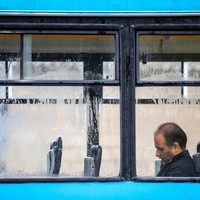
File photo: A man sits alone on a bus on a rainy day in Tehran, Iran.

Iranians struggling with mounting debts and soaring living costs are offering multiple organs and body tissues for sale, including testicles and corneas, in an online market where even finding a prospective buyer can come at a price.

An Iran International examination of more than 600 advertisements posted on a Telegram channel between late May and late October found that roughly one in three offered more than one organ or tissue.

One man who advertised several parts of his body, including a testicle, told Iran International: “I can still live after losing these organs.” He appeared unaware that some of the procedures he was proposing were not established transplant options in Iran.

Kidneys remained the most frequently advertised organ, appearing in 498 advertisements. But bone marrow was mentioned in 279, liver in 51, testicles in 15 and corneas in two.

In 142 advertisements, kidneys and bone marrow were offered together, while another 26 listed kidneys, bone marrow and liver. In 110 advertisements, kidneys were not mentioned at all, with sellers offering only other organs or tissues.

Prospective sellers interviewed by Iran International described financial pressures ranging from bankruptcy and mounting debts to the struggle to provide for their children.

One man said he was prepared to give up even vital organs to secure the financial future of his young daughter.

Another, who previously owned a clothing business, said he had accumulated debts and bounced checks after going bankrupt. Unable to meet his financial obligations, he hoped selling an organ would allow him to repay at least some of what he owed.

A third man, exhausted by years of renting and moving between homes, hoped the proceeds would enable him to buy a property of his own.

A woman raising two daughters on her own said she was looking for a buyer simply to cover her family's everyday expenses.

Year-on-year inflation reached nearly 89 percent in October, further eroding household incomes and pushing up the cost of housing and basic necessities.

A 2024 academic study of 215 people in Tehran's kidney market found that approximately 83 percent had entered the market to meet longer-term financial needs, including repaying debts and purchasing durable goods. Nearly three-quarters were renters.

The amounts sought by prospective sellers have also risen dramatically over the past decade, although advertised prices do not necessarily reflect completed transactions.

In 2016, kidneys were commonly advertised for around 20 million to 30 million tomans. By 2020, media reports cited asking prices of 100 million to 150 million tomans, rising to 150 million to 200 million tomans in 2021.

Some advertisements examined in the latest investigation listed kidneys for as much as 30 billion tomans, around 1,000 times the upper end of the asking-price range reported a decade earlier.

Asking prices for liver also reached 30 billion tomans, while bone marrow was advertised for up to 23 billion and testicles for up to 10 billion tomans. Sellers offering corneas generally said prices would be negotiated.

There is no evidence that transactions were completed at these prices, or that prospective sellers received the amounts they requested. Medical expenses and subsequent care could also reduce any proceeds.

Not everything being advertised, however, can be transplanted from a living donor.

Living donors can donate a kidney or part of their liver, although both procedures carry health risks, particularly the more extensive surgery required for liver donation.

Bone marrow donation involves collecting blood-forming stem cells rather than removing an entire organ. Corneas are ordinarily obtained from deceased donors, while the investigation found no evidence of an established procedure in Iran for transplanting testicles purchased from living sellers.

The investigation also found that prospective sellers may be charged simply to advertise their organs or reach potential buyers.

The administrator of one Telegram channel asked an Iran International investigator for 200,000 tomans to publish an organ-sale advertisement.

For an additional 400,000 tomans, the administrator offered to circulate the seller's details through what he described as an association connecting prospective donors with patients awaiting transplants in hospitals.

The combined fee of 600,000 tomans was payable before any buyer had been found. The administrator provided a bank card number for payment.

Iranian media have previously reported that some Telegram intermediaries demand around four million tomans to register prospective sellers and help them find buyers. Some sellers, meanwhile, seek out brokers who claim they can secure higher prices for their organs.

The investigation did not establish whether these intermediaries successfully arranged transplants or whether their advertised services were genuine.

For the people interviewed by Iran International, selling an organ represented a possible escape from debts, insecure housing or the struggle to provide for their families—even though none could be certain of finding a buyer, receiving the money they sought or escaping the hardship that drove them to advertise.

Iran threatens Armenia as US-run Trump Route clears Yerevan’s parliament

Nov 13, 2026, 09:20 GMT+0
•
Maryam Sinaiee
100%
US President Donald Trump holds the hands of Azerbaijan's President Ilham Aliyev and Armenia's Prime Minister Nikol Pashinyan as they shake hands between each other during a trilateral signing event, at the White House, in Washington, DC, August 8, 2025.

Armenia’s parliamentary approval of the Trump Route, a US-run transit corridor running along Iran’s northern border, has set off alarm in Tehran, with officials and state media warning that it would bring a US presence to the frontier.

Armenia’s parliament approved the agreement on October 28. Since then, an adviser to Iran’s supreme leader has threatened Yerevan, and state-run media have urged Tehran to stop the project.

The Trump Route for International Peace and Prosperity (TRIPP) is designed to link Azerbaijan to its exclave of Nakhchivan through Armenia’s southern Syunik province. Syunik borders Iran’s East Azarbaijan province and carries Iran’s only direct land connection to Armenia, and through it to the rest of the Caucasus.

  • Iran’s northern routes test the limits of US bid to extend blockade overland

    Iran’s northern routes test the limits of US bid to extend blockade overland

The route was announced at the White House in August 2025, when President Donald Trump hosted Azerbaijan’s President Ilham Aliyev and Armenia’s Prime Minister Nikol Pashinyan to sign a framework for peace between the two countries after decades of conflict.

Azerbaijan had long called the route the Zangezur corridor, and Tehran had opposed it for years, warning that it could cut Iran off from Armenia.

  • Iran says Caspian Sea a foreign policy priority on par with Persian Gulf

    Iran says Caspian Sea a foreign policy priority on par with Persian Gulf

  • State TV calls Iran’s northern sea by its English name, citing Israeli agenda

    State TV calls Iran’s northern sea by its English name, citing Israeli agenda

  • Iran moves to ratify Caspian Sea pact with seabed rights still unsettled

    Iran moves to ratify Caspian Sea pact with seabed rights still unsettled

Under the agreement, Washington and Yerevan will set up a joint company, TRIPP Development, with the US side holding 74 percent and Armenia 26 percent. The initial term is 49 years, with an option to extend it by 50 years, during which Armenia’s stake would rise to 49 percent.

Iranian officials and analysts say TRIPP could cut Iran’s transit revenue and weaken its position as a regional transport hub. They also see a US presence near Iran’s northern border as a serious security threat.

The state-run Mehr News Agency, in a November 9 article titled “The Caucasus on the Path to US Influence: Tehran Must Prevent Implementation of the TRIPP Corridor,” said Iran should rethink its approach to the Caucasus in light of what it called the country’s “new position in regional equations” after the war with the United States and Israel.

“A different approach centered on power,” Mehr said, could stop activities that threaten Iran’s national security from spreading in the South Caucasus.

Velayati threatens Armenia

Ali Akbar Velayati, an adviser to Iran’s supreme leader on international affairs and a former foreign minister, attacked Pashinyan over the agreement in an article in the Ettela’at newspaper on November 5.

Velayati said he had told Armenia’s deputy foreign minister and its ambassador in Tehran that Russia’s preoccupation with the war in Ukraine should not lead Armenia into a “miscalculation.” Iran, he said, considered itself responsible for security in the South Caucasus, “with or without Russia.”

  • Iran says it opposes Trump’s Caucasus plan as security threat

    Iran says it opposes Trump’s Caucasus plan as security threat

Iranian military commanders later traveled to the region and held a large exercise to show Iran’s “power and determination,” Velayati said. He said he had warned Armenia’s ambassador directly: “If Trump and his allies seek to cross this red line of Iran, we will break their legs.”

Armenia’s Security Council secretary, Armen Grigoryan, said in response that the project did not involve the presence of a single armed soldier, and that none of Armenia’s neighbors, Iran included, should see an economic project as a threat.

Iran’s Foreign Ministry spokesman, Esmaeil Baghaei, said on Monday that Tehran had raised its concerns with Armenia immediately after Armenia, Azerbaijan and the United States issued their joint statement on the project.

Armenia had assured Iran that the route would not change international borders or the region’s geopolitical arrangements, and that no US military forces would be stationed there, he said.

‘Yerevan’s gamble with Trump’s card’

Hardline media have kept up their attacks despite Armenia’s assurances.

On November 9, Jam-e Jam, a newspaper published by the state broadcaster, ran an article titled “Yerevan’s Gamble with Trump’s Card.”

“From the perspective of Iran’s national security doctrine, the emergence of an economic and administrative structure under US control in Syunik province, even if initially presented under the guise of transit and trade, is unacceptable,” the paper wrote.

Security threats do not have to begin with military bases, Jam-e Jam said. Strategic infrastructure and networks tied to hostile powers can lay the ground for long-term influence.

Mehdi Seif-Tabrizi, an analyst of Russian affairs, made a similar case in the Farhikhtegan newspaper on November 7.

“Tehran’s concern is fundamentally not limited to the possible deployment of US military forces. The issue is the formation of permanent infrastructure for influence in the vicinity of Iran’s borders, which could serve purposes beyond its initial economic objectives in times of crisis,” he wrote.

Iran’s concerns had grown more serious since its war with the United States, he added.