• العربية
  • فارسی
BrandBrand
  • Iran Insight
  • Politics
  • Economy
  • Analysis
  • Special Report
  • Opinion
  • Podcast
  • Live TV
  • Iran Insight
  • Politics
  • Economy
  • Analysis
  • Special Report
  • Opinion
  • Podcast
  • Live TV
  • Theme
  • Language
    • العربية
    • فارسی
  • Iran Insight
  • Politics
  • Economy
  • Analysis
  • Special Report
  • Opinion
  • Podcast
  • Live TV
All rights reserved for Volant Media UK Limited
volant media logo

Iran state TV panelists urge tougher action against US blockade

Maryam Sinaiee
Maryam Sinaiee

Iran International

Nov 11, 2026, 23:01 GMT+0
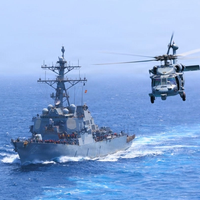
A photo released by US Central Command shows USS Donald Cook (DDG 75) transiting the Arabian Sea while an MH-60S Sea Hawk flies nearby.

Tehran's rhetoric toward Washington is hardening, with senior Iranian officials threatening US military bases in Europe and commentators on state television calling for a complete closure of the Strait of Hormuz to force American concessions.

The increasingly confrontational language comes as Iran faces a continuing US naval blockade and uncertainty over whether the two countries can reach an agreement to end the war.

Mohsen Rezaei, secretary of Iran's Supreme National Security Council, warned Wednesday that Tehran could target US military bases in Europe and on distant islands if Washington attacked Iran again.

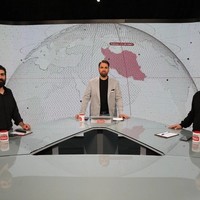
During a November 10 discussion on the state broadcaster's nightly talk show Be Vaght-e Iran, three analysts argued that Iran should use the Strait of Hormuz to drive up oil prices, deter further US attacks and pressure Washington to accept Tehran's terms for ending the war.

Nima Akbarkhani, a political and military analyst and regular panelist, argued that the United States would launch another war only after bringing oil prices down as far as possible, allowing it to contain the resulting increase once hostilities began.

He rejected the argument that a tighter closure of the Strait of Hormuz, or an Iranian attempt to break the US naval blockade, could prompt President Donald Trump to launch a full-scale war.

“We must definitely go after the blockade militarily. We must recognize that a blockade is a military action and demands a military response,” Akbarkhani said.

“Americans are monitoring the situation, and if it serves their interests, war will happen. We must do something to make it work against their interests.”

He argued that Washington had limited its military response even after US personnel were killed during the earlier war over Hormuz.

Yousef Azizi, an international relations and Middle East analyst, said Iran should keep oil prices high by closing the strait to deter another US attack.

Azizi also urged Iran's diplomatic apparatus to avoid releasing information that could drive oil prices down, including reports of possible meetings with officials from Iraq and Gulf Cooperation Council countries.

His remarks followed a denial by Rezaei of reports about a possible meeting with US Vice President JD Vance in Qatar and claims that negotiations with Washington were continuing.

In an interview with Al Mayadeen on Tuesday, Rezaei called the reports “completely false and a lie,” arguing that American claims about ongoing negotiations were intended to “reduce economic pressure and bring down oil prices.”

Azizi said Washington appeared to have concluded that it could not achieve its objectives through war. He considered a cycle of limited clashes, temporary ceasefires and interim understandings more likely than either side accepting all the other's demands.

Vahid Khazab, another regular analyst on Be Vaght-e Iran, said the costs of war could push the US and global economies into a deep recession and damage Trump's legacy.

An agreement, however, would require Washington to accept Iran's preconditions for ending the war and beginning nuclear negotiations, he said.

“More precisely, there is no unity, consensus or even a majority within the ruling camp in the United States in favor of making such concessions,” Khazab said.

Of three possible scenarios — war, an agreement ending the conflict, or continued economic pressure and a naval blockade — Khazab considered the third the most likely because it was the least costly option for Washington.

He argued that Iran should therefore close the Strait of Hormuz completely, denying Washington the option of maintaining economic pressure while some energy supplies continued to pass through.

Rather than focusing solely on raising oil prices, Khazab said Tehran should seek to influence market expectations about future supplies. A complete closure would prevent Trump from signaling that the strait might soon reopen, encouraging expectations of a return to normal traffic.

“Of course, this will also be reflected in prices, albeit with some delay,” he added.

He also argued that a tighter closure would prompt regional countries to pressure Washington to reach a resolution favorable to Tehran, without Iran having to attack their infrastructure.

Khazab said Tehran should present Washington with a stark choice: “Your only option is to reach an agreement with me and accept my seven conditions. If we want to get to this point, the way to do it is to close the strait.”

Most Viewed

Workers in Iran sell organs to pay debts and cover living costs
1

Workers in Iran sell organs to pay debts and cover living costs

2
VOICES FROM IRAN

Missile city unveiling sparks anger over poverty, lack of shelters

3
INSIGHT

Trump wants to keep Iran blockade. Can the Persian Gulf sustain the standoff?

4
ANALYSIS

The price Iranians paid for 47 years of revolutionary promises

5
VOICES FROM IRAN

Students shiver in classrooms as Iran government warns of gas cuts

Banner
Banner
Banner
Banner
Banner
Banner
Banner

Spotlight

  • Iran state TV panelists urge tougher action against US blockade

    Iran state TV panelists urge tougher action against US blockade

  • France's cyberattack allegations against Iran should wake up Europe
    OPINION

    France's cyberattack allegations against Iran should wake up Europe

  • Trump wants to keep Iran blockade. Can the Persian Gulf sustain the standoff?
    INSIGHT

    Trump wants to keep Iran blockade. Can the Persian Gulf sustain the standoff?

  • Iran state TV debate signals cautious openness to nuclear talks

    Iran state TV debate signals cautious openness to nuclear talks

  • The price Iranians paid for 47 years of revolutionary promises
    ANALYSIS

    The price Iranians paid for 47 years of revolutionary promises

  • Trump’s Iran diplomacy faces a test: Can both sides claim victory?
    ANALYSIS

    Trump’s Iran diplomacy faces a test: Can both sides claim victory?

  • Food, medicine, hope: what Iran's economic crisis is costing its people
    VOICES FROM IRAN

    Food, medicine, hope: what Iran's economic crisis is costing its people

•
•
•

More Stories

Iran threatens US bases in Europe if attacks resume

Nov 11, 2026, 14:30 GMT+0
100%
FILE PHOTO: Servicemen attend the annual multinational crisis response training SABER GUARDIAN 23 HOSPEX with a medical focus, at the U.S. Air Force Base in Ramstein, Germany, June 6, 2023.

Iran would strike US bases in Europe and on distant islands if the United States attacks again, the country’s top security official said, warning countries that host American forces that any base involved in an attack would become a target.

“If the Americans make a mistake and attack us, we will not limit ourselves to nearby bases,” Mohsen Rezaei, secretary of the Supreme National Security Council, told the Beirut-based channel Al Mayadeen, which is aligned with Hezbollah and Tehran.

“We may even target some American military bases in European countries.”

  • Iran’s war threats now reach Europe, from Cyprus to Britain

    Iran’s war threats now reach Europe, from Cyprus to Britain

  • G7 warns Iran of continued pressure if diplomacy fails

    G7 warns Iran of continued pressure if diplomacy fails

Iran might also hit “some islands they think our missiles cannot reach,” he said, and he advised every country that hosts US forces not to cooperate with an attack. “Wherever American planes take off from, we will regard it as a threat against us.”

Rezaei also said Vladimir Putin had told him, when they met in the Kremlin, that he had informed the Americans that the Islamic Republic “is not a system that can be toppled.”

A widening target list

The threat marks another step up in what Tehran says it is prepared to hit. In the 12-day war of June 2025, Rezaei said, Iran limited its strikes to Israel. In the war that began on February 28 it fired on US bases across the region. Now its officials name Europe.

Last month, Supreme Leader Mojtaba Khamenei ordered the armed forces to prepare for retaliation without geographic limits, according to a statement attributed to him. The army’s spokesman said a new war could spread “beyond West Asia,” and the hardline daily Kayhan listed US and NATO facilities in Cyprus, Greece, Romania, Albania, Italy and Britain, and the joint US-British base on Diego Garcia in the Indian Ocean.

  • US moves aircraft out of second British base over Iran threat - WSJ

    US moves aircraft out of second British base over Iran threat - WSJ

  • US Treasury chief moves to military base after Iranian threats

    US Treasury chief moves to military base after Iranian threats

Whether Iran can reach them is less clear. The Center for Strategic and International Studies lists Iran’s main ballistic missiles with ranges of about 2,000 kilometers, with some variants reaching perhaps 3,000. Britain’s Royal United Services Institute has said a strike as far as the UK is theoretically possible, with smaller and less accurate warheads flying through defended airspace.

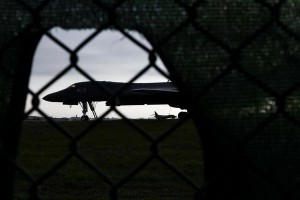
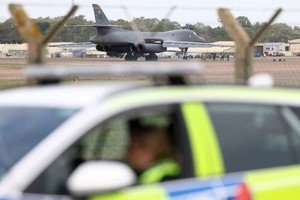
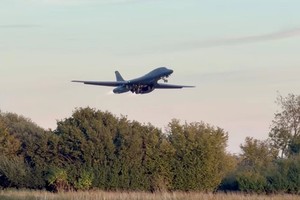
The warning comes days after the US military moved tankers and aircraft out of RAF Mildenhall in eastern England over a threat from Iran, and weeks after it withdrew bombers from RAF Fairford following a suspected Iran-linked plot.

‘There are no negotiations’

Rezaei denied that Tehran was talking to Washington, contradicting reports this week of progress in Qatari mediation.

“We are not negotiating with the Americans at present, and there are no negotiations between us and the United States,” he said.

Reports of a meeting in Qatar, or of plans for him to meet Vice President JD Vance, were “lies,” he said, meant to ease economic pressure and bring down oil prices. Asked directly about a meeting with Vance, he said: “Absolutely not.”

  • Iran state TV debate signals cautious openness to nuclear talks

    Iran state TV debate signals cautious openness to nuclear talks

  • Iran signals readiness for talks but demands US lift restrictions

    Iran signals readiness for talks but demands US lift restrictions

Iran has set seven conditions, he said, and the Strait of Hormuz will stay closed until they are met. Washington’s first reply had been “deceptive.” The first condition is an end to the war on all fronts, especially Lebanon.

He said the nuclear issue was not on the table, and that “not even a particle” of Iran’s enriched uranium would leave the country. Tehran had told Moscow the same, he said, adding that Iran was designing nuclear-powered ships and submarines and might build small modular reactors, and needed the material for them.

Rezaei also said both sides had signed an agreement during an earlier round of talks in Islamabad, and that Trump had torn it up within a month. Washington has not confirmed that account.

Rezaei said Iran had recently taken control of US drones in flight through electronic warfare and brought seven down intact, and had captured two underwater craft able to dive to 6,000 meters. He gave no details, and none of the claims could be independently verified.

The unseen leader

Asked about the health of Mojtaba Khamenei, who has not appeared in public since succeeding his father in March, Rezaei did not answer directly.

He said that when they last met, and he prayed behind him, he found him better informed about the country “even than me,” and that he issues instructions to military commanders.

Rezaei said he had carried a message from Mojtaba Khamenei to Putin, mostly on continuing cooperation, and that they had discussed the North-South trade corridor and piping Russian gas, no longer sold to Europe, into Iran for its own use and resale to its neighbors.

Trump wants to keep Iran blockade. Can the Persian Gulf sustain the standoff?

Nov 11, 2026, 02:11 GMT+0
•
Negar Mojtahedi
100%
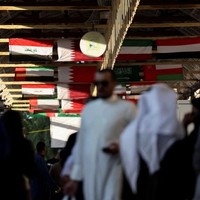
People walk beneath regional flags at a market.

US President Donald Trump says the Iran war is effectively over militarily, but his plan to maintain a naval blockade raises questions about how long the standoff can last and whether it serves the interests of the Arab neighbors he says support it.

“Most importantly, Qatar, Saudi Arabia, UAE, Bahrain, Kuwait and others would prefer the status quo, that we remain as is,” Trump told reporters at the White House on Monday after meeting Qatar’s prime minister.

He described that approach as continuing the US naval blockade, while keeping American forces ready for renewed military action.

Speaking to reporters in Paris after meetings with G7 counterparts on Tuesday, Secretary of State Marco Rubio said US sanctions and the naval blockade were inflicting growing economic damage on Iran, reducing the need for further major combat operations.

Regional analysts disagree over whether that policy offers Arab states across the Persian Gulf their safest option or prolongs a confrontation that threatens their security and economies.

Pressure without stability

Ghaith al-Omari, a senior fellow at the Washington Institute and former executive director of the American Task Force on Palestine, offered the opposite assessment to Trump’s. Regional governments want a weaker Islamic Republic, he said, but that does not mean they favor an indefinite blockade.

“They would like to see the regime weakened, but they don't believe that the blockade serves their interests,” he told Iran International.

Even where oil continues to flow, insurance costs and the risk of further attacks weigh on regional economies. Prolonged uncertainty also threatens the stability underpinning investment, tourism, finance and logistics, he said.

“No war, no peace equals uncertainty, equals instability,” al-Omari said.

He argued that Arab governments across the Persian Gulf doubt Washington’s willingness to sustain the policy.Trump’s midterm setback has intensified concerns that domestic pressure could prompt an abrupt change, leaving neighboring countries to manage the consequences.

Without an agreement reopening the Strait of Hormuz and ending the conflict, some governments could seek separate arrangements with Tehran to reduce their exposure, he said.

Between a rock and a hard place

Dalia Ziada of the Institute for the Study of Global Antisemitism and Policy (ISGAP) described the Arab states of the Persian Gulf as caught “between a rock and a hard place”: fearful of a resurgent Islamic Republic, yet harmed by the instability of a prolonged standoff.

“They don't want the Iranian regime to get strong again,” she told Iran International.

But continued insecurity carries its own economic consequences, threatening the region’s appeal to investors and confidence in its future.

“The biggest loss for the wealthy Gulf states is the lack of stability,” Ziada said.

She argued that differences among regional governments, combined with doubts about the reliability of American protection, complicate their choices. Their concerns cannot be reduced to a simple preference for war or continued restraint, she said.

One incident could break the standoff

Mohamed Fahmy, a journalist and Middle East political analyst, also sees significant differences among Iran’s Arab neighbors.

“There is no unified Gulf position on how long the blockade should continue,” he told Iran International.

Saudi Arabia and the UAE see value in maintaining American pressure until Tehran makes meaningful concessions, Fahmy said, while Qatar and Oman place greater emphasis on mediation.

Their shared interest in reducing the Iranian military threat does not eliminate the costs of prolonged confrontation.

“The UAE, Saudi Arabia and Qatar have invested heavily in presenting themselves as stable international hubs for business, tourism, finance and logistics. Prolonged confrontation threatens those ambitions,” he said.

Those concerns reflect damage already sustained. An October 15 Reuters investigation documented at least 135 missile and drone attacks by Iran and allied groups against at least 84 infrastructure sites across seven Arab countries since US-Israeli attacks on Iran began on February 28. The tally covered infrastructure attacks, rather than every launch or attempted strike.

Fahmy said the standoff could continue for some time because Washington and Tehran both appear to believe waiting will improve their negotiating positions. But an attack killing American personnel or seriously damaging Persian Gulf energy infrastructure could trigger renewed military action.

“It takes only one serious incident involving American forces, a commercial tanker or a Gulf energy installation to undermine the current restraint,” he said.

Growing pressure in Washington over financial costs, military commitments and the absence of a clear exit strategy could instead encourage a negotiated settlement, he argued.

The case for staying the course

Saad bin Tefla Al-Ajmi, Kuwait’s former information minister, argues that maintaining the status quo remains the least harmful choice.

“The solution is to keep the status quo as is. That’s the best solution,” he told Iran International, referring to an article he supplied outlining his position.

Renewed war could bring further Iranian attacks on neighboring countries, he argues, while American withdrawal could leave them exposed.

“The third option is the safest and best for us, for the region and for the beleaguered peoples of Iran,” he wrote in the article.

Al-Ajmi advocates sustained naval and economic pressure alongside efforts to constrain Tehran’s regional armed allies. He predicts that pressure could eventually bring down the regime, although that outcome remains uncertain.

He acknowledges the costs to neighboring states.

“The Gulf states are indeed paying a price under this scenario. Their trade is disrupted, tensions persist in their airspace and their projects are delayed,” he wrote.

His support for maintaining that pressure rests on the judgment that the alternatives would be worse. The question is whether Washington and its regional partners can sustain it without an escalation that forces them back into war.

Iran state TV debate signals cautious openness to nuclear talks

Nov 10, 2026, 22:37 GMT+0
•
Maryam Sinaiee
100%
A discussion on Iran’s nuclear negotiations on the state television program Be Vaght-e Iran.

A discussion on Iranian state television signaled cautious openness to future nuclear talks with Washington, with a commentator describing flexibility over preliminary exchanges while insisting Tehran’s conditions for ending the war must first be met.

Vahid Khazab, introduced as a military and political analyst, said on the state broadcaster’s Be Vaght-e Iran (Iran Time) talk show on Monday night that a significant development amid mediation efforts was Tehran’s willingness to discuss its nuclear program through intermediaries.

His account suggested room for diplomacy, but did not amount to an official announcement of a change in Iran’s negotiating position.

Iran has insisted that Washington accept its seven demands and end the war before nuclear negotiations begin. Khazab described preliminary discussions through intermediaries as a sign of “flexibility.”

However, he said, those discussions were limited to determining the issues that could be addressed in future nuclear negotiations, once Iran’s initial conditions had been accepted and the war ended.

Proposed nuclear compromise

According to Khazab, Pakistan’s army chief, Field Marshal Asim Munir, has raised the possibility of allowing Iran to continue uranium enrichment at 3.67%. His account did not establish whether Washington had accepted that provision.

In exchange, the proposals include diluting Iran’s stockpile of uranium enriched to 60%, which Khazab put at 400 kilograms, or converting it into fuel rods for nuclear reactors.

The proposed arrangement would also include the release of part of Iran’s frozen assets, the return of International Atomic Energy Agency inspectors, and ultimately the reopening of the Strait of Hormuz, Khazab said.

Tehran would likely regard any US acceptance of enrichment inside Iran as a major concession, he said. However, it would seek to negotiate how its highly enriched uranium stockpile is diluted and how much nuclear material remains inside the country.

He added that some Iranian experts had suggested gradual dilution to preserve part of the country’s nuclear capabilities for the “future, post-Trump era.”

Parallel mediation efforts

Pakistan, China, Iraq, Turkey and Qatar have been pursuing diplomatic initiatives amid concerns about renewed US military strikes against Iran.

Nima Akbarkhani, also introduced as a military expert on the program, said people with what he described as “greater access” had told him that the scale of mediation efforts in recent days was unprecedented compared with previous initiatives.

China has been among the countries involved. Ali Bagheri-Kani, a deputy secretary of Iran’s Supreme National Security Council, traveled to China in early November and met with Beijing’s special envoy for Middle Eastern affairs, Zhai Jun.

Zhai subsequently traveled to Iran on November 8. According to Khazab, he met not only with Iranian Foreign Ministry officials but also with Parliament Speaker and chief negotiator Mohammad-Bagher Ghalibaf.

Iraq has also been involved. Iraqi Prime Minister Ali Faleh al-Zaydi traveled to Iran late last week on an unannounced visit.

Iran’s Tasnim News Agency, which is affiliated with the Revolutionary Guards, reported that al-Zaydi met with President Masoud Pezeshkian and Ghalibaf. However, the agency said he had not obtained what it described as “a result satisfactory to the United States.”

Turkey has also been seeking to facilitate an agreement through political contacts with Washington and Tehran.

According to remarks attributed to Turkish intelligence chief Ibrahim Kalin, President Recep Tayyip Erdogan spoke with Trump and expressed concern about renewed military attacks against Iran, urging him to refrain from further strikes.

Qatar, which has served as one of the main channels of communication between Tehran and Washington in recent months, is also attempting to bring the two sides back to negotiations.

Qatari Prime Minister Mohammed bin Abdulrahman Al Thani traveled to Washington on Monday and met with Trump and Vice President JD Vance.

Former Qatari prime minister and foreign minister Hamad bin Jassim Al Thani has also emphasized the need to resolve regional disputes.

Khazab interpreted his recent emphasis on cooperation to end Iran’s blockade as a possible shift in Qatar’s calculations under wartime conditions.

Iran denies plans for Vance-Rezaei meeting

Khazab also addressed reports that Mohsen Rezaei, secretary of Iran’s Supreme National Security Council, could meet Vance in Qatar next week.

The discussion followed reports on Monday citing Kalin as saying Qatar would host the US vice president and Iran’s security chief the following week. Türkiye newspaper carried the Turkish intelligence chief’s remarks.

In his Monday night comments, Khazab suggested that reports of a possible meeting were not necessarily false, interpreting Iranian denials as a rejection of the existence of a specific arrangement.

According to the analyst, whether a meeting could take place would depend on Washington announcing its acceptance of Iran’s seven initial conditions for ending the war and reopening the Strait of Hormuz.

Iranian Foreign Minister Abbas Araghchi dismissed reports of the meeting as “speculation and media fabrication” and described them as “baseless from the outset.”

“There are no plans for such a meeting,” he said.

Rezaei subsequently told Lebanon-based Al Mayadeen television in an interview on Tuesday that “the Americans’ claims about the continuation of negotiations or the holding of a meeting in Qatar are outright lies.”

He said the claims were being circulated solely to ease economic pressure and drive down oil prices.

Khazab’s argument for conditional engagement rested on Tehran’s distrust of Washington. He accused the United States of violating its commitments after an earlier agreement and memorandum of understanding, leading to renewed hostilities.

For that reason, he said, Iran did not want to enter another round of negotiations that might produce a temporary agreement followed by a return to war.

“We have no objection to negotiations, no objection to talking. But it must be done in a way that genuinely removes the threat of war,” Khazab said.

US moves aircraft out of second British base over Iran threat - WSJ

Nov 10, 2026, 10:08 GMT+0
100%
A USAF KC-135 tanker of the 100th Air Refuelling Wing (100 ARW) at RAF Mildenhall airbase, amid reports that US military aircraft are being moved from bases in Britain following a reported threat from Iran, near Mildenhall, Britain, November 10, 2026.

The US military moved tankers and tiltrotor aircraft out of RAF Mildenhall in eastern England on Monday over a threat from Iran, the Wall Street Journal reported, the second British base it has thinned out since a suspected Iran-linked plot at RAF Fairford in September.

Flight-tracking data showed nine KC-135 refueling tankers and three V-22 Ospreys leaving Mildenhall in Suffolk on Monday afternoon and evening, Sky News reported. Most of the tankers went to bases in Germany and Spain and one to Prestwick in Scotland. The Ospreys moved to nearby RAF Lakenheath.

The exact nature of the threat was still under discussion among US officials, the Journal said. Washington raised the security level at Mildenhall and Lakenheath to FPCON Charlie, the second-highest on the Pentagon’s scale, which applies when intelligence indicates that some form of terrorist action is likely.

100%
A military vehicle stationed at RAF Lakenheath, which hosts US Air Force personnel and units, amid reports that US military aircraft are being moved from bases in Britain following a reported threat from Iran, in Lakenheath, Britain, November 10, 2026.

US European Command said aircraft move between locations “for a variety of reasons” and that it could not discuss force protection measures.

Britain’s Ministry of Defense said it did not comment on other nations’ activity. “We’re constantly keeping the security of our bases under review,” cabinet minister Lucy Powell told Sky News, “and as we’ve seen with other cases recently, we take firm and quick action where we need to.”

  • Iran threatens to reconsider UK ties over RAF Fairford allegations

    Iran threatens to reconsider UK ties over RAF Fairford allegations

  • Two charged over alleged Iran intelligence operation at RAF Fairford

    Two charged over alleged Iran intelligence operation at RAF Fairford

  • UK blames IRGC for RAF plot, vows crackdown on Iranian networks

    UK blames IRGC for RAF plot, vows crackdown on Iranian networks

The move comes six weeks after police arrested five men in the early hours of September 27 near RAF Fairford in Gloucestershire, which US bombers used to strike Iran during the war, after a local farmer reported three white vans and a group of men, some with their faces covered. The United States pulled all 12 of its B-1B bombers from Fairford on October 4.

Two men were charged last month under the National Security Act. Prosecutors said one, a British-Iranian dual national, had arranged for the men to drive to the base on the instructions of a man known only as “Ali,” and accused him of assisting a foreign intelligence service; police said they believed that country to be Iran. Six others remain on bail. Prime Minister Andy Burnham said the plot was “almost certainly” directed by the Revolutionary Guards.

Iran’s ambassador in London has denied any involvement. The Revolutionary Guards warned Britain in July that Fairford and any other base used to attack Iran would be a legitimate target.

Trump says Iran war ‘effectively over’ militarily, but US ready to strike again

Nov 10, 2026, 00:56 GMT+0
100%
US President Donald Trump gestures while delivering remarks at NASA’s Kennedy Space Center in Cape Canaveral, Florida, November 6, 2026. (White House)

US President Donald Trump said Monday the war with Iran was effectively over militarily but warned US forces remained “locked and loaded,” while Iran's security chief denied reports of talks with Washington and demanded acceptance of Tehran's conditions to end the conflict.

Qatar's prime minister, Sheikh Mohammed bin Abdulrahman Al Thani, met Trump at the White House in an effort to secure more time for diplomacy and advance negotiations between Washington and Tehran.

“Iran, militarily, is effectively over. We're just keeping it the status quo,” Trump told reporters at the White House after meeting with the Qatari prime minister.

While Trump described the war as militarily “effectively over,” he emphasized the continuation of the US naval blockade and Operation Iron Gate in a Truth Social post, saying Iran's neighbors, including Qatar, Saudi Arabia, the United Arab Emirates, Bahrain and Kuwait, favored maintaining the “status quo.”

He warned that American forces remained “locked and loaded” if developments in the Middle East changed, but said further military action appeared unlikely.

Trump also said Iran had accepted that it could never acquire a nuclear weapon, despite publicly denying such a commitment.

“They understand that. They accept that. They don't admit that they accept it,” he told reporters, describing the prohibition on Iranian nuclear weapons as non-negotiable.

Trump told Al Thani during their meeting that he wanted an agreement with Iran and was willing to give negotiations a chance, but could reverse course if Tehran failed to engage seriously, Axios reported Monday, citing a diplomat briefed on the discussions.

Despite reports of Washington's willingness to pursue diplomacy, Iran's Supreme National Security Council secretary Mohsen Rezaei accused the United States of fabricating reports of negotiations and demanded that it accept Tehran's seven conditions.

“STOP manufacturing FAKE NEWS about imaginary talks,” Rezaei wrote on X.

“The war on Iran has already wrecked the US government. But Washington flails like a desperate gambler,” he added, urging Washington to recognize what he described as a new regional order in West Asia.

The Washington Post reported in October that US officials viewed Rezaei as a key contact in Tehran who could help build support for a nuclear agreement.

Vice President JD Vance sent Rezaei a letter in late October expressing his willingness to meet personally to discuss a negotiated settlement, The Washington Post reported, citing a US official familiar with the initiative.

Axios reported that Vance was also closely involved in the indirect talks through frequent contact with Qatar's prime minister.

Following the White House meetings, Al Thani said he had discussed ways to advance US-Iran negotiations with Trump and Vance.

“Grateful for the positive discussions on reaching a deal and bringing peace to the region,” he wrote on X.

The mediation efforts have focused on a proposal setting out reciprocal steps to reduce tensions and restart negotiations over Iran's nuclear program.

Under the proposed two-day plan, Washington would first lift its naval blockade and release some frozen Iranian funds, while Tehran would invite UN nuclear inspectors to damaged sites, Axios reported. The Strait of Hormuz would reopen on the second day, followed by renewed talks over Iran's highly enriched uranium stockpile.

Iranian Foreign Minister Abbas Araghchi said Sunday that Tehran was awaiting Washington's response to the proposal, which also calls for an end to hostilities on all fronts.

US Secretary of State Marco Rubio, however, said Sunday that indirect negotiations had produced little progress and described some Iranian demands as unrealistic.

“I wouldn't say we're on the verge of a breakthrough,” Rubio said, adding that Trump preferred a diplomatic solution but that one was not always possible.

Meanwhile, Turkish intelligence chief Ibrahim Kalin said Monday that Vance and Rezaei were scheduled to meet in Qatar next week, according to Türkiye newspaper.

Speaking at a conference in Ankara, Kalin said the planned meeting in Doha could provide an opportunity to advance negotiations, warning that failure to reach an agreement could lead to another US attack on Iran.

Kalin said regional mediators were working on a seven-point proposal covering sanctions relief, frozen Iranian assets, nuclear commitments and the reopening of the Strait of Hormuz.

The main disagreement, Kalin said, was over which side would take the first step.