Qatar's prime minister, Sheikh Mohammed bin Abdulrahman Al Thani, met Trump at the White House in an effort to secure more time for diplomacy and advance negotiations between Washington and Tehran.
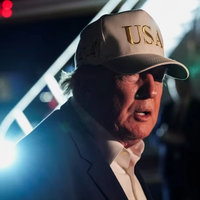
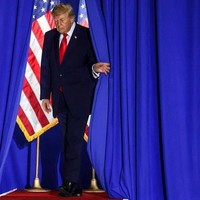
“Iran, militarily, is effectively over. We're just keeping it the status quo,” Trump told reporters at the White House after meeting with the Qatari prime minister.
While Trump described the war as militarily “effectively over,” he emphasized the continuation of the US naval blockade and Operation Iron Gate in a Truth Social post, saying Iran's neighbors, including Qatar, Saudi Arabia, the United Arab Emirates, Bahrain and Kuwait, favored maintaining the “status quo.”
He warned that American forces remained “locked and loaded” if developments in the Middle East changed, but said further military action appeared unlikely.
Trump also said Iran had accepted that it could never acquire a nuclear weapon, despite publicly denying such a commitment.
“They understand that. They accept that. They don't admit that they accept it,” he told reporters, describing the prohibition on Iranian nuclear weapons as non-negotiable.
Trump told Al Thani during their meeting that he wanted an agreement with Iran and was willing to give negotiations a chance, but could reverse course if Tehran failed to engage seriously, Axios reported Monday, citing a diplomat briefed on the discussions.
Despite reports of Washington's willingness to pursue diplomacy, Iran's Supreme National Security Council secretary Mohsen Rezaei accused the United States of fabricating reports of negotiations and demanded that it accept Tehran's seven conditions.
“STOP manufacturing FAKE NEWS about imaginary talks,” Rezaei wrote on X.
“The war on Iran has already wrecked the US government. But Washington flails like a desperate gambler,” he added, urging Washington to recognize what he described as a new regional order in West Asia.
The Washington Post reported in October that US officials viewed Rezaei as a key contact in Tehran who could help build support for a nuclear agreement.
Vice President JD Vance sent Rezaei a letter in late October expressing his willingness to meet personally to discuss a negotiated settlement, The Washington Post reported, citing a US official familiar with the initiative.
Axios reported that Vance was also closely involved in the indirect talks through frequent contact with Qatar's prime minister.
Following the White House meetings, Al Thani said he had discussed ways to advance US-Iran negotiations with Trump and Vance.
“Grateful for the positive discussions on reaching a deal and bringing peace to the region,” he wrote on X.
The mediation efforts have focused on a proposal setting out reciprocal steps to reduce tensions and restart negotiations over Iran's nuclear program.
Under the proposed two-day plan, Washington would first lift its naval blockade and release some frozen Iranian funds, while Tehran would invite UN nuclear inspectors to damaged sites, Axios reported. The Strait of Hormuz would reopen on the second day, followed by renewed talks over Iran's highly enriched uranium stockpile.
Iranian Foreign Minister Abbas Araghchi said Sunday that Tehran was awaiting Washington's response to the proposal, which also calls for an end to hostilities on all fronts.
US Secretary of State Marco Rubio, however, said Sunday that indirect negotiations had produced little progress and described some Iranian demands as unrealistic.
“I wouldn't say we're on the verge of a breakthrough,” Rubio said, adding that Trump preferred a diplomatic solution but that one was not always possible.
Meanwhile, Turkish intelligence chief Ibrahim Kalin said Monday that Vance and Rezaei were scheduled to meet in Qatar next week, according to Türkiye newspaper.
Speaking at a conference in Ankara, Kalin said the planned meeting in Doha could provide an opportunity to advance negotiations, warning that failure to reach an agreement could lead to another US attack on Iran.
Kalin said regional mediators were working on a seven-point proposal covering sanctions relief, frozen Iranian assets, nuclear commitments and the reopening of the Strait of Hormuz.
The main disagreement, Kalin said, was over which side would take the first step.