• العربية
  • فارسی
BrandBrand
  • Iran Insight
  • Politics
  • Economy
  • Analysis
  • Special Report
  • Opinion
  • Podcast
  • Live TV
  • Iran Insight
  • Politics
  • Economy
  • Analysis
  • Special Report
  • Opinion
  • Podcast
  • Live TV
  • Theme
  • Language
    • العربية
    • فارسی
  • Iran Insight
  • Politics
  • Economy
  • Analysis
  • Special Report
  • Opinion
  • Podcast
  • Live TV
All rights reserved for Volant Media UK Limited
volant media logo

Iran's solar ambitions falter as Chinese panel imports collapse

Dalga Khatinoglu
Dalga Khatinoglu

Oil, gas and Iran economic analyst

Nov 7, 2026, 15:23 GMT+0
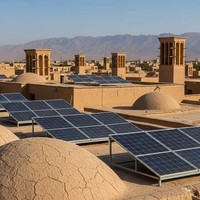
File photo: Solar panels installed on rooftops among traditional wind towers in Yazd, central Iran

Iran's imports of Chinese solar panels fell by more than 80% in 2026, threatening efforts to expand renewable power generation as the country struggles with worsening electricity shortages.

A new report by the International Energy Agency (IEA) shows that Chinese solar panel exports to Iran during the January–September period fell to less than one-fifth of the level recorded in the same period last year.

Data from energy think tank Ember show that China exported just 138 megawatts of solar panels to Iran during those nine months, worth approximately $15 million.

The decline comes as Iran grapples with severe natural gas shortages, air pollution and drought, leaving the government with limited options to expand thermal and hydropower generation, even if sufficient funding were available.

According to assessments by Iran's Energy Ministry and parliament's research centre, the country needs to add more than 5,000 megawatts of electricity generation capacity annually to avoid power shortages.

Failure to meet generation expansion targets in recent years has left Iran facing substantial electricity deficits throughout the year. During peak summer demand, the shortfall can exceed 20% of peak consumption.

The recent war has compounded those pressures. Iranian officials say around 4,000 megawatts of the country's power generation capacity were damaged during the conflict.

In April, a major warehouse storing equipment for Iran's solar power projects was also targeted in an attack. Iran's Renewable Energy and Energy Efficiency Organization (SATBA) estimated damage to the renewable energy sector at approximately $1.5 billion.

In recent years, the government has increasingly focused on solar power development.

According to the International Renewable Energy Agency (IRENA), Iran's installed solar power capacity surged by 128% in 2025 from the previous year, reaching approximately 1,781 megawatts.

Data from Ember, cited by the IEA, also show that Iran's solar panel imports from China in 2024 and 2025 combined were more than ten times higher than in previous years, suggesting considerable room for further expansion of the country's solar power capacity.

The sharp decline in imports this year could therefore undermine efforts to sustain that expansion, although the figures do not establish how much equipment Iran may already have in stock.

Iran falls behind regional competitors

Despite its recent solar expansion, Iran has fallen significantly behind regional competitors.

In 2025, Turkey and Saudi Arabia each added around five times as much solar capacity as Iran. Their total installed solar power capacities were approximately 12 times and seven times Iran's, respectively.

Another major weakness in Iran's renewable energy sector is the lack of progress in wind power. The country's installed wind capacity has remained unchanged at 378 megawatts for several years.

By comparison, Turkey commissioned around 2,000 megawatts of new wind power capacity last year, bringing its total to nearly 15,000 megawatts.

Globally, 692 gigawatts of new renewable power capacity were installed last year. Renewable capacity growth in the Middle East was approximately 28%, with Saudi Arabia recording the region's strongest expansion.

Saudi Arabia doubled its renewable power capacity in 2025 to more than 12,000 megawatts.

Turkey has roughly twice as much installed solar and wind capacity as Saudi Arabia, while the United Arab Emirates and Israel each have nearly 8,000 megawatts of renewable capacity.

Iran, meanwhile, has shifted from being a net electricity exporter to a net importer.

A decade ago, the country recorded a net electricity export surplus of around eight terawatt-hours. Last year, its electricity trade balance turned negative.

In recent months, Tehran has held talks with Turkmenistan to increase electricity imports and with Turkey to begin importing power from its western neighbour.

China's regional solar exports rebound

The collapse in Iran's solar panel imports contrasts with a rebound in Chinese shipments to several other Middle Eastern markets.

Chinese solar panel exports to a number of Arab countries initially declined by nearly half during the first eight months of 2026, but shipments to the broader region subsequently recovered.

According to a report by the China Chamber of Commerce in the UAE, citing Shanghai Metals Market data, China's photovoltaic module exports reached 23.92 gigawatts in September, up 44.2% from August.

Combined exports to Saudi Arabia, the United Arab Emirates and Turkey more than tripled in September to 3.97 gigawatts, with Saudi Arabia alone purchasing 2.9 gigawatts.

The figures suggest that Iran's sharp decline cannot be explained solely by a broader contraction in Chinese solar panel exports to the region, although the September rebound elsewhere does not establish the reasons for Iran's nine-month downturn.

With electricity shortages worsening and neighbouring countries accelerating renewable energy investment, Iran risks falling further behind at a time when expanding its power generation capacity has become increasingly urgent.

Most Viewed

Khamenei sent security chief to Moscow to seek S-400 air defenses – report
1

Khamenei sent security chief to Moscow to seek S-400 air defenses – report

2

Iran-linked ships go dark over Persian Gulf internet cables after threats - FT

3

Iran steps up diplomacy as Trump reels from midterm defeat

4
INSIGHT

Opportunity or trap? Vance's Iran war remarks divide Tehran

5
INSIGHT

Trump's election defeat fuels debate in Tehran over US deal

Banner

Spotlight

  • Iran's solar ambitions falter as Chinese panel imports collapse

    Iran's solar ambitions falter as Chinese panel imports collapse

  • Tehran hails US economic pain as Iranians struggle to make ends meet
    INSIGHT

    Tehran hails US economic pain as Iranians struggle to make ends meet

  • Opportunity or trap? Vance's Iran war remarks divide Tehran
    INSIGHT

    Opportunity or trap? Vance's Iran war remarks divide Tehran

  • Gas-rich Iran turns to Russia for an energy lifeline

    Gas-rich Iran turns to Russia for an energy lifeline

  • One man’s road from Westminster to the machine that carries Iran’s story abroad
    SPECIAL REPORT

    One man’s road from Westminster to the machine that carries Iran’s story abroad

  • Why social control remains central to Tehran's survival
    ANALYSIS

    Why social control remains central to Tehran's survival

Banner
Banner
Banner
Banner
Banner
Banner
•
•
•

More Stories

Tehran hails US economic pain as Iranians struggle to make ends meet

Nov 7, 2026, 08:42 GMT+0
•
Behrouz Turani
100%
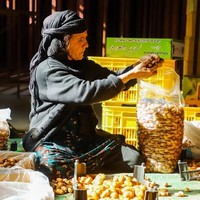
A worker packs dates in Ghasr-e Shirin, western Iran, November 5, 2026

While Tehran celebrates Donald Trump's midterm defeat and the economic pain the Iran war has inflicted on Americans, soaring prices and stagnant wages are pushing ordinary Iranians deeper into a cost-of-living crisis at home.

Senior Iranian officials have come close to claiming credit for the Democrats' sweeping election victory, frequently pointing to US officials' acknowledgment that the war contributed to Republican losses.

Many Iranian newspapers have followed suit, dwelling on America's economic and political troubles while portraying Iran as a country growing stronger despite the war.

"Ever-Stronger Iran on the Road to Progress," one economic daily declared on its front page on Thursday. Another proclaimed "American Humiliation Continues," alongside a photograph of a seemingly dejected Trump.

The hardline daily Kayhan highlighted what it described as €127 billion in European losses resulting from the closure of the Strait of Hormuz, presenting the economic damage as a measure of Tehran's success.

Largely absent from those triumphant headlines was the economic crisis that matters most to ordinary Iranians: the soaring cost of living.

The labour-focused news agency ILNA offered a starkly different picture, reporting that the estimated cost of basic household necessities had nearly doubled in seven months to 85 million tomans a month, almost six times the monthly earnings of an ordinary worker.

Labour expert Hamid Haji-Esmaeili told ILNA that inflation had become "normalised" in the thinking of Iranian officials, criticising the government's inadequate response and calling for wages to be revised midway through the year.

Pay levels set at the beginning of the Iranian calendar year no longer reflected economic realities, he argued, warning that the crisis was no longer confined to low-income workers but also affected civil servants and large sections of the middle class.

Economist Ali Ghanbari, also quoted by ILNA, described Iran as facing a "livelihood crisis", warning of a severe decline in the purchasing power of lower-income households.

Another ILNA report highlighted delayed wage payments for contract workers in Iran's southern oil-producing regions, adding to the uncertainty facing employees already struggling with inflation.

Growing calls to expand food-support programmes suggest that wages alone are no longer sufficient to protect many households from the rising cost of essential goods.

Years of inflation, currency depreciation, sanctions and inadequate investment had already eroded living standards. Two rounds of war in 2025 and 2026, and the subsequent US blockade of Iran's maritime trade, have compounded those pressures.

The government's response has come under increasing criticism, particularly over its failure to adjust wages and pensions to reflect the rapidly rising cost of living.

Pensioners have been among the most vocal groups demanding action. ILNA reported calls for authorities to restore their purchasing power immediately, as housing, healthcare and other essential expenses consumed an increasing share of their incomes.

In another report, a representative of military pensioners' organisations criticised repeated discussions about wage increases that had produced no concrete results.

He warned against creating "false hope" among pensioners frustrated by promises of financial relief that have yet to translate into higher payments.

Pensioners are among Iran's more organised social groups and have staged repeated demonstrations in recent years over inadequate incomes and rising prices.

Yet the emphasis in hardline political rhetoric remains on the costs Iran has imposed on its adversaries.

The closure of the Strait of Hormuz and its impact on international energy markets have been presented as evidence of Tehran's leverage over Western economies.

Such claims of success sit uneasily alongside accounts of hardship emerging from Iran's own media, where journalists operate under restrictions on reporting deemed damaging to the Islamic Republic's image.

For workers awaiting overdue wages and pensioners demanding relief, the economic pain inflicted on Iran's adversaries offers little consolation. Their immediate concern is whether they can pay next month's rent and put food on the table.

Gas-rich Iran turns to Russia for an energy lifeline

Nov 6, 2026, 15:50 GMT+0
•
Umud Shokri
100%
File photo: A view shows Gazprom's Amur Gas Processing Plant near the town of Svobodny in the Amur Region, Russia September 13, 2023.

Iran, home to the world's second-largest natural gas reserves, is turning to Russia for supplies as war damage and years of underinvestment threaten to deepen an energy crisis ahead of winter.

After meeting President Vladimir Putin in Moscow on November 5, Iranian security chief Mohsen Rezaei said the two countries had discussed pipelines to ease Iran's gas shortages and supply neighbouring markets.

The proposal offers potential relief, but raises a larger question: whether Russian imports will help Iran repair its struggling energy system or merely postpone the reforms needed to make it work.

On November 1, National Iranian Gas Company chief Saeed Tavakoli said attacks on four processing facilities had removed 230 million cubic metres of daily capacity. Repairs had restored 100 million, leaving 130 million unavailable.

Tavakoli warned that Iran could face a peak winter shortfall of around 400 million cubic metres a day. The figure is an official estimate for periods of maximum demand, not a year-round deficit.

The consequences are already visible. Gas supplies to cement plants were cut from October 23, according to an industry representative, forcing factories to switch to fuel oil. Such rationing protects household heating but disrupts production, increases costs and worsens air pollution.

The US Energy Information Administration estimated that the country produced 9.4 trillion cubic feet of gas in 2023 while consuming 8.9 trillion, leaving a narrow margin that conceals much sharper winter shortages.

Heavily subsidised prices encourage consumption, while inadequate investment, limited storage and restricted access to technology constrain supply. The giant South Pars field also needs investment to counter declining reservoir pressure.

Sanctions have obstructed financing and equipment purchases, but Tehran's policies have compounded the problem. Expanding dependence on cheap gas without sufficient investment in efficiency and production has left the economy vulnerable whenever temperatures fall.

Russian imports could provide breathing space. They cannot correct those weaknesses by themselves.

Iran and Russia have discussed gas cooperation for more than two years, but announcements have repeatedly outpaced delivery. Gazprom and the National Iranian Gas Company signed a memorandum in June 2024.

In January 2025, Putin outlined initial supplies of 2 billion cubic metres annually, potentially rising to 55 billion. Iranian officials announced further progress in October 2026, but a firm delivery date and financing for a major pipeline remain unclear.

Two billion cubic metres annually averages just 5.5 million cubic metres a day, less than 2% of Iran's estimated peak winter shortfall. Even the ambitious target of 55 billion annually averages about 151 million cubic metres a day.

These comparisons illustrate scale rather than guaranteed winter deliveries, which would depend on contracts, pipeline capacity and seasonal demand. Initial imports could help particular regions or industries but would make only a modest difference nationally.

Existing infrastructure through Azerbaijan could carry limited initial supplies. Reaching the larger target would require substantial investment in pipelines and equipment, transit agreements and reliable delivery arrangements.

Commercial terms also remain uncertain. Pricing and payment arrangements were still unresolved earlier this year, and subsequent announcements have not disclosed the details. Selling imported gas into Iran's heavily subsidised domestic market could increase pressure on public finances.

US sanctions could complicate financing and payments, although certain natural gas transactions are exempt from specific restrictions. Other sanctions affecting banks, contractors and designated companies would still need to be navigated.

For Moscow, the attraction is clear. Having lost much of its European pipeline market, Russia needs alternative buyers. Iran offers substantial demand and potential access to neighbouring markets.

But the partnership could come with unequal leverage. Tehran urgently needs gas, infrastructure and financing, while Moscow has supplies to sell. Dependence on Russian equipment, funding and deliveries could leave Iran with fewer options when negotiating prices and future commitments.

The arrangement also fits Tehran's ambition to become a regional gas trading hub. Yet that ambition faces a basic credibility test: can Iran reliably supply neighbouring countries when it struggles to meet domestic demand during winter?

Russian gas could support regional trade, but Iran risks becoming primarily a route for Russian exports without gaining meaningful control over prices or supply.

Ultimately, imports could help keep factories operating and reduce emergency fuel switching. Lasting energy security, however, requires repairing damaged facilities, sustaining production at South Pars and improving efficiency, alongside gradual subsidy reform that protects poorer households.

For a country with the world's second-largest gas reserves, the need to import is itself a measure of striking energy system deterioration. Whether the arrangement helps reverse that decline or just deepens Tehran's dependence on Moscow matters far more than the volume of gas promised.

Unpaid insurance bills push Iran's private hospitals into financial strain

Nov 5, 2026, 12:26 GMT+0
100%

Unpaid insurance reimbursements and rising medicine and equipment prices are draining private hospitals' finances, threatening their ability to maintain services and increasing costs for patients, hospital executives said in accounts published on Thursday.

A journalist in Iran described the financial pressures facing non-government hospitals following a meeting of hospital directors, with some executives saying insurers had failed to settle bills dating back to the Iranian calendar year that ended in March 2025.

One director of a major hospital in a provincial capital said the facility had contracts with about 35 basic and supplementary insurers, welfare departments, banks and other institutions, none of which had settled their outstanding bills for that year.

  • Drug prices jump up to 400% as shortages strain Iranian pharmacies

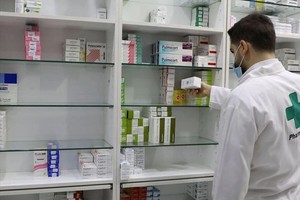
    Drug prices jump up to 400% as shortages strain Iranian pharmacies

The largest unpaid balances belonged to Dey and Dana Insurance, the director said.

The financial shortfalls come as hospitals face rapidly increasing costs for medicines and medical supplies, with treatment tariffs adjusted annually even as procurement prices change daily.

A director overseeing another hospital with more than 1,200 medical and administrative employees said inflation had made it increasingly difficult to replace medicines and supplies after use.

The price of Ringer's solution, a commonly used intravenous fluid, had increased by 600 percent over three years, the director said.

Insulin and widely used blood pressure medications have also risen in price by as much as 50 percent over the past month.

Some retirees said these medicines were unavailable at Social Security medical facilities, forcing them to seek supplies from other pharmacies.

Hospital costs rise faster than treatment tariffs

One private hospital with more than 300 beds and nearly 20 operating rooms has established a separate department to update medicine prices because they change daily, its director said.

The hospital is not profitable, with revenue covering only operating expenses and staff salaries, according to the director.

The mismatch between changing procurement costs and annually fixed treatment tariffs has added to the financial pressures on hospitals already waiting for overdue insurance payments.

The difficulties extend to Iran's public health insurance system.

  • Iran’s healthcare crunch forces patients to cut treatment

    Iran’s healthcare crunch forces patients to cut treatment

Inflation and rising expenditure have created an imbalance between resources and spending at the Iran Health Insurance Organization since the second half of the Iranian calendar year beginning in March 2024, its chief executive Mohammad Mehdi Nasehi said on October 24.

The Health Ministry owed the organization 420 trillion rials (about $157 million), while shares worth 850 trillion rials (about $318 million) transferred to settle outstanding receivables had not been converted into cash, Nasehi said.

Those figures cover the organization's wider network of contracted providers rather than the outstanding debts owed to individual hospitals.

Iran's Social Security Organization announced on November 3 that it had paid 50 trillion rials (about $19 million) to private pharmacies, family physicians and university-affiliated and private medical facilities.

The announcement did not specify how much of the outstanding debt to hospitals remained unpaid.

Patients face higher costs and reduced coverage

Private hospital executives said rising foreign exchange rates and tighter sanctions could make obtaining medicines and medical equipment more difficult.

Patients are also facing higher treatment costs and restrictions on insurance coverage, adding to the financial pressures across Iran's healthcare system.

The removal of some injectable medicines from outpatient insurance coverage is among the changes that could increase patients' out-of-pocket expenses.

  • Soaring medical costs and staff shortages strain Iran’s hospitals

    Soaring medical costs and staff shortages strain Iran’s hospitals

Some retirees have stopped visiting doctors or purchasing medicines because of treatment costs, retirement rights advocate Ali Akbar Eyvazi told the ILNA news agency on Thursday, November 5.

The removal of medicines from insurance coverage had extended to commonly used diabetes and blood pressure treatments, Eyvazi said.

Prices for some pharmaceutical products have increased by as much as 380 percent in recent months, while patients have described shortages and rising insulin prices.

Gold loses its shine as Iranians struggle to make ends meet

Nov 5, 2026, 04:13 GMT+0
•
Dalga Khatinoglu
100%
File photo: A jeweller weighs a pile of gold rings and bracelets

For years, Iranians have turned to gold to protect their savings from the relentless depreciation of the rial. Now, as war and soaring living costs deepen the economic crisis, some are selling those holdings to pay for everyday necessities.

The World Gold Council (WGC) said demand for gold bars and coins in Iran fell by more than half to 5.6 tonnes in the third quarter of 2026 compared with a year earlier.

“The war continued to disrupt daily life, and prompted some selling of bars and coins to cover living and relocation costs,” the report said.

Overall, Iranian demand for gold bars and coins reached 19.1 tonnes in the first nine months of 2026, down from 36.2 tonnes in the same period last year, a decline of approximately 47%.

“Iranian demand declined 17% to 5.4 tonnes as the ongoing war strained consumer sentiment and disrupted daily life,” the WGC said, referring to gold jewellery.

Jewellery purchases totalled 15.8 tonnes in the first nine months of 2026, compared with 21 tonnes in the same period last year.

An economy under strain

The decline comes amid a sharp depreciation of Iran's national currency and soaring gold prices. The rial has lost approximately 60% of its value against the US dollar over the past year.

Meanwhile, the price of the Bahar Azadi gold coin has surged by 141% over the past 12 months, putting new purchases increasingly beyond the reach of many households.

Years of US sanctions have restricted Iran's oil exports, access to international banking and foreign investment, depriving the economy of revenue and putting sustained pressure on the rial.

Decades of economic mismanagement, widespread corruption and inefficient state-dominated industries have compounded the damage, fuelling inflation and undermining living standards.

Official data from Iran's Statistical Center show that food inflation surged to nearly 123% last month, while prices for water, electricity and fuel almost doubled compared with October 2025.

The deteriorating economic situation has also been accompanied by job losses and a slowdown in business activity.

Wages fall behind living costs

Seyed Malek Hosseini, deputy minister for entrepreneurship development and employment at the Ministry of Cooperatives, Labour and Social Welfare, recently said around 500,000 jobs had been lost last year.

He added that a further 1.2 million to 1.4 million jobs had been lost following the latest war, which began on February 28. Hosseini put the country's current employed population at 23.5 million.

The financial pressure on Iranian households is also evident in the widening gap between wages and the cost of living.

Reuters recently reported that official estimates put the minimum monthly cost of living for a three-person working-class family at around $336, more than three times the average monthly wage of approximately $92 at the free-market exchange rate.

“As wages fail to keep pace with inflation, many families have exhausted savings, cut consumption or borrowed money to cover daily expenses,” Reuters reported.

For some Iranian households, gold is no longer simply a safeguard against the rial's collapse. It has become a way to pay for everyday necessities.

Iran can repair war damage, but can it revive its energy industry?

Nov 4, 2026, 14:57 GMT+0
•
Umud Shokri
100%
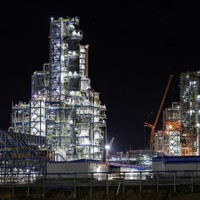
File photo: Iran's Bandar Imam petrochemical plant

Iran may be able to repair much of its war-damaged energy infrastructure without new Western technology. Whether it can rebuild a modern, reliable energy industry is another question.

Successive rounds of US and Israeli strikes have damaged oil storage facilities, gas-processing plants and petrochemical infrastructure.

Iranian engineers, supported by suppliers from China and Russia, may be able to restore substantial capacity.

But sanctions, limited investment, ageing equipment and the threat of further attacks complicate the prospects for lasting recovery.

Satellite analysis by the Conflict and Environment Observatory (CEOBS) following the June 14, 2025 attacks confirmed the destruction of four storage tanks at Tehran's Shahran depot.

The same analysis documented damage at South Pars Phase 14, where Iranian state media reported a temporary halt to 12 million cubic metres of daily gas production.

Further attacks in March 2026 damaged oil storage facilities at Shahran, Aqdasieh and Karaj, as well as the Tehran refinery site, according to CEOBS.

The International Energy Agency also identified damage to South Pars gas-processing facilities following strikes on Asaluyeh.

Petrochemical infrastructure suffered additional damage. Industry publication ICIS reported that April 4 strikes hit the Fajr 1 and Fajr 2 utility plants in Mahshahr, while the Bandar Imam complex sustained partial damage.

The Fajr facilities supply essential utilities to other industrial plants, meaning damage to them can disrupt production well beyond the immediate impact sites.

Challenges ahead

Some recovery has already been reported. On September 23, Reuters cited an Iranian official as saying that half the damaged South Pars capacity had been restored, although independent verification remained limited.

Iran has considerable domestic engineering expertise. Local contractors have continued developing oil and gas fields despite sanctions, while engineers at MAPNA have reported successful tests of upgraded heavy-duty turbines.

But repairing the physical damage caused by war is only one of the challenges facing an industry already struggling with years of underinvestment and restrictions on access to specialised technology.

As gas reservoirs mature, declining pressure can reduce production unless additional compression equipment is installed. Maintaining output therefore requires investment even at facilities that have escaped military attacks.

The problem is particularly acute at South Pars, the vast gas field shared with Qatar.

According to the US Energy Information Administration (EIA), the withdrawal of foreign partners disrupted plans for offshore compression at South Pars Phase 11.

The gap is even more pronounced in liquefied natural gas (LNG).

Iran has long sought to develop LNG exports, but sanctions-related technology restrictions have helped stall those ambitions, according to the EIA.

Restoring damaged gas-processing equipment could help recover domestic supplies. It would not, however, create a competitive LNG export industry, which requires specialised liquefaction technology, financing, shipping arrangements and long-term customers.

Moscow and Beijing to the rescue?

China and Russia offer potential alternatives to Western suppliers, but neither can be assumed to finance or rebuild Iran's energy industry on the scale required.

China is a major buyer of Iranian oil and could provide equipment, engineering services and project financing. Yet purchasing discounted crude does not necessarily translate into a willingness to undertake expensive, long-term infrastructure projects.

The EIA has documented the withdrawal of China's CNPC from South Pars Phase 11 after US sanctions were reimposed. Chinese companies considering new projects must still assess payment security, access to equipment and the returns available from investments elsewhere.

Russian assistance faces similar constraints.

A $40 billion memorandum of understanding signed between Gazprom and the National Iranian Oil Company in 2022 raised expectations of extensive Russian involvement. But the Congressional Research Service has questioned Russia's financial resources and commercial interest in expanding Iranian gas exports.

Reconstruction depends not on the value of memoranda but on financing secured, equipment delivered and facilities brought back into operation.

Damage, repair, repeat

Sanctions and restrictions on international payments limit Iran's access to foreign capital and imported equipment, while disruptions to oil exports further constrain the revenues available for reconstruction.

Even where Iran has the money and technical capacity to rebuild, the possibility of renewed military attacks creates another obstacle.

Although President Donald Trump has expressed skepticism about renewed strikes, US and Israeli planners have reportedly considered further attacks on Iranian petrochemical facilities.

The possibility of renewed strikes complicates long-term reconstruction. Companies may be reluctant to finance projects, supply specialised equipment or deploy personnel to facilities that could be attacked again.

This makes reconstruction priorities particularly important. Restoring gas treatment facilities and shared industrial utilities may bring multiple downstream operations back online, while repairing an isolated export facility may offer limited benefits if its supply connections remain disrupted.

Recovery timelines will also vary considerably. Some damaged units could restart within weeks or months if equipment is available, while major replacements and technological upgrades may take years.

Iran's engineers and its Chinese and Russian partners may be able to restore much of the damaged infrastructure.

But without sustained investment, specialised technology and protection against further attacks, Tehran risks becoming trapped in a cycle of destruction and repair rather than achieving lasting recovery.