• العربية
  • فارسی
Brand
  • Iran Insight
  • Politics
  • Economy
  • Analysis
  • Special Report
  • Opinion
  • Podcast
  • Live TV
  • Iran Insight
  • Politics
  • Economy
  • Analysis
  • Special Report
  • Opinion
  • Podcast
  • Live TV
  • Theme
  • Language
    • العربية
    • فارسی
  • Iran Insight
  • Politics
  • Economy
  • Analysis
  • Special Report
  • Opinion
  • Podcast
  • Live TV
All rights reserved for Volant Media UK Limited
volant media logo
INSIGHT

Behind Iran’s display of mercy, the gallows keep working

Sogand Sara Fakheri
Sogand Sara Fakheri

Head of Iran desk at JCFA

Sep 10, 2026, 01:54 GMT+1
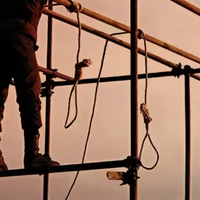
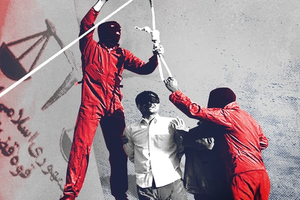
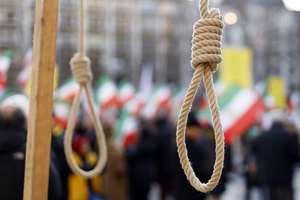
File Photo: A soldier stands on a scaffolding erected for executions in Iran

Iran is putting two faces of its justice system on display: highly publicized acts of compassion for thousands of prisoners, alongside an execution campaign that has killed hundreds and continues to put protesters on death row.

Iran’s leadership recently approved pardons or reduced sentences for 2,577 prisoners. The announcement came with the usual ceremonial packaging: a religious occasion, a request from the head of the judiciary and a generous act of compassion from above.

It is an impressive number. Large enough to make headlines and perhaps create the impression that something in Iran is becoming softer.

At almost the same time, the Revolutionary Court in Isfahan sentenced ten people arrested following the January protests to death. So much for the softer side.

These ten sentences are shocking, but they are not an isolated story. They were handed down in the middle of an execution campaign that has already taken hundreds of lives this year.

Iran Human Rights recorded at least 532 executions in the first eight months of 2026, including 82 in August alone. Only 77 of those 532 executions were announced by official sources. The rest were documented through the organization’s network and verified using independent sources.

In other words, while the Islamic Republic publishes its pardons, most of its executions happen with considerably less enthusiasm for publicity.

Iran Human Rights recorded at least 1,639 executions in 2025, a 68 percent increase from the previous year and the highest annual figure the organization has documented since 1989.

Many were sentenced to death for murder or drug-related offenses, often after proceedings criticized for serious violations of due process. But that distinction does not make the wider execution spree irrelevant to political repression.

The gallows create their own atmosphere. When a state executes people on such a scale, often without public acknowledgment, every new death sentence against a protester carries a very clear message.

At least 31 protesters had been executed by the end of August, according to Iran Human Rights. Twenty-nine of them had been arrested in connection with the January protests.

Amnesty International has also warned that dozens of protesters and dissidents remain under death sentences or at risk of execution.

The ten defendants in Isfahan are therefore not the entire story. They are the latest names added to a much larger campaign.

The case is known as the “Isfahan Shohada Square case.” According to matching reports by HRANA and Hengaw, those sentenced to death are Taraneh Rahimi, Navid Elyasi, Abolfazl Dadgostar, Mehdi Mansouri, Ahmadreza Saeidi, Mehrdad Boveyri, Mohammad Mehdi Asadi, Armin Gholami, Parsa Jafari and Mehdi Jafari, also known as Mehdi Jafari Khosravi.

All ten were also sentenced to 11 years in prison. Six other defendants received terms ranging from 16 to 36 years. Together, the prison sentences imposed on the 16 defendants amount to 256 years.

The charges include moharebeh, usually translated as “waging war against God,” allegedly through carrying bladed weapons, as well as destruction of public property, assembly and collusion, and propaganda against the state.

Two people died during the events around Shohada Square: a member of the Islamic Revolutionary Guard Corps and a homeless man. Yet the indictment reportedly did not charge the defendants directly with killing either of them.

According to HRANA and Hengaw, no documented evidence was presented establishing their responsibility for those deaths.

One detail is especially difficult to forget. A video found on the phones of some defendants reportedly shows Taraneh Rahimi, the only woman among the ten sentenced to death, trying to stop people from beating the homeless man.

She was reportedly attempting to prevent violence. The court sentenced her to death.

The defendants’ lawyers were denied access to significant parts of the case files and were not given sufficient time to review the evidence, according to the two organizations. The hearing was held inside Dastgerd Prison rather than an ordinary public courtroom.

During the proceedings, Ahmadreza Saeidi told the judges that an investigator had tortured him with electric shocks to his neck and genitals. There is no public indication that the allegation led to an independent investigation or caused the court to reconsider evidence obtained during his interrogation.

The full judgment has not been published, leaving no way for independent observers to examine the evidence or understand how the court justified ten death sentences without directly charging the defendants over the two deaths at the center of the case.

The verdicts are preliminary and can still be appealed. For the families, it offers limited comfort. They now have to wait while the same judicial system accused of denying the defense proper access to the case decides whether their loved ones should live.

This is what makes the pardon announcement so revealing.

Clemency is real for those who receive it. A prisoner returning home is not a public relations statistic to the family waiting at the door. A reduced sentence can restore years of someone’s life, and none of that should be dismissed.

But selective clemency should not be mistaken for a change in direction, especially while executions continue at this scale.

The 2,577 pardons offer the public one image of the state. The hundreds of executions offer another, one that receives considerably less official attention. Political defendants are being placed inside a system of capital punishment already operating at extraordinary speed.

The Isfahan case shows how that machinery can be directed against protest. A broad charge such as “waging war against God,” limited access to evidence, an allegation of torture and a closed hearing inside a prison can lead all the way to the gallows.

The pardons are meant to be seen. Most of the executions are not. Behind the official display of mercy, the machinery has not slowed down. Ten more people have now been placed in its path.

Most Viewed

Secret documents expose new network selling sanctioned Iranian oil
1
EXCLUSIVE

Secret documents expose new network selling sanctioned Iranian oil

2

War conditions curb mandatory hijab crackdown, Iranian official says

3
ANALYSIS

Iran’s gasoline price hike may add to revenues, but can it ease fuel shortage?

4
PODCAST

Why did Iran let back a singer who mocked its ‘sacred’ symbols?

5

Iran exports to Afghanistan fall at least 25% as rivals gain ground, trade official says

Banner
Banner

Spotlight

  • Behind Iran’s display of mercy, the gallows keep working
    INSIGHT

    Behind Iran’s display of mercy, the gallows keep working

  • Iran’s moderates question the price of prolonged war
    INSIGHT

    Iran’s moderates question the price of prolonged war

  • Former presidents push for public say on ending Iran war

    Former presidents push for public say on ending Iran war

  • Iran’s gasoline price hike may add to revenues, but can it ease fuel shortage?
    ANALYSIS

    Iran’s gasoline price hike may add to revenues, but can it ease fuel shortage?

  • Iran deploys security forces as gasoline price rise takes effect
    VOICES FROM IRAN

    Iran deploys security forces as gasoline price rise takes effect

Banner
•
•
•

More Stories

Iran’s moderates question the price of prolonged war

Sep 9, 2026, 18:35 GMT+1
•
Behrouz Turani
100%
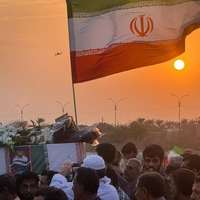
Mourners carry a coffin during the funeral of people killed in a US strike on Sirik, southern Iran, September 3, 2026.

Moderate and reformist figures in Tehran are increasingly warning that the country cannot sustain a prolonged war, challenging hardline calls for Iranians to accept further economic hardship as the price of resistance.

Their warnings come amid rising tensions in the Persian Gulf and Strait of Hormuz and growing concern that renewed military confrontations could escalate into a broader conflict.

Conservative lawmaker Gholamreza Tajgardoon on Tuesday urged Iranians to be prepared to “pay a price for their resistance.”

But several moderate and reformist figures have argued that years of sanctions, inflation and now war have left ordinary people with little capacity to absorb further economic pressure.

“Right now, in certain border and maritime regions, we are witnessing tension, conflict and military engagements,” veteran reformist figure Mohammad Atrianfar told Khabar Online on Tuesday. “One of the public’s serious concerns is whether these conflicts will lead to a full-scale war.”

Atrianfar said preventing a return to widespread war was an “unavoidable necessity” and called for clear red lines and emergency communication channels to help manage the conflict.

His comments come amid US strikes on Iranian tankers and Iranian attacks on American bases and warships in the region.

Atrianfar argued that diplomatic compromise should not automatically be treated as capitulation, saying the distinction between an honourable compromise and a damaging retreat depended on whether an agreement served national interests and restored stability.

Moderate political figure Mansour Haghighatpour made a similar argument, pointing to inflation and what he described as growing public exhaustion.

While Iran should maintain its ability to defend itself against foreign threats, he said, “the priority should remain securing a peace that guarantees national interests.”

His comments appeared to respond directly to Tajgardoon’s appeal for Iranians to accept the costs of resistance. Expecting people to endure continuing hardship without diplomatic progress was becoming untenable, Haghighatpour said.

Reformist politician Mahmoud Mirlohi focused on the physical and economic risks of a drawn-out conflict, warning that critical infrastructure, including power and petrochemical facilities, could become targets.

“Prolonged war and harsh sanctions have pushed Iranian society to its limits,” he said, arguing that Iranians needed “a chance to breathe.”

Mirlohi also criticised what he described as “extremist rhetoric and maximalist behaviour” at home, saying portraying Iranian political figures as advocates of continued war or nuclear escalation made diplomacy more difficult.

The increasingly public warnings reflect a broader argument within Iran over not only how the war should end, but how much more economic and social pressure the population can reasonably be expected to bear.

Hamidreza Jalaeipour, a reformist political figure generally supportive of the existing system, said Iranians had already endured more than two decades of sanctions, high inflation and stagnant economic growth.

He claimed more than 40% of the population was now below the poverty line and warned that “prolonging a war of attrition exacerbates this severe economic strain and risks severe public fatigue.”

“Iran needs realistic governance rather than radical idealism,” Jalaeipour said, accusing hardliners and partisan media of obstructing the flexibility needed for diplomacy and risking greater social unrest.

How body bags came to symbolize Iran's January killings

Sep 9, 2026, 13:04 GMT+1
•
Reza Haji Hosseini
100%
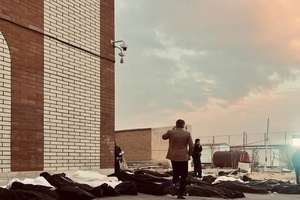
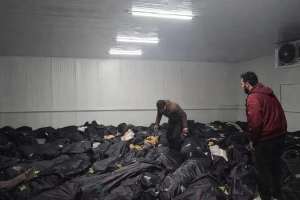
Families look for their loved ones in body bags piled outside a morgue in Iran, January 2026

Rows of black body bags became one of the defining images of Iran’s deadly January 2026 crackdown, as families searched among covered bodies and thousands of photographs for relatives killed or missing during the unrest.

Eight months later, images of the killings and crackdown remain vivid for survivors and the wider public. Iranians describing life after January have spoken of recurring nightmares, crying at night and difficulty returning to ordinary life. Some survivors have attempted suicide.

For many, life is now divided into before and after January.

Body bags have also acquired a place in Iran’s collective memory that they did not have before. Previously associated largely with films, natural disasters and major emergencies, they appeared repeatedly in footage documenting the aftermath of the January killings.

Images from earlier waves of unrest – the 2009 protests, November 2019 and the 2022 Woman, Life, Freedom movement – often showed the bodies of those killed: lying in streets, on hospital beds or wrapped in burial shrouds.

In January 2026, the dead were frequently hidden behind black bags and zippers. Faces disappeared from view and rows of bags remained.

The distinction matters. An object intended to preserve bodies for transportation and identification became one of the most recognizable images of the crackdown.

  • Seven months on, January protests still shape Iranians’ lives

    Seven months on, January protests still shape Iranians’ lives

Amnesty International counted at least 205 separate body bags in verified images from the Kahrizak morgue, south of Tehran. Human Rights Watch identified at least 400 bodies or body bags in three verified videos.

Eurovision News Spotlight, a verification project run by the European Broadcasting Union, also identified the green markings of Tehran’s Behesht-e Zahra cemetery on some of the body bags.

The trauma behind the bags

Part of the disturbing power of such images comes from what the bags conceal.

An exposed body, however difficult to see, retains a face and visible identity. Hundreds of nearly identical bags can instead reduce individuals to units: one package beside another, one number beside another, with the total continuing to rise.

For relatives searching for somebody missing, however, those bags have to be opened. Each zipper brings the possibility of encountering the body of a parent, child, sibling or friend.

This can be understood as a particular trauma associated with body bags: the combination of mass death, the temporary erasure of individual identity, the anxiety of identifying the dead and the repeated return of the same visual image.

There is also the question of dignity. Each bag contains a person whose family may be searching for them, yet footage showed bodies left in rows on the ground as relatives tried to identify them.

Such scenes are not unique to Iran.

  • 36,500 deaths in context: How Iran’s toll compares with wars and crackdowns

    36,500 deaths in context: How Iran’s toll compares with wars and crackdowns

After Egyptian security forces opened fire on protesters around Cairo’s Rabaa Square in the summer of 2013, the El-Iman mosque became a temporary morgue. Bodies were placed in tightly packed rows under white sheets. Volunteers wrote victims’ names on the coverings; some carried names and addresses, while others remained unidentified.

Families also searched morgues in Damascus after the fall of Bashar al-Assad’s government in Syria, opening bags, photographing faces and comparing them with images of missing relatives and acquaintances.

Those bags represented an archive of years of enforced disappearances, torture and deaths in custody.

Iran’s January 2026 images were different in one important respect. The bags appeared during the days and nights of the crackdown itself, within the existing system of hospitals, forensic facilities and cemeteries.

In much of the footage, rows of black bags are visible without names or identifying information that can be seen on their surfaces.

  • Over 36,500 killed in Iran's deadliest massacre, documents reveal

    Over 36,500 killed in Iran's deadliest massacre, documents reveal

The victims’ faces are concealed, but the sheer number of bags makes the scale of death visible.

The bags also did not arrive at morgues by themselves. Behind the images was a system responsible for collecting, transporting, recording and storing bodies.

What happened after the shooting

Mass killing does not end when shooting stops. Bodies have to be moved. That requires ambulances or other vehicles, body bags and labels, morgues or refrigerated containers and lists recording the dead. Decisions also have to be made about where bodies are stored, when they can be identified and under what conditions they are returned to families.

Reports following the killings on January 8 and 9 described shortages of body bags and bodies accumulating in hospitals and morgues.

That raises another question: where did the additional bags come from, and how prepared were authorities for handling large numbers of bodies?

Two procurement notices for body bags appeared around the time of the killings in Alborz province, one of the main centers of the protests and subsequent crackdown.

The Imam Hossein medical center in Alborz sought quotations on January 4, after the protests had begun, for 200 adult body bags and eight bags for children.

Shariati Hospital in Karaj had separately registered a request for 200 adult body bags on December 18, with the procurement notice published two days later.

  • Iranian protester undergoes months of secret treatment to save wounded leg

    Iranian protester undergoes months of secret treatment to save wounded leg

The timing, particularly of the Imam Hossein request, warrants scrutiny. But the records alone do not demonstrate that authorities anticipated mass killings, nor do they establish that these particular bags were subsequently used to carry protesters’ bodies.

Several links in the procurement chain are also missing, including final contracts, delivery receipts, shipment numbers and warehouse release documents.

Body bags are routine supplies for hospitals, cemeteries and emergency services. Purchasing them is therefore not in itself evidence of preparation for a crackdown.

Reports of shortages in cities including Arak, Khorramabad and Gorgan, however, suggest that ordinary stocks were rapidly exhausted. If so, additional supplies would have had to be distributed, potentially following further purchases.

That leaves a narrower but important question: what level of fatalities was the system for handling bodies equipped to manage, and did January’s death toll overwhelm that capacity?

Turning numbers back into names

In hospitals, forensic facilities and disaster operations, body bags serve practical purposes: separating and transporting the dead and protecting workers from contact with blood and bodily fluids.

Joint guidance from the World Health Organization and International Committee of the Red Cross says each body should be placed separately in a bag, with the location and time it was found recorded. Personal belongings should remain with the body and each person should receive a unique identification number.

That number is not intended to erase a name. Its purpose is to help establish an identity and ultimately return the body to relatives.

  • How one Tehran hospital became a window into Iran’s January massacre

    How one Tehran hospital became a window into Iran’s January massacre

For some Iranian families in January, the process appeared to work in reverse: they searched through bags and thousands of photographs in an effort to turn a number back into the name of somebody they knew.

The father of Iman Asadi spent five days searching police stations, prisons and hospitals before finding his son’s photograph among thousands of images of unidentified people.

In that collection, Iman was No. 11838.

A number intended to assist identification had become, at least temporarily, the marker of a person without a name.

Another father, Esmail Shokri, was filmed walking among body bags at the Kahrizak forensic facility in a 12-minute video, calling out for his son.

“Sepehr ... Sepehr, my son ... where are you?” Shokri called.

Every bag could have contained Sepehr. To his family, he had a face, a history and a name. From the outside, each closed black bag looked much like the next.

That is what distinguishes some of the most enduring images of January 2026 from those of earlier Iranian crackdowns. Previously, the victim’s body often occupied the center of the frame. This time, for many Iranians, the body bag stood between the dead and the public looking at them.

18 Iranian prisoners face possible death sentences over prison unrest

Sep 9, 2026, 12:03 GMT+1
100%

Eighteen prisoners held at Dastgerd prison in the central Iranian city of Isfahan could face death sentences over unrest and a fire at the facility, according to a judicial document obtained by Iran International.

The case has been sent to a Revolutionary Court, with some of the defendants accused of “leading the unrest” or “inciting war and killing,” charges that can carry severe penalties under Iranian law.

The document lists 75 prisoners as defendants in the case, while prosecutors in Isfahan have ordered at least 26 of them to stand trial.

The case was opened after unrest and a fire at Isfahan Central Prison, also known as Dastgerd, following an air strike near the prison in March. A military base and ammunition depot behind the prison were hit, while parts of the prison grounds and accommodation areas were also damaged.

Information accompanying the document said some prisoners were killed during the incident, and others died in the fire.

  • At least 916 executed in Iran since January - rights group

    At least 916 executed in Iran since January - rights group

Human rights groups, citing witnesses and relatives of prisoners, have said the unrest began after missiles struck a military site behind the prison and projectiles also hit parts of the prison complex. Guards and prison officials left some posts after the explosions, and inmates came out of their wards fearing the facility could collapse, according to those accounts.

The groups said some prisoners then set fire to blankets, sheets and other materials in an effort to force authorities to open doors and allow them into safer areas. Smoke spread through enclosed corridors as the fires grew.

Human rights groups have also said security forces later entered the prison and used live ammunition, pellet rounds and tear gas against inmates. According to witness accounts cited by the groups, some prisoners were shot, while others died from burns or smoke inhalation during the unrest.

  • Iran executes fifth defendant over January protests in Isfahan

    Iran executes fifth defendant over January protests in Isfahan

Serious charges brought

Prosecutors have brought charges including "inciting people to war and killing each other with the aim of disrupting national security," deliberate arson, destruction of public facilities and taking part in an illegal prison gathering that led to a riot during wartime, according to the document.

Other accusations include destroying surveillance cameras, windows and security doors, taking part in or assisting with property damage and setting fire to the prison infirmary.

Iran International identified 17 prisoners facing such accusations. The documents indicate that 18 prisoners could face death sentences.

  • Iran executes 20-year-old protester as fears grow for other detainees

    Iran executes 20-year-old protester as fears grow for other detainees

Five prisoners executed in separate case

The referral to the Revolutionary Court comes after five protesters held at Dastgerd were executed over the past two months in a separate case known as the "Alikhani Square" case.

Five other people sentenced in that case are at risk of imminent execution.

The latest case comes amid a rise in executions and heavy prison sentences in Iran in recent weeks as tensions with the United States have intensified.

Concerns over prison conditions

Concerns over Dastgerd have also grown over treatment of inmates and health conditions.

Political prisoner Abdolrasoul Mortazavi said in an audio message from the prison in June that some people detained during the January protests had been tortured. He also reported beatings, harsh interrogations, restrictions on contact with families and limits on outdoor exercise.

  • Iran executed at least 56 people since March, UN rights chief says

    Iran executed at least 56 people since March, UN rights chief says

Iran International has also received reports of worsening health conditions and a meningitis outbreak at the prison in recent weeks.

A source familiar with the situation told Iran International in August that several prisoners had died from infectious diseases. Information obtained by Iran International also indicated that meningitis had spread to most prison wards and that some inmates had been taken to Al-Zahra hospital in Isfahan.

Australian intelligence committee chair condemns IRGC threats against journalists

Sep 9, 2026, 08:56 GMT+1
100%
Australian Senator Raff Ciccone, Chair of Parliament’s Joint Committee on Intelligence and Security

Australian Senator Raff Ciccone condemned threats against journalists by Iran’s Islamic Revolutionary Guard Corps, telling Iran International they were “outrageous” and an attack on press freedom.

“It is quite wrong for the IRGC to be threatening journalists simply for doing their job,” Ciccone, Chair of Parliament’s Joint Committee on Intelligence and Security, said. “Journalists are entitled to report on what is occurring anywhere around the world, particularly the events in Iran.”

He said journalists must be able to work “without harassment or intimidation, or violence for that matter,” adding that Iranians had a right to independent reporting about events inside the country.

“The Iranian people are looking to the rest of the world to understand what is happening,” Ciccone told Iran International. “They have a right to independent reporting, and journalists must be protected while carrying out that work.”

He said the threats also affected Iranian journalists and government opponents living abroad, including members of the diaspora in Australia.

He described such threats as part of a broader pattern of intimidation by the IRGC and said governments should respond collectively.

“It’s no surprise that these threats are coming from the IRGC,” Ciccone said. “But intimidation cannot be allowed to silence journalists or communities overseas.”

Ciccone pointed to steps already taken by Australia and said Canberra should continue working with international partners to hold Iranian authorities accountable.

  • Australian lawmakers back Prince Pahlavi role in Iran transition

    Australian lawmakers back Prince Pahlavi role in Iran transition

“We also have to stand by the Iranian people,” he said. “The Iranian people are looking to the rest of the world for their support, and I can say that many people in Australia are with them 100%.”

He said Australia, Canada, Germany and other countries should stand with Iranians and condemn threats against journalists. He also backed diplomatic expulsions, sanctions against those linked to the IRGC and further action against the organization.

A senior official with Iran’s armed forces said in late August that journalists working for Persian-language media abroad could be placed on a list of military targets.

“Media outlets such as Iran International, BBC Persian and Radio Farda are directly connected to Mossad, the US Central Intelligence Agency and other foreign intelligence services and receive support from them,” said Abolfazl Shekarchi, a brigadier general and senior spokesman for Iran’s armed forces.

After his remarks, Canada also said its security and intelligence agencies are using a full range of tools to counter foreign interference and transnational repression.

In a response to Iran International, Public Safety Canada said authorities continuously monitor such threat s and can respond through investigations, criminal charges and disruption activities.

  • Who is Abolfazl Shekarchi, the Iranian general calling journalists military targets?

    Who is Abolfazl Shekarchi, the Iranian general calling journalists military targets?

Iran plans new university hijab directive as hardliners press for enforcement

Sep 8, 2026, 18:00 GMT+1
100%
File photo shows a confrontation between Iranian hijab enforcers and a woman not wearing the mandatory head covering.

Iran is preparing to issue a new compulsory hijab directive for universities, a senior official said Tuesday, as hardliners intensify pressure on women over mandatory veiling ahead of the anniversary of Mahsa Amini’s death in morality police custody.

Saeed Karami, deputy for cultural and political affairs at the Office of the Supreme Leader’s Representative in Universities, said the directive had been drafted and would soon be issued by the ministries of Science and Health, which oversee most universities and medical schools.

Karami told the semi-official Mehr news agency that existing regulations on hijab were “very good” and only needed renewed attention.

Asked whether universities would receive a “hijab charter,” Karami said “directive” was a more appropriate term. He did not give details of the measures it would contain or specify when they would take effect.

“We will certainly not witness the bitter incidents that we sometimes see on the streets at universities,” he said, without elaborating.

The planned directive comes amid a renewed push by hardline officials, clerics and government supporters to strengthen enforcement of compulsory hijab, four years after the death of Mahsa Jina Amini in morality police custody triggered the Woman, Life, Freedom uprising.

Women appearing in public without headscarves have since become commonplace in Tehran and other major cities, making rejection of compulsory hijab one of the most visible social changes to survive the 2022 protests.

Pressure has increased in recent weeks as hardliners demand implementation of the stalled Hijab and Chastity Law and criticize President Masoud Pezeshkian’s government for what they describe as a retreat on the issue.

Hardline lawmaker Mohammad-Taghi Naghd-Ali said Tuesday the government had backed down over hijab and accused it of failing to implement the legislation, describing compulsory veiling as one of the “foundations of the revolution.”

The more sweeping Hijab and Chastity Law remains suspended after the Supreme National Security Council instructed parliament not to promulgate it, Parliament Speaker Mohammad-Bagher Ghalibaf disclosed last year. The decision was widely seen as reflecting fears that aggressive enforcement could trigger renewed unrest.

Other signs of renewed pressure have appeared across Iran. The commander of the Revolutionary Guards in North Khorasan said this week that groups tasked with verbally warning women over their clothing were being revived, while pro-government gatherings demanding stricter hijab enforcement have been held in Qom, Birjand and Isfahan.

Iran International found last month that authorities had sealed at least 42 cafés, restaurants, shops, sports clubs and other businesses in 17 cities within three weeks over alleged violations of hijab rules and other Islamic norms.

Authorities have increasingly used business closures, judicial warnings and economic pressure rather than relying solely on the large-scale morality police patrols associated with enforcement before the 2022 uprising. Reports from inside Iran have nevertheless also pointed to renewed street warnings and patrol activity in several cities.

Universities have long been a particular focus of hijab enforcement and political control. Campuses became major centers of protest during the Woman, Life, Freedom uprising, and female students were among those who openly removed their headscarves in defiance of the state.

In April 2023, the Science Ministry said universities would not be required to provide educational, welfare and other services to students who refused to comply with hijab regulations. Female students were subsequently barred from campuses, summoned to disciplinary committees and in some cases suspended or expelled from dormitories.

At the University of Tehran, authorities later deployed women with seminary backgrounds to monitor students’ clothing, while students at several other institutions reported being photographed, having their student IDs recorded or being denied entry over their clothing.

At Tehran’s Amir Kabir University of Technology, students boycotted classes in 2024 after reports that more than 200 students had been barred from campus amid stricter dress-code enforcement. Similar pressure was subsequently reported at Tehran North Islamic Azad University.

  • Have Iran’s hijab enforcers returned to Tehran streets?

    Have Iran’s hijab enforcers returned to Tehran streets?

Signs of renewed tension have emerged again this year. The Student Basij at Iran University of Science and Technology recently protested the presence of unveiled female students at an event attended by senior officials from the Science Ministry.

Despite successive enforcement campaigns, many Iranian women continue to appear without mandatory hijab in streets, cafés, shopping centers and other public spaces, maintaining a form of civil disobedience that has persisted since the Woman, Life, Freedom protests.