• العربية
  • فارسی
Brand
  • Iran Insight
  • Politics
  • Economy
  • Analysis
  • Special Report
  • Opinion
  • Podcast
  • Iran Insight
  • Politics
  • Economy
  • Analysis
  • Special Report
  • Opinion
  • Podcast
  • Theme
  • Language
    • العربية
    • فارسی
  • Iran Insight
  • Politics
  • Economy
  • Analysis
  • Special Report
  • Opinion
  • Podcast
All rights reserved for Volant Media UK Limited
volant media logo
INSIGHT

Iran-US MoU draws praise and backlash across Tehran’s political spectrum

Maryam Sinaiee
Maryam Sinaiee

Iran International

Jun 15, 2026, 22:18 GMT+1
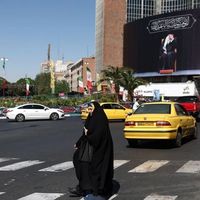
A woman walks past a billboard featuring a picture of Iran's late Supreme Leader, Ayatollah Ali Khamenei, after US and Iranian officials said they had reached a deal to end their war. June 15, 2026

The digitally signed Iran-US memorandum of understanding, expected to be formally signed in Geneva on Friday, has drawn sharply different reactions from Iranian officials, lawmakers, media outlets and social media users.

Iran's new Supreme Leader, Mojtaba Khamenei, has not yet commented on the announcement. President Masoud Pezeshkian, however, welcomed the development in a post on X, saying that if all provisions of the memorandum are implemented correctly, it could become "a source of pride for the country."

Pezeshkian said that an overwhelming majority of members of Iran's Supreme National Security Council had approved the text so that "America's genuine commitment to respecting the rights of the Iranian nation could be tested in practice."

Parliament Speaker Mohammad Bagher Ghalibaf, who also served as Iran's chief negotiator, struck a triumphant tone. In a message posted on X, he wrote that despite efforts by those who sought "to destroy the Iranian nation and force the country into submission, Iran had taken a major step toward final victory."

He added: "They wanted to, but they could not."

Judiciary chief Gholamhossein Mohseni Ejei also praised the outcome, saying the Islamic Republic had demonstrated "dignified and revolutionary diplomacy."

The announcement had an immediate impact on Iran's financial markets. The value of the US dollar and other foreign currencies, as well as digital assets such as Tether and gold prices, dropped following the news. Tehran's stock market also reacted positively when trading resumed on Monday.

Lawmakers split over agreement

Some members of parliament welcomed the reported memorandum.

Rouhollah Lak-Aliabadi told the conservative Tabnak news website that one of the memorandum's positive aspects was that “contrary to Washington's initial demands, there is no discussion of limiting the country's missile capabilities." He claimed that even American officials now speak of continued uranium enrichment "within specified frameworks."

"This shows that the Islamic Republic's military strength has been able to influence the course of negotiations," he said.

Hossein Samsami, a member of parliament affiliated with the hardline Paydari Front, argued that nuclear and regional negotiations are not permissible and that any future talks should serve only to buy time so that the country's deterrence capabilities can be strengthened.

In a post on X, he wrote that he follows the Supreme Leader's directives, but that his expert assessment differs.

This position was criticized by Lak-Aliabadi, who told Tabnak: "For someone to declare that even if the Leader supports a decision, he will still oppose it, is fundamentally unacceptable."

Hardline lawmaker Amirhossein Sabeti described the agreement as "hasty and weak," claiming it violated the Supreme Leader's red lines and reflected a "miscalculation" by officials.

According to Sabeti, "This agreement reflects the capabilities and understanding of the country's senior officials under current circumstances, not the satisfaction of the Supreme Leader." He further argued that the deal "will neither bring economic relief nor guarantee the country's security."

Mahmoud Nabavian, another hardline parliamentarian associated with the Paydari Front, called on authorities to provide the public with a detailed report on implementation of the memorandum, including provisions concerning the lifting of maritime restrictions, oil and petrochemical exports, banking and insurance services, and the release of frozen Iranian assets.

The hardline Raja News website criticized what it called an agreement with "the killer of the Leader," referring to US President Donald Trump, and questioned the lack of publicly available details regarding Iran's commitments under the memorandum.

Controversies over timing

Some hardliners also objected to the timing of the announcement. Because the news broke after midnight in Iran, while it was still June 14 in Washington — Trump's birthday — critics portrayed it as a symbolic gift to the US president.

Conservative journalist Parisa Nasr wrote: "Couldn't they have waited a few more hours until June 14 had passed in Washington before trumpeting the Iran-US peace agreement? Was giving a birthday gift to the killer of the martyred Leader also one of the unwritten conditions of the deal?"

Ahmad Qadiri, a hardline activist and researcher of international law, argued that Iran had obtained only promises while "what Trump has gained immediately is Iran's loss of credibility among the resistance front, lower oil prices, and having the agreement announced on his birthday."

Reformists and moderates welcome move

Several prominent reformist and centrist figures endorsed the reported agreement.

Former president Mohammad Khatami and former foreign minister Mohammad-Javad Zarif, who helped negotiate the 2015 nuclear agreement, both expressed support. In a statement, Khatami described acceptance of the memorandum as "a major and courageous step" and said that it was something "to be genuinely pleased about."

Reformist journalist Ahmad Zeidabadi offered a more measured assessment. Writing on his Telegram channel, he argued that the memorandum represented neither the surrender of one side nor the complete victory of the other.

"It is, like every other phenomenon, the ultimate result of the balance of power between the parties," he wrote, warning that absolutist interpretations favoring either side could complicate future negotiations aimed at reaching a final agreement.

The news website Rouydad24 described the current arrangement as "a major geopolitical ceasefire and a preliminary non-proliferation agreement" rather than a lasting peace settlement.

"Iranian diplomacy must now move from the phase of containing war to consolidating achievements and achieving the durable removal of sanctions — a marathon in which wisdom, domestic cohesion and avoiding unnecessary extremism are the first conditions for success," the report said.

In a commentary for Asr-e Iran, journalist Reza Ghibishavi argued that the end of the conflict could mark a historic turning point for the country.

"From Monday morning, with the official end of the war and the end of abnormal conditions, Iran enters a new era," he wrote. "A new Iran with a new leader, new circumstances, new experiences, a new society, a new region, a new agreement, a new America, and a new world. None of them will return to the past."

Most Viewed

Iran media publish purported details of Iran-US draft agreement
1

Iran media publish purported details of Iran-US draft agreement

2

Child labor rises as poverty deepens in Iran

3

Trump's Iran strategy underrates regime's resilience, ex-US diplomat says

4

World leaders welcome Iran-US deal, back path to final agreement

5
INSIGHT

Iran media split over US MoU as hardliners warn of retreat

Banner
Banner

Spotlight

  • Iran-US MoU draws praise and backlash across Tehran’s political spectrum
    INSIGHT

    Iran-US MoU draws praise and backlash across Tehran’s political spectrum

  • Iran media split over US MoU as hardliners warn of retreat
    INSIGHT

    Iran media split over US MoU as hardliners warn of retreat

  • Trump's Iran strategy underrates regime's resilience, ex-US diplomat says

    Trump's Iran strategy underrates regime's resilience, ex-US diplomat says

  • Lebanon may become first test of emerging Iran-US deal, experts say
    PODCAST

    Lebanon may become first test of emerging Iran-US deal, experts say

  • The uneasy mix of diplomacy and pressure in Canada’s Iran policy
    ANALYSIS

    The uneasy mix of diplomacy and pressure in Canada’s Iran policy

  • How Nourabad Mamasani became an early flashpoint of Iran’s January bloodshed

    How Nourabad Mamasani became an early flashpoint of Iran’s January bloodshed

•
•
•

More Stories

Iran media split over US MoU as hardliners warn of retreat

Jun 15, 2026, 18:18 GMT+1
•
Behrouz Turani
Iran media split over US MoU as hardliners warn of retreat
100%
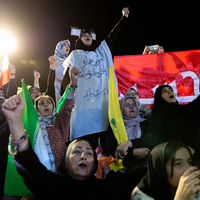
A woman wearing a shroud-like garment attends a rally of hardline Islamic Republic loyalists in Tehran on June 8, 2026, urging Iran’s negotiating team to adhere to Mojtaba Khamenei’s conditions.

Iranian newspapers and digital outlets split sharply over the emerging US-Iran memorandum, with hardliners denouncing it as retreat and pro-diplomacy outlets framing it as a system-backed path to end the war and ease economic pressure.

The Tehran-Washington Memorandum of Understanding, digitally signed on Sunday and expected to be formally signed in Geneva on Friday, has exposed deep divisions across Iran’s media landscape.

Editorials and opinion columns published after the announcement ranged from warnings of capitulation to claims that diplomacy had been made possible by Iran’s military deterrence and could offer the country a path out of war and economic pressure.

Hardliners warn of retreat

Kayhan, the hardline conservative daily, adopted a tone of open opposition, portraying the agreement as diplomatic capitulation under Western pressure and breaking with the official state narrative of victory.

“Surrendering to the Great Satan under the guise of an ‘antidote’ or regional de-escalation is a betrayal of our long-standing resistance,” Kayhan wrote.

“The historical track record shows that retreating before American demands never guarantees peace; it only invites further exploitation. This administration is repeating past blunders, turning a blind eye to our ultimate red lines.”

Khorasan, a conservative daily close to chief negotiator and parliamentary speaker Mohammad Bagher Ghalibaf, framed the MoU not as a peace settlement but as a tactical pause.

“The emerging agreement only aims to end the current war and does not resolve the underlying issues between Iran and the United States,” it wrote.

“This text merely delays the ‘final battle,’ giving both sides time to rebuild offensive and defensive military capabilities and prepare for a larger, full-scale war.”

Hamshahri, the conservative daily affiliated with Tehran Municipality, adopted a more cautious and technocratic tone. It neither endorsed nor rejected the agreement outright, but argued that any concessions from Washington were the result of Iran’s military deterrence rather than US goodwill.

“Let no one mistake this memorandum for a change of heart in Washington,” Hamshahri wrote.

“It is the undeniable triumph of the ‘Field’ and our defensive missile deterrence that dragged Trump’s negotiators to the table. Our economic relief is a direct dividend of our strategic strength, not a product of blind trust in foreign promises.”

Conservatives split over diplomacy

Not all conservative outlets rejected the agreement. Jomhouri Eslami, a traditional conservative newspaper, took the opposite line, criticizing hardline factions that it accused of trying to sabotage diplomacy.

“Anyone who possesses true national pride and genuine patriotism does not beat the drums of endless war,” the paper wrote.

“The remnants of past failed administrations are deliberately trying to stoke public unrest and invite economic ruin just to force their way back into power. True resilience is knowing when to secure the nation’s interests through calculated diplomacy.”

The split among conservative outlets reflected a broader divide inside the Iranian establishment: whether the MoU should be presented as a forced retreat, a tactical military pause, or a pragmatic decision backed by the state.

Reformists defend the agreement

Reformist newspaper Shargh focused on the structural pressures facing Iran, arguing that diplomacy carried costs but that continued economic siege left the country with few viable alternatives.

“We have reached a critical junction where the heavy toll of economic warfare and international naval blockades has worn down our baseline financial structures,” Sharq wrote.

“Confronted with a choice between managed tactical retreats or total systemic rupture, holding a unified defense line via calculated engagement remains our only viable shield against unchecked American geopolitical overreach.”

Etemad, a reformist daily closely aligned with President Masoud Pezeshkian’s administration, emphasized institutional cohesion and warned against internal fractures during the high-stakes implementation phase.

“The finalization of this text is not the decision of a single rogue faction or isolated ministry,” Etemad wrote.

“It is the calculated strategy of the entire sovereign system. The judiciary must act firmly against coordinated internal actors who use falsehoods, defamation, and targeted threats to undermine national unity at the very hour the country needs internal stability most.”

Arman-e Melli, a reform-leaning centrist publication, focused on the economic implications of the agreement, especially the need to ensure that sanctions relief and the lifting of shipping restrictions produce tangible results.

“While the baseline text provides a necessary safety valve for the national currency and immediate relief for global maritime commerce, the true test lies in the verification phase,” the paper wrote.

“The Foreign Ministry must ensure that the lifting of shipping blockades and primary oil sanctions occurs concurrently with our own adjustments, preventing any unilateral bad-faith maneuvers from Washington.”

Digital outlets highlight political fallout

Moderate news website Khabar Online celebrated the breakthrough while highlighting the anxiety it has created among hardliners and regional rivals.

“This historic text marks the definitive victory of collective wisdom over blind extremism,” it wrote.

“While radical elements inside the country scream betrayal, this agreement dismantles the multi-decade campaign to isolate Iran, offering a path where our core nuclear infrastructure remains intact while the economic siege is shattered.”

Fararu, a reform-leaning website, focused on the widening split within the conservative camp, saying mainstream conservative figures were increasingly distancing themselves from the hard right.

“The political landscape has completely shifted overnight,” Fararu wrote.

“Mainstream conservative pillars and major establishment figures are openly breaking away from the ultra-radical factions who are screaming ‘treason’ on the streets.”

Rouydad24 took a sharper institutional angle, arguing that opposition to the deal could isolate hardliners from the state’s decision-making structure.

“By standing against a deal approved at the highest levels of the National Security Council, the extreme right is effectively alienating themselves from the core governance architecture of the Islamic Republic,” it wrote.

Nour News, linked to the Supreme National Security Council, stayed close to the official line, presenting the agreement as a victory for Iran’s combined strategy of deterrence and diplomacy.

“Through a grueling, multi-month diplomatic campaign backed by unbreakable defense capabilities, the Islamic Republic has successfully achieved its primary strategic objectives,” Nour News wrote.

“The immediate and permanent termination of hostile operations across all fronts, coupled with the absolute lifting of the naval embargo, stands as an unvarnished testament to the efficacy of our dual strategy of active deterrence and robust negotiation.”

A deal, and a domestic battle

Taken together, the reactions show that the MoU has not only opened a new diplomatic phase between Tehran and Washington, but also triggered a domestic battle over how the agreement should be understood.

For hardliners, it risks being framed as a retreat from Iran’s red lines. For pro-diplomacy outlets, it is a state-backed attempt to end the war, ease economic pressure and prevent further escalation.

The sharpness of the debate suggests that the next stage of the MoU may be fought not only at the negotiating table, but also inside Iran’s political and media establishment.

Iran says US MoU may be signed in days as hardliners warn of retreat

Jun 12, 2026, 22:22 GMT+1
Iran says US MoU may be signed in days as hardliners warn of retreat
100%

Iran’s foreign minister said a Memorandum of Understanding with the United States could be signed remotely in the coming days, even as Tehran said the text was not final and hardliners attacked both the emerging deal and his handling of its public messaging.

Foreign Minister Abbas Araghchi told state television Friday that the memorandum could be signed once the final stages of negotiations are completed.

“Probably in the coming days, the memorandum of understanding between us and the United States will be signed,” Araghchi said.

He added that the signing would take place digitally and remotely after the final negotiating stages are passed, saying the process would be announced and could happen “in the coming days.”

But Araghchi also cautioned that the memorandum had not yet been signed and could still change. Foreign Ministry spokesman Esmail Baghaei said separately that the text was in the final stages of internal review and that no final decision had been made.

“Regarding the text of the understanding, we are in the final internal review stages. A meeting of the relevant bodies is currently underway,” Baghaei said.

Interim deal before nuclear talks

Araghchi sought to present the memorandum not as a final nuclear settlement, but as an interim political and security arrangement that would have to be implemented before any nuclear negotiations begin.

He said nuclear talks with the United States would take place only at a later stage and would not proceed unless the proposed interim deal was implemented first.

According to Araghchi, the interim arrangement would include reopening the Strait of Hormuz and ending conflicts on multiple fronts. He said management of the strait would not return to the pre-war era, adding that sovereignty over the waterway belonged to Iran and Oman and that Iran would secure safe passage for ships through it.

Araghchi also said the draft memorandum contains 14 articles and that nuclear issues had been moved to a second phase of negotiations lasting 60 days. He said the first phase included ending the war in Iran and on other fronts, as well as mutual commitments by Tehran and Washington not to interfere in each other’s internal affairs.

The comments came after Araghchi wrote on X that the “Islamabad Memorandum of Understanding” had never been closer to finalization, while urging media outlets not to speculate about its contents before the process is complete.

Hardliners target Araghchi

Araghchi’s public messaging quickly drew criticism from hardline circles, especially after President Donald Trump reposted his message and described it as “very positive.”

Fars News Agency, which is affiliated with the Revolutionary Guards, criticized Araghchi for what it called an “ambiguous” response to Trump’s rejection of Iranian media reports about the terms of a possible agreement.

The outlet said Araghchi’s English-language post failed to directly rebut Trump’s claim that leaked Iranian accounts of the agreement were false. Fars said his call for media restraint could be interpreted as an indirect confirmation that some of the published Iranian reports were inaccurate.

Fars also noted that Trump reposted Araghchi’s message shortly after it was published, portraying the Iranian foreign minister’s remarks as support for his own version of the negotiations.

Trump had earlier rejected Iranian media reports about the possible terms of the MoU, saying leaked details published in Iran had “NOTHING” to do with the written terms and bore “no relation to the truth.” He later told Axios that Iran had privately “apologized for putting out false information,” while saying he still believed a deal could be signed over the weekend or on Monday.

Hardline lawmaker Mahmoud Nabavian also criticized the latest version of the draft, saying it was more damaging than two earlier versions and involved greater Iranian concessions.

“After seeing the text of the agreement, I must say that compared with the two previous versions, it is more damaging and Iran’s retreats have also increased,” Nabavian said.

He posted a screenshot of Trump reposting Araghchi’s remarks and used it to attack Iranian officials involved in the talks.

“An agreement cooked up by the architects of the disgraceful JCPOA is certainly pure loss,” Nabavian wrote, using a phrase long used by hardliners to criticize the 2015 nuclear deal.

Several Friday prayer leaders also warned against compromise with Washington. Ahmad Alamolhoda, the Friday prayer leader in Mashhad, said no understanding would be acceptable without the approval of Supreme Leader Mojtaba Khamenei.

Mohammad Nabi Mousavifard, the Friday prayer leader in Ahvaz, said any retreat before what he called the “US and Israeli front” was “forbidden and unacceptable,” while Mohammad Mehdi Hosseini Hamedani in Karaj warned that countries assisting Iran’s enemies could become targets.

Conflicting reports over terms

The political pressure has been sharpened by sharply different accounts from Tehran and Washington over what the memorandum actually contains.

Iranian state media published details of what it called a 14-point draft understanding with the United States, including a ceasefire on all fronts, the lifting of the naval blockade and oil sanctions, the release of blocked funds, and future talks limited to nuclear and sanctions issues while excluding Iran’s missile program and support for regional allies.

Mehr News Agency said the draft included reconstruction projects worth at least $300 billion and the release of billions of dollars in frozen Iranian assets. It said final talks would not start until some oil sanctions were suspended, part of the frozen assets were released and the naval blockade was lifted.

US officials have described the emerging deal very differently.

A senior US official told Reuters the MoU would require the dismantling of Iran’s nuclear program, the on-site destruction and subsequent removal of its highly enriched uranium from Iran, and a long-term inspection regime to enforce compliance.

The official said the deal would be “performance-based,” meaning Iran would receive no access to frozen assets until it had fulfilled its obligations.

Fox News, citing a White House official, reported that those obligations would include dismantling Iran’s nuclear program, removing nuclear material and ending support for proxy groups before sanctions relief is granted.

Vice President J.D. Vance also said Iranian authorities would receive no money simply for signing an agreement or attending a meeting.

“There is a lot of misinformation being circulated about a possible agreement to reopen the Strait of Hormuz and end the Islamic Republic’s nuclear weapons program,” Vance said.

Close, but contested

The hardline backlash has contrasted with signals from some senior officials that Iran is preparing for possible implementation.

Parliament Speaker Mohammad Bagher Ghalibaf, who heads Iran’s negotiating delegation, said commitments made under a looming deal with the United States must be upheld, warning there would be “no ifs, no buts, no excuses.”

Fars has denied reports that an agreement would be signed in Geneva on Sunday, saying Iran’s review and decision-making process had not been finalized and that claims about both the timing and location were “completely false.”

The denial effectively overtook earlier speculation in Iranian media over a public signing ceremony and who might represent Tehran if one took place.

For now, Iranian officials are presenting the memorandum as close to completion but still unsigned, while Washington is insisting that any benefits for Tehran will depend on concrete performance.

That gap has left both sides trying to shape the public narrative before any document is signed.

In Tehran, the dispute has already moved beyond the content of the memorandum itself to a broader question: whether the leadership can sell an interim understanding with Washington to a political base that still views direct compromise with the United States as a humiliation.

Historian and analyst Abdollah Shahbazi said any document signed at this stage would likely be a memorandum of understanding rather than a legally binding agreement, warning that any such text could at best provide a temporary pause before tensions return.

Iran officials threaten Hormuz escalation as Trump says deal is near

Jun 12, 2026, 06:18 GMT+1
•
Maryam Sinaiee
Iran officials threaten Hormuz escalation as Trump says deal is near
100%
Vessels are anchored in the Strait of Hormuz, as seen from Musandam, Oman, June 11, 2026.

Hours after threatening to hit Iran “very hard,” President Donald Trump said a deal with Tehran was close, leaving Iranian officials to balance threats of retaliation with signals that talks over Hormuz, sanctions relief and a fragile ceasefire are still alive.

The sudden shift followed a volatile day in which US forces were reportedly hours away from launching new strikes inside Iran before Trump called off the operation and said the two sides had reached what he described as a “great deal.”

Reports by Axios, Politico and other outlets said the emerging memorandum of understanding would immediately reopen the Strait of Hormuz without tolls, lift the US blockade, extend the ceasefire for 60 days, including in Lebanon, and leave detailed nuclear negotiations for a second stage.

The agreement has not been formally signed. Axios reported that it still needed final approval, while Iran’s Foreign Ministry said Tehran had not reached a final decision. Al Arabiya reported that Iran had conveyed approval of a draft through Qatari mediators.

The latest diplomatic push came after a sharp escalation in rhetoric. Trump had earlier threatened new strikes against Iran and suggested the United States could eventually take control of Kharg Island and other parts of Iran’s oil infrastructure.

For Tehran, the public response has mixed defiance with pressure tactics.

Ali Abdollahi, commander of Iran’s Khatam al-Anbiya Central Headquarters, warned that attacks on Iran’s energy infrastructure could threaten exports across the region.

“Either oil and gas exports will remain available for everyone, or they will be possible for no one,” he said, adding that Iran would respond more forcefully if US attacks continued and that “the fire of war could spread further.”

Parliament Speaker Mohammad-Bagher Ghalibaf also warned that US actions could destabilize the region and energy markets.

“Wrong strategies and impulsive decisions will reset the entire board for the worse, explode energy infrastructure and markets, and create an endless quagmire that you will be stuck in for years,” he wrote on X. “You will see a different Iran.”

Mohsen Rezaei, a military adviser to Supreme Leader Mojtaba Khamenei, mocked Trump’s strategy and said military pressure would deepen Washington’s problems.

“The unhinged US president imagines that bombs can get him out of the quagmire he himself created,” Rezaei wrote. “But Iranian missiles will sink him even deeper into it.”

He added that Washington must choose between accepting Iran’s terms and losing what he called the last remains of its credibility.

Lawmaker Mojtaba Zarei said Iran had effectively moved beyond the ceasefire, saying Tehran was using its military power in three arenas: the Strait of Hormuz, the blockade front, and Lebanon and Bab al-Mandab. He said Iran would not relinquish control over Hormuz.

Iranian state media have also sought to portray the US strikes as ineffective and Trump’s threats as exaggerated. Outlets including Fars, IRNA and state broadcaster IRIB have described the attacks as aggression and a repeated violation of the ceasefire, while emphasizing reported damage to civilian infrastructure, including drinking-water reservoirs in southern Iran.

They have largely ridiculed Trump’s remarks about taking Kharg Island and Iranian oil infrastructure, describing them as delusion, adventurism or hollow threats.

Still, Iranian-linked actions and claims have continued around the edges of the ceasefire. Fox News reported that US forces shot down two Iranian one-way attack drones after an attempted strike on commercial ships transiting the Strait of Hormuz.

Iranian state media also reported that the IRGC Navy had confronted what it described as a “violating” vessel near Sirik and forced an oil tanker to comply with a traffic prohibition order.

The mixed signals have left analysts divided over whether the latest exchange marks a return to war or another stage of coercive bargaining.

Hassan Hanizadeh, a foreign policy analyst, told Fararu that the US strikes appeared aimed less at launching a full-scale campaign than at restoring Washington’s initiative.

“The United States is trying to shift the psychological balance in its favor through limited military actions,” he said.

Hanizadeh argued that the likelihood of a full-scale war in the short term remains low, and that Washington is instead pursuing a war of attrition combining military pressure with economic tools.

Others in Tehran have described the strikes as part of the negotiating process itself. Ebrahim Azizi, chairman of parliament’s National Security Committee, called the military operations “the military annex to the negotiating table.”

Political analyst Hossein Ghatib argued that Washington is trying to turn the Strait of Hormuz from a geopolitical asset for Iran into a source of military, economic and diplomatic vulnerability.

He said recent attacks on coastal radars, air-defense systems, naval command centers, drone bases and missile facilities appeared designed to weaken Iran’s ability to monitor and control the waterway.

But Shahin Shahid-Saless, an international affairs analyst, argued that military pressure is unlikely to soften Tehran’s position.

“Under military pressure, no matter how powerful, the Islamic Republic will not change its position,” he wrote on X. “I would even go further and say that heavy bombing will not soften its stance; it will make it harder and less reconcilable.”

That tension now defines the moment: Washington is using military threats and a blockade to push Tehran toward a preliminary deal, while Iranian officials are threatening Hormuz, US interests and regional energy flows to raise the cost of further pressure.

Whether the emerging agreement holds may depend less on Trump’s claim that the deal is nearly done than on whether Tehran treats the current pressure as a reason to sign – or as another reason to harden its terms.

Tit-for-tat under ceasefire: Experts warn of new normal in Mideast conflict

Jun 12, 2026, 00:55 GMT+1

The Middle East may be entering a period in which ceasefires no longer end wars but manage them, as the warring sides trade limited strikes below the threshold of an all-out war, experts told Iran International’s townhall held in Washington DC.

The discussion, hosted by Iran International’s Negar Mojtahedi, centered on whether the latest ceasefire in Lebanon marks the end of a war or the beginning of a more dangerous phase: a regional conflict in which Iran increasingly treats attacks on its proxies as attacks on itself.

Continue reading


Tit-for-tat under ceasefire: Experts warn of new normal in Mideast conflict

Jun 11, 2026, 19:46 GMT+1
Tit-for-tat under ceasefire: Experts warn of new normal in Mideast conflict
100%
From right to left: Negar Mojtahedi, Alex Vatanka, Robert Satloff, and Ambassador David Hale attend Iran International's townhall in Washington DC on June 10, 2026.

The Middle East may be entering a period in which ceasefires no longer end wars but manage them, as the warring sides trade limited strikes below the threshold of an all-out war, experts told Iran International’s townhall held in Washington DC.

The discussion, hosted by Iran International’s Negar Mojtahedi, centered on whether the latest ceasefire in Lebanon marks the end of a war or the beginning of a more dangerous phase: a regional conflict in which Iran increasingly treats attacks on its proxies as attacks on itself.

A ceasefire that does not end the war

Alex Vatanka, a senior fellow at the Middle East Institute, said Iran’s latest posture toward Lebanon should be viewed against the long arc of the Islamic Republic’s presence there.

He noted that it has been more than four decades since the first official officers of the Islamic Revolutionary Guard Corps arrived in Lebanon, making the country a central pillar of Tehran’s regional project.

Alex Vatanka
100%
Alex Vatanka

For years, Vatanka said, Iran used Lebanon and Hezbollah to project power, particularly against Israel. But recent events suggest Tehran may now be entering “a new chapter,” one in which the distinction between Iran and its proxy network becomes more blurred.

“An attack on Hezbollah, an attack on the Houthis, an attack on the Hashd al-Shaabi is going to, from now onward, be considered an attack on Iran,” Vatanka said, describing what Iranian officials have presented as a new defense doctrine.

He cautioned that if taken literally, such a doctrine could mean an open-ended regional confrontation. Any strike on Hezbollah in Lebanon, the Houthis in Yemen, or Iran-backed militias in Iraq could invite a direct Iranian response, turning local battlefields into triggers for wider escalation.

Vatanka said Tehran appears to be defending its proxy strategy at a moment when many analysts had expected the opposite. After October 7 and the heavy blows inflicted on Iran-backed groups, some believed the Islamic Republic might conclude that its “forward defense” strategy had failed. Instead, he said, influential voices in Tehran appear to be arguing that this is precisely the moment to double down.

Iran’s umbrella over Lebanon

Robert Satloff, executive director of the Washington Institute, said Lebanon is now caught between two competing visions of its future.

“There are two competing realities in Lebanon,” Satloff said. “One reality is Iran asserting its umbrella to control Lebanon... The other reality is Lebanon and Israel negotiating a security agreement, potentially a peace agreement.”

That contrast may define the next phase of the conflict. In one scenario, Iran tries to reassert control through Hezbollah and make clear that Lebanon remains part of its regional security architecture. In the other, Lebanon’s government attempts to reclaim sovereignty and pursue security arrangements with Israel, with US backing.

Robert Satloff
100%
Robert Satloff

Satloff said Iran’s attempt to claim Lebanon under its umbrella has not succeeded, but neither has the effort to fully disarm Hezbollah. He described the challenge as a contest between Iran’s regional power projection and a fragile Lebanese state trying to implement commitments it has made before but repeatedly failed to fulfill.

He also argued that Iran’s latest direct attack on Israel showed weakness rather than strength. Compared with previous barrages involving hundreds of missiles, he said, the latest attack was limited and intercepted, exposing the degradation of Iran’s capabilities rather than demonstrating strategic confidence.

Hezbollah down, but not out

Ambassador David Hale, a distinguished diplomatic fellow at the Middle East Institute and former US ambassador to Lebanon, Jordan and Pakistan, said one of the most striking changes is Hezbollah’s current vulnerability.

“Hezbollah is so degraded, it's down but not out, but it's so degraded that it can't defend itself,” Hale said. “Iran is coming in to defend its proxy. It's always the other way around.”

For Hale, that reversal is significant. Hezbollah was long understood as one of Iran’s most powerful deterrent tools, a force capable of threatening Israel and shaping Lebanese politics on Tehran’s behalf. Now, he said, Iran’s direct intervention suggests Hezbollah can no longer perform its traditional role with the same effectiveness.

Ambassador David Hale
100%
Ambassador David Hale

Still, Hale warned against assuming that Lebanon can resolve the Hezbollah question through military action alone. He said sovereignty is not “a light switch,” and disarming Hezbollah will require a political process as well as military pressure.

Lebanon’s state institutions, he said, remain weak by design, reflecting the country’s sectarian balance. Although President Joseph Aoun and Prime Minister Nawaf Salam have shown willingness to engage in a new direction, Hale said the Lebanese Armed Forces are unlikely to simply move into Hezbollah-controlled areas “guns blazing.” A durable solution would require humanitarian support, political alternatives for Lebanon’s Shiite community, and a credible state presence in the south.

The US as the decisive variable

The panelists agreed that whether this becomes the region’s new normal depends heavily on Washington.

Satloff said Iran’s attacks across the region, including against Kuwait, Bahrain and a US base in Jordan, should remind Arab states “who the real aggressor is” and create an opportunity for President Donald Trump to rally regional partners against Tehran. But he warned that the moment could be lost if Washington quickly returns to seeking any deal it can get.

Hale said the United States should rely less on public rhetoric and more on sustained pressure. He argued that Tehran understands violence and intimidation, and that Washington must be prepared to respond with persistent military, economic and political pressure.

100%

But the panel also raised doubts about the coherence of US strategy. Vatanka said he was struck by how much planning appeared to have gone into the military side of the confrontation, and how little into the political endgame. The stated US goal, he noted, has shifted from encouraging Iranians to challenge the regime to narrower objectives such as the nuclear file, trade and the Strait of Hormuz.

That uncertainty may be what makes the current moment so dangerous. A ceasefire may reduce the intensity of the fighting, but if Iran continues to defend its proxies as extensions of itself, Israel continues to strike perceived threats, Arab states are drawn into the line of fire, and Washington alternates between pressure and dealmaking, the region could remain trapped in a cycle of calibrated escalation.

Audience questions turn to Washington’s endgame

The audience Q&A shifted the discussion from battlefield dynamics to whether Washington has a political strategy to match its military pressure on Tehran.

Asked about regime change, Hale warned against raising expectations among Iranians without being prepared to follow through.

Satloff said Washington should instead invest in tools that prepare the ground for change, including stronger broadcasting to Iranians, internet access, and visa or asylum pathways for dissidents.

Vatanka said the deeper problem remains the lack of a coherent US strategy toward Iran.

100%

The exchange underscored a central point of the townhall: without a political endgame, military pressure alone may leave the region trapped in a cycle of ceasefires, strikes and retaliation.

For now, the experts suggested, the Middle East is not clearly moving from war to peace. It may instead be settling into a volatile gray zone: a ceasefire era in which the guns never fully fall silent.