World leaders welcome Iran-US deal, back path to final agreement
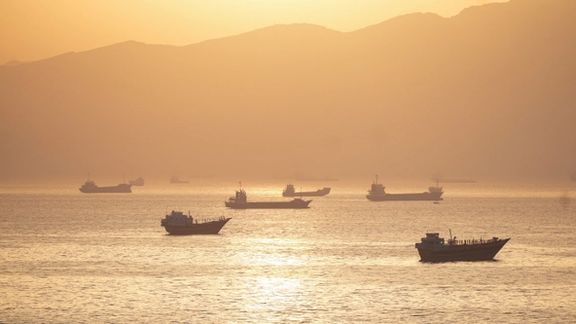
World leaders welcomed the agreement between Iran and the United States to end months of conflict, expressing support for the ceasefire and the negotiations expected to follow.
World leaders welcomed the agreement between Iran and the United States to end months of conflict, expressing support for the ceasefire and the negotiations expected to follow.
The strongest endorsements came from regional mediators and European governments, which described the breakthrough as a major step toward restoring stability in the Middle East and preventing further escalation.
Qatar's Prime Minister welcomed the memorandum of understanding reached between Tehran and Washington and voiced support for the next phase of negotiations.
Doha has played a central role in diplomatic efforts throughout the conflict and was among the key countries involved in mediation.
UN Secretary-General António Guterres congratulated both sides for reaching what he described as a peace deal providing for "an immediate and permanent ceasefire, the reopening of the Strait of Hormuz, as well as a framework for further negotiations."
"This represents a critical step towards the peaceful settlement of the conflict," Guterres said, while thanking Pakistan, Qatar, Egypt, Saudi Arabia, Türkiye and other regional countries for helping facilitate the agreement.
British Prime Minister Keir Starmer also welcomed the deal, saying London stood ready to support the technical negotiations that will now begin.
"I warmly welcome today's agreement reached between the United States and Iran," Starmer said, reiterating Britain's longstanding position that Iran must never acquire a nuclear weapon.
Japan's Prime Minister Sanae Takaichi also welcomed the announcement, expressing hope that "free and safe navigation through the Strait of Hormuz will be ensured in practice, and that a final agreement on Iran's nuclear issue and other matters will be reached as soon as possible."
In a joint statement, Britain, France, Germany and Italy signaled their readiness to ease sanctions on Iran in response to steps addressing its nuclear program.
"Iran must never acquire a nuclear weapon. We stand ready to work with the US, Iran and the IAEA to this end," the four countries said.
The international reaction followed announcements by Iranian and US officials that they had reached a memorandum of understanding ending hostilities and launching a 60-day period of negotiations on a final settlement.
Tehran has said final negotiations will begin only after implementation of key provisions in the framework agreement, including the lifting of the maritime blockade and the release of Iranian funds.
US President Donald Trump described the agreement as a historic achievement, saying it would bring "peace and security" to the region and allow for the reopening of the Strait of Hormuz, one of the world's most important energy shipping routes.
While many details remain unresolved, the broad international backing suggests governments across the region and beyond are eager to see the fragile agreement evolve into a lasting settlement.





Iran's state-affiliated Mehr News on Sunday published what it described as details of a 14-point draft memorandum of understanding between Tehran and Washington, provides for the release of $24 billion in frozen Iranian assets during the 60-day talks
The reported draft has not been independently verified, and neither Iranian nor US officials have publicly confirmed its contents.It appears to match a version first published by Mehr News on Friday.
According to Mehr, the draft begins with an immediate and permanent end to military operations across all fronts, including Lebanon, alongside a US commitment not to interfere in Iran's internal affairs and to respect the sovereignty of the Islamic Republic.
The report says Washington would commit to lifting the naval blockade within 30 days, withdrawing forces from around Iran and allowing the reopening of the Strait of Hormuz under Iranian arrangements during the same period.
The draft also reportedly provides for the release of $24 billion in frozen Iranian assets during the 60-day talks, with half the funds becoming available before negotiations begin.
The publication comes as regional and international leaders welcomed news of the framework agreement.
Qatar's prime minister, British Prime Minister Keir Starmer and other officials have publicly endorsed the breakthrough, while US President Donald Trump described it as a "great deal" that would bring peace and security to the region and lead to the reopening of the Strait of Hormuz.
One of the most politically sensitive provisions concerns the scope of future negotiations.
According to Mehr, discussions would be limited to the fate of enriched uranium, enrichment activities, sanctions relief and economic reconstruction. Iran's missile program and support for allied armed groups would be explicitly excluded from the agenda.
On the economic front, the draft reportedly calls for the suspension of sanctions on Iranian oil, petrochemical products and related exports, allowing Tehran full access to the resulting revenues. It also includes a requirement for the United States and its allies to present reconstruction plans worth at least $300 billion for Iran.
Mehr reported that the two sides would then enter a 60-day period of negotiations aimed at reaching a final agreement covering Iran's nuclear program and the lifting of US primary and secondary sanctions, as well as UN Security Council and IAEA-related restrictions.
Under the reported framework, Iran would reiterate its commitment under the Nuclear Non-Proliferation Treaty not to pursue nuclear weapons. During the negotiating period, the United States would reportedly refrain from deploying additional forces to the region or imposing new sanctions.
The contents published by Mehr, however, remain unconfirmed and could still be subject to change as both sides move toward formal negotiations.
As Washington and Islamabad push for a preliminary agreement with Iran, experts say the unresolved fight over Lebanon could determine what the region looks like after the war and how much influence Iran retains.
The US and Pakistani officials say a Memorandum of Understanding with Iran will be signed on Sunday, describing it as a step toward ending the wider conflict, but Tehran has cast doubt on the timing.
That uncertainty has kept attention on the issues still capable of derailing or reshaping any deal.
One of them is Lebanon.
Iranian officials and media reports have suggested that any broader understanding with the United States would have to include an end to fighting involving Hezbollah. Israel has rejected any arrangement that would limit its freedom of action, with Defense Minister Israel Katz saying Friday that Israel would continue operating in Lebanon regardless of any agreement with Tehran.
The dispute reflects a larger reality taking shape across the Middle East: even if a preliminary Iran-US agreement moves forward, the struggle over Lebanon may decide what kind of post-war order follows it.
For veteran Middle East negotiator Aaron David Miller, Tehran’s focus on Lebanon is no accident.
“I think they are using Lebanon now to try to push Trump to push Netanyahu and to establish a new equation,” Miller, a senior fellow at the Carnegie Endowment for International Peace, told Eye for Iran.
For decades, Hezbollah served as Iran’s primary deterrent against direct attacks on Iranian territory. Now, Miller argues, Tehran is attempting to reverse that logic by making Hezbollah itself the red line.
Lebanon, he said, has become even more important to Iran after setbacks elsewhere in its regional network. The result is a new dynamic in which military action in Lebanon risks triggering a wider confrontation involving Iran directly.
“The concern about Lebanon and the Persian Gulf is that they provide ample opportunities for miscalculation or kinetic interaction,” Miller said.
The repercussions are already being felt beyond Lebanon.
Mohamed Fahmy, an Egyptian-Canadian journalist and Middle East political analyst who recently returned from reporting in Kuwait, Saudi Arabia and the United Arab Emirates, said the war has altered how Iran is viewed across parts of the Arab world.
“There is a scar that has changed the psyche of people there towards how Iran is viewed,” Fahmy said.
Fahmy said governments across the region are now grappling with questions about deterrence, security and their future relationship with Tehran as missile and drone attacks continue despite diplomatic efforts.
The shifting landscape is also reshaping traditional assumptions about power in the Middle East.
“If you ask me who are the three most powerful players in the region, they’re the three non-Arabs: Israel, Turkey and Iran,” Miller said.
“The three states that dominated Middle Eastern politics for decades, Egypt, Iraq and Syria, are all offline.”
That makes Lebanon more than a side issue in the diplomacy around Iran. It is one of the places where the limits of any agreement may be tested first: whether Iran can preserve the deterrent value of Hezbollah, whether Israel can keep striking without triggering a wider war, and whether Washington can turn a preliminary understanding with Tehran into a more durable regional arrangement.
'The only real end is Iran regime change'
For former US special representative for Iran Elliott Abrams, the debate over Lebanon points to a larger question about the future of the Islamic Republic itself.
“The only real end of this is the end of the regime, which is to say, let the Iranian people govern themselves,” Abrams told Eye for Iran.
Looking beyond the immediate fighting, Abrams argued that the significance of the war may not ultimately be measured by what happens in Lebanon, but by what happens inside Iran.
“If the regime falls in a few years, we’ll all look back on early 2026 and say that’s when it started.”
For now, Lebanon remains one of the clearest tests of the emerging Iran-US track. A preliminary agreement may slow the war, but experts say the unresolved fight over Hezbollah and Israel’s freedom of action could still shape what comes after it.
US President Donald Trump and Pakistani officials said an Iran-US memorandum of understanding is set for electronic signing Sunday, but Tehran’s path to signing is being clouded by hardline backlash, disputes over nuclear terms and the fate of frozen funds.
Trump, in a Truth Social post, said the Deal is scheduled to get signed on Sunday, and "immediately after it is signed, the Hormuz Strait is open to all."
He also said no money would change hands under the agreement, a claim that contrasts with Iranian statements that the release of blocked funds would be an integral part of any deal.
Trump said that “at the appropriate time,” once conditions are calm, the United States would retrieve what he called “the Nuclear Dust” buried deep underground and downblend and destroy it, either in Iran or the United States.
He also warned that if the process fails, Washington has “the ultimate alternative.”
Pakistan’s Foreign Ministry said Saturday that an electronic signing ceremony for the Iran-US memorandum of understanding is scheduled for Sunday.
A senior US administration official told Reuters that Washington believes it has reached a “strong” deal with Iran.
Yet Iran’s security and military establishment has not yet signed off on the agreement, in what The Wall Street Journal described as a potentially significant stumbling block.
Mediators told the Journal on Friday that circles centered on the Islamic Revolutionary Guard Corps had yet to approve the preliminary deal to wind down the war.
Iran remains cautious
That uncertainty cuts against the public confidence coming from Washington and Islamabad, and helps explain why Tehran’s public messaging has remained more cautious.
Iranian Foreign Minister Abbas Araghchi has said a memorandum of understanding with the United States could be signed remotely if final negotiations are completed, while insisting the text has not yet been finalized and could still change.
Al-Arabiya reported that Araghchi will travel to Pakistan on Sunday with a delegation for technical discussions related to the emerging agreement.
However, Iran's foreign ministry spokesman had earlier said no delegation would visit Pakistan and no deal is expected to be signed on Sunday.
Differing versions
The two sides are describing the possible agreement in sharply different ways.
Washington has framed it as a performance-based deal that would require Iran to dismantle its nuclear program, destroy or remove highly enriched uranium and accept inspections before receiving economic relief.
A US official told the Wall Street Journal that under the deal, Iran could receive broad sanctions relief if it decommissions nuclear sites, ends its enrichment program and stops funding proxy militia groups, including Hezbollah in Lebanon.
The signing of an initial agreement would open a 60-day period during which Iran would reopen the Strait of Hormuz and the United States would wind back its blockade of Iranian ports and commerce, the Journal reported.
During that period, negotiations would continue on a final nuclear deal and the sanctions relief Tehran would receive under it.
The US official said Iran would receive no money upfront under the deal, despite Tehran’s demand for $24 billion in assets frozen under US sanctions during the 60-day period, along with some upfront economic relief.
Tehran has presented the memorandum as a political and security framework rather than a final agreement. Foreign Ministry spokesman Esmail Baghaei said the release of Iran’s blocked funds would be an “integral” part of any agreement, while arguing that Tehran should receive payment for services it provides in the Strait of Hormuz. He said foreign military bases and forces in the region must come to an end.
Baghaei also said the nuclear issue and related matters would not be addressed at this stage, with the focus instead on ending the war and issues related to Lebanon.
A deal still contested in Tehran
That gap has given hardliners inside Iran an opening to attack the draft before it is signed.
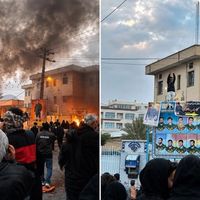
A video released by IRGC-affiliated media appears to show a gathering outside the Foreign Ministry’s representative office in Mashhad on Saturday evening where protesters chant, “Death to Araghchi, the dishonorable compromiser and infiltrator.”
The hardliners have been criticizing the foreign ministry and the negotiating team in recent days, accusing them of giving too many concessions to the United States in the emerging deal.
Kayhan, a hardline daily close to Iran’s most uncompromising faction, warned that the Strait of Hormuz must not be reopened through diplomacy with Washington. It said Hormuz had been closed “with power” and should not be opened until US forces leave the region and Washington accepts the supreme leader’s red lines.
Khorasan daily went further, arguing that any deal would only delay what it described as a final confrontation between Iran and the United States, giving both sides time to rebuild offensive and defensive strength before a wider war.
The backlash has also moved through parliament. Ebrahim Rezaei, spokesman for parliament’s National Security Committee, said “excessive generosity” at the negotiating table had changed “the enemy’s calculations” and made Washington think Iran was weak.
Mahmoud Nabavian, another hardline member of the committee, criticized the emerging MoU as open-ended, saying it does not set a timeline for a final agreement and allows for its extension. He said sanctions relief, the withdrawal of US forces and the lifting of the blockade had all been deferred to a final agreement.
Nabavian also said enrichment would remain at its current level, which he described as “zero,” while Tehran would be committed to preparing the ground for reopening the Strait of Hormuz and allowing all commercial vessels to pass without restrictions.
But the hardline front is not entirely unified. The conservative daily Javan criticized those rejecting any negotiation with Washington, arguing that diplomacy can be part of confrontation rather than surrender.
Tehran also appears to be keeping its strategic partners informed. Iranian Deputy Foreign Minister Kazem Gharibabadi said he discussed the latest developments on the draft Islamabad memorandum with the Russian and Chinese ambassadors in Tehran.
Hormuz remains the test
Hormuz remains the clearest test of whether diplomacy is lowering the temperature or merely reorganizing the pressure.
Araghchi has said Iran’s pressure over the strait would remain in place and that Iranian forces would intervene whenever necessary. He said tolls could not be imposed under international law, but described “service fees” as part of the negotiations.
Baghaei echoed that argument, saying Tehran’s measures to manage safe traffic through the Strait of Hormuz were both a step to protect national security and an effort serving the broader interests of the international community.
At the same time, the blockade is already affecting trade. Abbas Soufi, deputy chairman of parliament’s Construction Committee, said imports through Iran’s southern ports have faced challenges because of maritime restrictions.
A senior US administration official said Washington would be involved in de-mining the Strait of Hormuz as it reopens, with G7 countries possibly joining the effort. The official also said Trump will meet leaders from the UAE, Qatar and other Middle Eastern countries at the G7 summit.
Hardliners voice
Hardline figure Jalal Rashidikoochi accused Iranian lawmaker Seyed Mahmoud Nabavian of fuelling division over a potential Iran–US agreement, saying he had undermined national unity and warning that his actions would “come back to haunt him,” adding that even if his intentions were good, he had become “the cause and instigator of a great evil in the country which will also engulf you.”
Iranian lawmaker Seyed Mahmoud Nabavian said he read out and explained the text of a potential Iran–US agreement in an interview with the Student News Agency, insisting it is a “total loss,” while adding that he welcomed official denials of his remarks and was ready for debate on the deal.
A hardline influencer, Sarbaz Roohulla Rezvi, said he takes his political position from the Supreme Leader, adding he would support any decision on ceasefire or military action if approved by him, and act accordingly in practice, saying he would defend a ceasefire if ordered or support military action if instructed.
Canada’s response to the latest Iran crisis reflects the contradiction at the heart of Western policy toward Tehran: a continued call for diplomacy with a government it simultaneously treats as a source of terrorism, repression and regional instability.
In a written response to Iran International, the Canadian government said all parties involved in the latest exchanges between Iran, Israel and the United States must comply with international humanitarian law, including the protection of civilians and civilian infrastructure.
Ottawa also stressed the need for diplomacy and dialogue to resolve the crisis. But in Canada’s case, that language does not signal a softer approach toward Tehran. It sits alongside one of the most restrictive Iran policies among Western governments, built around sanctions, terrorist designations and a long-standing diplomatic rupture.
That tension is especially visible in Canada’s concern over the Strait of Hormuz.
Global Affairs Canada said Ottawa remains worried about disruptions in the strategic waterway and emphasized that respect for international navigation rights under international law is essential. It said the free flow of maritime traffic through the corridor is critical to global energy stability and supply chains.
For Canada, the crisis is therefore not only about preventing a wider war or limiting civilian harm. It is also about protecting the rules and routes that underpin global trade, energy flows and maritime security.
That is where Ottawa’s call for diplomacy begins to narrow. Canada supports de-escalation, but not in a way that separates the current crisis from Tehran’s broader conduct in the region.
Global Affairs Canada said Ottawa will continue working with allies and partners, both bilaterally and multilaterally, to support a diplomatic solution while countering what it describes as destabilizing activities by the Islamic Republic.
Those activities include Iran’s support for terrorist organizations, its ballistic missile program, nuclear activities and systematic human rights violations.
In other words, Canada’s message is not simply that the fighting should stop. It is that any diplomatic path must exist alongside continued pressure on the structures Ottawa believes drive Iran’s regional behavior.
That pressure is not only rhetorical.
Canada lists Hamas, Hezbollah and Yemen’s Houthi movement, also known as Ansarallah, as terrorist organizations. Ottawa has accused Iran of providing political, financial or military support to such groups.
In June 2024, Canada also listed the Islamic Revolutionary Guard Corps as a terrorist organization, following years of pressure from victims’ families of Flight PS752, human rights advocates and the Iranian-Canadian community.
Since 2012, Canada has designated Iran as a foreign state supporter of terrorism under the State Immunity Act, a legal framework that allows victims of terrorism to pursue civil action against the Iranian state in Canadian courts.
Together, those measures make Canada’s diplomatic language more constrained than it may first appear. Ottawa can call for dialogue, but it is doing so with a state it has legally and politically framed as a sponsor of terrorism and a source of transnational threats.
The sanctions record points in the same direction.
In March 2026, Canada sanctioned five individuals and four entities involved in procurement networks supplying technology used in IRGC weapons production, including drone-related systems. Canada said some Iranian arms, drones and technology have been transferred to Russia for use in the war against Ukraine.
A month earlier, Ottawa sanctioned seven individuals linked to Iranian state bodies responsible for intimidation, violence and transnational repression targeting dissidents and human rights defenders.
These measures show why Canada’s Iran policy cannot be read only through its latest call for restraint. The government is trying to prevent escalation in the short term while preserving the tools it has built over years to isolate and pressure Tehran.
The relationship has been moving in that direction for more than a decade.
Canada severed diplomatic relations with Iran in September 2012, closed its embassy in Tehran and declared Iranian diplomats in Canada persona non grata. Relations have not been restored since.
The gap widened further after the downing of Flight PS752, crackdowns on protests in Iran, allegations of transnational repression, Tehran’s regional activities, and concerns over its missile and nuclear programs.
Against that backdrop, Canada’s latest response is less a change in policy than a reminder of its limits. Ottawa wants diplomacy to contain the crisis, but it has little trust in the government with which diplomacy would have to be conducted.
That is the uneasy mix shaping Canada’s approach: avoid direct military involvement, keep channels for de-escalation open, and continue working with allies to restrict Iran’s room for maneuver.
The unresolved question is whether diplomacy can contain the crisis if Tehran is unwilling to make lasting changes, or whether negotiations will again become a way to delay pressure while preserving the policies that brought the region to this point.
Iran’s foreign minister said a Memorandum of Understanding with the United States could be signed remotely in the coming days, even as Tehran said the text was not final and hardliners attacked both the emerging deal and his handling of its public messaging.
Foreign Minister Abbas Araghchi told state television Friday that the memorandum could be signed once the final stages of negotiations are completed.
“Probably in the coming days, the memorandum of understanding between us and the United States will be signed,” Araghchi said.
He added that the signing would take place digitally and remotely after the final negotiating stages are passed, saying the process would be announced and could happen “in the coming days.”
But Araghchi also cautioned that the memorandum had not yet been signed and could still change. Foreign Ministry spokesman Esmail Baghaei said separately that the text was in the final stages of internal review and that no final decision had been made.
“Regarding the text of the understanding, we are in the final internal review stages. A meeting of the relevant bodies is currently underway,” Baghaei said.
Interim deal before nuclear talks
Araghchi sought to present the memorandum not as a final nuclear settlement, but as an interim political and security arrangement that would have to be implemented before any nuclear negotiations begin.
He said nuclear talks with the United States would take place only at a later stage and would not proceed unless the proposed interim deal was implemented first.
According to Araghchi, the interim arrangement would include reopening the Strait of Hormuz and ending conflicts on multiple fronts. He said management of the strait would not return to the pre-war era, adding that sovereignty over the waterway belonged to Iran and Oman and that Iran would secure safe passage for ships through it.
Araghchi also said the draft memorandum contains 14 articles and that nuclear issues had been moved to a second phase of negotiations lasting 60 days. He said the first phase included ending the war in Iran and on other fronts, as well as mutual commitments by Tehran and Washington not to interfere in each other’s internal affairs.
The comments came after Araghchi wrote on X that the “Islamabad Memorandum of Understanding” had never been closer to finalization, while urging media outlets not to speculate about its contents before the process is complete.
Hardliners target Araghchi
Araghchi’s public messaging quickly drew criticism from hardline circles, especially after President Donald Trump reposted his message and described it as “very positive.”
Fars News Agency, which is affiliated with the Revolutionary Guards, criticized Araghchi for what it called an “ambiguous” response to Trump’s rejection of Iranian media reports about the terms of a possible agreement.
The outlet said Araghchi’s English-language post failed to directly rebut Trump’s claim that leaked Iranian accounts of the agreement were false. Fars said his call for media restraint could be interpreted as an indirect confirmation that some of the published Iranian reports were inaccurate.
Fars also noted that Trump reposted Araghchi’s message shortly after it was published, portraying the Iranian foreign minister’s remarks as support for his own version of the negotiations.
Trump had earlier rejected Iranian media reports about the possible terms of the MoU, saying leaked details published in Iran had “NOTHING” to do with the written terms and bore “no relation to the truth.” He later told Axios that Iran had privately “apologized for putting out false information,” while saying he still believed a deal could be signed over the weekend or on Monday.
Hardline lawmaker Mahmoud Nabavian also criticized the latest version of the draft, saying it was more damaging than two earlier versions and involved greater Iranian concessions.
“After seeing the text of the agreement, I must say that compared with the two previous versions, it is more damaging and Iran’s retreats have also increased,” Nabavian said.
He posted a screenshot of Trump reposting Araghchi’s remarks and used it to attack Iranian officials involved in the talks.
“An agreement cooked up by the architects of the disgraceful JCPOA is certainly pure loss,” Nabavian wrote, using a phrase long used by hardliners to criticize the 2015 nuclear deal.
Several Friday prayer leaders also warned against compromise with Washington. Ahmad Alamolhoda, the Friday prayer leader in Mashhad, said no understanding would be acceptable without the approval of Supreme Leader Mojtaba Khamenei.
Mohammad Nabi Mousavifard, the Friday prayer leader in Ahvaz, said any retreat before what he called the “US and Israeli front” was “forbidden and unacceptable,” while Mohammad Mehdi Hosseini Hamedani in Karaj warned that countries assisting Iran’s enemies could become targets.
Conflicting reports over terms
The political pressure has been sharpened by sharply different accounts from Tehran and Washington over what the memorandum actually contains.
Iranian state media published details of what it called a 14-point draft understanding with the United States, including a ceasefire on all fronts, the lifting of the naval blockade and oil sanctions, the release of blocked funds, and future talks limited to nuclear and sanctions issues while excluding Iran’s missile program and support for regional allies.
Mehr News Agency said the draft included reconstruction projects worth at least $300 billion and the release of billions of dollars in frozen Iranian assets. It said final talks would not start until some oil sanctions were suspended, part of the frozen assets were released and the naval blockade was lifted.
US officials have described the emerging deal very differently.
A senior US official told Reuters the MoU would require the dismantling of Iran’s nuclear program, the on-site destruction and subsequent removal of its highly enriched uranium from Iran, and a long-term inspection regime to enforce compliance.
The official said the deal would be “performance-based,” meaning Iran would receive no access to frozen assets until it had fulfilled its obligations.
Fox News, citing a White House official, reported that those obligations would include dismantling Iran’s nuclear program, removing nuclear material and ending support for proxy groups before sanctions relief is granted.
Vice President J.D. Vance also said Iranian authorities would receive no money simply for signing an agreement or attending a meeting.
“There is a lot of misinformation being circulated about a possible agreement to reopen the Strait of Hormuz and end the Islamic Republic’s nuclear weapons program,” Vance said.
Close, but contested
The hardline backlash has contrasted with signals from some senior officials that Iran is preparing for possible implementation.
Parliament Speaker Mohammad Bagher Ghalibaf, who heads Iran’s negotiating delegation, said commitments made under a looming deal with the United States must be upheld, warning there would be “no ifs, no buts, no excuses.”
Fars has denied reports that an agreement would be signed in Geneva on Sunday, saying Iran’s review and decision-making process had not been finalized and that claims about both the timing and location were “completely false.”
The denial effectively overtook earlier speculation in Iranian media over a public signing ceremony and who might represent Tehran if one took place.
For now, Iranian officials are presenting the memorandum as close to completion but still unsigned, while Washington is insisting that any benefits for Tehran will depend on concrete performance.
That gap has left both sides trying to shape the public narrative before any document is signed.
In Tehran, the dispute has already moved beyond the content of the memorandum itself to a broader question: whether the leadership can sell an interim understanding with Washington to a political base that still views direct compromise with the United States as a humiliation.
Historian and analyst Abdollah Shahbazi said any document signed at this stage would likely be a memorandum of understanding rather than a legally binding agreement, warning that any such text could at best provide a temporary pause before tensions return.