Tehran and Washington betting the other side blinks first
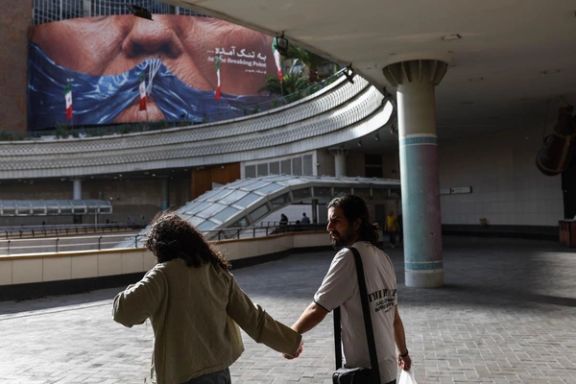
The competing narratives surrounding the latest US-Iran standoff have become so stark that even basic questions—who is deterring whom, who wants talks and who fears escalation—now produce entirely different answers depending on which capital is speaking.
On Tuesday, Trump again underscored the volatility of the standoff, saying the United States “may have to give them another big hit” and claiming Tehran was “begging” for a deal.
Khabar Online journalist Mohammad Aref Moezzi described the current dynamic as a familiar “neither war nor peace” scenario: sustained pressure and confrontation without a clear decision to escalate into full conflict or pursue a comprehensive agreement.
Both sides, he argued, still believe they can force concessions without paying the cost of war.
Read the full article here.




The competing narratives surrounding the latest US-Iran standoff have become so stark that even basic questions—who is deterring whom, who wants talks and who fears escalation—now produce entirely different answers depending on which capital is speaking.
On Monday, President Donald Trump said he had halted plans to attack Iran following requests from Qatar, Saudi Arabia, the UAE “and some others in the region.”
The same day, Iran’s state television claimed Trump had backed down from threatening military action “at least five times in recent weeks” because he feared Iran’s “firm response.”
On Tuesday, Trump again underscored the volatility of the standoff, saying the United States “may have to give them another big hit” and claiming Tehran was “begging” for a deal.
Rahman Ghahramanpour, a Middle East politics expert, told Tehran-based Khabar Online that both Tehran and Washington increasingly see the confrontation as a “competition over resilience,” with each believing renewed brinkmanship could strengthen its negotiating position.
Khabar Online journalist Mohammad Aref Moezzi described the current dynamic as a familiar “neither war nor peace” scenario: sustained pressure and confrontation without a clear decision to escalate into full conflict or pursue a comprehensive agreement.
Both sides, he argued, still believe they can force concessions without paying the cost of war.
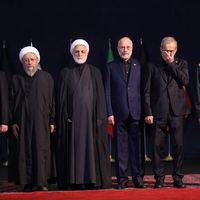
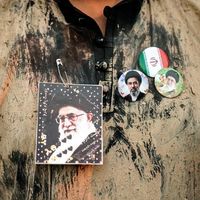
For Iran’s leadership, the overriding objective remains survival and persuading Washington to abandon any notion of regime change.
Ghahramanpour argues that Tehran is trapped in a struggle for survival while Washington faces what he calls a “credibility trap.” The United States wants a visible strategic victory; the Islamic Republic increasingly treats simple endurance as success.
Despite striking numerous military targets in Iran, Washington has yet to achieve a major political breakthrough. In the United States, particularly amid partisan rivalries, that is often framed as a failure for Trump. In Iran, the same reality is presented as proof the Islamic Republic withstood American pressure.
He also noted that many in Israel believe Trump’s presidency may represent the best opportunity to secure full US cooperation against Iran, adding to pressure for a more decisive confrontation before political circumstances change.
The widening gap between Iranian and American perceptions has effectively frozen negotiations.
Although some hardliners in Tehran advocate pre-emptive action, the government appears unwilling to be seen as the side that starts a war.
Washington, meanwhile, continues tightening sanctions and maintaining pressure while also signaling that military action remains an option if diplomacy stalls.
Another Iranian scholar, Ali Asghar Zargar, told Fararu on Tuesday that neither side benefits from the current deadlock.
He described the standoff as a mix of attrition, geopolitical rivalry and competing political narratives in which Iran remains under heavy pressure while the United States has yet to achieve its core objectives.
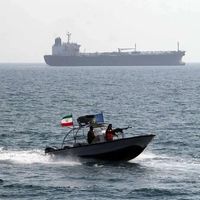
Zargar also argued that Washington cannot realistically use the Strait of Hormuz as a unilateral pressure tool given the global dependence on the waterway, warning that the longer the impasse continues, the greater the risk of escalation or miscalculation.
What increasingly unites both Iranian and American analysts is the sense that the current stalemate may be unstable, and that neither side has yet found a credible path out of it.
Iran’s deepening economic crisis is pushing cafés and coffee culture toward collapse, as soaring prices and falling incomes force both businesses and customers to cut back.
Mohsen Mobarra, head of the union overseeing coffee shops in Tehran, told economic daily Donya-e-Eqtesad that café operating costs have more than doubled while customer numbers have fallen by as much as 50 percent in recent months, with up to 40 percent of cafés shutting down.
“Continuing operations does not mean profitability,” he said. “The profits of these businesses are steadily shrinking. As a result, cafés that rent their locations or lack strong financial backing are heading toward closure.”
Over the past two decades, cafés became an important part of urban life in Iran, taking root in Tehran before spreading across the country.
With affordable entertainment options limited, they emerged as some of the few accessible spaces where young Iranians could socialize, work and spend time outside the home.
Many evolved into more than places to drink coffee or eat light meals. They hosted poetry nights, small music performances, photography exhibitions and informal gatherings, becoming rare spaces for social interaction at a time when few other public spaces remained accessible.
Until a few months ago, Tehran alone had around 6,000 cafés of different sizes in operation. But the collapse in consumers’ purchasing power has hit the industry hard.
Sanaz, a 28-year-old receptionist at a private company, said she and her friends used to visit cafés several times a week. But now, with sharp increases in the costs of food, transportation and housing, even such small pleasures require careful calculation.
“I have to calculate every expense, even this simple form of entertainment, just to make it to the end of the month — assuming I don’t lose my job,” she said.
“If I lose my job, after years of financial independence, I’ll have to move back to my parents’ home in my hometown.”
The closures and downsizing have also eliminated jobs for many workers, most of them young people and women.
Shana, 26, completed professional barista training before finding work at one of the branches of the well-known Saedi Nia café chain.
In January, the chain’s branches were abruptly shut down after the owner voiced support for opposition protesters. Shortly afterward, war broke out.
“Even cafés that have survived the economic downturn are not hiring new staff anymore,” she said. “Many are actually laying off existing employees.”
“I have no hope that even by learning new skills like cooking or other work, I’ll be able to find a job. The economy keeps getting worse every day, and the job market is shrinking.”
Coffee itself is also becoming a luxury.
Tea remains Iran’s dominant traditional drink, but coffee consumption expanded rapidly in recent years. Now, however, the sharp rise in foreign currency prices and disruptions to imports have pushed coffee prices so high that many households are cutting consumption or abandoning it altogether.
Although global coffee prices have declined, the cost of coffee beans in Iran — largely imported through the United Arab Emirates before the war — has nearly doubled compared to pre-war levels.
The increase has directly affected café prices. With rents and other expenses also rising, the price of a cup of coffee in some cafés has climbed by as much as four times.
One café owner told Donya-e-Eqtesad that even cafés specializing in basic coffee drinks are seeing falling demand because many people can no longer justify going out even for coffee.
Tara, the manager of an advertising company with ten employees, said coffee has become so expensive that even buying it for office use is increasingly difficult.
“For the first time in the past twenty years, I’ve had to stop buying coffee for the office kitchen, where it was always available for employees alongside tea,” she said.
“It’s not just about coffee prices. Since last summer’s war, work has effectively been frozen. Clients have even canceled half-finished projects, and everyone knows the company is taking its last breaths.”
“If this situation continues, we’ll have no choice but to shut down.”
The Iran war has entered a more ambiguous phase, with the regime battered but not broken, the US struggling to define victory, and the Strait of Hormuz emerging as Iran’s most potent bargaining tool, two Middle East experts said at an Iran International townhall in Washington DC.
The panel, moderated by Iran International’s Bozorgmehr Sharafedin, brought together Danielle Pletka of the American Enterprise Institute and Jon Alterman of the Center for Strategic and International Studies to discuss what comes after a ceasefire that has not ended the wider confrontation.
The debate, held on May 14, came a month after the US naval blockade of Iranian ports began on April 13, intensifying pressure on Tehran’s economy and maritime trade. But the blockade has also pushed shipping, insurance risk and control of Hormuz to the center of the conflict.
Tehran media coverage of the impasse with Washington following President Donald Trump’s visit to China points to growing frustration, with many insiders voicing concern that diplomacy has stalled and more confrontation may lie ahead.
Trump’s visit had fueled speculation in parts of the Iranian press that China might play a more active mediating role or pressure the United States toward concessions over the Strait of Hormuz and the broader conflict.
Instead, Chinese statements after the summit largely emphasized stability in global trade and uninterrupted shipping flows, reinforcing perceptions in Tehran that Beijing would ultimately prioritize its own economic interests.
Part of the disappointment stems from signs that Trump saw little value in seeking China’s help on Iran, while Beijing itself appears unwilling to meaningfully intervene unless its own strategic and economic interests are directly threatened.
Tehran media coverage of the impasse with Washington following President Donald Trump’s visit to China points to growing frustration, with many insiders voicing concern that diplomacy has stalled and more confrontation may lie ahead.
Trump’s visit had fueled speculation in parts of the Iranian press that China might play a more active mediating role or pressure the United States toward concessions over the Strait of Hormuz and the broader conflict.
Instead, Chinese statements after the summit largely emphasized stability in global trade and uninterrupted shipping flows, reinforcing perceptions in Tehran that Beijing would ultimately prioritize its own economic interests.
Part of the disappointment stems from signs that Trump saw little value in seeking China’s help on Iran, while Beijing itself appears unwilling to meaningfully intervene unless its own strategic and economic interests are directly threatened.
Hamid Reza Taraghi, a senior figure in the traditional conservative Islamic Coalition Party, said no real negotiations are currently taking place between Tehran and Washington.
While the two sides continue exchanging written messages through Pakistan, he said Trump has offered no positive response to Iran’s proposals.
“The prolonged limbo,” he told moderate outlet Khabar Online, "is worsening economic pressures inside Iran," complicating efforts to stabilize markets and deepening public uncertainty about the future.
Taraghi also acknowledged internal divisions within Iran, saying domestic opposition to negotiations continues to disrupt the process and is amplified by prime-time coverage on state television.
Like many Iranian commentators in recent days, Taraghi described the greatest danger facing the country as the risk of another round of conflict.
That sense of strategic deadlock was echoed Friday in a lengthy analysis published by the reform-leaning Fararu website, which argued that Washington now finds itself trapped in a “no victory, no exit” situation.
The report said the United States appears torn between several risky paths: reviving indirect diplomacy through regional intermediaries, escalating military pressure through a heavier regional presence, or tightening maritime restrictions to further squeeze Iran’s trade and access to sea routes.
None, Fararu argued, offers a clear path to success.
The analysis also pointed to divisions inside Washington, with Republican hawks pressing for stronger military action while Democrats continue advocating diplomacy and warning against deeper entanglement in the Middle East.
According to analysts cited by the outlet, the current US approach has failed to achieve its central objectives, while Iran has largely preserved both its deterrence posture in the Strait of Hormuz and its nuclear leverage.
Some of the unnamed experts warned that Washington risks repeating long-standing miscalculations about Iran’s vulnerabilities, potentially deepening rather than resolving the crisis.
Fararu suggested the Trump administration may ultimately seek a symbolic off-ramp—potentially even through rebranding or redefining its military campaign to justify limited renewed strikes while claiming a form of victory.
But the analysts cited by the publication argued that Iran is unlikely to yield under pressure, leaving Washington facing an increasingly unappealing choice between renewed escalation and acceptance of a costly stalemate.