There is little clarity about the terms of the ceasefire. Neither Washington nor Tehran refers to it as a formal agreement, and the absence of guarantees, enforcement mechanisms or an effective mediator underscores how fragile it may be.
President Donald Trump has declared victory, Tehran has described the outcome as a “historic achievement,” and Israeli Prime Minister Benjamin Netanyahu has offered only partial support for the arrangement.
The complexity of the war, including the involvement of Arab states across the Persian Gulf and multiple proxy actors, makes a comprehensive settlement difficult for now.
The view from Washington
The United States entered the war with multiple objectives: degrading Iran’s nuclear program, weakening the “Axis of Resistance,” and in some quarters even raising the possibility of regime change. At its core, however, the goal was to alter the regional balance of power by weakening Iran’s ability to threaten Israel and its neighbors.
According to American officials, roughly 13,000 targets were struck during the campaign, including missile infrastructure, naval facilities and parts of Iran’s air-defense network. Much of Iran’s military command structure was also disrupted following the killing of several senior figures.
From Washington’s perspective, these developments bought time by setting back Iran’s military capabilities and limiting its ability to rebuild quickly, even if sanctions were lifted.
However, key US objectives remain unresolved. Iran’s stockpile of highly enriched uranium has not been secured, and parts of the missile program retain operational capacity.
At the same time, Washington may have underestimated the leverage Tehran could exert through the Strait of Hormuz. Iran’s move to close the strait triggered a sharp global energy shock, prompting intense pressure on the Trump administration. These dynamics likely contributed to Washington’s decision to shift unresolved issues to negotiations.
In that sense, the United States neither fully won nor clearly lost. It altered the strategic equation but did not achieve all of its objectives on its own terms.
The view from Tehran
The internal condition of the Islamic Republic remains difficult to assess because of extensive internet restrictions. However, Tehran’s acceptance of the ceasefire suggests that the damage inflicted across military and infrastructure sectors was substantial.
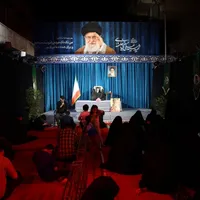
The war also produced a dramatic transformation in Iran’s command structure following the killing of several senior figures, including Supreme Leader Ali Khamenei.
The collapse of much of Iran’s air-defense network exposed the political center of power to continued vulnerability, making the possibility of further strikes a persistent concern.
At the same time, Iran’s leadership faced a different strategic risk: internal instability. Disruptions to electricity and fuel infrastructure, combined with the fragile legitimacy of the new leadership, raised concerns about potential unrest in a society already marked by repeated protest movements.
Hardline figures publicly criticized the ceasefire on Wednesday night, accusing the government of retreating under pressure. Yet the leadership appears to have concluded that a temporary pause was necessary to stabilize the domestic situation.
Tehran also believes it has gained leverage through the closure of the Strait of Hormuz. Reports have emerged that Iran seeks transit fees of roughly $2 million per ship. If such a system were implemented across normal shipping volumes—a major assumption—it could theoretically generate tens of billions of dollars annually.
A fragile truce
Shortly after the announcement, parliamentary speaker Mohammad Bagher Ghalibaf—who now leads Iran’s negotiating team—said that three provisions of the ceasefire framework had already been violated: Israeli attacks on Lebanon, Iran’s enrichment rights, and the incursion of a hostile drone into Iranian airspace.
Complicating matters further is the structure of the mediation effort itself. Pakistan, as a non-Arab Muslim state with working relations with both Washington and Tehran, appears a logical intermediary.
But Islamabad’s influence appears limited. Netanyahu’s rejection of Prime Minister Shehbaz Sharif’s remark that the ceasefire included Lebanon was a telling moment.
The absence of GCC powers and Lebanon also represents a structural weakness of the negotiations, as these actors remain deeply embedded in the conflict.
However, the decisive issue in the coming talks is likely to be the nuclear question. The central contradiction between Washington’s demand for zero enrichment and Tehran’s insistence on maintaining enrichment rights appears difficult to bridge. The fate of Iran’s existing uranium stockpile remains equally uncertain.
The Lebanese front presents another potential flashpoint. For Tehran, any perceived abandonment of Hezbollah would signal the collapse of the Axis of Resistance. Recent rhetoric from Iranian officials about defending Lebanese Shiite communities indicates that this front retains the capacity to derail the ceasefire.
The ceasefire therefore represents neither the end of the conflict nor the beginning of a durable peace. It is more accurately a pause within an ongoing confrontation.
The war did not generate the decisive pressure necessary to impose a lasting settlement. Both sides now hope to translate battlefield outcomes into diplomatic leverage. But based on what is publicly known, the negotiations appear unlikely to deliver the decisive achievements either side seeks.