• العربية
  • فارسی
Brand
  • Iran Insight
  • Politics
  • Economy
  • Analysis
  • Special Report
  • Opinion
  • Podcast
  • Iran Insight
  • Politics
  • Economy
  • Analysis
  • Special Report
  • Opinion
  • Podcast
  • Theme
  • Language
    • العربية
    • فارسی
  • Iran Insight
  • Politics
  • Economy
  • Analysis
  • Special Report
  • Opinion
  • Podcast
All rights reserved for Volant Media UK Limited
volant media logo

Germany urges Iran to respect ceasefire and ensure safe Hormuz navigation

Apr 9, 2026, 21:54 GMT+1

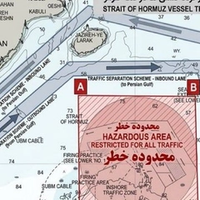
Germany’s foreign minister said he spoke with Iranian Foreign Minister Abbas Araghchi and called on Iran to respect the ceasefire, engage in constructive negotiations, and ensure free and safe navigation through the Strait of Hormuz.

In a post on X, he said the discussion also covered the need to maintain regional stability and keep diplomatic channels open.

Most Viewed

100 days after carnage: Iran economy reels from war, inflation, unemployment
1
INSIGHT

100 days after carnage: Iran economy reels from war, inflation, unemployment

2
OPINION

The Hormuz get out of jail card turned to a grave

3

State media slam Araghchi's Hormuz tweet, say it let Trump claim victory

4
EXCLUSIVE

Iranian assaulted in London amid concern over threats to regime critics

5
PODCAST

Too early to tell who is winning Iran war, experts say

Banner
Banner

Spotlight

  • From instability to influence: Pakistan’s pivotal role in US-Iran diplomacy

    From instability to influence: Pakistan’s pivotal role in US-Iran diplomacy

  • A nation in limbo: 100 days after the massacre, has the world moved on?
    INSIGHT

    A nation in limbo: 100 days after the massacre, has the world moved on?

  • 100 days after carnage: Iran economy reels from war, inflation, unemployment
    INSIGHT

    100 days after carnage: Iran economy reels from war, inflation, unemployment

  • The Hormuz get out of jail card turned to a grave
    OPINION

    The Hormuz get out of jail card turned to a grave

  • How Tehran bends its own red lines to boost state rallies
    INSIGHT

    How Tehran bends its own red lines to boost state rallies

  • Iran blackout cripples freelancer, small business incomes
    VOICES FROM IRAN

    Iran blackout cripples freelancer, small business incomes

•
•
•

More Stories

Starmer, Trump discuss plan to restore shipping through Strait of Hormuz

Apr 9, 2026, 21:50 GMT+1

British Prime Minister Keir Starmer spoke with US President Donald Trump on Thursday about the need for a plan to restore shipping through the Strait of Hormuz “as quickly as possible” following a US ceasefire with Iran, Downing Street said.

According to a statement, Starmer discussed UK efforts to convene partners to agree on a “viable plan” to restore freedom of navigation in the waterway.

The statement said the two leaders agreed that, with a ceasefire in place and agreement to reopen the strait, efforts should now focus on a practical plan to resume shipping.

Saudi energy facilities attacked in Iranian strikes disrupting 1.3 million bpd

Apr 9, 2026, 21:45 GMT+1

Saudi Arabia’s Ministry of Energy said on Thursday that vital energy facilities were subjected to multiple recent Iranian attacks in Riyadh, the Eastern Province and Yanbu Industrial City.

"The attacks targeted oil and gas production, transportation, refining, petrochemicals and electricity, killing one industrial security guard and injuring seven others," The statement said.

"They caused a loss of 700,000 barrels per day on the East-West pipeline and a 600,000 bpd reduction in production capacity — 300,000 bpd from Manifa and 300,000 bpd from Khurais," the statement added.

A truce for the world, a reckoning for Iran’s economy

Apr 9, 2026, 21:40 GMT+1
•
Mohamad Machine-Chian

The ceasefire in the US-Israeli war on Iran eased global oil markets and may finally reopen the Strait of Hormuz. But for Iran, the truce exposes an economic crisis the war had temporarily masked, with weaker fundamentals and fewer tools to respond.

The ceasefire announced on April 7 has offered temporary relief to the United States and, by extension, the global economy. Oil prices have since fallen below $100 per barrel, the Strait of Hormuz may finally reopen, and global stock markets have rallied, recovering part of the losses recorded over the previous 40 days.

The coming days may prove crucial for stabilizing seasonal supply chains, particularly for fertilizer inputs transiting the strait during the peak planting period in the Northern Hemisphere.

Inside Iran, however, the outlook is far more complex.

The war effectively froze Iran's economic crises, shuttered markets, and halted price discovery. A similar pattern followed the 12-day conflict earlier in the war, when markets closed temporarily before reopening to renewed upward pressure as underlying imbalances reasserted themselves. This time, the damage is far greater.

During US-Israeli airstrikes on Iran’s strategic infrastructure, attacks on Mahshahr and Asaluyeh petrochemical facilities hit sites Iranian officials say account for 85% of the country’s petrochemical export capacity.

The steel industry was also hit. Since these sectors supply downstream industries from plastics to automotive manufacturing and construction, the full scale of disruption has yet to be assessed.

The Tehran Stock Exchange has been closed for more than 40 consecutive days.

The head of the Securities and Exchange Organization has indicated that war-damaged companies will return to trading at a later stage, meaning that even if the exchange reopens, a significant portion of major firms may remain inactive.

Reopening without viable export-oriented companies could trigger heavy selling pressure in a market where banks and automakers are already loss-making and reliant on state support.

  • Dollar-pegged pizza in Tehran points to a different kind of regime change

    Dollar-pegged pizza in Tehran points to a different kind of regime change

Inflation remains the most pressing crisis. Before the US-Israeli airstrikes, annual inflation had surpassed 70 percent — the highest since World War II. Food inflation reached triple digits, with bread and grains rising by 140 percent and cooking oil by more than 200 percent.

The war temporarily suppressed these pressures: demand fell amid unemployment, banking disruptions reduced the velocity of money, and property and automobile transactions slowed sharply.

With the Pakistani-brokered ceasefire, that suppressed demand is likely to return.

The fiscal picture offers no relief. The approved budget included a 65-percent rise in taxes, but roughly 60 percent of working-age individuals are currently unemployed.

In effect, the government is attempting to tax its way out of a fiscal crisis in an economy where the majority of working-age adults have no income to tax. Post-war military expenditures and reconstruction obligations have increased sharply, with no significant new revenue streams available.

Compounding this is the disruption of Iran's primary financial channel through Dubai, which for years served as a central hub for trade and currency transactions worth $16 billion to $28 billion annually.

Following recent attacks on Dubai, Emirati authorities reportedly detained dozens of currency dealers linked to Iran's Revolutionary Guard and shut down associated front companies.

Alternative channels in Herat and Erbil remain active but lack Dubai's scale. When suppressed demand for foreign currency returns, it will hit a narrower, less efficient set of channels, amplifying exchange rate volatility.

The ceasefire offered the world a reprieve. For Iran, it removed the only thing suppressing a crisis that had been building for months. When markets reopen, they will price in not only pre-war imbalances but the destruction of the export capacity that once generated foreign currency.

The rial will face a market that has every reason to reprice it sharply downward, and a state with fewer tools than ever to intervene. Iran's economy has not returned to its pre-war condition. It has moved past it.

Yet the ceasefire itself is fragile, reportedly violated several times within its first 48 hours. Even in the best-case diplomatic scenario, the technology and capital required for reconstruction will not materialize within weeks, and as long as the risk of renewed conflict remains, investors are unlikely to commit long-term capital.

What comes next at the negotiating table will shape whether any of it matters.

Trump attacks conservative commentators over Iran nuclear stance

Apr 9, 2026, 21:39 GMT+1

US President Donald Trump has launched a broad attack on several conservative commentators, including Tucker Carlson, Megyn Kelly, Candace Owens and Alex Jones, accusing them of supporting Iran acquiring a nuclear weapon and of seeking publicity.

In a post on Truth Social, Trump said the figures had “low IQs” and described them as “troublemakers” and “losers,” adding that they were no longer influential in mainstream media.

"I know why Tucker Carlson, Megyn Kelly, Candace Owens, and Alex Jones have all been fighting me for years, especially by the fact that they think it is wonderful for Iran, the Number One State Sponsor of Terror, to have a Nuclear Weapon — Because they have one thing in common, Low IQs," he said.

"MAGA is about WINNING and STRENGTH in not allowing Iran to have Nuclear Weapons. MAGA is about MAKING AMERICA GREAT AGAIN, and these people have no idea how to do that, BUT I DO, because THE UNITED STATES IS NOW THE “HOTTEST” COUNTRY ANYWHERE IN THE WORLD!" Trump added.

Trump says ‘very optimistic’ about Iran peace - NBC News

Apr 9, 2026, 21:15 GMT+1

US President Donald Trump said on Thursday he is “very optimistic” a peace deal with Iran is within reach, even as a fragile ceasefire shows signs of strain.

Speaking to NBC News, Trump said Iran’s leaders were “more reasonable” in private talks and warned that failure to reach an agreement would be “very painful.”

He also said he urged Israeli Prime Minister Benjamin Netanyahu to scale back strikes in Lebanon to support ongoing negotiations, adding that Israeli operations were being reduced.