Ghalibaf questions basis for US-Iran talks, citing violations of proposal


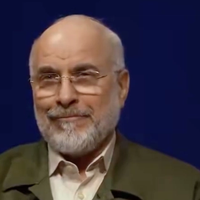
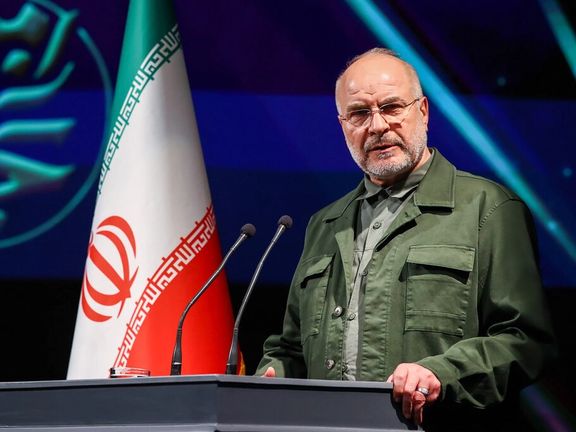
Iran’s parliamentary speaker Mohammad Bagher Ghalibaf said several key clauses of Tehran’s proposed framework for negotiations with the United States have already been violated, casting doubt on the basis for talks expected to begin in Pakistan.
In a statement published on X, Ghalibaf said three provisions of Iran’s 10-point proposal had been breached even before negotiations began.
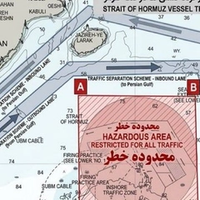
He cited continued attacks in Lebanon despite what he said was a commitment to an immediate ceasefire, the entry of a drone into Iranian airspace that was later destroyed in the southern city of Lar, and what he described as the denial of Iran’s right to uranium enrichment.
“The very workable basis on which to negotiate has been openly and clearly violated, even before the negotiations began,” Ghalibaf wrote.
He added that under such circumstances “a bilateral ceasefire or negotiations is unreasonable.”


As the newly announced ceasefire struggles to hold, Tehran is entering a contradictory moment marked by official celebrations, delayed funerals and renewed political infighting.
By Wednesday morning, several senior figures were already positioning themselves as the architects of the truce, and their competition quickly spilled into the Iranian media.
The pro-government ISNA news agency reported that parliamentary Speaker Mohammad Bagher Ghalibaf would lead Iran’s delegation to the talks scheduled to begin Friday in Islamabad, Pakistan. Within half an hour, the IRGC-linked Tasnim News Agency contradicted the report, saying the composition of the delegation had not yet been finalized by the “relevant institutions.”
The conflicting reports highlighted uncertainty over who would lead the delegation and underscored the rivalries that often shape decision-making in Tehran.
The first official statement on the ceasefire came from Foreign Minister Abbas Araghchi, a longtime diplomat with close ties to Iran’s security establishment.
In a post on X, he emphasized that he was speaking “on behalf of the Supreme National Security Council of the Islamic Republic of Iran,” and thanked Pakistani officials “on behalf of the Islamic Republic of Iran,” language that appeared to project broad institutional authority.
President Massoud Pezeshkian, who cannot join the negotiating team for protocol reasons, issued a largely symbolic statement—seemingly intended to remind the public that the country still has a president expected to lead the government. Like several other officials who had advocated a ceasefire from the outset, Pezeshkian framed the temporary truce as a “victory for Iran.”
Moments after Iran signaled its reluctant acceptance of the ceasefire, Nasim Online, an outlet close to the IRGC, published a statement from the Secretariat of the Supreme National Security Council.
The statement suggested that Security Chief Mohammad Bagher Zolghadr was also seeking to frame the agreement as a decisive achievement. It declared that “the enemy… has suffered an undeniable, historic, and crushing defeat,” and repeatedly urged the public to “celebrate the victory.”
Yet within minutes of the statement, Israel and Jordan reported intercepting Iranian missiles. Later on Wednesday, Kuwait came under drone and missile attack. The incidents highlighted the fragile nature of the ceasefire and the difficulty of enforcing it across multiple actors involved in the conflict.
Israel’s heavy strikes on Beirut later that day further underscored the instability of the truce. US Vice President JD Vance publicly described the ceasefire as “fragile.”
In the early hours of Wednesday, Iranian-aligned groups in Iraq initially appeared unwilling to honor the ceasefire. But when they released a female US journalist they had taken hostage earlier in the week, the move suggested Tehran still retains influence over some allied militias and could signal a willingness to ease tensions.
From the tone of several officials in Tehran, particularly those aligned with more pragmatic political currents, it appears that many believe President Trump has concluded the conflict has reached its limit and that he does not want further escalation.
Tehran appears to share that assessment. Both sides have claimed victory, a framing some politicians describe as a “win-win agreement.”
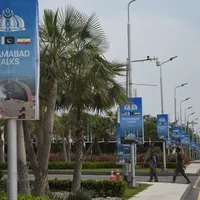
The United States and Iran will hold talks in Pakistan on Saturday, the White House confirmed, as diplomacy gathers pace following the two-week ceasefire announced earlier this week.
“The first round of those talks will take place on Saturday morning local time, and we know we look forward to those in-person meetings,” White House spokeswoman Karoline Leavitt t told reporters.
She also said Tehran had indicated it would be willing to turn over its stockpile of highly enriched uranium.
Leavitt confirmed that US Vice President JD Vance will lead the American delegation, accompanied by presidential envoy Steve Witkoff and Jared Kushner.
Iran’s exiled prince Reza Pahlavi urged Iranians to remain patient following a two-week ceasefire, saying the government had been weakened but that its repression apparatus had not been fully eliminated and that the final blow must come from the Iranian people.
“I know that news of the two week ceasefire between the Islamic Republic, America and Israel has disheartened many of you. But today is not a time for despair, it is a time for even greater belief in victory,” Pahlavi said in a video message addressed to Iranians inside the country.
He said that while the Islamic Republic has been “profoundly weakened,” its capacity for repression has not been “entirely eliminated.”
“We knew from the outset, however, that the Islamic Republic would not fall solely through the elimination of its command structure and the degradation of its repressive apparatus by aerial strikes. That is precisely why, in every message I have addressed to you, I emphasized that it is we, the Iranian nation, who must deliver the final blow to this weakened regime and bring about its ultimate end,” he said.
He said his priority was to ensure any final move to topple the Islamic Republic minimizes loss of life, urging Iranians to remain patient, protect themselves and stay ready, while pledging to continue efforts abroad to support calls for the regime's end.
“I therefore ask that you remain patient, protect yourselves and, with faith in victory and full readiness, await the decisive moment. In the meantime, I and all our compatriots abroad will raise your demand for an end to the Islamic Republic with every ounce of our strength,” he said.
Iran’s Islamic Revolutionary Guard Corps said that if attacks on Lebanon do not stop, a “regretful response” will face the “aggressors” in the region, state media reported.
Explosions and air defense activity were heard across Tehran on Wednesday evening, eyewitnesses told Iran International.
Eyewitnesses said they heard drone activity in southern Jannat Abad, a residential area in west Tehran, at 19:30 local time, as well as about 15 small explosions.
Eyewitnesses also said they heard a loud explosion in Marzdaran, also in west Tehran, at around 19:45.
They said explosions and air defense activity were heard in central Tehran.
At 20:00, eyewitnesses said air defense systems were active in the Mehrabad area, near Tehran’s main domestic airport in the west of the city, and Shahrak-e Esteghlal, a neighborhood in west Tehran.