• العربية
  • فارسی
Brand
  • Iran Insight
  • Politics
  • Economy
  • Analysis
  • Special Report
  • Opinion
  • Podcast
  • Iran Insight
  • Politics
  • Economy
  • Analysis
  • Special Report
  • Opinion
  • Podcast
  • Theme
  • Language
    • العربية
    • فارسی
  • Iran Insight
  • Politics
  • Economy
  • Analysis
  • Special Report
  • Opinion
  • Podcast
All rights reserved for Volant Media UK Limited
volant media logo

Iran’s state-linked oil traders cash in on war using US waiver - BBG

Apr 2, 2026, 17:01 GMT+1

Sanctioned Iranian oil traders have increased profits from the war as US policy shifts allowed some Tehran-linked shipments to continue, Bloomberg reported Thursday, citing people familiar with the operations and tanker-tracking data.

The report said traders, including Hossein Shamkhani, have been able to move crude through the Strait of Hormuz and benefit from higher global prices, despite earlier US action targeting his shipping network.

It added that a second network linked to Supreme Leader Mojtaba Khamenei has also benefited from the waiver, citing people familiar with the trading activities.

Bloomberg said the US Treasury issued a temporary sanctions waiver allowing Iran-linked vessels to move and sell oil already loaded as of March 20, after the Justice Department moved to seize funds tied to Shamkhani’s network.

That helped Iranian oil, previously sold at a discount, trade at a slight premium to Brent crude, the report said.

The report said Iran’s control of the Strait of Hormuz has enabled its ships to transit while restricting flows from other producers in the Persian Gulf, contributing to supply shortages and higher prices.

Most Viewed

Ghalibaf defends Iran-US talks amid hardline backlash
1
INSIGHT

Ghalibaf defends Iran-US talks amid hardline backlash

2
ANALYSIS

From instability to influence: Pakistan’s pivotal role in US-Iran diplomacy

3
ANALYSIS

100 days on: why Iran’s January protests spread across social classes

4

War-hit homeowners feel abandoned as Iran’s reconstruction aid fades

5

Iran says no decision yet on talks as Pakistan prepares to host US team

Banner
Banner

Spotlight

  • The politics of pink: how Iran uses cuteness to rebrand violence
    ANALYSIS

    The politics of pink: how Iran uses cuteness to rebrand violence

  • Bread shortages, soaring prices strain households in Iran, residents say
    VOICES FROM IRAN

    Bread shortages, soaring prices strain households in Iran, residents say

  • War-hit homeowners feel abandoned as Iran’s reconstruction aid fades

    War-hit homeowners feel abandoned as Iran’s reconstruction aid fades

  • 100 days on: the anatomy of Iran’s January crackdown
    INSIGHT

    100 days on: the anatomy of Iran’s January crackdown

  • Ghalibaf defends Iran-US talks amid hardline backlash
    INSIGHT

    Ghalibaf defends Iran-US talks amid hardline backlash

  • From instability to influence: Pakistan’s pivotal role in US-Iran diplomacy
    ANALYSIS

    From instability to influence: Pakistan’s pivotal role in US-Iran diplomacy

•
•
•

More Stories

Finland’s Stubb urges ceasefire in call with Iran’s Pezeshkian

Apr 2, 2026, 16:55 GMT+1

Finland’s President Alexander Stubb in a call with his Iranian counterpart Masoud Pezeshkian on Thursday called for a diplomatic solution, urging an end to strikes and restoration of navigation in the Strait of Hormuz.

“A ceasefire and a diplomatic solution are urgently needed,” Stubb said on X.

“I emphasized the need to end the strikes on neighbouring countries and restore freedom of navigation in the Strait Hormuz,” he added.

Iran’s IRGC says it targeted Amazon cloud facility in Bahrain

Apr 2, 2026, 16:24 GMT+1

Iran’s Revolutionary Guards said on Thursday they had attacked an Amazon cloud computing center in Bahrain, warning of further action against companies it accused of supporting US and Israeli operations, according to an official statement carried by state media.

“After delusional While House rulers ignored our warnings on Wednesday, the Amazon cloud computing center in Bahrain was attacked and destroyed in a first action against spy and terrorist technology companies,” the statement said.

Seven air bases belonging to US and Israeli forces were also attacked in the Wednesday operation, the IRGC added.

“If the assassinations continue, the next companies we have previously announced will be punished much more severely, and responsibility for the complete destruction of these companies in the region lies with the US president himself,” the statement said.

Israel defense minister warned Hezbollah chief over rocket fire

Apr 2, 2026, 14:04 GMT+1

Israel’s defense minister Israel Katz warned Naim Qassem he would “pay a very heavy price” over rocket fire toward Israel.

Katz said Qassem and his associates would face severe consequences for attacks targeting Israeli civilians during the Passover holiday.

“You will not live to see this,” Katz said, adding Qassem would be “in the depths of hell” alongside other leaders Israel has targeted.

In photos: Iranian families mark Nature Day in parks amid conflict

Apr 2, 2026, 13:55 GMT+1

Iranian families were seen in parks in Tehran on Nature Day, a public holiday marking the end of Nowruz when people traditionally gather outdoors.

Pictures: Reuters

100%
100%
100%
100%
100%

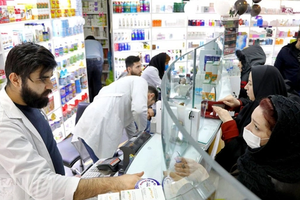
Drug shortages push essential medicines in Iran to record prices

Apr 2, 2026, 13:52 GMT+1

Residents told Iran International that severe shortages and soaring prices for key medicines, including insulin and blood thinners, have persisted over the past month, with some insulin brands reaching seventy million rials (≈$46.7).

Several citizens said the price of Ryzodeg insulin jumped from 12 million rials (≈$8) to 76 million rials (≈$51). Five-dose packs of NovoRapid and Lantus now sell for 15–18 million rials (≈$10–$12).

A resident reported that the blood thinner Plavix, crucial to preventing strokes and heart attacks, rose from 7.5 million rials (≈$5) to 27 million rials (≈$18) in recent weeks.

An ordinary Iranian citizen earns approximately $100–$150 per month.

Shortages leave patients struggling

Before the war and US-Israeli attacks, insulin was already limited, with insurance covering only one dose per week. Residents say the scarcity has now reached crisis levels.

One citizen in Parand near Tehran said: “I couldn’t find my diabetes medications for a month, even without a prescription. Two types, Lantus and Apidra, usually last a week each, but I ran out completely.”

  • Iran drug stocks under two months, 800 medicines at risk as FX delays bite

    Iran drug stocks under two months, 800 medicines at risk as FX delays bite

Another said his mother had to travel from Karaj to Qazvin (over 110 km) to obtain essential medicines. Tehran residents report difficulty finding Asentra (sertraline) for depression and Iran-made blood thinner Osvix.

Supply chain disruptions deepen crisis

Residents link shortages to halted imports from Turkey and Dubai. A transit driver said fewer registered shipments have reduced cargo flow. Local distributors have paused sales, while pharmacies face delayed deliveries and payments.

“Our city has more pharmacies than any other shop, but even acetaminophen is unavailable,” a Sari resident in northern Iran said.

The shortages coincide with rising food prices and widespread business closures, adding to economic strain.

However, Mohammad Reza Aref, First Vice President, said on Wednesday that strategic drug reserves are in good condition and ordered “immediate import” of essential medicines. Residents, however, continue to report high prices and irregular availability.

Global healthcare impact

NHS England chief executive Sir Jim Mackey warned that the Iran war could disrupt healthcare supplies internationally. Speaking to LBC Radio on Wednesday, Mackey said syringes, gloves, and intravenous bags may become scarce due to the closure of the Strait of Hormuz.

  • Iran faces looming medicine shortages as UN sanctions strain drug supply chains

    Iran faces looming medicine shortages as UN sanctions strain drug supply chains

“A team has been set up across the NHS to assess risks through the supply chains. Almost everything may be at risk, as Britain relies heavily on imports for medicines and healthcare equipment,” Mackey said.

Medicines UK chief executive Mark Samuels said Britain could face further shortages if the conflict prolongs, noting that 85 percent of NHS medicines are generic and largely sourced from India.