Israel says Larijani, Basij chief killed in major blow to Iran leadership
Iran's former Secretary of the Supreme National Security Council Ali Larijani
Israeli forces killed senior Iranian official Ali Larijani and IRGC-Basij commander Gholamreza Soleimani in overnight airstrikes inside Iran, Israel’s defense minister and military said on Tuesday, as Tehran has yet to confirm the deaths.
Defense Minister Israel Katz said Larijani had been killed in the strikes, while the Israeli military confirmed it targeted him in Tehran. The military separately said a strike killed Soleimani, head of the Basij paramilitary force, along with other senior officials.
Katz used stark language in comments released by his office after a security assessment.
“Larijani and the Basij commander were eliminated overnight and joined the head of the annihilation program, Khamenei, and all the eliminated members of the axis of evil, in the depths of hell,” Katz said.
The Israeli military said Soleimani was struck at a tent camp recently established by the Basij after earlier Israeli attacks damaged several headquarters used by the paramilitary organization.
According to the military, the strike also killed the deputy commander of the Basij and several other senior officials.
The Basij, which operates under the Islamic Revolutionary Guards Corps, has long been associated with the enforcement of ideological policies and the suppression of dissent inside Iran.
The reported killings mark one of the most significant decapitation strikes against Iran’s leadership structure since the outbreak of the current conflict.
Larijani: Insider and wartime power broker
Ali Ardashir Larijani, born on June 3, 1945 in Najaf, Iraq, rose to become one of the most influential figures in the Islamic Republic over four decades.
He came from a clerical family originally from Mazandaran province in northern Iran. His father, Hashem Larijani, was a cleric, and several of his brothers also held senior posts within the Iranian state.
Iran's former Secretary of the Supreme National Security Council Ali Larijani
His political career began in the early years after the 1979 Islamic Revolution, when he joined the Islamic Revolutionary Guards Corps and later moved into government posts.
Larijani served as deputy labor minister and later as deputy minister of information and communications technology before he was appointed in 1994 as the head of the state broadcasting organization, Islamic Republic of Iran Broadcasting (IRIB).
He led the state media network for a decade, a role that gave him a position in shaping the government’s propaganda during a politically turbulent period.
In 2005 he was appointed secretary of the Supreme National Security Council, placing him at the center of Iran’s security policy and nuclear negotiations. In that role he served as Iran’s chief nuclear negotiator in talks with European powers.
Larijani later entered parliamentary politics and became speaker of the Iranian parliament in 2008, a position he held until 2020.
He ran for president in 2005 but finished sixth, and later attempted to run again in 2021 and 2024. Both candidacies were blocked by the Guardian Council, which vets candidates for high office.
In August 2025, he returned to the center of national security policy when he was appointed once again as secretary of the Supreme National Security Council.
Following the death of Supreme Leader Ali Khamenei during the 2026 US-Israeli strikes, some analysts and media reports described Larijani as acting as Iran’s wartime leader, relying on long-standing ties to security institutions and clerical networks.
Iran's former Secretary of the Supreme National Security Council Ali Larijani
The United States imposed sanctions on Larijani in January 2026 over his role in the violent suppression of protests inside Iran.
Iranian on social media blame him as the mastermind behind the massacre of around 36,500 protesters during January uprising. Israeli officials said their overnight strike targeted him in Tehran.
Soleimani: Basij commander
Gholamreza Soleimani, born in 1963 in Farsan in Iran’s Chaharmahal and Bakhtiari province, built his career inside the Islamic Revolutionary Guards Corps and the Basij militia.
Despite sharing the surname, he was not related to Qasem Soleimani, the commander of the Guard’s Quds Force who was killed in a US drone strike in Iraq in January 2020.
Iran's former Basij Cheif Gholamreza Soleimani
Soleimani joined the Basij as a volunteer during the Iran-Iraq War in the 1980s and later became a member of the Revolutionary Guards.
He steadily rose through the ranks and eventually became commander of the Basij Organization in 2019.
The Basij, a paramilitary network with branches across Iran, operates under the authority of the Revolutionary Guards and has played a key role in enforcing ideological policies and mobilizing supporters of the Islamic Republic.
The force has also been widely accused by human rights groups of participating in violent crackdowns on protests.
Soleimani was sanctioned by the European Union in 2021 for his role in the repression of those protests.
The United States Treasury placed him on its Specially Designated Nationals list later the same year.
Additional sanctions were imposed by the United Kingdom and Canada in connection with human rights abuses.
Iran's former Basij Cheif Gholamreza Soleimani
The strikes occurred as Israel and the United States continued a broad aerial campaign against Iranian military and nuclear infrastructure.
Meanwhile, Israeli air defenses detected a new ballistic missile launch from Iran toward northern Israel on Tuesday.
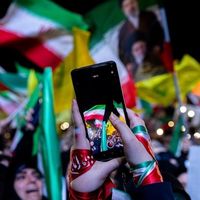
People celebrating Chaharshanbeh Suri in Tehran (file photo)
As dusk falls across Iran on Tuesday, bonfires, fireworks and street gatherings are expected to mark Chaharshanbeh Suri, an ancient fire festival that has also become a public act of defiance, this year unfolding under war, heavy security and fears of bloodshed.
Iranian authorities have issued stark warnings ahead of Chaharshanbeh Suri as officials point to what they describe as wartime conditions and the risk of unrest.
Police commander Ahmadreza Radan said this year’s celebrations come under “different circumstances,” adding that the country is effectively in a state of war and that emergency and medical services are on high alert.
He warned that adversaries could exploit the night’s gatherings, saying there is a possibility that “agents” could blend into crowds celebrating the festival and trigger incidents or casualties to inflame the situation.
In a separate notice, the Intelligence Ministry urged citizens to remain vigilant, claiming that “a small number of Israeli soldiers” may attempt sabotage during the festivities and calling on people to report suspicious activity.
The messaging has been reinforced by a broader security buildup. Reports indicate increased coordination among police, intelligence, and judicial bodies, alongside threats of decisive action against what officials describe as dangerous behavior.
In some areas, people have been encouraged to hold events in mosques and controlled spaces rather than in the streets.
An Iranian man lights a firework during the Wednesday Fire celebration (Chaharshanbeh Suri in Persian) at a park in Tehran, Iran. (2024)
Contest over public space, culture and control
Yet Chaharshanbeh Suri has rarely stayed contained.
Celebrated on the eve of the last Wednesday before Nowruz, the festival – marked by bonfires, fireworks, and the ritual of jumping over flames – predates Islam and has endured for centuries. In recent years, it has taken on an added meaning, evolving into one of the few nights when large numbers of people gather spontaneously in public spaces.
That scale has made it difficult to control. It has also turned the festival into a recurring flashpoint.
Last year, crowds across multiple cities poured into the streets despite heavy security presence. Clashes broke out in several areas, leaving at least 19 dead and thousands injured. Videos showed bonfires lighting up neighborhoods as music, chanting, and fireworks filled the air.
In earlier years, the night has gone further, with young people using firecrackers and homemade devices to confront security forces, chanting slogans, and in some cases burning photos of late Supreme Leader Ali Khamenei.
The pattern has become familiar: warnings ahead of the night, followed by mass turnout, and then confrontation.
This year, however, the backdrop is markedly different.
Iran is in the midst of an escalating conflict, with the United States and Israel striking targets linked to military and security structures. A strike announced on Tuesday killed the IRGC Basij commander Gholamreza Soleimani, a key figure in crowd control and repression.
Against that backdrop, officials have framed the festival not only as a safety concern but as a potential security threat.
‘A symbol of resilience’
Exiled Prince Reza Pahlavi, in an interview with Iran International earlier this week, said the festival carries a deeper meaning beyond tradition.
“When we celebrate Chaharshanbeh Suri today, it is not only to preserve our culture,” he said. “It is a powerful message to those who have always tried to erase our identity… an opportunity to show that we exist – to ourselves and to the world.”
He also pointed to a broader generational shift, saying: “Today everyone has reached the conclusion that a secular system is needed… a system built on ideology has, from the beginning, imposed discrimination on society.”
At the same time, he framed the preservation of cultural traditions as central to Iran’s resilience, adding that the country has endured “because of the courage of its people and the preservation of Iranian culture.”
His call to mark the night has been echoed among parts of the diaspora, including appeals for gatherings outside Iranian embassies, while inside the country officials have warned that participation could carry consequences.
The tension between these two narratives – celebration and control – is not new.
As analyst Morad Vaisi has noted, the confrontation over festivals like Nowruz and Chaharshanbeh Suri reflects a deeper struggle.
These traditions, he wrote, have endured not because of official backing, but because of people’s resistance to cultural pressure, becoming a symbol of identity and continuity beyond political systems.
Each year that people gather despite restrictions, the act itself sends a message that Iran’s cultural life extends beyond those in power.
That dynamic is expected to be on full display again tonight.
But this year, the familiar sounds of celebration will unfold alongside something heavier: a country under bombardment, a heightened security presence, and warnings that frame even small gatherings as a potential threat.
In past years, Chaharshanbeh Suri has often blurred the line between festivity and confrontation.
As darkness falls, that line may once again be tested – raising expectations of large turnouts, and concern that the night could end, as it has before, with violence and more lives lost.
Iran's exiled prince Reza Pahlavi speaking to Iran International's Morad Vaisi on March 16, 2026.
Exiled Prince Reza Pahlavi said the Islamic Republic’s weakening grip on internal repression is bringing closer the moment when Iranians could once again take control of the streets.
He said in an interview with Iran International aired on Monday that a final call for nationwide demonstrations to end the Islamic Republic would come once the authorities’ coercive apparatus had been sufficiently weakened.
“I think all of us, after 47 years of dealing with this criminal government, are counting the days until this system finally disappears,” Pahlavi said in the interview with Morad Vaisi.
“We want to reach the day after its collapse, when the people of Iran can achieve what they truly deserve: complete freedom and an opportunity to rebuild and prosper.”
Many Iranians, Pahlavi added, are hoping that moment will arrive soon but argued that strategy and timing remain critical.
“Conditions must also be taken into account,” Pahlavi said. “As everyone has seen, this government has no hesitation in suppressing people. It is prepared to see hundreds of thousands killed if that means staying in power. Therefore the movement must proceed intelligently. The final call will be issued at the right moment.”
Exiled Prince Reza Pahlavi
Opposition strategy focuses on weakening security forces
Pahlavi argued that recent developments had already eroded the Islamic Republic’s ability to rely on its security institutions.
The weakening of the Islamic Revolutionary Guards Corps and the Basij militia, he said, was central to opposition strategy, describing foreign military pressure and domestic activism as factors that had shifted the balance.
“This campaign delivered a very heavy blow to the structures of repression in the Revolutionary Guards and the Basij,” Pahlavi said.
Beyond external pressure, he talked about what he described as covert organizing inside the country, including activities by a network he called the “Immortal Guard.”
The network, according to Pahlavi, operates inside Iran and carries out coordinated actions intended to undermine the state’s coercive institutions.
“Groups inside the country, members of the Immortal Guard, through organization and coordinated work, have the ability to deliver further blows from within,” Pahlavi said. “Many of the developments we have seen in the country did not occur spontaneously but were the result of organized work.”
He described the network as emerging from within society and said its activities were aimed at protecting civilians while targeting institutions used for repression.
“The Immortal Guard is born from the people themselves,” Pahlavi said. “At this stage it plays a defensive role, helping protect people’s lives and striking institutions that the authorities use to spread fear and violence.”
Appeal to security forces
Pahlavi also used the interview to address members of Iran’s armed forces and police, urging them to distance themselves from the authorities.
“You still have the opportunity to join the people and separate yourselves from the system and its repressive forces,” Pahlavi said. “You can be part of the solution for the future of the country.”
He warned that those who continue to support the government could face accountability if political change occurs.
“Those who choose to remain defenders and guarantors of this system’s survival will have to answer to the people tomorrow,” Pahlavi said.
At the same time, he sought to reassure members of the military establishment that a future political transition would not necessarily exclude them.
“I come from a military family and I myself was a pilot,” Pahlavi said. “I understand the value of those who defend their country. Whether in the army, the police, or the gendarmerie, we need these individuals to maintain the security of the nation.”
Pahlavi said that anyone not involved in violence against civilians should be able to play a role in the future political system.
“As long as someone’s hands are not stained with the blood of the people, there is no reason they cannot serve in the future of the country,” he added.
Plans for transition after collapse
Pahlavi also described planning efforts for a transitional period following the fall of the Islamic Republic, referring to an initiative known as the “Prosperity Project.”
The effort, he said, involves specialists across various fields preparing proposals for how the country could be governed immediately after a political transition.
“The purpose of the Prosperity Project is to ensure that beyond political activists, professionals and experts are also planning for the future,” Pahlavi said.
He cited areas such as the judiciary, economic policy, health care, and education as subjects under discussion.
“For example, legal experts can explain how justice should be implemented during the transition and how officials of the current system should be handled,” he said. “Economists can outline how to rebuild the economy and attract investment.”
Pahlavi said existing state institutions and civil servants would likely continue operating temporarily to prevent administrative breakdown.
“During an emergency transition period, the country will need to be run by the existing institutions and ministries,” Pahlavi said. “These employees must continue their work until we reach the stage where the future political system is determined.”
The long-term political structure, he said, would ultimately be decided by a constituent assembly and national referendum.
Return to Iran
The exiled prince also said he intends to return to Iran as soon as circumstances permit, even if the Islamic Republic still formally holds power.
“I do not know where the first liberated area will be and it may not necessarily be Tehran,” Pahlavi added. “But as soon as conditions allow, I would prefer to be inside Iran among my compatriots.”
He suggested that his presence inside the country could accelerate defections from state institutions.
Iran's exiled prince Reza Pahlavi speaking to Iran International's Morad Vaisi on March 16, 2026.
“My presence in Iran could encourage faster defections among the forces of the Islamic Republic and help them join the people,” Pahlavi said. “I am ready to accept all necessary and calculated risks in order to return to my country.”
National identity and protest movement
Throughout the interview, Pahlavi framed the opposition movement as a national project rooted in Iranian cultural identity.
He argued that the country’s traditions and historical symbols had played an important role in sustaining resistance to the authorities.
“This uprising is a national movement built around our Iranian identity,” Pahlavi said. “From the first days, the Islamic Republic confronted cultural traditions such as Nowruz and Chaharshanbe Suri (fire festival) because Iran itself was not their priority.”
Despite acknowledging the risks involved in confronting the state, Pahlavi said he believes the authorities will ultimately fail to maintain control.
“I have no doubt that this system will eventually disappear and the people will prevail,” Pahlavi said. “The important thing is that we continue our movement according to the calls that are issued and remain committed to rebuilding the country.”
Smoke rises in the Fujairah oil industry zone, amid the US-Israel conflict with Iran, United Arab Emirates, March 14, 2026
President Donald Trump was briefed before launching strikes on Iran that Tehran could retaliate against US allies in the Persian Gulf, Reuters reported Monday, citing a US official and several people familiar with intelligence assessments.
Prewar intelligence did not say retaliation was certain, but it was “on the list of potential outcomes,” one source said, speaking on condition of anonymity.
Two additional sources said Trump was also warned Iran might attempt to close the Strait of Hormuz, a vital global oil transit route.
Trump said twice on Monday that Iran’s retaliatory strikes on Qatar, Saudi Arabia, the United Arab Emirates, Bahrain and Kuwait had been unexpected.
“They weren’t supposed to go after all these other countries in the Middle East,” he said at a White House event. “Nobody expected that. We were shocked.”
The remarks came as the Pentagon sought to underscore the scale of the campaign. US Central Command said it had hit more than 7,000 targets across Iran by the end of Monday, including missile sites, naval assets and command facilities.
Israel’s military issued similarly sweeping claims, asserting in a post on its Persian X account that it had inflicted heavy losses on Iranian forces and leadership and caused declining morale — claims that could not be independently verified.
Yet a report by The Washington Post the same day cited US intelligence assessments suggesting the campaign has not destabilized Iran’s political system and that the Islamic Revolutionary Guard Corps is consolidating power, with no signs of major defections or internal fractures.
Trump defended the decision to join Israel in launching airstrikes on February 28, arguing the economic fallout was justified. He called the war’s impact on markets “a very small price to pay,” adding: “You want to see the stock market go down? Start letting them hit you with nukes.”
Major stock indexes have fallen since the campaign began, while oil prices surged as shipping through the Strait of Hormuz slowed sharply. Markets recovered somewhat Monday as oil prices eased.
Trump also argued the war was necessary to prevent a wider conflict, saying that “had we not done this, you would have had a nuclear war that would have evolved into World War III.”
Emergency personnel work at the site of a US-Israeli strike, in Tehran, Iran, March 16, 2026
Reports received by Iran International indicate that at least 5,000 members of Iran’s military and security forces have been killed and more than 15,000 wounded so far in the US-Israeli attack on the country.
Many were killed in airstrikes on missile and drone units, the reports suggest, with the Revolutionary Guards, Basij forces and anti-riot police units sustaining the heaviest casualties.
No official figure on armed forces casualties has been released.
The information also suggests authorities have sought to limit public awareness of the losses by restricting public funeral and burial ceremonies. Families have reportedly been told to hold mourning services privately.
The reported toll comes as signs of dissatisfaction, declining morale, financial strain and desertions are said to be spreading among parts of Iran’s security and military forces.
Members of police special units received a notice on Friday indicating that salary payments for some units had been disrupted, according to information obtained and reviewed by Iran International.
In response to the announcement—said to be the third such delay in recent months—some personnel declined to attend pro-government rallies, and sources said deployments in some major cities were affected.
Reports received by Iran International also indicate that retirees and some army personnel have not received salaries for a second consecutive month.
Some senior commanders are said to accuse the IRGC of exploiting the financial crisis at Bank Sepah to weaken the police while strengthening other institutions, particularly those linked to the clerical establishment.
Additional reports suggest the IRGC has sought to address manpower shortages by recalling certain retirees to active duty and encouraging some prisoners to cooperate with security forces with promises of amnesty.
In the air force, according to the reports, morale and operational readiness are low. Many pilots—particularly after the reported downing of a Yak-130 aircraft in an encounter with an Israeli F-35—are said to be reluctant to fly combat missions against Israeli or US forces.
Readiness levels are also reported to have declined.
At the same time, desertions within the police have emerged as a serious challenge for the authorities.
Some reports indicate that about 350 personnel left their posts at one base, while in some units the rate of absence or desertion has reportedly approached 90 percent.
A man lights a candle by a wall showing pictures of protesters killed during anti-government demonstrations in Iran, in Golders Green, London, Britain, March 7, 2026.
The killings of protesters in January did not end when the shooting stopped. For many Iranians living thousands of kilometers from the streets where the bullets fell, the event did not remain on their screens.
It entered their bodies – in sleepless nights, stomach illness, obsessive counting of the dead, and a persistent sense that something in their relationship to Iran had been permanently altered.
Now, two months later, as the United States and Israel wage war against the Islamic Republic and another far stricter internet blackout grips the country, that earlier rupture is returning with renewed force.
Images of death, the disappearance of communication, and the uncertainty surrounding Iran’s future have reopened a wound many in the diaspora say never fully closed.
A new qualitative study by researcher Nazanin Shahbazi, a PhD student at the University of Manchester, helps explain why.
Based on eight in-depth interviews with politically engaged members of the Iranian diaspora conducted shortly after the January killings and end of internet shutdown, the research explores how people far from the violence nevertheless experienced the uprising and massacre as a personal rupture – one that reshaped their bodies, their sense of time, and even what it meant to say “I am Iranian.”
“The protests, the killings, the internet blackout and the blocked funerals were not separate chapters,” Shahbazi told Iran International. “For the people I spoke with they formed one continuous shock that reorganized their lives.”
Human rights organizations have documented the repression in detail – the shootings, the arrests, the intimidation of families and the pressure placed on relatives of the dead. What those reports cannot capture is how such violence lives on in those who witness it from afar.
“They can tell us what was done to people and roughly how many were killed,” Shahbazi said. “But they can’t show what it feels like to live with that in your body, your sleep, your relationships and your sense of future.”
One of the most striking patterns in the interviews is how often the experience of the massacre appeared in the body.
Participants described vomiting after seeing images of burned bodies, sudden weight gain, eczema, IBS flare-ups, breathlessness, grinding teeth and persistent insomnia. Some lost their appetite entirely. Others said their ordinary routines collapsed into constant monitoring of news from Iran.
“When words ran out, people kept returning to their bodies,” Shahbazi said. “Sudden vomiting, weight gained in twenty days, neck spasms or grinding teeth were how they registered what they could not yet fully think or articulate.”
The body, in this sense, became both witness and container.
Political violence was not simply something they analyzed or debated. It was something that settled into digestion, sleep, muscles and skin.
Shahbazi believes those reactions reveal dimensions of suffering that familiar categories like trauma or PTSD sometimes fail to capture.
“Diagnostic labels can flatten experience into symptom lists,” she said. “What people described were very concrete bodily dramas tied to images and events in Iran.”
Another recurring theme was the strange moral position created by exile.
The interviewees were physically safe – living in UK, Europe, North America or elsewhere outside Iran – yet many said they did not experience themselves as distant observers.
“I would describe their condition as safe but summoned,” Shahbazi said. “They lived outside the field of bullets but inside a field of responsibility.”
Again and again participants returned to a painful question: why am I here while others were killed?
Exile did not reduce the emotional weight of the uprising. In many cases it intensified it.
“Safety, mobility and an intact body were experienced not simply as privileges,” Shahbazi said. “They were felt as a kind of unpaid debt to those who stayed and faced lethal risk.”
That sense of symbolic debt helps explain why many interviewees described weeks in which work, sleep and daily routines collapsed into constant monitoring of events in Iran.
Some called friends inside the country repeatedly. Others spent hours tracking death tolls or watching newly emerging videos.
They were not simply following the news. They were trying to answer a moral demand they felt placed upon them.
The scale of the violence also strained language itself. Participants repeatedly reached for extreme words – “catastrophe,” “slaughter,” or “something like a Holocaust” – because ordinary vocabulary seemed incapable of holding what they had seen.
“Everyday language felt too small,” Shahbazi said. “So people borrowed the biggest words they could find.”
Even those words felt insufficient.
Many interviewees hesitated as they spoke, qualifying their descriptions with phrases like “something like” or “nothing else really covers it.”
Numbers became another way of trying to grasp the event.
Several participants described compulsively tracking death tolls or attempting rough calculations of how many people might have been killed.
“Counting was a way of making the killings halfway thinkable,” Shahbazi said.
A different Iranian-ness
Despite the suffering described in the interviews, the research also uncovered something unexpected. Several participants said the uprising had changed how they understood their own identity.
For years, many had associated being Iranian internationally with embarrassment tied to the Islamic Republic’s image abroad. After the protests, that feeling began to shift.
Shahbazi said several participants described a “partial lifting of shame” when saying they were Iranian.
“In its place they spoke about pride in the courage and sacrifices of protesters,” she said.
Some described renewed attachment to Iranian culture, language and land. Others spoke about admiration for the mothers who stood at the forefront of demonstrations.
Shahbazi believes this shift may have political consequences as well.
“It recenters being Iranian around equality, justice and shared humanity,” she said, “rather than around the state’s ideology.”
That transformation remains fragile.
The war now unfolding and the renewed blackout mean that images of violence are again entering Iranian homes and diaspora communities alike.
But if the interviews reveal anything, it is that the event did not remain confined to the streets where it began.
As Shahbazi put it: “For many Iranians in the diaspora, the massacre did not stay on their screens; it cut into their bodies, their sense of time, and even the way they dare to say, ‘I am Iranian.’”