US President Donald Trump said on Wednesday that a deal with Tehran “will happen” but insisted there was “never a deadline” for negotiations.
When asked whether a deal could come before his planned trip to China next week, he said “it’s possible,” while stressing that renewed strikes also remained on the table.
His comments came as Axios reported that the White House believes a one-page memorandum to end the war may be within reach, potentially laying the groundwork for broader nuclear talks and a possible agreement within 30 days.
Reacting cautiously, Iranian foreign ministry spokesperson Esmail Baghaei said the US proposal remains under review and that Tehran’s response would be conveyed to Pakistani mediators once finalized.
According to Axios, Washington expects a reply within 48 hours.
The combination of Trump’s remarks and reports of a possible agreement had immediate economic effects inside Iran, with the value of foreign currencies and the cryptocurrency Tether falling sharply in Tehran markets.
Hardline rejection
Media outlets affiliated with the Revolutionary Guards (IRGC), however, pushed back strongly against suggestions that an agreement was imminent.
“Today’s propaganda by American media is about justifying Trump’s retreat from his recent hostile action,” Tasnim News wrote, citing an unnamed informed source. “Trump’s move was wrong from the beginning and should not have been taken.”
The source added that after Trump’s “retreat,” Iran had resumed reviewing the proposal and would announce its conclusion to mediators “whenever it reaches one.”
Ebrahim Rezaei, spokesperson for parliament’s national security committee, also dismissed the reports.
“What the Americans did not achieve in face-to-face negotiations, they will not obtain through a failed war,” he said. “Iran is ready, finger on the trigger… if they do not surrender and grant the necessary concessions… we will deliver a harsh and regret-inducing response.”
Diplomatic opening?
Despite the rhetoric, other voices portrayed the developments as a possible diplomatic opening.
The website Nour News, close to security institutions, described the suspension of the “Freedom Project” as evidence of a US “miscalculation” but added that it had “once again given value to the diplomacy card and strengthened the negotiation option to resolve the crisis.”
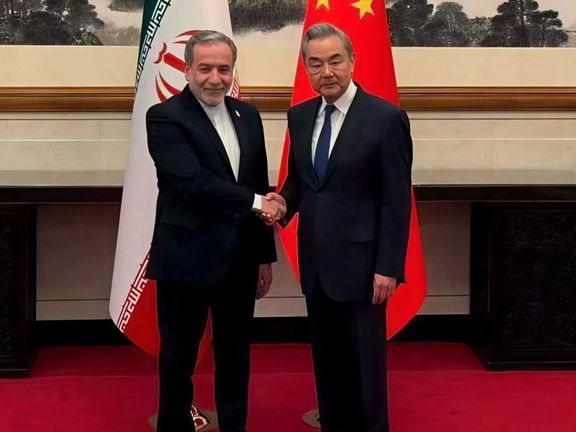
It also pointed to Foreign Minister Abbas Araghchi’s recent trip to Beijing as evidence that Iran had entered a new phase of diplomatic activity, with China emerging as a potential facilitator in the Hormuz crisis.
The outlet warned, however, that “given Trump’s impulsive decisions, the situation remains fragile.”
Even as negotiations continue, Tehran appears intent on reinforcing its leverage in the Strait of Hormuz.
Reports indicate Iranian authorities have issued new instructions to shipping companies through a body referred to as the “Persian Gulf Strait Authority.”
The reported rules state that ships from countries that sanctioned Iran or froze Iranian assets could be denied passage. Violations may result in seizure and fines amounting to up to 20 percent of cargo value.
Journalist Mohammadreza Manafi wrote on X that Araghchi’s meeting with China’s foreign minister may have helped break the deadlock.
“It seems Araghchi will return to Tehran from the land of the dragon with ‘full hands’,” he wrote.
Analyst Ahmad Zeidabadi offered a more cautious analogy, comparing the negotiations to “the heart of a heart-attack patient being resuscitated in an operating room.”
“Fortunately, today this heart shows better vital signs than in previous days,” he wrote, “but there is no certainty about its condition tomorrow.”