• Iran Insight
  • Politics
  • Economy
  • Analysis
  • Special Report
  • Opinion
  • Podcast
All rights reserved for Volant Media UK Limited
volant media logo
  • العربية
  • فارسی
Brand
  • Iran Insight
  • Politics
  • Economy
  • Analysis
  • Special Report
  • Opinion
  • Podcast
  • Iran Insight
  • Politics
  • Economy
  • Analysis
  • Special Report
  • Opinion
  • Podcast
  • Theme
  • Language
    • العربية
    • فارسی
EXCLUSIVE

Pahlavi says Islamic Republic’s weakening grip brings return to streets closer

Mar 17, 2026, 09:13 GMT
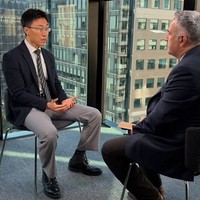
Iran's exiled prince Reza Pahlavi speaking to Iran International's Morad Vaisi on March 16, 2026.

Exiled Prince Reza Pahlavi said the Islamic Republic’s weakening grip on internal repression is bringing closer the moment when Iranians could once again take control of the streets.

He said in an interview with Iran International aired on Monday that a final call for nationwide demonstrations to end the Islamic Republic would come once the authorities’ coercive apparatus had been sufficiently weakened.

“I think all of us, after 47 years of dealing with this criminal government, are counting the days until this system finally disappears,” Pahlavi said in the interview with Morad Vaisi.

“We want to reach the day after its collapse, when the people of Iran can achieve what they truly deserve: complete freedom and an opportunity to rebuild and prosper.”

Many Iranians, Pahlavi added, are hoping that moment will arrive soon but argued that strategy and timing remain critical.

“Conditions must also be taken into account,” Pahlavi said. “As everyone has seen, this government has no hesitation in suppressing people. It is prepared to see hundreds of thousands killed if that means staying in power. Therefore the movement must proceed intelligently. The final call will be issued at the right moment.”

Exiled Prince Reza Pahlavi

Opposition strategy focuses on weakening security forces

Pahlavi argued that recent developments had already eroded the Islamic Republic’s ability to rely on its security institutions.

The weakening of the Islamic Revolutionary Guards Corps and the Basij militia, he said, was central to opposition strategy, describing foreign military pressure and domestic activism as factors that had shifted the balance.

“This campaign delivered a very heavy blow to the structures of repression in the Revolutionary Guards and the Basij,” Pahlavi said.

Beyond external pressure, he talked about what he described as covert organizing inside the country, including activities by a network he called the “Immortal Guard.”

The network, according to Pahlavi, operates inside Iran and carries out coordinated actions intended to undermine the state’s coercive institutions.

“Groups inside the country, members of the Immortal Guard, through organization and coordinated work, have the ability to deliver further blows from within,” Pahlavi said. “Many of the developments we have seen in the country did not occur spontaneously but were the result of organized work.”

He described the network as emerging from within society and said its activities were aimed at protecting civilians while targeting institutions used for repression.

“The Immortal Guard is born from the people themselves,” Pahlavi said. “At this stage it plays a defensive role, helping protect people’s lives and striking institutions that the authorities use to spread fear and violence.”

Appeal to security forces

Pahlavi also used the interview to address members of Iran’s armed forces and police, urging them to distance themselves from the authorities.

“You still have the opportunity to join the people and separate yourselves from the system and its repressive forces,” Pahlavi said. “You can be part of the solution for the future of the country.”

He warned that those who continue to support the government could face accountability if political change occurs.

“Those who choose to remain defenders and guarantors of this system’s survival will have to answer to the people tomorrow,” Pahlavi said.

At the same time, he sought to reassure members of the military establishment that a future political transition would not necessarily exclude them.

“I come from a military family and I myself was a pilot,” Pahlavi said. “I understand the value of those who defend their country. Whether in the army, the police, or the gendarmerie, we need these individuals to maintain the security of the nation.”

Pahlavi said that anyone not involved in violence against civilians should be able to play a role in the future political system.

“As long as someone’s hands are not stained with the blood of the people, there is no reason they cannot serve in the future of the country,” he added.

Plans for transition after collapse

Pahlavi also described planning efforts for a transitional period following the fall of the Islamic Republic, referring to an initiative known as the “Prosperity Project.”

The effort, he said, involves specialists across various fields preparing proposals for how the country could be governed immediately after a political transition.

“The purpose of the Prosperity Project is to ensure that beyond political activists, professionals and experts are also planning for the future,” Pahlavi said.

He cited areas such as the judiciary, economic policy, health care, and education as subjects under discussion.

“For example, legal experts can explain how justice should be implemented during the transition and how officials of the current system should be handled,” he said. “Economists can outline how to rebuild the economy and attract investment.”

Pahlavi said existing state institutions and civil servants would likely continue operating temporarily to prevent administrative breakdown.

“During an emergency transition period, the country will need to be run by the existing institutions and ministries,” Pahlavi said. “These employees must continue their work until we reach the stage where the future political system is determined.”

The long-term political structure, he said, would ultimately be decided by a constituent assembly and national referendum.

Return to Iran

The exiled prince also said he intends to return to Iran as soon as circumstances permit, even if the Islamic Republic still formally holds power.

“I do not know where the first liberated area will be and it may not necessarily be Tehran,” Pahlavi added. “But as soon as conditions allow, I would prefer to be inside Iran among my compatriots.”

He suggested that his presence inside the country could accelerate defections from state institutions.

Iran's exiled prince Reza Pahlavi speaking to Iran International's Morad Vaisi on March 16, 2026.

“My presence in Iran could encourage faster defections among the forces of the Islamic Republic and help them join the people,” Pahlavi said. “I am ready to accept all necessary and calculated risks in order to return to my country.”

National identity and protest movement

Throughout the interview, Pahlavi framed the opposition movement as a national project rooted in Iranian cultural identity.

He argued that the country’s traditions and historical symbols had played an important role in sustaining resistance to the authorities.

“This uprising is a national movement built around our Iranian identity,” Pahlavi said. “From the first days, the Islamic Republic confronted cultural traditions such as Nowruz and Chaharshanbe Suri (fire festival) because Iran itself was not their priority.”

Despite acknowledging the risks involved in confronting the state, Pahlavi said he believes the authorities will ultimately fail to maintain control.

“I have no doubt that this system will eventually disappear and the people will prevail,” Pahlavi said. “The important thing is that we continue our movement according to the calls that are issued and remain committed to rebuilding the country.”

Most Viewed

Larijani rebukes UAE, other Islamic states for not backing Iran during war
1

Larijani rebukes UAE, other Islamic states for not backing Iran during war

2

Iran does not seek ceasefire but war must end, FM says

3

UN report says Iran crushed protests with force, arrests and digital curbs

4

Arab states urge US not to stop short in war on Iran

5
INSIGHT

Grief crossed the border: How Iranians abroad lived the January massacre

Banner
Banner

Spotlight

  • Tehran warns of crackdown ahead of annual fire festival
    INSIGHT

    Tehran warns of crackdown ahead of annual fire festival

  • Son of FBI agent missing in Iran says US strikes are step toward justice

    Son of FBI agent missing in Iran says US strikes are step toward justice

  • Tehran press turn to survival as war upends Iranian New Year
    INSIGHT

    Tehran press turn to survival as war upends Iranian New Year

  • Grief crossed the border: How Iranians abroad lived the January massacre
    INSIGHT

    Grief crossed the border: How Iranians abroad lived the January massacre

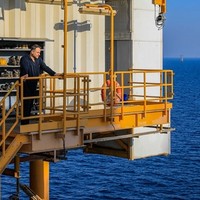
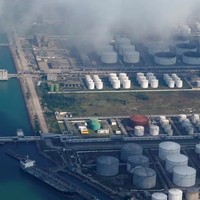
  • Iran shields its oil exports as Hormuz flows falter
    ANALYSIS

    Iran shields its oil exports as Hormuz flows falter

  • Iran’s security agents gang rape two nurses detained for aiding protesters
    EXCLUSIVE

    Iran’s security agents gang rape two nurses detained for aiding protesters

•
•
•

More Stories

Pay delays hit Iran security units as morale declines

Mar 17, 2026, 07:27 GMT

Signs of discontent, low morale, financial strain and desertion are spreading among parts of Iran’s security and military forces, Iran International has learned.

Members of the Special Units Command received a notice on Friday saying salary payments for some units had run into problems, according to people familiar with the matter. The delay marked the third time this year that wages for those forces are being paid late.

Following the delays, some personnel refused to attend pro-government gatherings, the sources said, causing disruptions in deployment in some major cities.

Retirees and some army personnel have also not been paid for a second straight month.

Some senior commanders accuse the Islamic Revolutionary Guard Corps of using the financial crisis at Bank Sepah to weaken the police force and strengthen other institutions, especially bodies tied to the clerical establishment.

Pay delays hit Iran security units as morale declines

Mar 17, 2026, 06:30 GMT

Signs of discontent, low morale, financial strain and desertion are spreading among parts of Iran’s security and military forces, Iran International has learned.

Members of the Special Units Command received a notice on Friday saying salary payments for some units had run into problems, according to people familiar with the matter. The delay marked the third time this year that wages for those forces had been paid late.

Following the delays, some personnel refused to attend pro-government gatherings, the sources said, causing disruptions in deployment in some major cities.

Retirees and some army personnel have also not been paid for a second straight month.

Some senior commanders accuse the Islamic Revolutionary Guard Corps of using the financial crisis at Bank Sepah to weaken the police force and strengthen other institutions, especially bodies tied to the clerical establishment.

At least 5,000 Iranian security forces killed by US-Israeli strikes

Mar 16, 2026, 22:53 GMT

Reports received by Iran International indicate that at least 5,000 members of Iran’s military and security forces have been killed and more than 15,000 wounded so far in the US-Israeli attack on the country.

Many were killed in airstrikes on missile and drone units, the reports suggest, with the Revolutionary Guards, Basij forces and anti-riot police units sustaining the heaviest casualties.

No official figure on armed forces casualties has been released.

The information also suggests authorities have sought to limit public awareness of the losses by restricting public funeral and burial ceremonies. Families have reportedly been told to hold mourning services privately.

The reported toll comes as signs of dissatisfaction, declining morale, financial strain and desertions are said to be spreading among parts of Iran’s security and military forces.

Members of police special units received a notice on Friday indicating that salary payments for some units had been disrupted, according to information obtained and reviewed by Iran International.

In response to the announcement—said to be the third such delay in recent months—some personnel declined to attend pro-government rallies, and sources said deployments in some major cities were affected.

Reports received by Iran International also indicate that retirees and some army personnel have not received salaries for a second consecutive month.

Some senior commanders are said to accuse the IRGC of exploiting the financial crisis at Bank Sepah to weaken the police while strengthening other institutions, particularly those linked to the clerical establishment.

Additional reports suggest the IRGC has sought to address manpower shortages by recalling certain retirees to active duty and encouraging some prisoners to cooperate with security forces with promises of amnesty.

In the air force, according to the reports, morale and operational readiness are low. Many pilots—particularly after the reported downing of a Yak-130 aircraft in an encounter with an Israeli F-35—are said to be reluctant to fly combat missions against Israeli or US forces.

Readiness levels are also reported to have declined.

At the same time, desertions within the police have emerged as a serious challenge for the authorities.

Some reports indicate that about 350 personnel left their posts at one base, while in some units the rate of absence or desertion has reportedly approached 90 percent.

Grief crossed the border: How Iranians abroad lived the January massacre

Mar 16, 2026, 14:55 GMT
•
Arash Sohrabi

The killings of protesters in January did not end when the shooting stopped. For many Iranians living thousands of kilometers from the streets where the bullets fell, the event did not remain on their screens.

It entered their bodies – in sleepless nights, stomach illness, obsessive counting of the dead, and a persistent sense that something in their relationship to Iran had been permanently altered.

Now, two months later, as the United States and Israel wage war against the Islamic Republic and another far stricter internet blackout grips the country, that earlier rupture is returning with renewed force.

Images of death, the disappearance of communication, and the uncertainty surrounding Iran’s future have reopened a wound many in the diaspora say never fully closed.

A new qualitative study by researcher Nazanin Shahbazi, a PhD student at the University of Manchester, helps explain why.

Based on eight in-depth interviews with politically engaged members of the Iranian diaspora conducted shortly after the January killings and end of internet shutdown, the research explores how people far from the violence nevertheless experienced the uprising and massacre as a personal rupture – one that reshaped their bodies, their sense of time, and even what it meant to say “I am Iranian.”

“The protests, the killings, the internet blackout and the blocked funerals were not separate chapters,” Shahbazi told Iran International. “For the people I spoke with they formed one continuous shock that reorganized their lives.”

Human rights organizations have documented the repression in detail – the shootings, the arrests, the intimidation of families and the pressure placed on relatives of the dead. What those reports cannot capture is how such violence lives on in those who witness it from afar.

“They can tell us what was done to people and roughly how many were killed,” Shahbazi said. “But they can’t show what it feels like to live with that in your body, your sleep, your relationships and your sense of future.”

  • Iranians catalog tragedies blamed on the regime to counter antiwar narrative

    Iranians catalog tragedies blamed on the regime to counter antiwar narrative

  • Iran’s security agents gang rape two nurses detained for aiding protesters

    Iran’s security agents gang rape two nurses detained for aiding protesters

Body keeps the score

One of the most striking patterns in the interviews is how often the experience of the massacre appeared in the body.

Participants described vomiting after seeing images of burned bodies, sudden weight gain, eczema, IBS flare-ups, breathlessness, grinding teeth and persistent insomnia. Some lost their appetite entirely. Others said their ordinary routines collapsed into constant monitoring of news from Iran.

“When words ran out, people kept returning to their bodies,” Shahbazi said. “Sudden vomiting, weight gained in twenty days, neck spasms or grinding teeth were how they registered what they could not yet fully think or articulate.”

The body, in this sense, became both witness and container.

Political violence was not simply something they analyzed or debated. It was something that settled into digestion, sleep, muscles and skin.

Shahbazi believes those reactions reveal dimensions of suffering that familiar categories like trauma or PTSD sometimes fail to capture.

“Diagnostic labels can flatten experience into symptom lists,” she said. “What people described were very concrete bodily dramas tied to images and events in Iran.”

  • Dancing for the dead: How protest massacre is rewriting Iran’s mourning rituals

    Dancing for the dead: How protest massacre is rewriting Iran’s mourning rituals

  • Pay for bullets: How Iran pressures families after killing protesters

    Pay for bullets: How Iran pressures families after killing protesters

Safe but summoned

Another recurring theme was the strange moral position created by exile.

The interviewees were physically safe – living in UK, Europe, North America or elsewhere outside Iran – yet many said they did not experience themselves as distant observers.

“I would describe their condition as safe but summoned,” Shahbazi said. “They lived outside the field of bullets but inside a field of responsibility.”

Again and again participants returned to a painful question: why am I here while others were killed?

Exile did not reduce the emotional weight of the uprising. In many cases it intensified it.

“Safety, mobility and an intact body were experienced not simply as privileges,” Shahbazi said. “They were felt as a kind of unpaid debt to those who stayed and faced lethal risk.”

That sense of symbolic debt helps explain why many interviewees described weeks in which work, sleep and daily routines collapsed into constant monitoring of events in Iran.

Some called friends inside the country repeatedly. Others spent hours tracking death tolls or watching newly emerging videos.

They were not simply following the news. They were trying to answer a moral demand they felt placed upon them.

  • Over 36,500 killed in Iran's deadliest massacre, documents reveal

    Over 36,500 killed in Iran's deadliest massacre, documents reveal

  • 36,500 deaths in context: How Iran’s toll compares with wars and crackdowns

    36,500 deaths in context: How Iran’s toll compares with wars and crackdowns

Language at its limit

The scale of the violence also strained language itself. Participants repeatedly reached for extreme words – “catastrophe,” “slaughter,” or “something like a Holocaust” – because ordinary vocabulary seemed incapable of holding what they had seen.

“Everyday language felt too small,” Shahbazi said. “So people borrowed the biggest words they could find.”

Even those words felt insufficient.

Many interviewees hesitated as they spoke, qualifying their descriptions with phrases like “something like” or “nothing else really covers it.”

Numbers became another way of trying to grasp the event.

Several participants described compulsively tracking death tolls or attempting rough calculations of how many people might have been killed.

“Counting was a way of making the killings halfway thinkable,” Shahbazi said.

A different Iranian-ness

Despite the suffering described in the interviews, the research also uncovered something unexpected. Several participants said the uprising had changed how they understood their own identity.

For years, many had associated being Iranian internationally with embarrassment tied to the Islamic Republic’s image abroad. After the protests, that feeling began to shift.

Shahbazi said several participants described a “partial lifting of shame” when saying they were Iranian.

“In its place they spoke about pride in the courage and sacrifices of protesters,” she said.

Some described renewed attachment to Iranian culture, language and land. Others spoke about admiration for the mothers who stood at the forefront of demonstrations.

Shahbazi believes this shift may have political consequences as well.

“It recenters being Iranian around equality, justice and shared humanity,” she said, “rather than around the state’s ideology.”

That transformation remains fragile.

The war now unfolding and the renewed blackout mean that images of violence are again entering Iranian homes and diaspora communities alike.

But if the interviews reveal anything, it is that the event did not remain confined to the streets where it began.

As Shahbazi put it: “For many Iranians in the diaspora, the massacre did not stay on their screens; it cut into their bodies, their sense of time, and even the way they dare to say, ‘I am Iranian.’”

Iran’s security agents gang rape two nurses detained for aiding protesters

Mar 15, 2026, 14:58 GMT
•
Farnoosh Faraji

Two nurses working in a Tehran hospital who treated wounded protesters during the nationwide uprising in January were tortured and repeatedly gang raped by security agents while in custody, people familiar with the matter told Iran International.

The sources, based in Tehran, requested anonymity for fear of retribution.

The nurses were among medical staff at Tehran’s Rajaei Cardiovascular, Medical and Research Center who treated people injured during the massive protests that erupted in late December and spread into early January, drawing millions into the streets and prompting a crackdown that led to mass arrests and at least 36,500 deaths.

Sexual torture and severe injuries

One of the nurses, a 33-year-old woman, was repeatedly abused and raped during detention, according to informed sources who spoke with Iran International.

Sources said agents subjected her to various forms of sexual torture.

In addition to assaulting her with their fingers, agents raped her in groups of two or three over consecutive days.

They also raped her by inserting a foreign object into her anus, causing severe bleeding, the sources said.

In another form of torture, agents took her along with dozens of other detained women to an elevated place and then pushed them all into a small pit-like space, the sources said.

The injuries inflicted on the nurse were so severe that doctors had to remove part of her intestine, and she now lives with a colostomy bag, one source said.

Her uterus also suffered severe tearing and she has so far undergone two surgeries. Doctors may ultimately be forced to remove her uterus completely, the source added.

Before she was transferred to the operating room, the nurse repeatedly asked doctors not to allow her to survive and said that if she came out of surgery alive, she would take her own life, the source said.

According to an eyewitness, her psychological condition is so severe that her hands are currently tied to the hospital bed to prevent her from harming herself while she remains under the supervision of security forces.

The second nurse was also subjected to gang rape in custody, according to the sources.

Part of her intestine was severely damaged, and she has also been fitted with a colostomy bag, the witnesses said.

Due to severe bleeding, doctors removed her uterus completely.

Sources said the family of one of the nurses was forced to pay significant sums of money to an intelligence officer to secure her release.

According to the sources, a document was then prepared stating that the woman had entered into a temporary marriage with one of the agents, a step described as intended to create the conditions for her release.

She was also required to sign a pledge stating that after her release she would declare that she had been abused and raped by “rioters,” the sources said.

Hospital crackdown during protests

The hospital, located in the Vali-Asr area of Tehran, faced a wave of wounded people late on the evening of Jan. 8.

From around 9 p.m. onward, large numbers of individuals injured by live ammunition were transferred to the hospital.

Agents involved in the crackdown on protesters told hospital staff not to provide medical treatment to the wounded, according to sources.

Among the 27 personnel and nurses present in the ward that night, 14 refused the order and attempted to treat the injured.

Sources said two male nurses among them were arrested after protesting the situation and expressing sympathy with the wounded.

Among the 14 members of the medical staff who resisted the order, only seven female nurses were able to continue providing emergency care for several hours.

According to information received by Iran International, these seven nurses continued treating the wounded until around 11 p.m. to midnight.

Security forces later entered the hospital and fired at some of the wounded patients.

When nurses and hospital staff protested the shooting, they were beaten and transferred to the lower floor of the hospital and into a storage area.

Witnesses said that among the seven nurses, two were shot and killed in front of the others.

Staff were warned not to touch the bodies, and the corpses were left where they lay.

According to information received by Iran International, the families of the two nurses found their bodies several days later in Kahrizak.

Five other female nurses were arrested and transferred to detention, and their families had no information about their situation for weeks.

International concern over sexual violence against detainees

Human rights groups have warned that detainees arrested during the protests face a high risk of torture and sexual violence.

Amnesty International said thousands of people detained in connection with the nationwide unrest were at risk of torture and other ill-treatment in custody, including sexual violence.

The United Nations has also expressed concern about Iran’s violent crackdown on the protests and the treatment of detainees, including reports of torture and sexual violence.

Sara Hossain, chair of the Independent International Fact-Finding Mission on Iran established by the UN Human Rights Council, said the mission had gathered evidence pointing to serious human rights violations committed by Iranian authorities.

“The information we have gathered points to severe human rights violations, including unnecessary and disproportionate use of force, resulting in arbitrary killings, torture, sexual violence, arbitrary arrests and detentions, and forced confessions,” Hossain said in remarks to the Human Rights Council in late January.

Previous reports and investigations by Iran International have also documented allegations of sexual violence against detainees during protest crackdowns in Iran.

Other allegations of sexual violence against detainees have also emerged during the same wave of nationwide protests

Last month, Iran International reported that female protesters detained during the protests on Jan. 8 and Jan. 9 were raped and sexually assaulted while in custody.

Two teenage girls, aged 15 and 17, who were arrested during protests on January 8, were raped by on duty soldiers at a detention facility, local sources told Iran International.

In a separate account, sources detailed the experience of a young woman and another 17-year-old teenager.

According to the sources, the two were held in an informal detention center which they both described as belonging to the Revolutionary Guards (IRGC).

Sources said the victims were raped by individuals at the site during their detention.

According to sources, the severity of the trauma has led some of these victims to attempt suicide.

Another year-long investigation by Iran International found systematic and widespread use of sexual violence by security forces against detained protesters during the 2022 uprising, sparked by the death in custody of 22-year-old Mahsa Zhina Amini.

In exclusive interviews conducted for the investigation, six protesters aged between 19 and 43 said they were raped or sexually abused shortly after their detention, including inside police vehicles, at covert locations and in detention centers.

Sexual abuses committed by Iranian security forces were not isolated incidents, but rather part of a widespread, systematic strategy to stifle dissent, as evidenced by numerous testimonies provided to Iran International.

While sexual abuse indiscriminately targeted women of all ages, testimonies also unveiled that authorities employed sexual violence as a calculated tactic to suppress and intimidate male protesters.

The Iranian authorities’ use of physical and sexual violence to suppress dissent is a longstanding tactic, dating back to the establishment of the Islamic Republic.