Pay delays hit Iran security units as morale declines
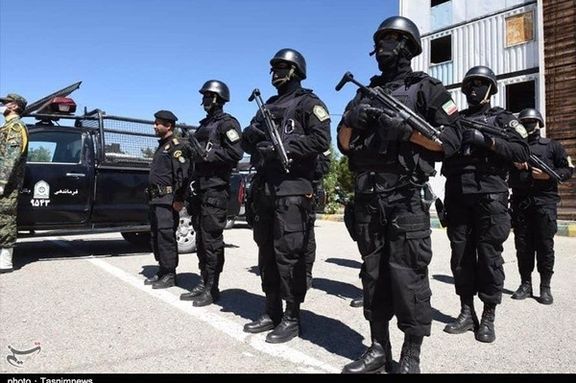
Signs of discontent, low morale, financial strain and desertion are spreading among parts of Iran’s security and military forces, Iran International has learned.
Members of the Special Units Command received a notice on Friday saying salary payments for some units had run into problems, according to people familiar with the matter. The delay marked the third time this year that wages for those forces are being paid late.
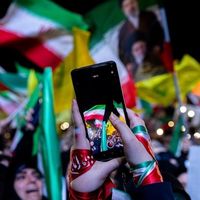
Following the delays, some personnel refused to attend pro-government gatherings, the sources said, causing disruptions in deployment in some major cities.
Retirees and some army personnel have also not been paid for a second straight month.
Some senior commanders accuse the Islamic Revolutionary Guard Corps of using the financial crisis at Bank Sepah to weaken the police force and strengthen other institutions, especially bodies tied to the clerical establishment.
Signs of discontent, low morale, financial strain and desertion are spreading among parts of Iran’s security and military forces, Iran International has learned.
Members of the Special Units Command received a notice on Friday saying salary payments for some units had run into problems, according to people familiar with the matter. The delay marked the third time this year that wages for those forces had been paid late.
Following the delays, some personnel refused to attend pro-government gatherings, the sources said, causing disruptions in deployment in some major cities.
Retirees and some army personnel have also not been paid for a second straight month.
Some senior commanders accuse the Islamic Revolutionary Guard Corps of using the financial crisis at Bank Sepah to weaken the police force and strengthen other institutions, especially bodies tied to the clerical establishment.
Emergency personnel work at the site of a US-Israeli strike, in Tehran, Iran, March 16, 2026
Reports received by Iran International indicate that at least 5,000 members of Iran’s military and security forces have been killed and more than 15,000 wounded so far in the US-Israeli attack on the country.
Many were killed in airstrikes on missile and drone units, the reports suggest, with the Revolutionary Guards, Basij forces and anti-riot police units sustaining the heaviest casualties.
No official figure on armed forces casualties has been released.
The information also suggests authorities have sought to limit public awareness of the losses by restricting public funeral and burial ceremonies. Families have reportedly been told to hold mourning services privately.
The reported toll comes as signs of dissatisfaction, declining morale, financial strain and desertions are said to be spreading among parts of Iran’s security and military forces.
Members of police special units received a notice on Friday indicating that salary payments for some units had been disrupted, according to information obtained and reviewed by Iran International.
In response to the announcement—said to be the third such delay in recent months—some personnel declined to attend pro-government rallies, and sources said deployments in some major cities were affected.
Reports received by Iran International also indicate that retirees and some army personnel have not received salaries for a second consecutive month.
Some senior commanders are said to accuse the IRGC of exploiting the financial crisis at Bank Sepah to weaken the police while strengthening other institutions, particularly those linked to the clerical establishment.
Additional reports suggest the IRGC has sought to address manpower shortages by recalling certain retirees to active duty and encouraging some prisoners to cooperate with security forces with promises of amnesty.
In the air force, according to the reports, morale and operational readiness are low. Many pilots—particularly after the reported downing of a Yak-130 aircraft in an encounter with an Israeli F-35—are said to be reluctant to fly combat missions against Israeli or US forces.
Readiness levels are also reported to have declined.
At the same time, desertions within the police have emerged as a serious challenge for the authorities.
Some reports indicate that about 350 personnel left their posts at one base, while in some units the rate of absence or desertion has reportedly approached 90 percent.
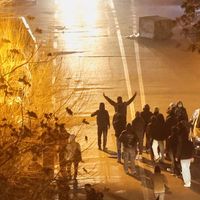
Cars burn in a street during a protest in Tehran, Iran, January 8, 2026.
Two nurses working in a Tehran hospital who treated wounded protesters during the nationwide uprising in January were tortured and repeatedly gang raped by security agents while in custody, people familiar with the matter told Iran International.
The sources, based in Tehran, requested anonymity for fear of retribution.
The nurses were among medical staff at Tehran’s Rajaei Cardiovascular, Medical and Research Center who treated people injured during the massive protests that erupted in late December and spread into early January, drawing millions into the streets and prompting a crackdown that led to mass arrests and at least 36,500 deaths.
Sexual torture and severe injuries
One of the nurses, a 33-year-old woman, was repeatedly abused and raped during detention, according to informed sources who spoke with Iran International.
Sources said agents subjected her to various forms of sexual torture.
In addition to assaulting her with their fingers, agents raped her in groups of two or three over consecutive days.
They also raped her by inserting a foreign object into her anus, causing severe bleeding, the sources said.
In another form of torture, agents took her along with dozens of other detained women to an elevated place and then pushed them all into a small pit-like space, the sources said.
The injuries inflicted on the nurse were so severe that doctors had to remove part of her intestine, and she now lives with a colostomy bag, one source said.
Her uterus also suffered severe tearing and she has so far undergone two surgeries. Doctors may ultimately be forced to remove her uterus completely, the source added.
Before she was transferred to the operating room, the nurse repeatedly asked doctors not to allow her to survive and said that if she came out of surgery alive, she would take her own life, the source said.
According to an eyewitness, her psychological condition is so severe that her hands are currently tied to the hospital bed to prevent her from harming herself while she remains under the supervision of security forces.
The second nurse was also subjected to gang rape in custody, according to the sources.
Part of her intestine was severely damaged, and she has also been fitted with a colostomy bag, the witnesses said.
Due to severe bleeding, doctors removed her uterus completely.
Sources said the family of one of the nurses was forced to pay significant sums of money to an intelligence officer to secure her release.
According to the sources, a document was then prepared stating that the woman had entered into a temporary marriage with one of the agents, a step described as intended to create the conditions for her release.
She was also required to sign a pledge stating that after her release she would declare that she had been abused and raped by “rioters,” the sources said.
Hospital crackdown during protests
The hospital, located in the Vali-Asr area of Tehran, faced a wave of wounded people late on the evening of Jan. 8.
From around 9 p.m. onward, large numbers of individuals injured by live ammunition were transferred to the hospital.
Agents involved in the crackdown on protesters told hospital staff not to provide medical treatment to the wounded, according to sources.
Among the 27 personnel and nurses present in the ward that night, 14 refused the order and attempted to treat the injured.
Sources said two male nurses among them were arrested after protesting the situation and expressing sympathy with the wounded.
Among the 14 members of the medical staff who resisted the order, only seven female nurses were able to continue providing emergency care for several hours.
According to information received by Iran International, these seven nurses continued treating the wounded until around 11 p.m. to midnight.
Security forces later entered the hospital and fired at some of the wounded patients.
When nurses and hospital staff protested the shooting, they were beaten and transferred to the lower floor of the hospital and into a storage area.
Witnesses said that among the seven nurses, two were shot and killed in front of the others.
Staff were warned not to touch the bodies, and the corpses were left where they lay.
According to information received by Iran International, the families of the two nurses found their bodies several days later in Kahrizak.
Five other female nurses were arrested and transferred to detention, and their families had no information about their situation for weeks.
International concern over sexual violence against detainees
Human rights groups have warned that detainees arrested during the protests face a high risk of torture and sexual violence.
Amnesty International said thousands of people detained in connection with the nationwide unrest were at risk of torture and other ill-treatment in custody, including sexual violence.
The United Nations has also expressed concern about Iran’s violent crackdown on the protests and the treatment of detainees, including reports of torture and sexual violence.
Sara Hossain, chair of the Independent International Fact-Finding Mission on Iran established by the UN Human Rights Council, said the mission had gathered evidence pointing to serious human rights violations committed by Iranian authorities.
“The information we have gathered points to severe human rights violations, including unnecessary and disproportionate use of force, resulting in arbitrary killings, torture, sexual violence, arbitrary arrests and detentions, and forced confessions,” Hossain said in remarks to the Human Rights Council in late January.
Previous reports and investigations by Iran International have also documented allegations of sexual violence against detainees during protest crackdowns in Iran.
Other allegations of sexual violence against detainees have also emerged during the same wave of nationwide protests
Last month, Iran International reported that female protesters detained during the protests on Jan. 8 and Jan. 9 were raped and sexually assaulted while in custody.
Two teenage girls, aged 15 and 17, who were arrested during protests on January 8, were raped by on duty soldiers at a detention facility, local sources told Iran International.
In a separate account, sources detailed the experience of a young woman and another 17-year-old teenager.
According to the sources, the two were held in an informal detention center which they both described as belonging to the Revolutionary Guards (IRGC).
Sources said the victims were raped by individuals at the site during their detention.
According to sources, the severity of the trauma has led some of these victims to attempt suicide.
Another year-long investigation by Iran International found systematic and widespread use of sexual violence by security forces against detained protesters during the 2022 uprising, sparked by the death in custody of 22-year-old Mahsa Zhina Amini.
In exclusive interviews conducted for the investigation, six protesters aged between 19 and 43 said they were raped or sexually abused shortly after their detention, including inside police vehicles, at covert locations and in detention centers.
Sexual abuses committed by Iranian security forces were not isolated incidents, but rather part of a widespread, systematic strategy to stifle dissent, as evidenced by numerous testimonies provided to Iran International.
While sexual abuse indiscriminately targeted women of all ages, testimonies also unveiled that authorities employed sexual violence as a calculated tactic to suppress and intimidate male protesters.
The Iranian authorities’ use of physical and sexual violence to suppress dissent is a longstanding tactic, dating back to the establishment of the Islamic Republic.
Iran players Zahra Ghanbari (left), Mona Hamoudi and Atefeh Ramezanizadeh react from the bench during the AFC Women’s Asian Cup Group A match between Iran and the Philippines at Gold Coast Stadium in Australia on March 8, 2026.
The mother of Iran women’s national football captain Zahra Ghanbari has been threatened by Iranian security bodies, including the Revolutionary Guards intelligence unit, according to information received by Iran International.
Sources said members of the women’s national team currently in Kuala Lumpur relayed the information to Ghanbari after learning about the pressure on her family.
Ghanbari is the all-time top scorer for Iran’s women’s national team and sought asylum in Australia last week.
The report also said another staff member, Zahra Soltan Moshkeh-Kar had passed on threatening messages from Iran’s football federation leadership to players who had sought asylum, while a third player was reportedly pressured to return after receiving emotional voice messages from family members in Iran.
More than 60 bulldozers belonging to Iran’s Islamic Revolutionary Guards Corps (IRGC) that were intended to rebuild missile storage sites were destroyed in Israeli strikes, a source in the Israeli Air Force told Iran International.
The heavy equipment, the source said, was being prepared to repair and restore missile facilities damaged in recent attacks.
IRGC personnel responsible for launching missiles are expected to return to the sites in an attempt to resume operations, according to the source.
“Members of the Revolutionary Guards who are responsible for firing missiles will return to these locations and will try to launch missiles.”
Asked whether Israeli forces would target personnel returning to the facilities, the source said the Israeli Air Force would continue striking individuals it considers a threat to Israel.