As talks expected later this week faltered over venue and format,tensions in the Persian Gulf continued to rise.
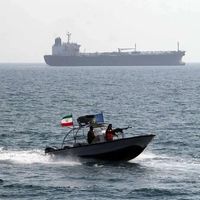
On Tuesday, US forces shot down an Iranian Shahed-139 drone approaching a US aircraft carrier in the Arabian Sea, while armed Iranian boats attempted to stop a US-flagged oil tanker in the Strait of Hormuz.
White House spokeswoman Karoline Leavitt said hours later that talks between US envoy Steve Witkoff and Iran’s foreign minister Abbas Araghchi were “still scheduled” despite the escalatory events. “For diplomacy to work, of course, it takes two to tango,” she added, warning that a military option remained on the table.
Together, these developments capture the defining contradiction of the moment: diplomacy is being pursued, but the conditions that might allow it to succeed remain elusive.
Familiar pattern
Iran’s leadership enters this phase struggling with military setbacks, economic collapse and mass protest that have narrowed its strategic options. The Islamic Republic’s capacity to absorb pressure—long central to its survival—has markedly diminished.
It is against this backdrop that diplomacy has resurfaced, haltingly. The pattern is familiar: engagement paired with coercive signalling, compromise floated even as escalation continues.
The analytical question, then, is not whether a negotiated outcome is possible. It is whether any agreement reached under such conditions can resolve the underlying conflict without accelerating regime destabilisation.
Washington’s publicly articulated demands extend well beyond nuclear fuel cycles. They include eliminating domestic enrichment, constraining Iran’s ballistic missile programme, and ending support for armed groups across the region.
Tehran’s dilemma
Taken together, these demands strike at the institutional and ideological foundations of the Islamic Republic, while implicitly challenging its reliance on internal repression to maintain control.
Compliance would generate a strategic paradox. Nuclear rollback would weaken deterrence; missile constraints would erode Iran’s asymmetric posture; proxy disengagement would dismantle its regional influence architecture; and ideological retreat would hollow out the revolutionary legitimacy that sustains clerical authority.
No historical precedent suggests the Islamic Republic can survive such cumulative disarmament intact. The more fully Tehran complies, the less viable the regime becomes.
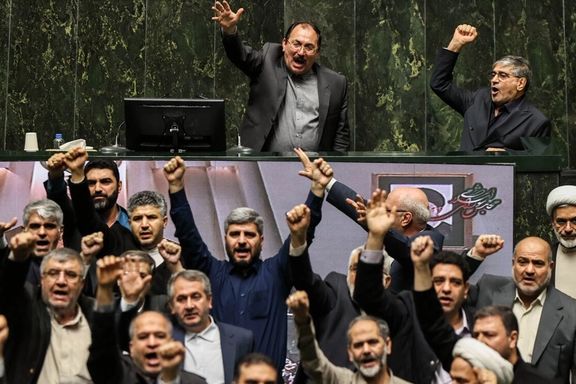
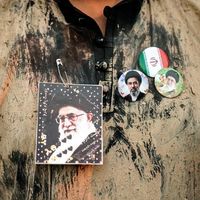
The protests of late 2025 and early 2026—unfolding as the rial fell to historic lows—rapidly evolved into demonstrations rejecting clerical rule and calling for systemic change.
Wary neighbours
Regional reactions, particularly among Persian Gulf states, remain ambivalent. Some governments privately fear that an Iranian transition could introduce instability or renewed competition.
Yet history suggests a more complex picture. During the 1970s, within the Cold War security framework of the period, Iran functioned as a stabilising pillar of regional order rather than a source of disruption—an approach sharply at odds with the Islamic Republic’s subsequent reliance on proxy warfare.
For the United States, the strategic dilemma is increasingly constrained. Sustaining a large forward military posture—carrier strike groups, advanced air assets, missile defence systems, and logistics—carries steep financial and opportunity costs.
Conservative estimates place the monthly expense well above one billion dollars, at a time when Washington faces mounting pressures in East Asia, renewed instability in the Western Hemisphere, and competing domestic priorities.
Interactable problem?
These constraints are sharpened by signals from the White House, where. President Donald Trump has repeatedly asserted that the United States would come to the aid of Iranian demonstrators if violent repression continued.
Such statements are not cost-free. Repeated often, they risk transforming intervention from a contingency into an expectation, narrowing Washington’s room for manoeuvre should events move faster than policy can adapt.
A negotiated settlement that leaves Iran’s coercive capabilities partially intact risks repeating earlier cycles of temporary de-escalation followed by strategic relapse. Yet comprehensive Iranian compliance would likely accelerate regime fragmentation by stripping away the pillars that sustain clerical authority. Indefinite military pressure, meanwhile, is fiscally and strategically unsustainable.
President Trump therefore confronts not a binary choice, but a narrowing decision space shaped by volatility and exhaustion. Each available pathway carries consequences that extend beyond Iran itself, affecting US credibility, regional security, and the broader balance of power.
What distinguishes the present moment is not diplomatic momentum but strategic fatigue.
Negotiation still holds the possibility of de-escalation, but it no longer offers an obvious route to durable equilibrium. Instead, it points toward competing trajectories of erosion or escalation. How Washington manages this unstable phase will shape not only Iran’s future, but the strategic contours of the Middle East for years to come.