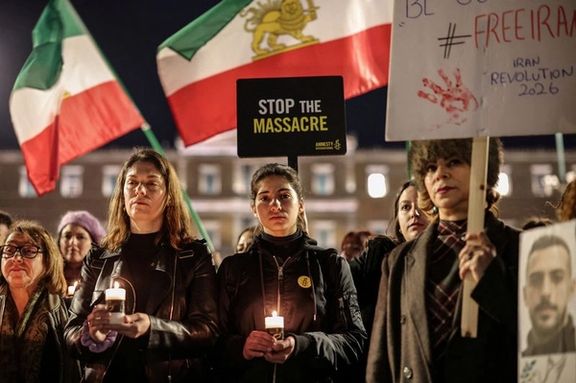
The group, calling itself the “People’s Red Lion and Sun Groups of Iran,” issued its founding statement on Tuesday, nearly a month after demonstrations erupted across the country and the subsequent violence that has left more than 36,500 people dead, with tens of thousands more suffering physical injuries and profound psychological trauma.
“We speak in days when Iran is wounded,” the statement said. “The people of Iran are mourning and angry because of losing at least thirty thousand of their best sons and daughters.”
The initiative says many of the wounded have been pushed into hiding, unable to seek treatment openly for fear of arrest or retaliation.
“Reports show that many of the wounded are forced to be treated at home and in hiding,” it said, warning that others have been deprived of medical care altogether because they cannot safely access trusted doctors or secure facilities. The statement adds that some remain in critical condition.
The group also raised alarm over reports of security forces entering hospitals and detaining injured people. “Reports indicate that Revolutionary Guard suppression forces have gone to hospitals, taken the wounded with them, or arrested citizens at home by reviewing patient lists,” it said.
According to the organizers, attacks on medical centers, intimidation of healthcare workers, and the removal of patients from hospitals have created what they describe as “a national humanitarian and emergency crisis.”
Many, they warned, are now at risk behind closed doors. “If urgent help does not arrive, some will die, and others will face irreversible physical and psychological consequences,” the statement said.
The founders present the network as a strictly humanitarian effort rather than a political organization, emphasizing that its purpose is to protect lives and reduce suffering.
“Our identity is human and relief-based, not political,” the statement declared. “We have been formed to save human lives and reduce the suffering of families.”
“We are not a political organization, not an instrument of power competition,” it added. “We are a grassroots network of relief and resilience.”
The group’s name and symbol deliberately revive the Red Lion and Sun, a historic emblem associated with humanitarian aid in Iran before the 1979 Islamic Revolution.
By restoring it, the organizers say they seek to highlight “heritage, humanity, and collective responsibility,” while committing themselves to what they call non-negotiable principles centered on saving lives.
“Saving human lives is our absolute priority,” the statement said, adding that citizen safety and privacy would be treated as red lines.
“The safety of citizens and their privacy are our red lines. We will have no mechanism for registration, list-making, or traceable recruitment.”
Instead, the initiative describes itself as an educational and resilience-based network built around decentralized neighborhood cells rather than centralized leadership.
“Our work is education, not organization,” it said. “All local cells will be independent and self-governed.”
The structure, according to the statement, is designed to allow rapid and secure assistance under conditions of surveillance and insecurity. Each unit would consist of only three to five people, formed exclusively among long-time friends, family members or trusted neighbors.
“There is no headquarters and no internal hierarchy,” the group explained. “Each cell is an island of resilience.”
The organizers say the model draws on international crisis-preparedness approaches focused on empowering communities when trust in official institutions collapses or when access to formal emergency services becomes impossible.
The mission of the Red Lion and Sun Groups, they said, is practical and urgent: ensuring safe medical treatment for wounded citizens, connecting patients with volunteer doctors and nurses, and preventing injuries from going untreated because of fear or blocked access.
“No wounded person should remain untreated because of fear or lack of access,” the statement said, outlining a vision of neighborhood-based first response so that vital hours are not lost in moments of crisis.
Beyond medical care, the group said it aims to provide emergency support to families facing severe shortages, supply disruptions, or siege-like conditions, including food, medicine, and essential goods.
It also plans to publish short educational materials that can be stored and used even during communication blackouts, covering first aid, trauma care, psychological support, and basic crisis survival.
The statement places particular emphasis on psychological first aid, including reducing panic, supporting children and the elderly, and strengthening social resilience alongside physical rescue and safety measures.
The announcement comes as the group describes a volatile national environment, warning that the scale of violence and the Iranian authorities’ confrontational posture internationally have heightened fears of further escalation and instability.
In closing, the organizers framed their initiative as a covenant of solidarity with ordinary people, urging citizens to form small trusted neighborhood circles to help one another when institutions fail.
“We make a covenant with the people that, within our capacity, knowledge, and means, we will stand beside them,” the statement said.
“If an incident happens in your area, if an injured person seeks help, if treatment arrives too late… this time, the people will not be alone.”
The group ended with a call for readiness and mutual support. “Be ready,” it said. “To save Iranian lives. To save Iran.”