Iran’s FM says no contact with US envoy Witkoff, no request for talks


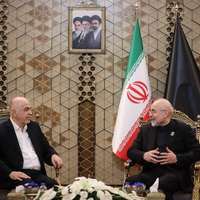
“I have not had any contact with Mr. Witkoff in recent days, and we have not requested negotiations,” Iran’s Foreign Minister Abbas Araghchi said on Wednesday, according to state media.
Araghchi was responding to questions about possible message exchanges with Washington, denying reports of direct outreach to US special envoy Steve Witkoff.
He added, however, that intermediaries remain active and that Tehran is in contact with mediating countries “holding consultations,” signaling that indirect channels are still in play even as Iran publicly plays down prospects for talks.

The United States has deported three former members of Iran’s Islamic Revolutionary Guard Corps (IRGC), US Immigration and Customs Enforcement (ICE) said in a post on X.
“Foreign terrorist organizers are NOT welcome in our country,” ICE wrote, announcing that Ehsan Khaledi, Mohammad Mehrani and Morteza Nasirikakolaki were returned to Iran over the weekend.
The Department of Homeland Security (DHS) identified the three men as former IRGC members and said they were among 14 Iranian nationals on a deportation flight to Tehran, the first such flight since widespread anti-government protests in Iran were met with a deadly crackdown.
According to DHS, Mehrani and Khaledi entered the United States illegally in Southern California in 2024, while Nasirikakolaki entered illegally in November 2024 and was apprehended by Border Patrol near San Luis, Arizona. The White House said all individuals deported had final removal orders issued by a federal judge.
The IRGC is Iran’s elite military force, separate from the regular army and reporting directly to Supreme Leader Ali Khamenei. The United States designated the IRGC as a foreign terrorist organization in 2019, citing its role in supporting militant groups and carrying out operations targeting US interests and allies.
The deportations come amid sharply rising tensions between Washington and Tehran, as the Trump administration has signaled it is prepared to use military force if Iran continues executions and violent repression linked to nationwide protests. The United States has also stepped up its military presence in the region in recent weeks.
The United States has deported three former members of Iran’s Islamic Revolutionary Guard Corps that were suspected of terrorism.
"Foreign terrorist organizers are NOT welcome in our country," US Immigration and Customs Enforcement wrote on X.
The Department of Homeland Security identified the men as Ehsan Khaledi, Mohammad Mehrani and Morteza Nasirikakolaki, and said they were among 14 Iranians on the first deportation flight to head back to Tehran since anti-government protests in Iran triggered a deadly crackdown.
DHS said Mehrani and Khaledi entered the United States illegally in Southern California in 2024, while Nasirikakolaki entered illegally in November 2024 and was encountered by Border Patrol near San Luis, Arizona.
Turkish musician Aytac Dogan said he was mourning those killed in Iran’s street protests, writing that each life lost leaves silence inside him.
In a post shared with the hashtag Iran, the Turkish kanun virtuosos said his heart was with the people of Iran and that he shared their pain and grief.

Exiled Prince Reza Pahlavi addressed families whose loved ones have been killed by authorities, saying he shares their pain and expressing hope that freedom and justice prevail.
In a post on X on Wednesday, he said he was speaking to “all the families whose loved ones this criminal regime has killed,” adding that he feels their suffering from the bottom of his heart.
“As a father, as a husband, I feel your pain deeply and share this pain with you,” he said.
The exiled prince said Iranians would soon be free of the criminal regime and would celebrate their future together. He added that he hoped to be among them soon, “to embrace you and, hand in hand, rebuild our country.”
“That day is near,” he said, ending his message with the phrase “Long live Iran.”

Iran’s judiciary said on Wednesday it executed a man it identified as Hamidreza Sabet Esmailipour, whom it accused of spying for Israel’s intelligence service, Mossad, after his death sentence was upheld by the Supreme Court.
The judiciary identified him as Hamidreza Sabet Esmailipour and said he was arrested on April 29, 2025. It said he was convicted of “espionage and intelligence cooperation,” alleging he communicated with an intelligence officer and handed over documents and classified information.
In a detailed account published by Mizan, the judiciary’s official media outlet, authorities said Sabet Esmailipour had carried out logistical and support tasks for what they described as Israeli intelligence operations, including moving vehicles between provinces and transferring funds. The report alleged some of the vehicles contained explosives intended for sabotage operations, claims that could not be independently verified.
Mizan said the man acknowledged cooperating with Mossad during interrogations and court proceedings, and that his death sentence was upheld by Iran’s Supreme Court before being carried out by hanging.
Iran has executed more than a dozen people in recent months on charges of spying for Israel, cases that human rights groups say often involve opaque legal proceedings.
Iranian authorities have said more than 700 people were detained on suspicion of espionage or collaboration with Israel following the conflict in June.
US-based rights group HRANA said in a report earlier this month that at least 313 prisoners were executed by hanging during a period of nationwide protests between late December and late January, adding that executions surged alongside mass arrests and a security crackdown as unrest spread and internet access was widely restricted.