• العربية
  • فارسی
BrandBrand
  • Iran Insight
  • Politics
  • Economy
  • Analysis
  • Special Report
  • Opinion
  • Podcast
  • Live TV
  • Iran Insight
  • Politics
  • Economy
  • Analysis
  • Special Report
  • Opinion
  • Podcast
  • Live TV
  • Theme
  • Language
    • العربية
    • فارسی
  • Iran Insight
  • Politics
  • Economy
  • Analysis
  • Special Report
  • Opinion
  • Podcast
  • Live TV
All rights reserved for Volant Media UK Limited
volant media logo

Iran’s repeated use of 3,117 fuels doubts about official statistics

Jan 27, 2026, 08:50 GMT+0
Relatives search for missing loved ones among the bodies of slain protesters at the Kahrizak morgue complex. (January 2026)

A single number – 3,117 – has appeared repeatedly in Iranian official statistics, from protest deaths to public health data, raising doubts about the credibility and methodology behind state-reported statistics.
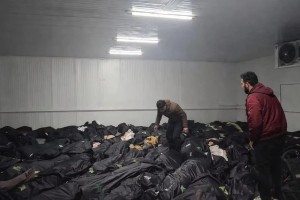

In a joint statement, Iran’s Martyrs Foundation and the Legal Medicine Organization said 3,117 people were killed during the nationwide protests in January.

The number itself, however, is strikingly familiar.

The same figure – 3,117 – has appeared in multiple, otherwise unrelated official datasets over recent years, including public health statistics, economic reports, and earlier protest-related announcements.

Variants of the number, particularly 1,039 and its multiples, have also been cited repeatedly in COVID-19 infection and hospitalization figures released by state bodies.

Analysts say that while identical numbers can recur by chance, the repeated use of a non-rounded figure across different sectors and time periods is statistically unlikely.

The pattern has prompted questions about whether such figures reflect genuine record-keeping, administrative shortcuts, or the use of standardized numbers in situations where full data are unavailable or politically sensitive.

Independent human rights organizations and international media have consistently challenged official casualty figures following protest crackdowns.

Their estimates – based on eyewitness testimony, hospital documentation, verified video evidence, and reports of serious injuries and enforced disappearances—point to significantly higher death tolls than those acknowledged by authorities.

According to documents reviewed by Iran International, more than 36,500 Iranians were killed by security forces during the January 8-9 crackdown on nationwide protests, making it the deadliest two-day protest massacre in history.

Official statements, by contrast, have offered little supporting detail. Names, locations, dates, and provincial breakdowns have not been released, limiting independent verification and intensifying criticism that casualty figures may be framed to downplay the scale of violence, particularly as international attention grows, including at the UN Human Rights Council.

The reappearance of 3,117 has reinforced long-standing skepticism over the reliability of official statistics in moments of crisis—when numbers carry political weight well beyond their face value.

  • Over 36,500 killed in Iran's deadliest massacre, documents reveal

    Over 36,500 killed in Iran's deadliest massacre, documents reveal

Most Viewed

Iran's oil output plunges below pre-war domestic needs
1
ANALYSIS

Iran's oil output plunges below pre-war domestic needs

2

Iran threatens Armenia as US-run Trump Route clears Yerevan’s parliament

3

Cash-strapped Iranians put multiple organs up for sale

4
INSIGHT

Iranian hardliners urge Iraq to push back against US pressure

5
ONE-ON-ONE

Americans ‘a bit naive’ about influence campaigns by Iran, Russia, China

Banner

Spotlight

  • Locks for cash: inside Iran's booming hair trade

    Locks for cash: inside Iran's booming hair trade

  • Seven years after ‘Bloody November,’ Iran rations gasoline it dares not reprice

    Seven years after ‘Bloody November,’ Iran rations gasoline it dares not reprice

  • Iran's oil output plunges below pre-war domestic needs
    ANALYSIS

    Iran's oil output plunges below pre-war domestic needs

  • Iranian hardliners urge Iraq to push back against US pressure
    INSIGHT

    Iranian hardliners urge Iraq to push back against US pressure

  • Cash-strapped Iranians put multiple organs up for sale

    Cash-strapped Iranians put multiple organs up for sale

  • Iran's intelligence merger debate signals possible security shake-up
    INSIGHT

    Iran's intelligence merger debate signals possible security shake-up

Banner
Banner
Banner
Banner
Banner
Banner