Iran, in this view, is a buffer—a state whose continued cohesion has helped secure Turkey’s eastern borders for decades, whatever its internal circumstances.
The prospect of that buffer weakening alarms Ankara far more than the nature of the demands driving Iran’s unrest.
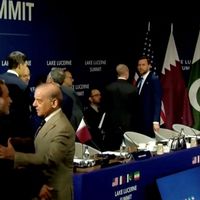
That approach was underscored on Thursday, when President Recep Tayyip Erdoğan told Iran’s President Masoud Pezeshkian in a phone call that Turkey opposed any foreign intervention in Iran and valued peace and stability in the country.
The message echoed a broader pattern in Ankara’s response: caution, restraint, and a clear preference for preserving the status quo over endorsing political change.
Since the protests began, Turkish officials have framed developments in Iran as the erosion of central authority driven by outside forces.
Senior figures, including Erdoğan and Foreign Minister Hakan Fidan, have described the unrest as a “scripted scenario” and warned against what they portray as foreign efforts to push the region toward chaos.
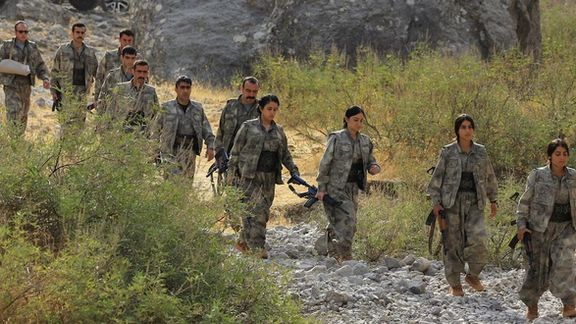
At the core of this stance lies a long-standing fear that instability in Iran could open space for militant groups along Turkey’s eastern and southern frontiers, even as a peace process with Kurdish militants has made historic progress after decades of combat.
The Syrian precedent
This security-first reading of events reflects a fear expressed from corners of Turkey’s media and academic establishment that if the Islamic Republic were to collapse, Turkey could be next.
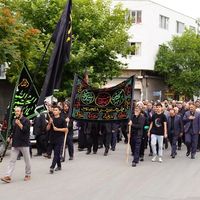
As a result, Iran’s protests are often explained away through the language of conspiracy—foreign plots rather than expressions of domestic discontent—making meaningful democratic solidarity between the two societies more difficult at a moment of profound crisis.
Years of economic strain at home and unresolved entanglements in Syria have further heightened Ankara’s sensitivity to instability beyond its borders.
Few Turkish policymakers are eager to risk a scenario that could trigger new refugee flows after the epic out-migration of Syrians fleeing that country's civil war strained Turkey's domestic cohesion and stoked bitter arguments with Europe.
Support for armed insurgents in that war did not render the hosting of millions of Syrian people on Turkish soil any easier, and Turkey has shown no such fondness for any anti-state elements in Iran.
Ankara’s caution has also been shaped by its regional calculations since the war in Gaza. Turkish officials are acutely wary of being seen as aligned with Israel, particularly as Israeli leaders have spoken openly in favor of regime change in Iran.
In Ankara’s reading, Western rhetoric about democracy masks a broader realignment that would ultimately strengthen Israel’s regional position at Turkey’s expense. Weakening Iran, they fear, could expand Israeli influence in ways that leave Turkey strategically exposed.
Some Turkish analysts have warned in recent days that the government should be less concerned about Iran losing a conventional conflict than about what might follow. A weakened Iranian state, they argue, could rely on proxy forces and non-state actors to drag the region into a prolonged, asymmetric struggle.
Fear of what may come next
From this perspective, preventing war in Iran is a strategic necessity. A collapse of authority inside Iran could empower Kurdish groups such as the PKK or its Iranian affiliate, PJAK, and test Turkey’s security more severely than the Syrian civil war ever did.
The fragmentation of Syria remains a vivid reference point: a power vacuum, the emergence of armed enclaves, and a long-term security burden that Ankara is still struggling to manage.
These fears help explain why the refrain “if Iran falls, Turkey is next” has gained traction in Turkish media.
Turkey’s main opposition party, the Republican People’s Party, has largely aligned with the government’s cautious approach. Even media outlets critical of Erdoğan have, at times, reinforced narratives that external actors are driving the violence in Iran.
The relative absence of support from Turkey’s secular movements for protesters in Iran also reflects the limited reach of Iranian opposition groups in neighboring countries.
Turkish officials often say they would prefer an Iran that is more developed and better integrated into the international system. But the uncertainty surrounding Iran’s political trajectory—and the perceived costs of a turbulent transition—continue to outweigh that aspiration.
For now, Ankara’s overriding objective remains stability: not because it approves of Iran’s system, but because it fears what might come after it.