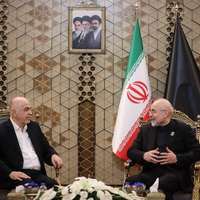
Egypt’s foreign minister held separate phone calls with senior officials from the US and Iran on Wednesday, urging de-escalation and diplomacy as tensions rose in the region.
Foreign Minister Badr Abdelatty spoke with US Middle East envoy Steve Witkoff and Iranian Foreign Minister Abbas Araghchi, stressing the need to ease tensions and avoid further instability.
“He warned against plunging the region into new cycles of instability,” the Egyptian foreign ministry said.
Abdelatty also urged steps to pave the way for renewed dialogue between Washington and Tehran on Iran’s nuclear program, it added.
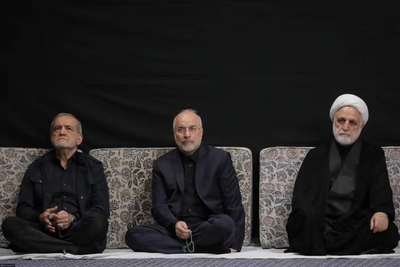
US President Donald Trump is not going to attack Iran, an Iranian lawmaker said, dismissing Washington’s military moves in the region as psychological pressure rather than preparations for war.
“America will definitely not attack Iran,” Mohammad Seraj, a Tehran representative in parliament, was quoted as saying by the Iranian outlet Didban Iran.
Seraj argued that Trump believes he can achieve his aims by creating an atmosphere of fear.
He also issued a warning over US naval deployments, describing an American aircraft carrier sent to the region as a potential target.
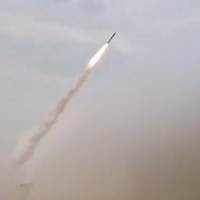
“The ship the United States has dispatched is itself a target for us,” Seraj said. “If we wanted, we could easily send American ships to the bottom of the open seas with our missiles.”
Seraj said Trump would require congressional authorization for military action and argued that neither domestic US politics nor regional conditions favored a new confrontation. “This is purely psychological warfare,” he said.
He also rejected the prospect of negotiations under US conditions, saying Iran would not accept what he described as demands imposed through threats. “We will never negotiate with Trump,” Seraj said.

Rear Admiral Habibollah Sayyari, Iran’s army deputy coordinator, dismissed the presence of US aircraft carriers in the region, saying Tehran was unfazed by such displays of force and warned that any confrontation would be costly.
Speaking on Wednesday, Sayyari said it made “no difference whether the threat comes from land, sea or air,” adding that any US “adventurism” would carry “heavy costs for the enemy,” according to Iranian state-linked media.
He described the US naval buildup as an attempt to intimidate rivals through what he called long-standing “gunboat diplomacy,” arguing that deploying large warships was meant to create fear rather than reflect real strength.
Sayyari said Iran was prepared to respond if necessary, insisting that American forces would also suffer serious damage in the event of an escalation.

A senior commander in Iran’s Revolutionary Guards dismissed US talk of naval deployments toward the region, saying Tehran was not intimidated by Washington’s rhetoric.
Ahmad Vahidi, the IRGC’s deputy commander-in-chief, said Iran was “not afraid of words,” adding that statements by US officials reflected “the depth of America’s internal problems,” according to state media.
His comments came after US President Donald Trump said “another armada” of US naval forces was moving toward Iran, while urging Tehran to reach a deal with Washington.

Turkey’s foreign minister said a US attack on Iran would be “wrong” and urged Washington and Tehran to pursue diplomacy despite rising military tensions.
“It’s wrong to start the war again,” Hakan Fidan told Al Jazeera, adding that Iran was “ready to negotiate” and calling for step-by-step engagement.
“My advice always to the American friends: close the files one by one with Iranians. Start with nuclear, close it, then the other, then the other,” he said.
“If you put them as a package all of them, it will be very difficult for our Iranian friends to digest,” Fidan added. “It sometimes might seem humiliating for them. It will be very difficult to explain to not only themselves, but also to the leadership.”

“I have not had any contact with Mr. Witkoff in recent days, and we have not requested negotiations,” Iran’s Foreign Minister Abbas Araghchi said on Wednesday, according to state media.
Araghchi was responding to questions about possible message exchanges with Washington, denying reports of direct outreach to US special envoy Steve Witkoff.
He added, however, that intermediaries remain active and that Tehran is in contact with mediating countries “holding consultations,” signaling that indirect channels are still in play even as Iran publicly plays down prospects for talks.