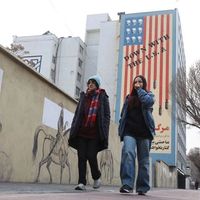
Official outlets show bundled up children frolicking and families shopping, suggesting normal life restored. Eyewitness accounts from inside Iran and testimony from those who have recently left describe instead a country gripped by grief, fear and economic paralysis.
Prominent journalist Elaheh Mohammadi—whose report about Mahsa Amini, a young woman who died in morality police custody, helped trigger the widespread protests of 2022—described the mood.
“For the past day or two, our VPNs have been working only sporadically—maybe for half an hour to an hour each day—allowing us brief access to the internet. We use that time to let people know we’re still alive,” she said on X.
“The city smells of death. In all my life, I have never seen snow fall in Tehran without anyone even smiling,” she added. “Everyone is in shock; the entire country is in mourning.”
For nearly two weeks, Iran’s internet has been almost entirely shut down, with little sign it will be soon restored. Aside from a handful of government-affiliated outlets and state television, access to news has been virtually nonexistent.
Fleeing the tragedy
Those who have managed to leave Iran by land or air have become key sources of information. Yet many say that once across the border, they too fall into an information vacuum, cut off from reliable updates from home.
Mortaza, who left Iran for a neighboring country several days after the killings, says satellite television has become the primary source of news for many inside the country. Even those broadcasts, he adds, are intermittently disrupted by jamming.
Without exception, those interviewed say the scale of the killings far exceeded what many had anticipated. Violence was so widespread, they say, that almost everyone knows at least one of the dead personally.
Across neighborhoods, families and friends have erected traditional mourning displays—hejleh—decorated with flowers, candles, mirrors, lights and framed photographs of young victims.
The structures resemble wedding canopies, symbolizing lives cut short before marriage.
Banners announcing the victims’ “passing,” often accompanied by poetry or phrases such as “martyr of the homeland,” are visible throughout cities.
What tragedy?
News programs on the state broadcaster repeatedly air footage of vehicles and buildings allegedly set ablaze by protesters—now described not merely as “rioters,” but as “US- and Israel-backed terrorists.”
These segments are interspersed with televised interrogations and forced confessions of individuals who have not appeared in court, alongside images of daily life and repeated claims that foreign-backed "terrorist" plots have been thwarted.
In recent days, the judiciary has issued repeated warnings promising harsh punishment and “no leniency” for those accused of participating in the unrest.
Continued repression
The crackdown has extended well beyond those who took part in protests.
Mohammad Saedi-Nia, a prominent investor and owner of the Saeedi-Nia café chain, was arrested after closing his cafés during calls to protest by exiled Prince Reza Pahlavi. His businesses—along with those of former national footballer Voria Ghafouri—were shut down for supporting protesters.
Saeedi-Nia’s assets, estimated at around $20 million, have reportedly been confiscated.
Dozens of athletes, artists and intellectuals who expressed support for the demonstrations have also had cases opened against them; some have been detained.
The judiciary says assets have been seized to ensure that, if convictions follow, alleged damage to public or private property can be recovered.
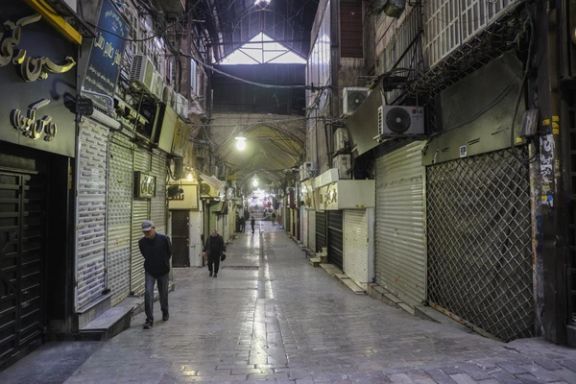
Mostafa, who communicated with Iran International via Starlink from his workplace, says traffic in Tehran is unusually light. Only a small number of street-facing shops have opened, he said, and the gold market remains shut.
Economic standstill
Most universities are closed, with final exams moved online. Many businesses are effectively dormant: transactions have stalled because prices depend on the dollar, and the currency market has frozen without a clear exchange rate.
Eyewitnesses also report growing shortages of basic goods. Cooking oil is scarce and selling at several times its previous price when available.
Prices of staples such as rice, eggs, chicken and meat have surged, while consumers limit purchases to essentials and shopkeepers hesitate to sell non-perishable goods.
State media deny that conditions resemble martial law, but eyewitnesses insist otherwise.
Many people have deleted photos and videos of protests from their phones, fearing random stops and searches by security forces.
Some witnesses say young people have been forced to expose their bodies in public to show they bear no marks from pellet guns or rubber bullets—signs authorities use to identify those who took part in demonstrations.