The ascendency of Khamenei Jr was a long-planned improvisation

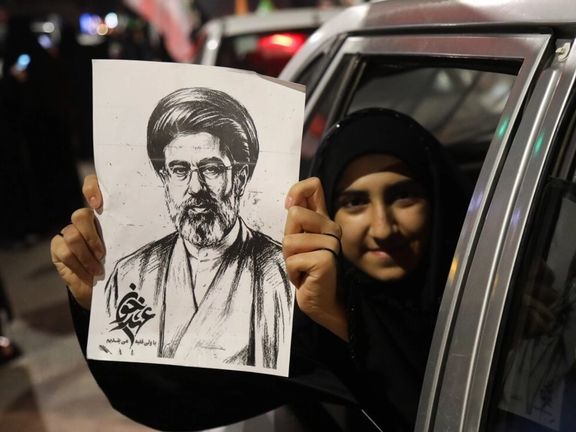
By elevating Mojtaba Khamenei—a figure most Iranians have never heard speak—the Islamic Republic has completed a long drift away from popular legitimacy.
Iran International

By elevating Mojtaba Khamenei—a figure most Iranians have never heard speak—the Islamic Republic has completed a long drift away from popular legitimacy.
For years, Mojtaba has operated largely behind the scenes within Iran’s political and security elite. The only public recording of his voice is a one-minute video in which he tells seminary students that his classes have been cancelled.
He appears to lack any significant public profile or popular following among the wider population—an element the Islamic Republic now seems increasingly unconcerned about.
Mojtaba played a significant role in the election of Mahmoud Ahmadinejad in 2005 and has long been seen as influential in the expansion of the Revolutionary Guards’ intelligence and economic reach, as well as in policies used to suppress dissent.
His rise reflects the priorities of a system that now appears to value internal cohesion and security ties more than public stature.
The issue of choosing the supreme leader has always posed both a philosophical and practical challenge in the Islamic Republic. If the leader is the representative of God on earth and a successor to the Prophet Mohammad, the question is how that authority is conferred: through popular recognition or divine designation.
These two impulses have shaped debates over the nature of the Islamic Republic for decades. One emphasizes the system’s republican and electoral elements; the other gives primacy to its theocratic foundations.
Popularity factor
The question barely arose when Ruhollah Khomeini came to power. He embodied both elements: he enjoyed broad popular support and was among the most prominent religious figures of his time.
Khomeini’s ascendancy preceded the formal codification of the office of supreme leader. The robe, as a Persian expression would have it, was cut to his measure
This was reflected in the first constitution adopted after the 1979 revolution, which described the leader as one “recognized and accepted by the overwhelming majority of the people,” as was the case with Khomeini.
That provision was revised in 1989, when Ali Khamenei was selected as the second supreme leader. The reference to popular acceptance was removed, assigning the decision solely to the Assembly of Experts.
Yet popularity still mattered. Ali Khamenei did not hold a high religious rank at the time and was not yet an ayatollah. But after eight years as president he was a familiar national figure, and public recognition and political experience were judged more important than clerical standing.
Staying the course
The selection of Mojtaba suggests those considerations now carry far less weight. He has been elevated not because of religious stature, executive experience or public standing, but largely because of his ties to the security establishment.
If the Islamic Republic had followed its previous trajectory, it might have been expected to choose one of the former cleric presidents—most plausibly Hassan Rouhani, who in recent months appeared to be positioning himself for such a role.
By choosing Mojtaba, the Islamic Republic has effectively crossed a threshold. The system that once defined itself in opposition to hereditary rule now appears willing to tolerate it, prioritizing continuity and control over ideological consistency.
While officials have presented Mojtaba’s appointment as an emergency wartime decision, his decades of behind-the-scenes activity suggest a far longer process of consolidation.
His succession also narrows the already limited space for fundamental change.
As Iran confronts war with the United States and Israel abroad while continuing to face deep mistrust at home, the balance of power now points firmly toward continuity—and toward a system with little interest in resolving tensions either with its own society or with its adversaries.


Tehran may have assumed that a US–Israeli attack would activate the loose alignment it has cultivated with Moscow, Beijing and other non-Western powers. So far, it has instead exposed its limits.
What Iranian officials often presented as an emerging geopolitical counterweight to Western power appears, for now, far from a wartime coalition.
Russia and China have condemned the attacks and called for restraint, but neither has shown willingness to intervene militarily on Iran’s behalf.
Reports suggest Moscow may have shared limited intelligence that could assist Iranian targeting of US assets in the region. Even if so, such cooperation remains indirect and far short of what a wartime alliance would entail.
For Moscow, deeper involvement carries obvious risks. Russia remains heavily engaged in Ukraine and under sustained military and economic pressure from the West. Opening another confrontation with the United States in the Middle East would pose significant strategic dangers.
Yet instability in the region could still bring Moscow indirect gains. As a major oil exporter, Russia benefits from higher global energy prices, which help cushion the impact of Western sanctions.
A wider conflict could also divert Western political attention from Ukraine, easing pressure on its primary theater.
China’s calculus points in the same direction: distance. Beijing’s interests in the Middle East are largely economic—stable energy supplies, secure shipping routes and predictable markets. A major regional war threatens all three.
At the same time, a prolonged conflict that absorbs American attention and resources could indirectly ease pressure on China in its broader rivalry with Washington.
North Korea, often cited as part of an emerging anti-Western axis, has remained largely silent. Pyongyang lacks the logistical capacity to project meaningful military power into the Middle East and has little incentive to risk confrontation with the United States in a distant conflict.
For decades, Tehran invested heavily in expanding its regional influence through a network of non-state actors stretching from Lebanon to Yemen. Groups such as Hezbollah, Hamas and the Houthis were meant to provide strategic depth, allowing Iran to pressure adversaries indirectly while avoiding direct confrontation.
That network now faces growing strain.
Hamas has been significantly weakened by prolonged conflict with Israel. Hezbollah remains Iran’s most capable partner, but its structure also reveals a deeper limitation in Tehran’s approach: the system often depends on personal relationships between commanders rather than durable institutional frameworks, making coordination more fragile when individuals are removed.
The Houthis retain the capacity to disrupt shipping routes and launch missile or drone attacks across the region. But their strength lies primarily in asymmetric disruption; in a high-intensity campaign driven by air power and long-range strikes, such actions cannot quickly alter the strategic balance inside Iran itself.
Elsewhere, several militia groups cultivated by Tehran in Iraq appear reluctant to escalate dramatically, underscoring the limits of Iran’s ability to mobilize partners during a major confrontation.
In recent years, Iran has sought to present itself as part of a broader alignment against Israel while simultaneously pursuing pragmatic openings with Arab states. The China-brokered rapprochement with Saudi Arabia in 2023 suggested the possibility of a more stable Gulf balance.
But that détente depends heavily on regional stability. If Iranian actions—or those of allied militias—threaten shipping lanes or energy infrastructure, Arab governments may prove far less inclined to view Tehran as a reliable long-term partner.
If the conflict continues while its partners remain cautious, Iran risks growing isolation. Its ties with Russia and China are shaped primarily by overlapping interests rather than formal alliance commitments.
Strategic priorities diverge, and even governments opposed to Western dominance remain wary of dependence or rivalry.
A deeper alignment might have emerged under different geopolitical conditions, much as sustained confrontation during the Cold War pushed Western states toward institutional alliances such as NATO.
But that moment has not arrived. The war suggests it may not—at least not on terms Iran had imagined.
Israeli military images of an underground tunnel complex attributed to Ali Khamenei appear to confirm long-circulating rumors of a network stretching several kilometers beneath central Tehran, under medical centers, schools, and residential neighborhoods.
On March 5, shortly after heavy strikes targeted areas near the Pasteur government complex in central Tehran – a district that houses the Iranian presidency and several key government offices – the Israeli military published a video depicting what it described as Khamenei’s underground bunker system.
The complex resembles a subterranean city. According to the video and accompanying imagery, the facility appears to have been used as a secure shelter for Iran’s leadership and may still be used by remaining officials following Khamenei’s death.
A tunnel network stretching nearly five kilometers
Analysis of the imagery released by the Israeli military, using publicly available online mapping tools, suggests the tunnel network extends close to five kilometers in length.
To understand the scale of the project, it helps to compare it with ordinary infrastructure construction in Tehran.
According to statements by Tehran mayor Alireza Zakani and members of the Tehran City Council, building one kilometer of metro tunnel in Tehran currently costs between 5,000 and 6,000 billion tomans – roughly $30-36 million at an exchange rate of about 166,000 tomans per dollar.
This estimate covers only the excavation and structural work. It does not include interior finishing, equipment, ventilation systems, or other underground facilities.
Based on those figures, building five kilometers of underground tunnel would cost about 25,000 to 30,000 billion tomans, or roughly $150-180 million.
Given the secrecy and security requirements surrounding such a project, the actual cost was likely significantly higher than that of a standard transportation tunnel.
Under normal conditions, tunneling contractors in Tehran can excavate around 10 meters per day. At that pace, building a five-kilometer tunnel system would take at least 500 days – roughly 17 months.
Considering the classified nature of the project and the additional infrastructure involved, the construction timeline may have been considerably longer.
The core of the complex: beneath a medical facility
The video appears to place the central section of the bunker complex southwest of the presidential compound in the Pasteur district.
The site sits directly beneath the Shahid Shourideh Medical Center, a clinic affiliated with Iran’s Ministry of Agriculture. The facility has operated since 1985 and effectively functions as part of the broader Pasteur government complex.
Based on the height of vehicle ramps and the dimensions of vehicles visible in the imagery, the central installation appears to be located 40 to 50 meters underground.
From there, the tunnel system extends northwest toward another entrance near the end of Rajabi Street, roughly 200 meters from the Shourideh hospital complex.

Easternmost entrance: next to an elementary school
The easternmost known entrance to the tunnel network appears to be located in the Sheikh Hadi neighborhood, along Valiasr Street, beneath the Jami multi-story parking garage.
This parking structure stands directly beside Hejrat Girls’ Elementary School, while Saheb a-Zaman Boys’ Elementary School lies about 100 meters away.
At the northern edge of the network sits another multi-story garage known as the 12 Farvardin Parking Complex, located near the intersection of Jomhouri Eslami Street and Danesh Street.
Both parking structures were inaugurated on December 4, 2017, as part of a paired urban development project attended by Tehran’s then-mayor Mohammad Najafi.

An entrance beneath a mosque, beside a school
Another entrance appears west of Pasteur Square, between Hor Metro Station and the square itself.
This access point lies beneath Tohid Mosque. Adjacent to the mosque is a building, and behind it stands Shahid Kadkhodaei Boys’ Elementary School.
Roughly 200 meters away, another possible entrance is located on the southwestern side of Pasteur Square, along a street that houses the AJA University of Command and Staff – the staff college of the Islamic Republic of Iran Army.
Nearby are the Karimeh Ahl-e Beit dental clinic and medical clinic, as well as the 29 Farvardin Pharmacy, which is affiliated with Iran’s army.

Western entrance beside a football school
The westernmost identified entrance to the tunnel network appears to lie beneath a small building near an office responsible for issuing hunting weapon permits.
Immediately next to the building, sharing a wall, is a football training school, while dense residential complexes surround the area.
This location sits near the intersection of Sepah and Kamali streets, along Kashan Street, at the end of Fourth Street.
The tunnels also lie close to the Yas and Namjou residential complexes, which are affiliated with the Iranian army.

Mojtaba Khamenei, long known as the discreet and powerful son of slain Ayatollah Ali Khamenei, was announced early Monday as Iran’s new Supreme Leader at a time when the country is at war and Israel has openly vowed to target any successor to his father.
Iran’s Assembly of Experts in a statement introduced Mojtaba Khamenei as the new leader of the Islamic Republic, five days after Iran International first reported that the body had selected him under pressure from the Revolutionary Guards.
For decades Mojtaba operated largely out of public view while building deep ties across the Islamic Republic’s political and security apparatus. His rise marks the formal emergence of a figure who had already been widely regarded as one of the most influential actors behind the scenes of Iran’s ruling establishment.
Mojtaba, the second son of Ali Khamenei, has long been considered the only member of his family with clear political ambitions. His younger brother, Masoud, worked only in administrative roles within their father’s office, while his other two brothers and two sisters are not known to have held political or bureaucratic positions.
Born in 1969 in Mashhad, Mojtaba continued his education in Tehran at the prestigious Alavi High School, which produced many of the Islamic Republic’s elite, including former foreign minister Javad Zarif. The school’s dean, Kamal Kharrazi, later became one of Ali Khamenei’s senior political advisers.
After graduating, Mojtaba began religious studies in Tehran before moving to Qom to pursue seminary education. In recent years, he has taught dars-e kharij — the highest level of jurisprudential instruction and a prerequisite for attaining the rank of mujtahid — at the Qom Seminary.
Mojtaba married Zahra Haddad-Adel, daughter of former parliamentary speaker Gholam-Ali Haddad-Adel. Zahra and one of their children were killed in the February 28 attack on Ali Khamenei’s residence. The couple had three children.
Because Mojtaba operated almost entirely behind the scenes under strict security, official information about him remained scarce, and unofficial reporting has often been fragmentary.
He held no formal executive or elected position for much of his career, yet he was widely believed to wield significant influence within the Office of the Supreme Leader and to oversee parts of his father’s administrative network.
Political orientation and policy views
A devoted pupil of Mohammad-Taqi Mesbah-Yazdi, the ideological architect of the ultraconservative Paydari Party, Mojtaba has long been aligned with Iran’s hardline faction. Analysts describe him as an advocate of a “unified state” in which appointed institutions overshadow elected bodies.
This model was implemented most clearly during the presidency of Ebrahim Raisi, when moderate conservatives such as Ali Larijani were marginalized and gradually pushed out of the political arena. Mojtaba has also been widely regarded as a key supporter of Mahmoud Ahmadinejad’s rise in 2005 and his continuation in power after the disputed 2009 election.
Mesbah-Yazdi, a fierce opponent of republicanism who died in 2021, argued that the Supreme Leader should be appointed without regard for public consent. Mojtaba has embraced this worldview, supporting strong clerical authority and the exclusion of moderates from power.
He has also been widely viewed as the principal political and financial patron of the Paydari Front, whose members see him as the guarantor of the Islamic Republic’s revolutionary identity after his father.
His foreign-policy outlook is deeply distrustful of the West, particularly the United States, and rooted in the doctrine of “resistance.” He strongly supports expanding Iran’s regional influence and strengthening the so-called “Axis of Resistance,” opposing compromise with Western governments.
Position on protests
Although Mojtaba has rarely spoken publicly, political reporting has consistently portrayed him as favoring a forceful, security-driven response to domestic unrest.
During the 2009 Green Movement protests, he was widely identified as one of the key figures overseeing the crackdown. Demonstrators chanted directly against him for the first time, shouting: “Mojtaba, may you die before you see leadership.”
During the protests of 2022, media outlets close to the regime again depicted him as central to maintaining internal stability.
His supporters—including segments of the Islamic Revolutionary Guard Corps, the paramilitary Basij, hardline clerics in Qom, institutions linked to the Supreme Leader’s Office, and state-aligned media—describe him as devout, discreet, and deeply knowledgeable about security affairs.
Opponents, including much of the public and the political opposition, view him as a symbol of hereditary succession and criticize both his role in crackdowns and his opaque political influence.
IRGC networks
Mojtaba has maintained extensive ties to Iran’s intelligence and military structures. His network dates back to his youth, when he served in the IRGC’s Habib Battalion during the Iran–Iraq War—a unit that later produced many senior commanders, including Esmail Kowsari.
He has had a particularly close relationship with Hossein Taeb, former head of the IRGC Intelligence Organization, and has widely been believed to exert influence over its operations. Mohammad Sarafraz, the former head of state television, wrote that Mojtaba and Taeb pressured him to allocate a large share of the broadcaster’s advertising revenue to their networks.
Many Iranian analysts believe Mojtaba has played a decisive role in shaping senior IRGC appointments and key security positions.
Implications of his leadership
With Mojtaba Khamenei now formally assuming the role of Supreme Leader, observers say his leadership could reinforce the dominance of Iran’s hardline institutions and deepen the role of the security establishment within the political system.
His extensive ties to the IRGC and his long-standing influence within the Supreme Leader’s office have given him a unique power base even before holding the title. For years he operated as one of the most consequential figures in Iran’s political hierarchy without occupying a formal public position.
Now, as Supreme Leader, the “shadow prince” of the Islamic Republic has stepped fully into the center of power.
Iran’s Revolutionary Guards continued launching attacks on neighboring countries despite President Pezeshkian’s apology to regional states and his order for the armed forces to halt such strikes, highlighting tensions over who controls wartime decisions.
Iran's Revolutionary Guards started launching attacks against the United Arab Emirates, Bahrain, Kuwait, and the Iraqi Kurdistan shortly after President Pezeshkian said in a televised speech he had instructed them to halt such attacks.
The IRGC strikes followed unusually sharp verbal attacks by hardliners which highlighted the limited influence Pezeshkian exercises within Iran’s power structure despite his membership in the temporary three-member leadership council that is currently exercising powers normally held by the country’s supreme leader in wartime.
Pezeshkian said on Saturday that Iran’s armed forces had sometimes acted “at their own discretion” during the recent conflict. He added that, following a decision by the “temporary leadership council,” military forces had now been instructed not to attack neighboring countries “unless they intend to attack us from that country.”
The first institutional response came from the spokesman of Khatam al-Anbiya Central Headquarters, the body that coordinates operational command of Iran’s armed forces, including both the regular army and the IRGC.
The spokesman declared that any location used to launch attacks against Iran would be considered a legitimate target. “Every point that serves as the origin of aggression against Iran is a legitimate target,” he said, adding that with the continuation of offensive operations, “all military bases and interests” of the US and Israel in the region would remain the “main targets” of IRGC attacks.
Within hours, the IRGC also announced missile strikes on Dubai Airport and Juffair Base in Bahrain, which hosts the US Navy’s Fifth Fleet headquarters.
However, judiciary chief Gholam‑Hossein Mohseni‑Ejei, who also serves on the three-member leadership council, responded quickly. He said evidence from Iranian armed forces showed that “the geography of some regional countries has openly and covertly been placed at the disposal of the enemy” and used for attacks on Iran.
He added that “intense attacks” on such targets would continue and stressed that “this strategy is currently being implemented and the government and other pillars of the system are united on this matter.”
Factors behind the apology
Saudi Arabia on Saturday warned Iran that continued attacks on the kingdom and its energy sector could push Riyadh to respond in kind, Reuters reported citing four sources familiar with the matter.
The message was conveyed before Pezeshkian's televised apology, according to Reuters.
Another factor behind Pezeshkian’s apology may have been reports of a drone attack Thursday in the Nakhchivan autonomous region of Azerbaijan, which maintains extensive military cooperation with Israel.
Iran has denied involvement. However, officials in Baku also said they had also foiled several alleged sabotage plots attributed to the IRGC, including a plot targeting the Baku–Tbilisi–Ceyhan (BTC) oil pipeline.
Following the incident, Azerbaijan ordered the immediate withdrawal of its diplomats from Tehran and Tabriz, closed its border with Iran, and demanded an apology.
In a separate incident earlier this week, Iran’s armed forces denied firing a ballistic missile toward Turkish airspace, which Turkish authorities said was intercepted by NATO air and missile defense systems over the eastern Mediterranean.
Turkish President Recep Tayyip Erdogan said Ankara had issued “warnings in the clearest terms” to prevent similar incidents from recurring.
According to analyst Abdolreza Davari, who defended Pezeshkian’s stance, escalating tensions with the United Arab Emirates (UAE) could be very costly to Iran’s external economy which depends heavily on financial and trade channels through the United Arab Emirates.
The UAE has warned it could move to seize Iranian state-linked assets within its jurisdiction if tensions escalate further, according to regional analysts and officials familiar with the dispute.
Hardline backlash and possible moves to limit Pezeshkian’s authority
Some political figures defended Pezeshkian. Davari said the president was simply conveying a decision by the temporary leadership council to halt attacks on neighboring states. He argued that until a new supreme leader is chosen, council decisions carry the authority of the supreme leader and must be implemented.
Hardline critics, however, reacted harshly to the president’s remarks. Former lawmaker Jalal Rashidi Kouchi wrote on X: “An apology is made when a mistake has occurred, whether intentionally or unintentionally. We made no mistake. Your message showed no sign of authority.”
The conservative website Raja News described Pezeshkian as “an irritant to a nation ready for the final confrontation with arrogance” and called for preventing him from sending what it called “signals of weakness.”
The article also warned that Pezeshkian’s description of military strikes as “at their own discretion” could provide justification for neighboring states or international institutions to challenge what it called Iran’s “legitimate and sovereign defense.”
Hardline member of parliament Hamid Rasaei wrote on X that Pezeshkian’s comments were unacceptable, arguing that countries hosting US bases should be the ones apologizing. “The armed forces know their duty well and, as before, will target with powerful missiles wherever the Iranian nation and homeland are attacked. The firm demand of the Iranian people is exactly this.”
Several lawmakers, including Hamed Yazdian and Mohammad Mannan Raisi, urged the Assembly of Experts to quickly appoint a new supreme leader, arguing that statements like Pezeshkian’s risk placing Iran in a position of weakness.
Tehran representative Kamran Ghazanfari also threatened to pursue a parliamentary motion declaring the president politically incompetent — a process that would require signatures from one-third of lawmakers and a two-thirds vote to remove him.
President Massoud Pezeshkian is facing growing criticism from political figures and analysts for failing to seize what some viewed as a rare opportunity to de-escalate the regional conflict while repairing the state’s broken relationship with Iranians.
The situation grew more complicated after US President Donald Trump publicly signaled a desire to influence Iran’s leadership transition and the future structure of the regime.
The pressure mounted further when lawmaker Mohsen Zanganeh said Friday that “senior clerics in the Assembly of Experts have nominated two clerics for Iran’s next leadership, but both have declined the position.”
Amid mounting reports of disagreement and deadlock, the Expediency Discernment Council moved to suspend the Assembly of Experts—the body constitutionally responsible for selecting the supreme leader—and shift authority to a provisional leadership structure.
Under Article 111 of Iran’s constitution, that shift elevated Pezeshkian, as head of the Provisional Leadership Council, to a position granting him many of the powers of the supreme leader, including command of the armed forces.
Critics say he has so far refrained from intervening decisively in major state affairs and has instead focused on secondary issues, including preparations for local elections scheduled for May.
“Today Pezeshkian is simultaneously the president, head of the leadership council, and the commander-in-chief,” former transport minister Abbas Akhundi wrote on X. “He must step into the field and declare: everyone is under my command.”
Akhundi argued the succession debate itself is ill-timed. “Any action that diverts attention from the war … is playing into Israel’s hands,” he added. “Becoming preoccupied with succession at a time of war is a harmful distraction.”
Wartime power centers
The Revolutionary Guards remain central to both the war effort and domestic politics. While engaged in a widening regional confrontation, the IRGC has also been deeply involved in the succession debate.
Reports indicate it has strongly backed Mojtaba Khamenei despite constitutional sensitivities and resistance from parts of the clerical establishment.
The sidelining of the Assembly of Experts underscores institutional divisions. Some clerics argue that naming a successor during wartime risks deepening fractures, while others insist a swift decision is necessary to project unity and control.
The Expediency Discernment Council has played a decisive role by affirming the authority of the provisional leadership structure, signaling that the succession question has reached a level of internal dispute requiring extraordinary intervention.
Security chief Ali Larijani has also reportedly intervened in the deliberations to promote his brother Sadeq Larijani as a candidate for supreme leader.
Sadeq Larijani was once head of judiciary and now heads the Expediency Council, where he can in theory slow the succession process and complicate the IRGC’s push for Mojtaba Khamenei.
For now, uncertainty over succession and authority continues to shape Iran’s wartime politics, with key figures—including Mojtaba Khamenei, senior IRGC leaders and Ali Larijani—remaining largely silent in public.