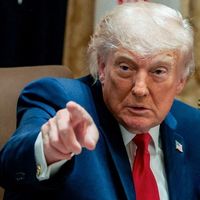
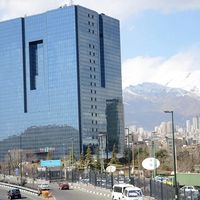
That assumption has been reinforced by recent developments in Venezuela, where the United States forcibly removed Nicolás Maduro from power and now appears prepared to work with figures from within the same governing apparatus.
But Iran is not Venezuela, and treating it as such misunderstands the nature of the Islamic Republic’s power structure.
In Venezuela, despite corruption and the concentration of power, the political system is not security-ideological and transnational in the way Iran’s is. Loyalties and alliances in Caracas can shift without forcing a fundamental remake of the establishment.
Can the same be said about Tehran?
Over the past four decades, the original theocracy has evolved into a complex security-ideological power machine whose core lies within the Islamic Revolutionary Guard Corps (IRGC) and its affiliated networks. This machine is not merely an instrument of the system; it has become inseparable from it.
The IRGC, the Quds Force, parallel intelligence bodies, and a web of armed groups across the region are better understood as a single, tightly interwoven power structure. Even the potential departure of Iran’s supreme leader would be unlikely to alter, let alone dismantle, this organism.
Ali Khamenei may embody the Islamic Republic, and his name is often used interchangeably with the “system,” but the state itself encompasses thousands of actors across the Revolutionary Guards, security institutions and affiliated bodies.
These networks have cooperated operationally with aligned forces in Iraq, Syria, Lebanon, Yemen, Afghanistan and Pakistan—working together in war, negotiation, and crisis management.
Other parts of the same apparatus have spent years developing missile and nuclear programs, accumulating expertise, institutional memory, and vested interests.
This is the product of a shared political and security life: a layered network in which relationships, trust, and interests have solidified over time. Such a network does not collapse with the departure of a single figure, or even a single faction.
Security relationships and interests built over decades are far more likely to reproduce themselves than to disappear with a leadership change. The leader may go, but the system’s underlying logic will remain.
That logic rests on several widely entrenched pillars: the expansion of the nuclear program; the development of missile and drone capabilities; the preservation and extension of regional proxy networks; and the definition of political identity in opposition to the United States and the West.
These are not merely policy preferences open to negotiation. They are widely treated within the system as pillars of survival. Betting on figures drawn from within this structure to shed their skin risks reproducing the very logic such a strategy claims to transcend.
The image of a moderate caretaker or a deal-making leader emerging as a Bonaparte-like figure capable of transforming the system is therefore closer to political fantasy than practical possibility.
Comparing Iran to Venezuela is ultimately a comparison between two dissimilar systems.
In Venezuela, alliances can shift while the structure remains intact. In Iran, the structure itself is the source of the crisis. The container and its contents are one and the same. A change of skin does not resolve that contradiction.
For Iranians—and for the wider world—the problem with the Islamic Republic cannot be solved by changing faces. A durable solution can only be contemplated when this structure gives way to an order that is fundamentally different, shaped by actors who are fundamentally different as well.