• العربية
  • فارسی
Brand
  • Iran Insight
  • Politics
  • Economy
  • Analysis
  • Special Report
  • Opinion
  • Podcast
  • Iran Insight
  • Politics
  • Economy
  • Analysis
  • Special Report
  • Opinion
  • Podcast
  • Theme
  • Language
    • العربية
    • فارسی
  • Iran Insight
  • Politics
  • Economy
  • Analysis
  • Special Report
  • Opinion
  • Podcast
All rights reserved for Volant Media UK Limited
volant media logo
ANALYSIS

Crisis at home shrinks Tehran’s margin for error abroad

Danny Citrinowicz
Danny Citrinowicz

Institute for National Security Studies

Jan 9, 2026, 20:02 GMT+0
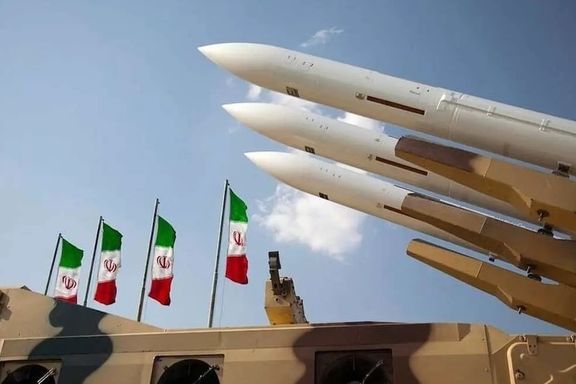
Iran-made Sejjil missile on display with Iranian flags in the background

In a speech on Friday, Supreme Leader Ali Khamenei left little doubt that Tehran intends to confront the current wave of protests with force rather than concession.

The remarks pointed to an intensifying crackdown, unfolding amid a near-total internet shutdown across Iran.

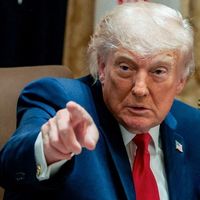
Those signals have placed renewed focus on Washington, where US President Donald Trump has issued repeated public warnings to Tehran in recent days, including statements suggesting the United States could act if Iranian authorities continue killing protesters.

Whether those threats translate into policy remains unclear, but they have sharpened attention on how the White House responds as events unfold inside Iran.

Khamenei’s remarks, which included renewed accusations that protesters are being directed by foreign powers, were accompanied by direct criticism of Trump, who late Thursday night warned Iran against further violence.

Taken together, the exchanges have added to tensions already heightened by months of mutual suspicion and rhetorical escalation.

The result has been growing unease across the Iran–US–Israel triangle. Iranian officials routinely frame internal unrest as foreign intrigue, while Israeli leaders have long described the Islamic Republic as a persistent, existential threat.

Risk of escalation

Iran’s rulers now appear increasingly concerned that the United States or Israel could seek to exploit domestic instability—fears that, in turn, risk shaping Tehran’s military calculations.

Earlier this week, Iran’s National Defense Council and other security bodies issued statements warning that the country could carry out a preemptive strike if it detected preparations for an attack.

Those warnings coincided with missile tests, moves officials described as defensive but which analysts say added another layer of volatility.

The rhetoric and military signaling have raised fears of escalation even in the absence of clear intent on any side to seek a confrontation.

In Israel, security officials have expressed concern that Iran could attempt to divert attention from internal unrest by provoking an external crisis, though many analysts consider such a move unlikely.

Still, Israel’s heightened sensitivity to risk since the October 7 attacks has reinforced a preference for preparing for worst-case scenarios.

Critical decisions

As Iran’s leadership faces mounting pressure at home, the margin for error abroad appears to be narrowing.

Clear signals of US support for protesters, even if not backed by immediate action, risk aggravating Tehran’s fears of external intervention, while Iranian military signaling increases the danger of miscalculation.

Some in Washington worry that even limited American involvement—military or otherwise—could destabilize an already fragile regional balance and draw Israel into a broader confrontation.

At the same time, a White House decision to refrain from action, despite repeated warnings, could also carry consequences. Protesters inside Iran have often looked to international pressure for protection or leverage, and the absence of follow-through could further dampen momentum on the streets.

What is clear is that Iran’s internal crisis is no longer insulated from its external rivalries.

Developments inside the country now carry implications far beyond its borders, raising the risk that repression at home could intersect with miscalculation abroad—between Iran, the United States and Israel.

Most Viewed

Iran negotiators ordered to return after internal rift over Islamabad talks
1
EXCLUSIVE

Iran negotiators ordered to return after internal rift over Islamabad talks

2
ANALYSIS

US blockade enters murky phase as tankers spoof signals and buyers hesitate

3
ANALYSIS

Why the $100 billion Hormuz toll revenue is a myth

4

US tightens financial squeeze on Iran, warns banks over oil money flows

5
ANALYSIS

US blockade targets Iran oil boom amid regional disruption

Banner
Banner

Spotlight

  • Hardliners push Hormuz ‘red line’ as US blockade tests Iran’s leverage
    INSIGHT

    Hardliners push Hormuz ‘red line’ as US blockade tests Iran’s leverage

  • Ideology may be fading in Iran, but not in Kashmir's ‘Mini Iran'
    INSIGHT

    Ideology may be fading in Iran, but not in Kashmir's ‘Mini Iran'

  • War damage amounts to $3,000 per Iranian, with blockade set to add to losses
    INSIGHT

    War damage amounts to $3,000 per Iranian, with blockade set to add to losses

  • Why the $100 billion Hormuz toll revenue is a myth
    ANALYSIS

    Why the $100 billion Hormuz toll revenue is a myth

  • US blockade targets Iran oil boom amid regional disruption
    ANALYSIS

    US blockade targets Iran oil boom amid regional disruption

  • Iran's digital economy battered by prolonged blackout
    INSIGHT

    Iran's digital economy battered by prolonged blackout

•
•
•

More Stories

The dead of Iran’s protests, and the stories yet untold

Jan 9, 2026, 16:50 GMT+0
•
Maryam Sinaiee

Dozens of people have been killed in protests across Iran in recent days, according to human rights groups and witness accounts, with the full scale of casualties from Thursday night still unknown after authorities imposed a nationwide internet blackout.

Before communications were cut, Iran Human Rights, a Norway-based monitoring group, said at least 45 protesters had been killed between December 28 and January 8, and that more than 2,000 people had been arrested.

Those figures are likely to rise following Thursday’s nationwide protests and reports of further unrest on Friday night, but verification has become increasingly difficult as images and firsthand accounts from inside Iran have largely disappeared.

One video that circulated online on Thursday appears to show at least seven bodies lying on the ground in what looks like an underground parking area.

The footage, which has not been independently verified, is said by the narrator to have been recorded in Fardis, near the city of Karaj, west of Tehran. The narrator claims the victims were killed by live fire.

Warnings from the top

Supreme Leader Ali Khamenei, who has appeared rarely in public since last month’s 12-day war, addressed the nation on Friday, a day after the mass protests. He referred to demonstrators as “saboteurs” and said he would not retreat in the face of unrest.

Soon afterward, the Secretariat of Iran’s Supreme National Security Council issued a statement warning that security forces and the judiciary would show “no leniency toward saboteurs.”

Similar statements later issued by the national police force and the Revolutionary Guards’ intelligence arm described the protests as a “joint design” by Israel and the United States to undermine Iran’s security and vowed retaliation.

The remarks heightened concerns among activists and rights groups that the authorities were preparing for further violent crackdowns.

Recasting the dead

Alongside the use of force, Iranian authorities have in several cases sought to portray slain protesters as government supporters or as victims of protesters’ violence—a pattern seen in previous waves of unrest.

One such case involved Amir-Hessam Khodayari, 22, who was wounded by security forces on December 31 in the western city of Kouhdasht, in Lorestan province, and later died after being transferred to a hospital in the provincial capital, Khorramabad.

Little is publicly known about his education or occupation, but his family is described as working-class Kurds who follow the Yarsan faith, a religious minority.

The Revolutionary Guards issued a statement describing Khodayari as a member of the Basij, a pro-government militia, and as one of the “forces defending security.” State media echoed the claim, and local officials visited his family.

That account was contradicted after his family rejected efforts to identify him as a Basij member.

In a widely shared video, his father is seen telling mourners that his son had been a protester. Other videos showed crowds forcing security forces to retreat from his funeral, despite attempts by authorities to control the ceremony.

Family members and activists said they faced pressure, including threats to withhold his body and offers of financial compensation, to accept the official version of events.

A similar pattern was documented during the 2022 Woman, Life, Freedom protests, including in the case of Hamid-Reza Rouhi, another protester initially portrayed by authorities as a Basij member after his death.

Many more to come?

Another recent case involved Shayan Asadollahi, 28, who was killed in the city of Azna, also in Lorestan province. Authorities withheld his body for five days, pressuring his family to say he had been a Basij member or that he had died in a traffic accident.

He was eventually buried quietly in the remote village of Deh Haji.

Asadollahi worked as a hairdresser and was the sole breadwinner for his mother and sister after his father died in an accident last year. Friends described him as an avid supporter of the Persepolis football club.

Like many young Iranians, he was active on Instagram, where he shared photos of his work, daily life and football fandom—an online presence that fell silent after his death.

The stories that have emerged so far may represent only a fraction of what occurred, with many more accounts expected to surface if and when full internet access is restored.

Khamenei says Trump will fall, targets protesters in speech

Jan 9, 2026, 09:43 GMT+0

Iran’s Supreme Leader Ali Khamenei on Friday warned US President Donald Trump that he would be brought down, as he spoke about protests and accused foreign-backed forces of trying to destabilize Iran.

“Trump should know that world tyrants such as Pharaoh, Nimrod, Reza Shah and Mohammad Reza were brought down at the peak of their arrogance. He too will be brought down,” Khamenei said in remarks aired on state television.

He said the Islamic Republic would not retreat in the face of unrest. “Everyone should know that the Islamic Republic came to power with the blood of hundreds of thousands of honorable people, and it will not back down in the face of saboteurs,” he said.

Referring to protests in the country, Khamenei accused demonstrators of acting to please the US president. “They want to make him happy. If he knew how to run a country, he would run his own,” he said, adding that there were many problems inside the United States.

Referring to the June attacks, Khamenei said: “In the 12-day war, more than a thousand of our compatriots were martyred.” He added that the US president had said, “I gave the order and I commanded the attack,” and said this amounted to an admission that “his hands are stained with the blood of Iranians.”

Khamenei urged supporters to remain united. “Dear young people, keep your readiness and your unity. A united nation will overcome any enemy,” he said.

Millions of Iranians take to the streets as protest death toll hits 42

Jan 9, 2026, 03:12 GMT+0

Millions of Iranian protesters filled the streets across the country on the 12th day of nationwide protests, with human rights groups saying at least 42 people including five minors have been killed so far.

The 42 documented fatalities include 29 protesters, eight security personnel and five children or adolescents, figures released on Thursday by the US-based rights group HRANA showed.

Reports of many more injured are still being verified amid restricted access to field information and medical data following a total internet shutdown, HRANA said.

More than 2,277 have also been arrested in 12 days of protests that started over economic woes but soon spiraled into an uprising to topple the Islamic Republic, according to the report.

“At least 60 new arrests were recorded on Thursday alone, bringing the total to over 2,277 detainees, among them at least 166 minors and 48 university students, while 45 coerced televised “confessions” have been broadcast by state media since the unrest began,” HRANA reported.

The report cited an extensive strike movement, particularly in Kurdish and Lur areas, saying tens of towns in Kurdistan, West Azarbaijan, Kermanshah and Ilam provinces joined market shutdowns, alongside partial closures in Tehran and cities including Arak, Qazvin, Zanjan, Urmia, Isfahan and Shiraz.

The group reports extensive use of tear gas and shooting—including aerial fire—in several cities such as Bijar, Khorramabad, Behbahan and parts of Karaj, as well as electricity cuts in some locations, which together have hampered documentation and contributed to an “information fog” around the true scale of casualties.

Why Iran is not Venezuela

Jan 8, 2026, 23:24 GMT+0
•
Mehdi Parpanchi

The idea that Iran could change course through a shift at the top—without the collapse of the structure itself, and with a pragmatic figure opening up to the world—rests on a false assumption about how power actually works in Tehran.

That assumption has been reinforced by recent developments in Venezuela, where the United States forcibly removed Nicolás Maduro from power and now appears prepared to work with figures from within the same governing apparatus.

But Iran is not Venezuela, and treating it as such misunderstands the nature of the Islamic Republic’s power structure.

In Venezuela, despite corruption and the concentration of power, the political system is not security-ideological and transnational in the way Iran’s is. Loyalties and alliances in Caracas can shift without forcing a fundamental remake of the establishment.

Can the same be said about Tehran?

Over the past four decades, the original theocracy has evolved into a complex security-ideological power machine whose core lies within the Islamic Revolutionary Guard Corps (IRGC) and its affiliated networks. This machine is not merely an instrument of the system; it has become inseparable from it.

The IRGC, the Quds Force, parallel intelligence bodies, and a web of armed groups across the region are better understood as a single, tightly interwoven power structure. Even the potential departure of Iran’s supreme leader would be unlikely to alter, let alone dismantle, this organism.

Ali Khamenei may embody the Islamic Republic, and his name is often used interchangeably with the “system,” but the state itself encompasses thousands of actors across the Revolutionary Guards, security institutions and affiliated bodies.

These networks have cooperated operationally with aligned forces in Iraq, Syria, Lebanon, Yemen, Afghanistan and Pakistan—working together in war, negotiation, and crisis management.

Other parts of the same apparatus have spent years developing missile and nuclear programs, accumulating expertise, institutional memory, and vested interests.

This is the product of a shared political and security life: a layered network in which relationships, trust, and interests have solidified over time. Such a network does not collapse with the departure of a single figure, or even a single faction.

Security relationships and interests built over decades are far more likely to reproduce themselves than to disappear with a leadership change. The leader may go, but the system’s underlying logic will remain.

That logic rests on several widely entrenched pillars: the expansion of the nuclear program; the development of missile and drone capabilities; the preservation and extension of regional proxy networks; and the definition of political identity in opposition to the United States and the West.

These are not merely policy preferences open to negotiation. They are widely treated within the system as pillars of survival. Betting on figures drawn from within this structure to shed their skin risks reproducing the very logic such a strategy claims to transcend.

The image of a moderate caretaker or a deal-making leader emerging as a Bonaparte-like figure capable of transforming the system is therefore closer to political fantasy than practical possibility.

Comparing Iran to Venezuela is ultimately a comparison between two dissimilar systems.

In Venezuela, alliances can shift while the structure remains intact. In Iran, the structure itself is the source of the crisis. The container and its contents are one and the same. A change of skin does not resolve that contradiction.

For Iranians—and for the wider world—the problem with the Islamic Republic cannot be solved by changing faces. A durable solution can only be contemplated when this structure gives way to an order that is fundamentally different, shaped by actors who are fundamentally different as well.

Trump backs Iran protesters, calls them ‘brave people’

Jan 8, 2026, 22:51 GMT+0

US President Donald Trump warned Iran’s authorities against killing protesters amid nationwide demonstrations on Thursday, praising Iranians as “brave people.”

Millions of Iranians took the streets across the country for a national rally called by exiled Prince Reza Pahlavi.

Trump told podcaster Hugh Hewitt that the Iranian leaders "have been told very strongly… that if they do that, they’re going to have to pay hell.”

This is the third time since the start of protests on December 28 that Trump has warned Tehran not to kill demonstrators or face possible US intervention.

Addressing Iranians directly, he urged them to “feel strongly about freedom,” and said: “There’s nothing like freedom. You’re brave people. It’s a shame what’s happened to your country.”

Protesters in Iran have appealed directly to Trump for protection. Rights groups say at least 36 people have been killed since the protests began on December, while more than 2,000 people have been arrested or detained.

A nationwide internet blackout hit Iran on Thursday according to live network metrics from network monitoring groups.

Asked if he would meet exiled Prince Pahlavi, Trump said he still waits to see what happens in Iran before meeting or endorsing any opposition figure.

"Well, I've watched him, and he seems like a nice person, but I'm not sure that it would be appropriate at this point to do that as President," Trump responded. "I think that we should let everybody go out there and see who emerges. I'm not sure necessarily that it would be an appropriate thing to do."

‘US Back people of Iran’

Vice President JD Vance said the administration stands by “anybody who is engaged in peaceful protests” and seeking to exercise “their rights of free association and to have their voices heard,” including in Iran.

"Obviously, the Iranian regime has a lot of problems, as the President of the United States has said, the smartest thing for them to have done, it was true two months ago, it's true today, is for them to actually have a real negotiation with the United States about what we need to see when it comes to their nuclear program," Vance said to reporters at the White House.

"I'll let the President speak to what we're going to do in the future. But we certainly stand with anybody across the world, including the Iranian people, who are advocating for their rights,” he added.