• العربية
  • فارسی
Brand
  • Iran Insight
  • Politics
  • Economy
  • Analysis
  • Special Report
  • Opinion
  • Podcast
  • Iran Insight
  • Politics
  • Economy
  • Analysis
  • Special Report
  • Opinion
  • Podcast
  • Theme
  • Language
    • العربية
    • فارسی
  • Iran Insight
  • Politics
  • Economy
  • Analysis
  • Special Report
  • Opinion
  • Podcast
All rights reserved for Volant Media UK Limited
volant media logo
PODCAST

Bruised but undeterred: Iran braces for more risks in 2026, experts say

Negar Mojtahedi
Negar Mojtahedi

Iran International

Dec 26, 2025, 21:02 GMT+0Updated: 22:29 GMT+0
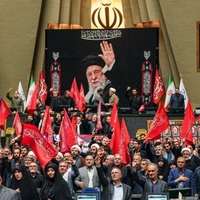
Pictures of slain IRGC commanders and Islamic Republic’s founder Rouhollah Khomeini at a state-organized anti-US rally in Tehran

Iran’s theocracy exits 2025 battered yet still standing, with analysts telling Eye for Iran that Tehran is interpreting survival after a punishing war with Israel, regional losses and domestic strain as grounds for taking greater risks in 2026.

At the start of 2024, Iran appeared to be riding high — expanding regional reach, edging closer to nuclear threshold status and projecting confidence at home and abroad. That trajectory began to reverse in late 2024 and accelerated into 2025.

The past year brought direct confrontation with Israel and later the United States, the weakening of Tehran’s regional proxy network and mounting domestic pressures. What it did not bring was collapse.

That survival, analysts warn, may now be shaping how the Islamic Republic approaches 2026 — not as a moment for restraint, but as proof that it can endure unprecedented pressure and press forward.

The defining moment of the year was the June war with Israel, a confrontation that punctured long-held assumptions about Iran’s deterrence while stopping short of triggering a regime change.

On Eye for Iran, Middle East analyst and former Israeli intelligence official Avi Melamed who directs the Inside the Middle East fellowship program for policy and security professionals; journalist and investigative reporter Jay Solomon, author of The Iran Wars; and historian Shahram Kholdi assessed what the Islamic Republic’s survival says about the year that is about to end and why its interpretation of that survival could make the coming year more volatile.

Fear is breaking — but survival is being reframed

Avi Melamed pointed to a psychological shift inside Iran as one of the most consequential developments of 2025.

“The most significant one is that I think that we are witnessing now a very significant shift in Iran in the sense that many Iranian people are no longer afraid of this regime,” he said.

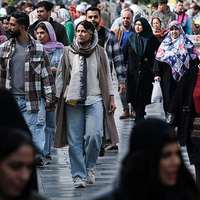
That erosion of fear has coincided with widespread social defiance, particularly among younger Iranians and women, even as repression continues.

Shahram Kholdi said that Tehran is not reading this moment as a loss. Instead, he argued, the leadership is internalizing 2025 through a survivalist lens — one that encourages defiance rather than restraint.

“If something that can kill you doesn’t destroy you, it makes you stronger,” Kholdi said, describing what he sees as the clerical establishment’s core mentality after the June war with Israel.

That belief, he argued, helps explain why executions have continued and why the Islamic Republic is signaling resolve despite suffering unprecedented blows.

A strategic reversal — interpreted as a test passed

Externally, 2025 marked a sharp break from the trajectory that once favored Tehran. Jay Solomon described the year as a reversal after decades in which Iran expanded influence through proxies and deterrence.

“The word I’d use for the year is weakness,” he said.

Solomon pointed to Israeli strikes, the degradation of Hezbollah and Hamas, and Iran’s struggle to manage overlapping crises — from inflation and water shortages to public dissent.

Yet despite expectations of mass bloodshed following the June conflict, the Islamic Republic ultimately pulled back, reinforcing its own perception that it had weathered the storm.

Why 2026 may be more volatile

For the analysts the biggest concern for 2026 was the risk ahead.

Iran’s deterrence model has been punctured but not abandoned. Instead, Tehran appears determined to rebuild — restoring proxy leverage, advancing missile capabilities and reasserting influence amid uncertainty.

Iran’s ballistic missile stockpile appears largely intact following the June war, with roughly 2,000 heavy missiles still in its arsenal, according to Al-Monitor.

The outlet cited an Israeli security source saying that Israel's military intelligence had conveyed the assessment to the United States in an indication that Israel is urging Washington to again act to address the alleged threat.

Melamed warned that this environment heightens the risk of miscalculation. Kholdi argued that the belief that Iran “didn’t lose” the June war makes confrontation more likely, not less. Solomon added that shifting political currents in the United States are being closely watched in Tehran and Tel Aviv alike, narrowing the window for restraint.

The danger, the panel suggested, is that survival itself is being treated as victory.

As 2026 begins, the Islamic Republic may be weaker — but convinced it has passed a test. That conviction could shape the year ahead more than any battlefield outcome.

Most Viewed

Iran negotiators ordered to return after internal rift over Islamabad talks
1
EXCLUSIVE

Iran negotiators ordered to return after internal rift over Islamabad talks

2
INSIGHT

Iran's digital economy battered by prolonged blackout

3
ANALYSIS

US blockade enters murky phase as tankers spoof signals and buyers hesitate

4
ANALYSIS

Why the $100 billion Hormuz toll revenue is a myth

5

US tightens financial squeeze on Iran, warns banks over oil money flows

Banner
Banner

Spotlight

  • Hardliners push Hormuz ‘red line’ as US blockade tests Iran’s leverage
    INSIGHT

    Hardliners push Hormuz ‘red line’ as US blockade tests Iran’s leverage

  • Ideology may be fading in Iran, but not in Kashmir's ‘Mini Iran'
    INSIGHT

    Ideology may be fading in Iran, but not in Kashmir's ‘Mini Iran'

  • War damage amounts to $3,000 per Iranian, with blockade set to add to losses
    INSIGHT

    War damage amounts to $3,000 per Iranian, with blockade set to add to losses

  • Why the $100 billion Hormuz toll revenue is a myth
    ANALYSIS

    Why the $100 billion Hormuz toll revenue is a myth

  • US blockade targets Iran oil boom amid regional disruption
    ANALYSIS

    US blockade targets Iran oil boom amid regional disruption

  • Iran's digital economy battered by prolonged blackout
    INSIGHT

    Iran's digital economy battered by prolonged blackout

  • Iran's cultural opening was won by Gen Z not granted by state, analyst says

    Iran's cultural opening was won by Gen Z not granted by state, analyst says

•
•
•

More Stories

Rare Iranian police videos protesting low wages spark public reaction

Dec 26, 2025, 17:00 GMT+0
•
Maryam Sinaiee

A series of rare viral videos by Iranian police officers describing severe financial hardship has triggered widespread reaction, with retractions by officers involved fueling allegations of pressure.

The first video, circulated widely on social media, featured a police officer in the southwestern province of Kohgiluyeh and Boyer-Ahmad. The officer, identified as Staff Sergeant Mohammad-Amin Ardeshir-Moghaddam, serves in the provincial capital Yasuj, one of Iran’s poorest regions.

In the video, Ardeshir-Moghaddam complained about low wages across the armed forces, particularly within the Law Enforcement Command. He said many police personnel are forced to work second jobs—including driving for ride-hailing apps—to cover basic living expenses. Referring to his own situation, he said he was under such financial pressure that he was considering selling a kidney.

Less than 48 hours later, the officer released a second video, walking back his remarks, saying the video was merely “a heart-to-heart talk with General Radan,” the national police chief.

He added that he had never imagined his words would become “a pretext for misuse by certain individuals and groups” seeking to drive a wedge between the police, the public and what he described as “the loyal base of the system.”

A second officer, a sharper warning

Days later, a similar video emerged—this time from Bandar Abbas in southern Iran. In the clip, Third Lieutenant Mostafa Loghmani, a police officer, said he had just received his monthly salary of 23 million tomans (roughly $171).

With three school-aged children, rental housing and heavy commuting costs, he said he too saw no option but to consider selling a kidney.

Loghmani went further than his colleague, openly sharing his bank card number and contact details and inviting viewers to contact him to purchase the organ.

Referring to his colleague’s second video and what he suggested was an apology made under pressure or threat, Loghmani said he would not back down. “I have nothing to lose, and I will not take back what I said."

Saying many colleagues face similar hardships but remain silent out of fear of repercussions, Loghmani directly addressed Iran’s supreme leader and senior officials, warning that neglecting the living conditions of police forces would eventually exhaust their patience.

The following day, he released another video saying that at the time of recording the first clip, he had been taking certain medications and was not in a stable mental condition, adding that he did not want his remarks to be misused online.

In a separate video circulating on social media, a police officer with an altered voice whose face is not shown alleges that retraction videos are recorded under pressure and threats to families, warning: “We are fire under the ashes.”

The pattern in these cases sends a message to the public, the moderate news website Rouydad24 wrote. "Even if officially considered coincidental, they signal that a problem exists that finds no outlet except sudden eruption on social media.”

Broader discontent within the ranks

In another circulating clip, an unidentified police colonel said that after 25 years of service, making ends meet had become impossible, and he was forced to retire early and seek other work.

Such videos are virtually unprecedented in Iran. Online, users have described the videos as signs of “attrition,” “force erosion,” and a “silent crisis” within Iran’s security institutions.

Social media users have noted that economic hardship appears to affect police personnel more acutely than members of the regular army or the Revolutionary Guards, many of whom benefit from subsidized organizational housing and other privileges.

The Telegram channel Radio Dej has published alleged pay slips and messages from police and military personnel showing extremely low incomes.

One message, attributed to an air defense officer with 17 years of service, alleges he earns 16 million tomans ($119) a month and criticized what he called “corrupt commanders beating the drums of war.”

In another message, a military spouse told Radio Dej her husband earns 18 million tomans ($134) a month after 24 years of service and that the family could no longer cope.

The Telegram channel also wrote: “Attrition within the armed forces has become so widespread that it has reached even loyalists and personnel committed to the system, showing just how deeply military members are entangled in livelihood and organizational problems.”

Iran says ready to protect Iraq’s political system from collapse if asked

Dec 26, 2025, 12:17 GMT+0

Tehran is prepared to step in to protect Iraq’s political system from collapse if formally requested, Iran’s ambassador to Iraq said on Friday.

Iran would respect Iraq’s sovereignty but stood ready to act if the Iraqi government sought assistance, Mohammad Kazem Al-e Sadegh said in an interview reported by the ISNA news agency.

“Iran is ready to protect the political system in Iraq from collapse if officially requested,” he said, without elaborating on what such protection would entail.

  • Iraq to correct official record, delete Hezbollah and Houthis from sanctions list

    Iraq to correct official record, delete Hezbollah and Houthis from sanctions list

Iran supports Iraqi groups through financing, training, and arms, primarily focusing on Shia militias that are often integrated into the official Popular Mobilization Forces (PMF).

This support helps groups like the Badr Organization and Kata'ib Hezbollah exert military and political influence, though some factions like Harakat Hezbollah Al-Nujaba have focused more on military operations. The support allows Iran to pursue its regional objectives, gain influence, and destabilize Iraqi politics while coordinating attacks against US forces.

Iran’s ambassador to Iraq Mohammad Kazem Al-e Sadegh
100%
Iran’s ambassador to Iraq Mohammad Kazem Al-e Sadegh

Armed groups and ‘independent decisions’

Al-e Sadegh addressed recent Iraqi initiatives aimed at consolidating weapons under state control, a sensitive issue given the power of Iran-aligned armed factions. The Iran-backed groups, he said, were hesitant about weapons monopolisation due to concerns over its consequences, but insisted they had reached a level of maturity that allowed them to make decisions independently.

“Our relationship with these groups is longstanding, but they have reached a stage where they can decide for themselves,” he said, rejecting descriptions of the factions as Iranian proxies.

On regional tensions, the ambassador said Iran was “fully prepared” to respond to any hostile action by Israel, adding that Israel had sought US mediation to secure a ceasefire.

Iraq has balanced relations with both the United States and Iran, but faces mounting risks to its financial system if it falls foul of global sanctions regimes.

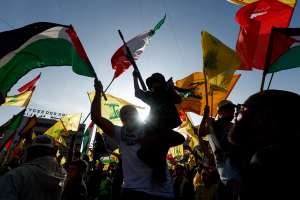
Hezbollah and the Houthis are key members of a broader network of Iran-backed groups across the region.

  • US warns Iraq over cabinet posts for Iran-backed armed groups, source says

    US warns Iraq over cabinet posts for Iran-backed armed groups, source says

Iran views Iraq as a strategic economic and political partner amid Western sanctions, while Baghdad remains wary of being drawn into US efforts to squeeze Tehran and its regional allies.

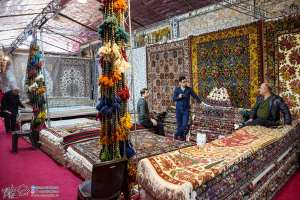
Iran’s handwoven carpet industry hits record low under sanctions – FT

Dec 26, 2025, 10:27 GMT+0

Iran’s handwoven carpet industry has fallen to its lowest level on record, hit by US sanctions, restrictive foreign-currency rules and regional instability that have driven exports close to collapse, the Financial Times reported on Friday.

“The costs of making a carpet are high and the profits low,” Akram Fakhri, a 45-year-old weaver in Kashan, told the FT, describing the pressures facing artisans across Iran.

Once a flagship of Iran’s non-oil exports, Persian rugs are expected to generate less than $40mn in the year to March 2026, down from $41.7mn the previous year, according to the Carpet and Handicrafts Commission of Iran’s Chamber of Commerce.

Export revenues have stayed below $100mn for six consecutive years, compared with a peak of more than $2bn three decades ago – figures that commission chair Morteza Haji Aghamiri described as “so meagre we can say it is practically zero.”

The downturn accelerated after 2018, when then US president Donald Trump withdrew from the Iran nuclear deal and imposed “maximum pressure” sanctions. As foreign reserves tightened, Iran required exporters to sell part of their foreign-currency earnings to the central bank at the official exchange rate rather than at market rates.

The rule destroyed incentives to export, Industry representatives said. “It completely paralysed the sector. None of them have any motivation to stay active in global markets,” said Abdollah Bahrami, head of the National Union of Handwoven Carpet Co-operatives.

For weavers such as Fakhri, the economics no longer work. She told the FT she must invest $250 in wool and silk and spend a year weaving a single carpet, only to hope it might sell for more than $600. Without social security or state support, she said the work has become physically exhausting. “I work with constant back and leg pain. But hiring an assistant weaver is beyond my means.”

  • Iran's Persian Carpet Exports Drop Drastically

    Iran's Persian Carpet Exports Drop Drastically

Iranian carpets were once exported to about 80 countries, but sales are now largely limited to markets such as the UAE, Germany, Japan, the UK and Pakistan. As Iran lost ground, competitors from Turkey, India, China and Afghanistan moved in. “After the US market closed, some traders began rerouting Persian rugs to the US through third countries… hurting Iran’s craft by concealing its identity,” said Mohsen Shojaei, a carpet trader in Mashhad.

Regional tensions have compounded the decline. Shojaei said: “The disruption of regional airspace after the war with Israel, along with other political tensions, caused foreign traders to lose confidence.”

While officials have promised support, industry figures remain bleak. “The future? The future is gone. The sound of the loom in villages and towns has fallen silent,” Bahrami said.

Araghchi's remarks on sanctions trigger backlash in Iran

Dec 26, 2025, 09:43 GMT+0

Comments by Iran’s foreign minister describing international sanctions as having blessings have sparked a wave of criticism from economists and social media users, many accusing senior officials of being detached from the economic hardship faced by ordinary citizens.

Speaking on Thursday at a meeting with economic activists in Isfahan, Abbas Araghchi said Iran must accept the reality of sanctions and learn to live with them.

“We must accept that sanctions exist and accept that it is possible to live with sanctions,” he said. “Sanctions have their costs… I know very well what sanctions mean and what their costs are. I know their problems and I also know their blessings.”

The remarks quickly drew criticism as Iran grapples with soaring inflation, a weakening rial and sharp rises in the price of basic goods, pressures that have hit low-income households hardest.

  • One gram of gold now equals a month’s wage for Iranian workers

    One gram of gold now equals a month’s wage for Iranian workers

Senior officials are insulated from the realities of sanctions, Economist Mohammad Tabibian wrote in a note. “We all know that he and other gentlemen can live well and comfortably even under far worse conditions,” Tabibian wrote.

“Please do not speak on behalf of the people. Ask the people themselves and let them describe their own situation.”

Social media backlash

Users on social media platforms, including X, also reacted angrily. One user identified as Yousef pointed to the recent surge in the dollar’s exchange rate hitting 1.36 million rials, writing: “The blessings are for rent-seekers and mafias. For the people, only poverty and hunger remain.”

Iran's FM Abbas Araghchi
100%
Iran's FM Abbas Araghchi

Another user, Zahidi, criticized what he described as the lavish lifestyles of senior officials.

“Even if people are pushed into conditions worse than total deprivation, it is still a blessing for Mr. Araghchi and his friends,” he wrote, adding that the gap between officials and ordinary citizens has grown impossibly wide.

Others described the comments as offensive. A user named Azita called the remarks “shameful,” writing: “Do not speak on behalf of the nation. Sanctions have only brought misery. What blessing?”

‘People below the poverty line’

Further criticism focused on the contradiction between official rhetoric and lived experience. One user wrote that while people are being driven below the poverty line, “embezzlers ride in luxury limousines.” Another commented: “Sanctions for people mean medicine shortages, unemployment, poverty and constant anxiety. If sanctions are a blessing, publish the list of beneficiaries.”

  • One percent holds nearly a third of Iran’s wealth, Tehran daily says

    One percent holds nearly a third of Iran’s wealth, Tehran daily says

Another post argued that Araghchi’s comments were impossible to accept for people “whose backs have been broken under the weight of sanctions,” adding that any benefits accrue to networks involved in evading sanctions, not to the public.

The backlash reflects broader public frustration with economic conditions after years of sanctions and policy mismanagement, as the cost of living continues to climb and the national currency loses value.

For many critics, Araghchi’s remarks underscored a widening disconnect between Iran’s political leadership and the daily struggles of its citizens.

Afghans face killings, torture after return from Iran, investigation finds

Dec 26, 2025, 08:37 GMT+0

Afghan refugees deported from Iran have faced arbitrary detention, torture and extrajudicial killings after returning to Afghanistan, according to an investigation by Afghanistan International.

The investigation documented at least six extrajudicial killings and 11 cases of detention involving Afghans expelled from Iran, though the outlet said the true number of victims is likely higher. Families of those killed or detained have blamed the Taliban, describing a recurring pattern of violence against people forcibly returned from Iran.

The findings come amid a sharp rise in deportations following the announcement of a ceasefire in a 12-day war in June by US President Donald Trump. According to the International Organization for Migration, more than 500,000 Afghan nationals were expelled from Iran between June 24 and July 9 alone. Iran’s Interior Minister Eskandar Momeni later said about 1.5 million Afghans had been deported this year.

Targeted after forced return

Many deportees, Afghanistan International said, were refugees at immediate risk, including former government officials, journalists and civil society activists who fled Afghanistan after the Taliban takeover in 2021. Several were killed or detained shortly after their return.

Among the cases documented was the killing of Kamin Jan, a former interior ministry employee, who was shot dead in Takhar province in October 2025, weeks after being deported from Iran. Two weeks earlier, the body of another former Afghan soldier who had also been expelled from Iran was found in Farah province.

Kamin Jan, a former interior ministry employee, who was shot dead in Takhar province in October 2025.
100%
Kamin Jan, a former interior ministry employee, who was shot dead in Takhar province in October 2025.

In another case, the body of Gul Ahmad, a former interior ministry employee, was discovered in Farah in October 2025 after he was taken from his home by armed men carrying Taliban intelligence identification cards. His family said he was held for more than three months before his body was returned.

A similar incident occurred in Kabul, where the body of Abdulwali Naimi, a former Afghan special forces officer from Panjshir province, was found in September 2025, two weeks after his deportation. International organizations, including the United Nations, have reported sustained retaliatory attacks against former Afghan security personnel since the Taliban takeover.

Abdulwali Naimi, a former Afghan special forces officer from Panjshir province
100%
Abdulwali Naimi, a former Afghan special forces officer from Panjshir province

One day after deportation

Some deaths followed almost immediately after expulsion. In July 2025, Ezzatullah, a former commander affiliated with the Junbish-e Milli (National Islamic Movement of Afghanistan) party in Sar-e Pol province, was killed just one day after returning from Iran. Ezzatullah had fled to Iran after the Taliban takeover but was forced to leave when his visa expired, a party spokesperson said.

Civil society activists were also targeted. Hamza Ulfat, a former Taliban detainee and civil activist, was shot while fleeing Taliban forces shortly after crossing back from Iran and later died from his wounds.

Detention, torture and silence

Beyond killings, the investigation documented multiple cases of detention and torture. Khal Mohammad, a former Afghan army colonel deported from Iran in October 2022, said Taliban forces tortured him and his elderly mother in separate incidents. Afghanistan International said it reviewed videos and medical records showing signs of abuse.

Despite repeated warnings from human rights groups, Iran has continued deportations. Filippo Grandi, the UN high commissioner for refugees, has called forced returns from Iran and Pakistan alarming, warning they return people to unsafe conditions.

killings extend inside Iran

The investigation comes as Afghan opposition figures have also been targeted inside Iran. On Wednesday, former Afghan police general Ikramuddin Sari was shot dead by masked assailants near his home in Tehran, the second such killing in under four months. Sari, who had served as police commander in Baghlan and Takhar provinces, fled to Iran after 2021 and was an outspoken critic of the Taliban.

His killing followed the September shooting of Maroof Ghulami in Mashhad. People close to both men blamed the Taliban, with an Afghan military source describing the attacks as the start of Taliban “extraterritorial assassinations.” Iranian authorities have not publicly commented on Sari’s killing or released findings from the Ghulami investigation.

  • Second anti-Taliban commander killed in Iran in under four months

    Second anti-Taliban commander killed in Iran in under four months

Rights advocates say the pattern of violence raises serious concerns about violations of the international principle of non-refoulement, which bars returning individuals to places where their lives or freedom are at risk.