• العربية
  • فارسی
BrandBrand
  • Iran Insight
  • Politics
  • Economy
  • Analysis
  • Special Report
  • Opinion
  • Podcast
  • Live TV
  • Iran Insight
  • Politics
  • Economy
  • Analysis
  • Special Report
  • Opinion
  • Podcast
  • Live TV
  • Theme
  • Language
    • العربية
    • فارسی
  • Iran Insight
  • Politics
  • Economy
  • Analysis
  • Special Report
  • Opinion
  • Podcast
  • Live TV
All rights reserved for Volant Media UK Limited
volant media logo

Iran’s handwoven carpet industry hits record low under sanctions – FT

Dec 26, 2025, 10:27 GMT+0Updated: 22:29 GMT+0

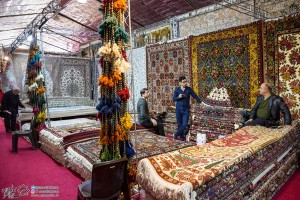
Iran’s handwoven carpet industry has fallen to its lowest level on record, hit by US sanctions, restrictive foreign-currency rules and regional instability that have driven exports close to collapse, the Financial Times reported on Friday.


“The costs of making a carpet are high and the profits low,” Akram Fakhri, a 45-year-old weaver in Kashan, told the FT, describing the pressures facing artisans across Iran.

Once a flagship of Iran’s non-oil exports, Persian rugs are expected to generate less than $40mn in the year to March 2026, down from $41.7mn the previous year, according to the Carpet and Handicrafts Commission of Iran’s Chamber of Commerce.

Export revenues have stayed below $100mn for six consecutive years, compared with a peak of more than $2bn three decades ago – figures that commission chair Morteza Haji Aghamiri described as “so meagre we can say it is practically zero.”

The downturn accelerated after 2018, when then US president Donald Trump withdrew from the Iran nuclear deal and imposed “maximum pressure” sanctions. As foreign reserves tightened, Iran required exporters to sell part of their foreign-currency earnings to the central bank at the official exchange rate rather than at market rates.

The rule destroyed incentives to export, Industry representatives said. “It completely paralysed the sector. None of them have any motivation to stay active in global markets,” said Abdollah Bahrami, head of the National Union of Handwoven Carpet Co-operatives.

For weavers such as Fakhri, the economics no longer work. She told the FT she must invest $250 in wool and silk and spend a year weaving a single carpet, only to hope it might sell for more than $600. Without social security or state support, she said the work has become physically exhausting. “I work with constant back and leg pain. But hiring an assistant weaver is beyond my means.”

Iranian carpets were once exported to about 80 countries, but sales are now largely limited to markets such as the UAE, Germany, Japan, the UK and Pakistan. As Iran lost ground, competitors from Turkey, India, China and Afghanistan moved in. “After the US market closed, some traders began rerouting Persian rugs to the US through third countries… hurting Iran’s craft by concealing its identity,” said Mohsen Shojaei, a carpet trader in Mashhad.

Regional tensions have compounded the decline. Shojaei said: “The disruption of regional airspace after the war with Israel, along with other political tensions, caused foreign traders to lose confidence.”

While officials have promised support, industry figures remain bleak. “The future? The future is gone. The sound of the loom in villages and towns has fallen silent,” Bahrami said.

Most Viewed

Iran's oil output plunges below pre-war domestic needs
1
ANALYSIS

Iran's oil output plunges below pre-war domestic needs

2

Cash-strapped Iranians put multiple organs up for sale

3

Iran threatens Armenia as US-run Trump Route clears Yerevan’s parliament

4
INSIGHT

Iranian hardliners urge Iraq to push back against US pressure

5

Iran state TV says modified missile could reach US base in Britain

Banner

Spotlight

  • Canadian MP to flag paintball gun findings after Iran protest blindings
    PODCAST

    Canadian MP to flag paintball gun findings after Iran protest blindings

  • Locks for cash: inside Iran's booming hair trade

    Locks for cash: inside Iran's booming hair trade

  • Seven years after ‘Bloody November,’ Iran rations gasoline it dares not reprice

    Seven years after ‘Bloody November,’ Iran rations gasoline it dares not reprice

  • Iranians and Israelis can defeat the IRGC together, says Arab-Israeli activist
    ONE-ON-ONE

    Iranians and Israelis can defeat the IRGC together, says Arab-Israeli activist

  • Iran's oil output plunges below pre-war domestic needs
    ANALYSIS

    Iran's oil output plunges below pre-war domestic needs

  • Iranian hardliners urge Iraq to push back against US pressure
    INSIGHT

    Iranian hardliners urge Iraq to push back against US pressure

Banner
Banner
Banner
Banner
Banner
Banner
  • Iran's Persian Carpet Exports Drop Drastically

    Iran's Persian Carpet Exports Drop Drastically