• العربية
  • فارسی
Brand
  • Iran Insight
  • Politics
  • Economy
  • Analysis
  • Special Report
  • Opinion
  • Podcast
  • Iran Insight
  • Politics
  • Economy
  • Analysis
  • Special Report
  • Opinion
  • Podcast
  • Theme
  • Language
    • العربية
    • فارسی
  • Iran Insight
  • Politics
  • Economy
  • Analysis
  • Special Report
  • Opinion
  • Podcast
All rights reserved for Volant Media UK Limited
volant media logo

Guards say Israel’s war plan faltered over failure to stir unrest in Iran

Dec 22, 2025, 08:54 GMT+0
People run along a street amid smoke following the Israeli strikes on Iran, in Tehran, June 15, 2025.

Iran’s Revolutionary Guards said on Monday that Israel was defeated in the recent 12-day conflict because it failed to trigger unrest inside Iran, despite what its spokesman described as expectations that military strikes would lead to domestic turmoil.

Ali Mohammad Naini, spokesman for the Islamic Revolutionary Guard Corps (IRGC), said Israel and its allies had pursued a dual strategy during the conflict: direct military confrontation alongside efforts to destabilize Iran from within.

“The enemy’s defeat in the 12-day war was precisely here,” Naini said. “They tried to drag the war inside the country, but that project failed.”

Naini was speaking at a meeting to organize commemorations for December 30, a state-marked anniversary tied to mass rallies that followed the disputed 2009 presidential election and the suppression of the Green Movement protests – one of the largest episodes of unrest in Iran’s recent history.

The Green Movement is often cited alongside the 2019 Bloody November protests and the 2022 Woman, Life, Freedom demonstrations as the most significant challenges to the Islamic Republic since its founding.

Naini said Iran’s adversaries had assumed that air strikes would be followed by protests, riots or internal collapse, repeating what he described as a long-standing “illusion of chaos” rooted in past episodes of unrest.

“They sat in their war rooms with a wrong calculation, waiting for disorder, riots and the breakdown of the country from within,” he said.

Instead, Naini said the attacks were followed by large public reactions that included anti-Israel rallies and funerals for those killed, which he portrayed as demonstrations of national unity.

He said Israel underestimated what he described as a “fortress-like” popular cohesion and that attempts at what Iranian officials often call soft war or cognitive war aimed at weakening society from within were completely unsuccessful.

“The enemy shifted from military war to cognitive war, using pessimism, division and exaggerating social dissatisfaction to weaken the unity that was formed,” Naini said.

The remarks come as regional tensions remain high and as Israel weighs next steps.

NBC News reported over the weekend that Israeli officials are preparing to brief US President Donald Trump on options for possible new military strikes on Iran, citing concerns that Tehran is rebuilding facilities linked to ballistic missile production and repairing air defenses damaged in earlier attacks.

Israeli Prime Minister Benjamin Netanyahu is expected to raise the issue during an upcoming meeting with Trump, including options for US support or participation in any future action, according to the report.

Trump has repeatedly said US strikes in June destroyed Iran’s nuclear capabilities and has warned Tehran against trying to rebuild them. Iran denies seeking nuclear weapons and says its military and nuclear programs are defensive.

Naini said Iran continues to monitor what he described as hostile plans closely, adding that the lesson Iranian officials draw from both past unrest and the recent war is that internal cohesion remains decisive in confronting external threats.

Most Viewed

Iran negotiators ordered to return after internal rift over Islamabad talks
1
EXCLUSIVE

Iran negotiators ordered to return after internal rift over Islamabad talks

2
INSIGHT

Iran's digital economy battered by prolonged blackout

3
ANALYSIS

US blockade enters murky phase as tankers spoof signals and buyers hesitate

4
ANALYSIS

Why the $100 billion Hormuz toll revenue is a myth

5

US tightens financial squeeze on Iran, warns banks over oil money flows

Banner
Banner

Spotlight

  • Hardliners push Hormuz ‘red line’ as US blockade tests Iran’s leverage
    INSIGHT

    Hardliners push Hormuz ‘red line’ as US blockade tests Iran’s leverage

  • Ideology may be fading in Iran, but not in Kashmir's ‘Mini Iran'
    INSIGHT

    Ideology may be fading in Iran, but not in Kashmir's ‘Mini Iran'

  • War damage amounts to $3,000 per Iranian, with blockade set to add to losses
    INSIGHT

    War damage amounts to $3,000 per Iranian, with blockade set to add to losses

  • Why the $100 billion Hormuz toll revenue is a myth
    ANALYSIS

    Why the $100 billion Hormuz toll revenue is a myth

  • US blockade targets Iran oil boom amid regional disruption
    ANALYSIS

    US blockade targets Iran oil boom amid regional disruption

  • Iran's digital economy battered by prolonged blackout
    INSIGHT

    Iran's digital economy battered by prolonged blackout

  • Mideast upheaval leaves Iran hard-pressed to regain old footholds

    Mideast upheaval leaves Iran hard-pressed to regain old footholds

  • Israel warns US Iran missile drills may be cover for surprise attack - Axios

    Israel warns US Iran missile drills may be cover for surprise attack - Axios

  • Israel weighs regime change in Iran, former Israeli diplomat says

    Israel weighs regime change in Iran, former Israeli diplomat says

•
•
•

More Stories

Israel warns US Iran missile drills may be cover for surprise attack - Axios

Dec 22, 2025, 01:22 GMT+0

Israel told the United States that the recent Iranian missile drills may conceal preparations for a potential strike, Axios said on Sunday, one day after Iran International reported unusual Iranian air activity spotted by Western intelligence agencies.

Israeli Chief of Staff Eyal Zamir raised the issue directly with Brad Cooper, head of US Central Command, warning that recent missile movements could serve as a cover for a surprise operation against the Jewish state.

The warning follows Iran International's report on Saturday which said Western intelligence agencies had identified unusual movements involving the Revolutionary Guard's Aerospace Force, including activity by missile, drone, and air-defence units beyond established patterns.

The developments could be linked to military exercises, Western officials with knowledge of the matter told Iran International but added that the scale and synchronization had drawn closer scrutiny.

Axios reported that Israeli intelligence assessed the movements as taking place within Iran’s borders but said Israel’s military risk tolerance has dropped significantly since Hamas’s surprise attack in October 2023.

"The chances for an Iranian attack are less than 50%, but nobody is willing to take the risk and just say it is only an exercise," the report said citing an Israeli source.

An American source, however, told Axios that the US intelligence currently sees no indication of an imminent Iranian attack.

In his conversation with the CENTCOM chief, Zamir urged closer coordination between Israeli and US forces on defensive preparations.

The phone call was followed by Cooper's visit to Tel Aviv on Sunday, where he met Zamir and top Israeli military officials to discuss the situation.

In June, Israel carried out airstrikes and covert operations against Iranian military and nuclear sites, killing more than 1,000 people including senior officials and nuclear scientists.

Iran retaliated by launching hundreds of missiles and drones at Israel, killing at least 33 people, among them an off-duty soldier.

The United States helped Israel intercept Iranian attacks and later joined the Israeli campaign, bombing three Iranian nuclear facilities on June 22.

Axios said that Israeli intelligence and the Mossad do not believe Iran’s current pace of rebuilding missile capabilities creates an immediate need for military action in the next two to three months, but warned the issue could become more urgent later next year.

Meanwhile, NBC News reported that Israeli officials plan to brief President Donald Trump at the end of the month on options for potential future strikes against Iran, amid concerns that Tehran is rebuilding ballistic missile production facilities and repairing air defenses damaged during the June conflict.

Low voter engagement casts doubt on Tehran’s maiden proportional council elections

Dec 21, 2025, 21:46 GMT+0
•
Maryam Sinaiee

Tehran’s upcoming city council elections will be held under a proportional representation system for the first time, but widespread voter apathy has raised concerns of an extremely low turnout outside conservative ranks.

The city and village council elections in May will also be held independently of the presidential race for the first time, a change that further distinguishes them from previous electoral cycles.

City council contests are significant to political figures and groups in Iran because they have repeatedly served as springboards to national power, particularly the presidency.

Tehran’s current hardline mayor, Alireza Zakani, rose through the city council before becoming mayor and later used that position as a launchpad for his bid in last year’s presidential election, though he was ultimately unsuccessful.

Before him, Mahmoud Ahmadinejad famously moved from the Tehran mayoralty to the presidency, underscoring the political weight of municipal office in Iran.

Voter disillusion and the risk of low participation

Unlike all other elections in Iran, city council races are not supervised by the Guardian Council, an unelected body widely accused by critics of “engineering elections” in favor of conservatives and hardliners through mass candidate disqualifications.

As a result, council elections have generally been freer than presidential and parliamentary contests over the past two decades.

Even so, political analysts and activists say the depth of public frustration with elections and governance makes it unlikely that large segments of the electorate will return to the polls, with some warning that turnout could fall below levels seen five years ago, when only around 25 percent of eligible voters participated in Tehran.

This is particularly true of the so-called “gray voters,” a broad and often decisive group whose participation has frequently tipped election outcomes in favor of reformists and moderates.

Recent electoral experience reinforces these concerns. In the 2021 parliamentary elections, after most reformist candidates were disqualified, turnout in Tehran hovered around 10 percent. The top candidate in the capital won roughly 580,000 votes—about six percent of eligible voters.

The reformist-leaning daily Arman-e Melli warned of the potential total marginalization of reformists and moderates under the new electoral model and prevailing voter apathy in an article titled “The Proportional Election Trap Facing Reformists.”

“If conservatives enter the race with two lists and split their organized votes between them, while reformists fail to mobilize their political base, the total reformist vote could fall to third place. In such a scenario, even the complete exclusion of reformists from Tehran’s city council would not be far-fetched.”

Uneven campaign energy

So far, there has been little visible enthusiasm among reformists for the upcoming vote. Conservatives and hardliners, by contrast, have been planning for months.

Meanwhile, according to the centrist website Asr-e Iran, three conservative camps are already maneuvering aggressively: Mehrdad Bazrpash, a long-time rival of Tehran Mayor Alireza Zakani, is reportedly has an eye toward becoming Tehran’s next mayor by placing allies in the council, while supporters of Saeed Jalili and members of the hardline Paydari Front, and neo-conservative allies of parliamentary speaker Mohammad-Bagher Ghalibaf, also push for maximum seats.

How proportional elections work—and why they matter

Under the new model, seats are allocated based on the share of the total vote won by each party or coalition list, with independent candidates assessed according to their percentage of overall ballots cast.

In practice, this means that in Tehran, organized political forces with disciplined voter bases—particularly conservatives and hardliners—are likely to benefit the most, while candidates without party backing face steep obstacles.

While many political groups agree that proportional representation can, in theory, improve the performance of councils and municipalities, some argue that introducing it under current political and institutional conditions may produce the opposite effect.

Skepticism across the political spectrum

Opposition to the new model is not limited to any single political camp.

Masoud Zaribafan, a former close ally of Mahmoud Ahmadinejad, has publicly warned against the risks.

He said that if ideologically rigid and unqualified individuals enter the council, it will “certainly face serious problems in selecting a mayor—especially someone who intends to use the mayoralty as a springboard to a higher position, including the presidency.”

He added: “Even if they manage to elect a mayor, I doubt they will be able to choose a powerful and efficient one.”

Mohammad Mehdi Tondgouyan, a former Tehran council member close to reformists, argued that proportional elections make little sense in a country without deeply rooted parties. “Our people have no real connection with parties,” he said.

Mahmoud Mir-Lohi, a senior member of the National Trust Party and a former deputy interior minister under President Mohammad Khatami, noted that Iran has around 200 registered parties, most of which function more like professional associations than genuine political organizations.

Former parliamentary candidate Tina Amin echoed this concern in a post on X: “If proportional elections are applied based on the current party landscape, they will not solve the problems of majoritarian elections. Instead, they will reproduce party-based rent-seeking and a lack of meritocracy in a different form.”

Israel weighs regime change in Iran, former Israeli diplomat says

Dec 21, 2025, 20:15 GMT+0

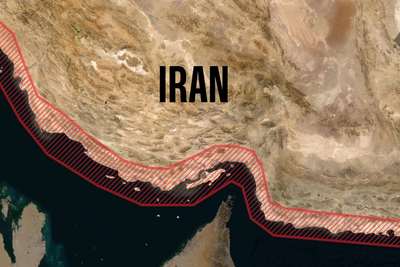
Israel is thinking about regime change in Iran as an option to avoid repeated rounds of conflict, former Israeli consul in Los Angeles said on Sunday.

“Israel is thinking about the regime change in Iran, because otherwise we’ll have to go to a round after round after round,” Yaki Dayan said on Israel’s i24NEWS The Rundown program.

Dayan said Israeli Prime Minister Benjamin Netanyahu will have to do significant convincing when he meets Trump later this month at Mar-a-Lago, particularly on backing further Israeli action against Iran.

"Netanyahu will have a lot of convincing here to do with Trump, not necessarily joining forces in another attack, but going to another attack and getting the defense capabilities from the Americans," he said.

Dayan said Trump is “much more in the peacemaking mode than attacking mode” on Iran and views the nuclear program as a more immediate threat than Iran’s ballistic missile program, which he said Tehran is currently prioritizing.

Dayan's remarks come as Israel Defense Forces’ (IDF) Chief of Staff Lt. Gen. Eyal Zamir said the force will strike its enemies “wherever required, on near and distant fronts alike,” in comments that appeared to allude to the possibility of further action against Iran.

Zamir said Iran had built what he described as a “ring of strangulation” around Israel, a reference to Tehran-backed groups operating across multiple fronts, and warned that the military was prepared to act both close to home and farther afield.

Iran MP accuses officials of selective enforcement of ‘sensitive jobs’ law

Dec 21, 2025, 13:32 GMT+0

An Iranian lawmaker accused senior officials on Sunday of selectively enforcing the law, questioning why it was applied strictly to a former foreign minister but not to the current vice president.

“People are asking what problem Parliament Speaker Mohammad Bagher Ghalibaf and Chief Justice Gholamhossein Mohseni Ejei had with former foreign minister Mohammad Javad Zarif that they firmly enforced the sensitive jobs law against him, but are now ignoring the same law in the case of Vice President Mohammad Reza Aref,” Tehran MP Hamidreza Rasaei said in an open session of parliament.

Rasaei said key provisions of Iran’s transparency law – requiring disclosure of officials’ income, judicial rulings, commission proceedings, major contracts and recruitment – had not been implemented by the government or the judiciary, adding that non-compliance is defined as a criminal offense.

  • Iran Vice President Aref ineligible over son’s dual nationality, MP says

    Iran Vice President Aref ineligible over son’s dual nationality, MP says

  • Political erosion mounts in Pezeshkian’s government as officials resign

    Political erosion mounts in Pezeshkian’s government as officials resign

He accused both branches of violating the law and said public frustration was growing as legal requirements were enforced rigidly in some political cases but ignored in others.

Referring to the law governing sensitive positions, which bars officials if close family members hold foreign citizenship, Rasaei said Aref’s appointment was unlawful because his child holds German nationality, contrasting it with the earlier removal of Zarif.

“When laws are applied selectively,” Rasaei said, “this is the result.”

Iran says damage to missile launchers was under 3% in June war

Dec 21, 2025, 11:21 GMT+0

Iran said damage to its missile launchers during a 12-day conflict with Israel was limited, with a senior military official saying less than 3% were destroyed and that Iran’s missile capability remains operational.

Ahmad Vahidi, deputy chief of Iran’s armed forces general staff, said Israel had sought to amplify its performance through media and psychological operations that did not reflect realities on the ground, according to comments aired by Lebanon-based Al Mayadeen television and reported by Iranian media.

“Israel tried to present an image that does not match the reality,” Vahidi said, adding that Israel failed to achieve its objectives during the fighting.

He said Israel managed to destroy “less than 3%” of Iranian missile launch platforms during the conflict and that Iran’s missile force remained active and capable of conducting operations.

Iranian officials have repeatedly sought to play down damage from the fighting and to signal the resilience of the country’s military capabilities, while Israel has said it inflicted significant blows to Iran’s military infrastructure. Neither side’s claims could be independently verified.