Iran MP accuses officials of selective enforcement of ‘sensitive jobs’ law
An Iranian lawmaker accused senior officials on Sunday of selectively enforcing the law, questioning why it was applied strictly to a former foreign minister but not to the current vice president.
“People are asking what problem Parliament Speaker Mohammad Bagher Ghalibaf and Chief Justice Gholamhossein Mohseni Ejei had with former foreign minister Mohammad Javad Zarif that they firmly enforced the sensitive jobs law against him, but are now ignoring the same law in the case of Vice President Mohammad Reza Aref,” Tehran MP Hamidreza Rasaei said in an open session of parliament.
Rasaei said key provisions of Iran’s transparency law – requiring disclosure of officials’ income, judicial rulings, commission proceedings, major contracts and recruitment – had not been implemented by the government or the judiciary, adding that non-compliance is defined as a criminal offense.
He accused both branches of violating the law and said public frustration was growing as legal requirements were enforced rigidly in some political cases but ignored in others.
Referring to the law governing sensitive positions, which bars officials if close family members hold foreign citizenship, Rasaei said Aref’s appointment was unlawful because his child holds German nationality, contrasting it with the earlier removal of Zarif.
“When laws are applied selectively,” Rasaei said, “this is the result.”
Iran’s Parliament Speaker Mohammad Bagher Ghalibaf (left) speaks with President Masoud Pezeshkian during a joint meeting of the heads of the executive, legislative and judicial branches at the presidential office in Tehran, December 20, 2025.
Iran’s parliament speaker warned on Sunday that lawmakers could move to impeach President Masoud Pezeshkian’s cabinet if the government fails to rein in soaring prices, stepping up pressure on an administration grappling with a deepening economic crisis.
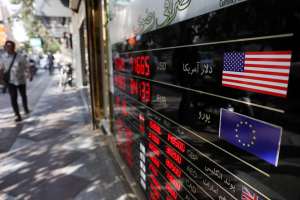
Mohammad Bagher Ghalibaf said runaway increases in the cost of basic goods had become one of the public’s main concerns, with rising foreign exchange and gold prices acting as key drivers – or what he called pretexts – for broader inflation.
Speaking in an open parliamentary session, Ghalibaf said the legislature had held a series of oversight meetings with senior government officials, including the ministers of economy, agriculture and industry, as well as the heads of the planning and budget organization and the central bank.
He said the talks had focused on preventing further erosion of household purchasing power, implementing a state-backed food voucher scheme and managing volatility in the currency market.
“If these measures do not deliver results, then in order to minimize time and tension, the priority will be for the government to repair its cabinet,” Ghalibaf said. “If the necessary reforms are not carried out by the government, representatives will be forced to begin the impeachment process.”
The warning adds to a widening chorus of concern inside Iran’s political establishment as inflation, a weakening rial and sharp rises in food and housing costs strain living standards, particularly for lower-income households.
Ghalibaf said parliament would continue to pursue the issue with urgency, stressing that lawmakers viewed the surge in prices for everyday necessities as a national priority.
The pressure on the Pezeshkian administration has also extended beyond economic policy.
During the same parliamentary session, dozens of lawmakers issued formal written warnings to the president and cabinet ministers on a wide range of issues, from perceived inequality in the state bureaucracy to delays in infrastructure projects, internet access, student housing and unpaid wages.
Such parliamentary admonitions are a routine feature of Iranian politics, but their volume shows the breadth of dissatisfaction as economic hardship deepens.
Impeachment is not a theoretical threat. In March 2025, just six months after Pezeshkian took office, parliament voted to impeach and remove Economy Minister Abdolnasser Hemmati, citing the rising dollar rate and higher prices for basic goods.
During that session, Pezeshkian hinted at the limits of his authority, pointing indirectly to Supreme Leader Ali Khamenei’s stance on relations with the United States and saying the government had to align itself with those positions.
Iran’s economic woes are rooted in years of sanctions, policy missteps and political constraints that have narrowed the government’s room for maneuver.
Inflation has remained high, the national currency has repeatedly hit record lows and the cost of essential goods has surged, eroding public confidence and adding to social tension.
The latest parliamentary threat comes as broader debates intensify over accountability and power in Iran’s political system. Moderates and reformist figures have increasingly argued that elected institutions lack the authority to address structural problems, while ultimate control over key areas of policy rests with unelected bodies under the Supreme Leader.
At the same time, even some of Pezeshkian’s former supporters have begun to question whether he can deliver meaningful change, with commentators and social media users warning that continued economic deterioration could trigger renewed unrest.
A female musician plays the Qanun in an orchestral performance of classical Iranian instruments, at Tehran's iconic Vahdat Hall, December 8, 2025
Tehran’s recent gestures of apparent flexibility—from looser enforcement of the hijab to an embrace of nationalist symbolism—recall moments in Communist history when a brief opening exposed risks the system ultimately moved to contain.
In 1956, Soviet leader Nikita Khrushchev stunned the communist world by denouncing Joseph Stalin’s crimes in a closed-door speech at the Communist Party Congress.
The address, later leaked, raised expectations that the Soviet system might be capable of reform from within. Instead, it exposed pressures the leadership struggled to contain, contributing to unrest at home and rebellion abroad—notably in Hungary—and ultimately reinforcing the limits of permissible change.
That pattern—tactical relaxation under pressure, followed by retrenchment—offers a useful lens for understanding Iran’s current moment.
Since June’s 12-day war with Israel and the United States, the Islamic Republic has been navigating what officials privately describe as a convergence of external threat and internal fragility.
Internationally, Tehran faces deepening isolation and a US administration that has shown a willingness to use force. Domestically, the aftershocks of the 2022 Woman, Life, Freedom uprising continue to shape public behavior and elite anxiety.
Lifeline: patriotism
Against that backdrop, the state has adopted a dual strategy.
On one track, it has sought to soften flashpoints—particularly hijab enforcement—that could reignite street unrest. Police patrols have become less visible, enforcement more uneven, and officials have emphasized “cultural” rather than coercive methods.
On another track, the leadership has leaned into a form of state-sponsored nationalism that draws selectively on Iran’s pre-Islamic past.
Last month, authorities unveiled a statue in Tehran depicting the Roman Emperor Valerian kneeling before the Sassanid king Shapur I, commemorating a third-century Persian victory over Rome. The accompanying slogan—“You will kneel before Iran again”—was echoed in imagery portraying Israel’s prime minister in a similar posture.
Such symbolism would have been unthinkable for much of the theocracy’s history, when pre-Islamic iconography was treated with suspicion or outright hostility.
Supreme Leader Ali Khamenei reinforced this shift in July when, in his first public appearance after the war, he asked a religious eulogist to perform “Ey Iran,” a nationalist song associated with the pre-revolutionary era.
The gesture was widely read, both inside Iran and abroad, as an attempt to blur the line between religious authority and national identity—and by some, as a signal of potential recalibration.
‘Let a hundred flowers bloom’
History suggests caution. Authoritarian systems have often reached for controlled liberalization or symbolic inclusion during moments of acute stress, only to reverse course once the immediate danger recedes.
Mao Zedong’s 1957 “Hundred Flowers” campaign—launched in part to manage the fallout from Khrushchev’s de-Stalinization—famously invited criticism before giving way to a sweeping crackdown when dissent exceeded official expectations.
Iran’s trajectory over recent months has followed a similar arc.
Even as officials spoke of unity and restraint, legislation advanced to tighten restrictions on speech, expand capital punishment for acts of dissent, and broaden the security services’ remit online.
Arrests and executions have continued at a steady pace, and pressure on journalists, activists and minority communities has intensified.
Earlier this month, Khamenei dismissed criticism of hijab laws as part of a Western ideological campaign, warning domestic media against amplifying such views. The judiciary chief swiftly followed suit, announcing a more coordinated effort involving police and prosecutors—a signal less of retreat than of reorganization.
The episode underscores a recurring dynamic in the Islamic Republic’s history: moments of apparent opening that generate speculation about reform, followed by moves that reassert control once the boundaries of dissent become clearer.
As with Khrushchev’s speech nearly seven decades ago, the significance may lie less in the promise of change than in what the response reveals about the system’s underlying anxieties—and the limits it is ultimately prepared to enforce.
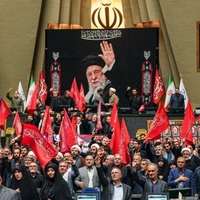
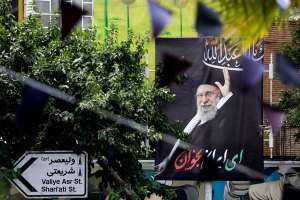
A banner depicting Iran’s supreme leader Ali Khamenei featuring a directive that later became widely shared online—urging a loyal vocalist to “Sing, O Iran”, Tehran, July 6, 2025.
As Tehran grapples with a mounting mix of economic strain and public disillusionment, talk of constitutional reform is resurfacing among political insiders who say they have not entirely abandoned the idea that change from within is still possible.
Underlying the renewed debate is the concentration of power in the office of the Supreme Leader. After nearly four decades in power, 86-year-old Ali Khamenei exercises final authority over foreign policy, the economy and security matters, leaving elected institutions with little real leverage.
Calls to amend the constitution—long a staple of reformist discourse—have returned as moderates search for an institutional way out of what they describe as systemic dysfunction.
The proposals focus on strengthening presidential authority, restoring accountability and fixing an election system that critics say has been hollowed out over two decades.
“Based on the current version of the Iranian Constitutional Law, two-thirds of government institutions in Iran are not answerable to anyone and cannot be held accountable for wrongdoing,” Heshmatollah Falahatpisheh, a former head of parliament’s national security committee, told moderate outlet Khabar Online on Thursday.
The remarks echoed similar comments a day earlier by former lawmaker Mansoor Haghighatpoor, who argued that the constitution itself allows for revision and that treating it as immutable has become a political choice rather than a legal necessity.
Long overdue
Reformist and moderate figures have made such arguments for years, most notably former presidents Mohammad Khatami (1997–2004) and Hassan Rouhani (2013–2021), both of whom sought to expand executive authority and curb unelected power centers.
Their efforts went nowhere. Any constitutional amendment requires Khamenei's approval—an obstacle widely seen as insurmountable.
Much of the current critique centers on the 1989 constitutional revision, which transferred sweeping powers from the presidency to the Supreme Leader.
Since then, Khamenei has also entrenched the Guardian Council’s role in vetting election candidates, an extra-constitutional practice that has steadily narrowed voter choice. Politicians have protested biased disqualifications in every election since 2005, without effect.
Rouhani went further during his presidency, floating the idea of a referendum on limited issues such as legislation needed for Iran to join international financial conventions. Khamenei publicly—and angrily—rejected the proposal.
‘Not God’s word’
Haghighatpoor has focused on what he describes as the constitution’s internal contradictions, citing requirements such as the stipulation that the intelligence minister be a senior cleric.
“The Constitutional Law was not drawn by God,” he said. “It was written by the first Assembly of Experts in 1979, and they explicitly allowed for amendments. If laws no longer fit modern needs, they should be changed. That is a strength, not a weakness.”
Falahatpisheh added that Iran’s system lacks even basic mechanisms found elsewhere, such as the ability of a government or parliament to resign after failure. “This absence of accountability is itself a structural flaw,” he said.
Wishful thinking?
Parliament has no supervisory role over the armed forces, state television, the intelligence ministry or vast financial bodies operating under the Supreme Leader’s office.
Haghighatpoor also pointed to the Executive Headquarters of Imam Khomeini’s Decree (EHIKD), an opaque entity created in 1989—weeks before the death of Iran’s first supreme leader—to confiscate assets linked to the toppled monarchy.
That “temporary” body is now one of Iran’s largest financial conglomerates, second only to the Mostazafan Foundation. It operates directly under Khamenei’s authority and remains beyond parliamentary oversight.
The EHIKD is just one example, Haghighatpoor said, of structural problems that could only be addressed through constitutional reform.
Any such reform, however, requires Khamenei’s consent. For now, even proponents of constitutional revision concede that the debate remains largely theoretical.
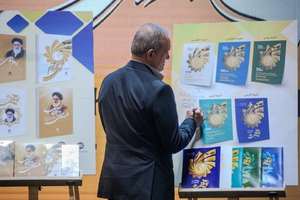
Iran's president Masoud Pezeshkian writes a memorial on the sidelines of an international event commemorating the founder of the Islamic Republic, Ruhollah Khomeini, December 18, 2025
Some of Iranian President Masoud Pezeshkian’s supporters are now openly warning that Iran is headed toward crisis that could threaten the political system itself, with a growing number arguing that the president should resign.
Aside from lifting censorship of WhatsApp and resisting enforcement of compulsory hijab laws, most of Pezeshkian’s campaign pledges remain unrealized.
Even on the sensitive issue of the hijab, his refusal to formally implement a hardline law has not halted pressure from radical factions, which have been pushing to regain the lost ground in recent weeks.
Disillusionment is no longer confined to critics outside Pezeshkian’s original support base. Some of his former backers are now openly questioning whether he can continue in office at all.
Prominent sociologist Taghi Azad-Armaki, speaking to the website Khabar Online, stated bluntly that he hopes Pezeshkian will remain a one-term president.
“Mr. Pezeshkian is in unity with the heads of the three branches of government, all are aligned with the Supreme Leader, and power has effectively been consolidated to govern the country. However, this alignment has not resulted in broader national, social or regional cohesion,” he said.
“It would actually be a positive development for the ruling establishment … to finally put an end to the elections altogether—to abolish elections, and for the Leader and the ruling establishment to choose a president themselves, that there is a coup so that people could be freed from the current situation,” Azad-Armaki said.
Pezeshkian has one backer who's power is beyond match, however: Supreme Leader Ali Khamenei. The 86-year old theocrat who has ultimate power over all Iranian decisions foreign and domestic has praised him repeatedly in recent speeches.
The office of the presidency has historically provided Khamenei a heat shield from criticism and allows the supreme leader to avoid messy arguments over governance even as officials are constrained by his policies.
Among the most influential voices sounding the alarm on Pezeshkian is Abbas Abdi, a prominent reformist commentator.
Referring to persistent attacks on the government, along with fragmentation and passivity within it, Abdi said in an interview with Eco Iran earlier this month that only if the deadlock is acknowledged and “a decision is made somewhere (above) to change course” could the crisis be overcome.
Without such a shift, he suggested, the next year could be deeply destabilizing for the system. He reiterated similar concerns on the online program Strategic Dialogue, warning that the continuation of a suspended posture toward Israel, combined with the absence of meaningful internal reforms, could trigger a renewed wave of domestic protests.
Abdi’s remarks prompted a sharp response from the Revolutionary Guards-linked newspaper Javan, which accused him of implicitly shifting blame for the government’s failure to implement reforms onto the “system” itself, meaning the Supreme Leader Ali Khamenei.
Undeterred, Abdi doubled down last week in an op-ed published in Etemad, defending his prediction that “events outside the will of the system” would occur if the current trajectory continued.
Calls for resignation
Public frustration has increasingly spilled onto social media, particularly after the recent sharp fall in the value of the rial. Hardliners accuse Pezeshkian of incompetence, while disillusioned supporters argue that if structural constraints prevent him from acting, he should step aside.
A user named Saeed wrote on X: “Either you have been allowed to work, in which case you must be accountable for these crushing price increases, or you have not been allowed to work, in which case you must have the courage to tell the people and resign!”
“It’s best to resign before public anger reaches its peak and the people’s patience runs out. We have had enough; we are at our breaking point,” another user, Shirkoohi, posted on X.
“You may not understand the meaning of poverty, misery, and livelihood, but surely by now you should have understood the meaning of the 1979 revolution and the sound of an approaching revolution,” he added.
“I wish all officials would resign collectively and make the Iranian people happy… An entirely corrupt and flawed system needs fundamental change, not the replacement of one individual,” another user posting as Ali Shomali wrote.
Two young men sit under a large picture of Iran's first supreme leader Ruhollah Khomeini (L) and his successor Ali Khamenei at a park in Tehran, Iran, January 17, 2016.
Faced with economic crisis, social defiance and regional strain, Iran’s supreme leader Ali Khamenei continues to invoke earlier moments of “glory,” treating defeat and mismanagement as moral triumphs rather than political failures.
This approach has been a defining feature of his 36-year rule: confronting challenges not by reassessing the past but by recasting it.
That pattern was again on display in a December 15 speech, in which Khamenei returned to the state narrative forged after the 1980s war with Iraq—known officially as the “Sacred Defense.”
The Iran–Iraq war, which ended in 1988 without a clear winner, inflicted enormous human and financial losses on both countries, leaving hundreds of thousands dead.
In its immediate aftermath, Iran’s theocratic rulers embedded their interpretation of the conflict into public space. Murals across the country depicted blood-stained bodies of “martyrs” alongside grieving children.
Khamenei delivered his latest speech in an event commemorating the martyrs of that war in Karaj, Iran’s fourth-largest city, just west of Tehran. He called for a “transfer of the values and motivations of the Sacred Defense era to the new generation through artistic effort and persistent follow-up.”
Rather than grappling with present-day realities, he looked backward, framing sacrifice and “martyrdom” as enduring virtues for a new generation.
No mistakes
In his speech, Khamenei acknowledged Iran’s dire condition but sought to project optimism.
“Despite all the hardships and difficulties, there exist numerous positive points and considerable readiness within the country to move toward Islam and the Revolution,” he said, adding that “these must be strengthened.”
Political analyst Jamshid Barzegar told Iran International TV that the remarks reflected a leadership unwilling to accept responsibility.
“Not only does Khamenei fail to alleviate the poverty and other problems he has imposed on the nation, he does not seem to have a plan to correct his mistakes,” Barzegar said.
He also questioned Khamenei’s assertion that society is moving “toward revolution and Islam,” noting that the supreme leader himself abandoned revolutionary and Islamic rhetoric after the 12-day war with Israel, shifting instead toward nationalist themes that emphasized Persian identity over religious ideology.
No course correction
Khamenei’s retreat into past narratives—coming shortly after the unveiling of a replica statue depicting a Roman emperor prostrating before a Persian king—has projected an image of uncertainty rather than authority.
That impression was reinforced by the handling of the Karaj speech itself. Its broadcast was delayed until the following day, apparently for security reasons, suggesting the establishment has not forgotten the shock—if not the humiliation—of the June assault and its personal aftermath for Khamenei.
The unusually brief version posted on his website also hinted at heavy editing, possibly to avoid missteps.
Economic analyst Mohammad Machinchian criticized Khamenei’s reference to “numerous positive points,” arguing that it bore little resemblance to everyday reality.
“Only in recent days nearly all Iranians suffered heavy financial losses due to unusual price hikes,” Machinchian said. “But Khamenei is captivated by the distant past and seeks to follow the same path that has led to the current impasse.”