Iran mocks US for ‘kneeling’ to its drones by deploying copies
A row of US LUCAS one-way attack drones are shown in an image released by CENTCOM on December 3, 2025.
Iran's military spokesman said on Tuesday that the United States had been forced to acknowledge Tehran's military prowess by reverse-engineering its Shahed kamikaze drone and deploying the copies to the Middle East.
"There is no greater honor than seeing self-proclaimed superpowers kneel before an Iranian drone and copy it,” Abolfazl Shekarchi said.
The senior spokesman for Iran's armed forces was referring to an announcement last week from the Pentagon that it would field a new fleet of one-way attack drones in the Middle East modeled on a captured Iranian Shahed.
Tehran’s reaction followed an announcement by US Central Command that it would deploy to the region the new drone squadron using LUCAS platforms—low-cost systems developed after US companies dismantled and reverse-engineered a damaged Shahed drone obtained years earlier.
CENTCOM said the drones can operate autonomously, launch from multiple platforms and are intended to beef up its supply of cheap lethal unmanned aerial vehicles which are widely viewed as the future of warfare.
Iran submitted the Shahed's design to Russia for use in its full-scale invasion of Ukraine, which under the name Geran-2 has been mass-produced to wreak havoc on cities and battlefields there.
File photo of Iranian Shahed drones.
US defense officials told CNN and other outlets that the drone deployment marks an effort to “flip the script” after years in which Iran and its armed allies used cheap drones to strike US positions, including the 2024 attack in Jordan blamed on Iraqi militias that killed three American soldiers.
Washington’s belated push into mass-manufactured, expendable drones comes as low-cost platforms increasingly dominate conflicts from Ukraine to the Red Sea.
US officials have not disclosed the number of LUCAS drones now in the region, saying only that “many” are already deployed and more are coming.
At roughly $35,000 apiece, they remain far more expensive than models produced in Iran, China or Russia, raising questions among analysts about whether the Pentagon can scale fast enough or cheaply enough to match its adversaries’ output.
'Thorn in the throat'
Iran's military spokesman said the US and Israel’s recent threats against Tehran were “delusional,” insisting that the brief war in June had shown how such threats collapse “in the real field of battle.”
Shekarchi said Iran’s forces—particularly the Revolutionary Guard's Aerospace Force—remain “a thorn in the throat of the hegemonic system.”
Defense analysts say the Shahed’s simple design and low unit cost compared with hundreds of thousands for Western equivalents have driven global efforts to produce cheaper unmanned systems.
Western governments have imposed multiple rounds of sanctions on Iranian drone manufacturers and procurement networks, accusing Tehran of supplying drones to Russia and regional armed groups.
Iran has denied direct involvement in combat operations abroad, saying its technology serves defensive purposes.
Russian service members, who were involved in the country's military campaign in Ukraine, march in columns during a military parade on Victory Day in Red Square in Moscow, Russia, May 9, 2024.
The Russian Embassy in Tehran has denied any connection to flyers circulating in the Iranian capital that invited men to enlist in the Russian army for large cash rewards.
In a statement on Tuesday, the embassy said “unscrupulous individuals” had been spreading fake letters online, offering Iranian men aged 18 to 45 contracts “to serve with the Armed Forces of the Russian Federation in the area of the special military operation.”
“The embassy officially declares that this letter and any similar document are forgeries of a criminal nature,” the statement said. “Neither the embassy nor any official Russian institution has any connection with them.”
The denial followed a report by the Tehran-based outlet Rouydad24, which said that leaflets distributed near the Russian Embassy in Tehran invited Iranian men to join the Russian army with promises of dollar payments and contracts “directly under the Ministry of Defense of the Russian Federation.”
The flyers, seen around College Square, targeted men aged 18 to 45 and offered starting bonuses of $15,000 to $18,000 and monthly salaries of $2,500 to $2,800, along with free housing, medical care, and military uniforms.
Rouydad24 said the leaflets directed readers to a Telegram channel that had published multilingual posts in Persian, Russian, Arabic, and English, describing the campaign as a “state-supported initiative.”
One video shared by the channel appeared to show a man in a Russian military uniform introducing himself in Persian as “Mohammadian Khatibi, from Iran.”
The Iranian report compared the flyers to similar alleged recruitment efforts in India, Nepal, Sri Lanka and several African countries, which foreign media have described as part of Moscow’s drive to attract foreign fighters amid heavy losses in Ukraine.
While the embassy has now categorically denied any such activity in Iran, Rouydad24 noted that the case underscores the vulnerability of economically distressed Iranians to online recruitment scams offering large foreign payouts.
Iran has resumed large-scale production of ballistic missiles about six months after its 12-day war with Israel, a senior IDF official told lawmakers in a closed Knesset briefing, according to Israeli news outlet Ynet.
The briefing, described by several participants, said Iran is rapidly restoring its missile manufacturing capacity after suffering heavy damage in June strikes.
The IDF official warned that Tehran’s missile program is “recovering at a fast pace” and remains a top strategic priority for Iran’s military planners.
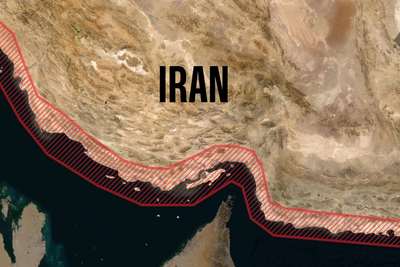
The warning came as Iran intensified missile and drone testing during large-scale military exercises in the Persian Gulf and the Oman Sea.
Last week, the commander of Iran’s Revolutionary Guard Navy said a new missile tested during the drills had a range beyond the length of the Persian Gulf, without specifying the exact distance. “The Persian Gulf is 1,375 kilometers long – this missile’s range is beyond that,” Rear Admiral Alireza Tangsiri said on state television.
Tangsiri said the weapon, built domestically by the IRGC Navy, “can be guided after launch” and demonstrated “very high precision.” State media said the exercises also involved ballistic and cruise missile fire, drone operations, and air defense maneuvers around the Strait of Hormuz and Iran’s southern islands.
Iran’s missiles have a declared range of up to 2,000 kilometers, which officials say is sufficient for deterrence and covers Israel. The United States and its allies have urged Tehran to limit missile development to under 500 kilometers — a demand Iran has repeatedly rejected.
Satellite image of the Fordow nuclear facility after the US strike
Iran’s foreign minister Abbas Araghchi says there is a risk of radiation release at nuclear facilities bombed during the 12-day war in June, contradicting earlier assurances from Tehran.
In an interview with Japan’s Kyodo News on Sunday, Araghchi said strikes on Iran’s nuclear facilities had created serious dangers, including possible radiation exposure and unexploded ordnance.
“We are now facing security threats and safety concerns,” he said.
Following the joint US-Israeli attacks, Iranian authorities refused to evacuate surrounding towns and repeatedly dismissed public fears.
In late June, deputy health minister Alireza Raeisi said enrichment “does not involve nuclear fission” and therefore cannot generate harmful radiation, adding that measurements around Natanz and Fordow showed the areas were completely safe.
The International Atomic Energy Agency (IAEA) likewise reported in June that it had detected no radiation increase around Natanz.
Conditional openness to new talks
Before the 12-day conflict, Tehran and Washington held five rounds of talks that broke down over Iran’s refusal to end domestic enrichment as demanded by US President Donald Trump.
Tehran, Araghchi said, could restart talks with Washington “as soon as they accept a logic of confidence-building” that trades sanctions relief for restrictions on Iran’s nuclear program.
He insisted any framework must recognize Iran’s “right to enrichment.”
Iran, Araghchi added, is prepared to accept supervisory mechanisms “beyond the NPT” and time-limited limits on enrichment levels and centrifuge types, recalling that Tehran had accepted the 3.67-percent cap for 15 years under the JCPOA.
Still, Araghchi told Kyodo News that Iran cannot currently allow the resumption of IAEA inspections halted after the war because no protocol or guideline exists for inspectors entering damaged facilities.
IAEA director general Rafael Grossi has said most of Iran’s enriched-uranium stockpile is being kept at sites in Isfahan, Fordow and Natanz where inspectors lack access, and warned in October that monitors had observed activity around storage locations.
US officials under President Trump have demanded zero enrichment, dismantling of proxy forces and limits on Iran’s missile program – terms Tehran calls unacceptable.
The US Navy amphibious assault ship USS Kearsarge and the Arleigh Burke-class guided-missile destroyer USS Bainbridge sail in the Arabian Sea May 17, 2019.
The US and Israeli naval forces on Sunday launched their annual joint wargames aimed at countering threats in the Middle East, the Israeli military said, two days after Iran’s naval forces held similar drills in the Persian Gulf.
The week-long drills, codenamed the Intrinsic Defender, are held between the Israeli Navy and the US Navy’s 5th Fleet, according to an Israel Defense Force (IDF) statement.
“The purpose of the exercise is to strengthen strategic and operational cooperation between the two navies and practice dealing with various regional threats,” the IDF added.
The wargames, which were also held in 2022 and 2023, came shortly after two-day naval drills by Iran's Revolutionary Guards in the Persian Gulf, Sea of Oman and Strait of Hormuz which started on Thursday.
Tehran said the exercise was a “display of active presence and a warning to foreign fleets, especially the American warships in the region."
On the first day of the drills, IRGC naval units issued a warning to foreign vessels to deliver their firm message against any potential violation, according to state media.
Iran also tested a new unnamed missile with a range exceeding the length of the Persian Gulf, the commander of the IRGC Navy said without specifying the exact distance.
On Monday, US President Donald Trump and Israeli Prime Minister Benjamin Netanyahu discussed regional issues including Iran, CNN reported, as Israeli defense officials warned that a renewed conflict was possible.
Israeli media cited Israeli Defense Ministry Director-General Amir Baram as saying that the country is developing more new technologies to prepare for the next potential war against Iran.
"Enemies are learning and adapting. We are at a pivotal point before a new paradigm takes place," the Jerusalem Post quoted Baram as saying at the International DefenseTech Summit in Tel Aviv on Monday.
“Iran’s rapid force buildup in air defense and ballistic missile capabilities,” driven by “its extremist ideology” means that “all fronts are still open” and the Israeli military must be ready for another conflict, Baram said according to the Jerusalem Post.
A large plume of smoke rises over a mountainous area after reported Israeli strikes on military sites in Iran in June.
Israel may strike Iran within the next year if it concludes Tehran is moving to restore high-level uranium enrichment, European diplomats told Al-Monitor on Saturday.
One Western diplomat said a new campaign would be “short and intense” but strategically limited. “Iran will evidently retaliate with a missile launch, perhaps hitting buildings the way it did last time,” the diplomat said, adding that the fundamental balance of power would remain unchanged.
Enrichment described as the main red line
The current post-war equilibrium is deeply unstable, Raz Zimmt of the Institute for National Security Studies told Al-Monitor. Israel, he added, has yet to define precise red lines on Iran’s ballistic missile program, but a return to enrichment, weaponization work or attempts to recover the roughly 408 kilograms of uranium enriched to 60 percent believed lost in the June attacks would almost certainly trigger a response.
“The more time passes without the United States and Iran reaching a nuclear agreement, the more likely a new round of conflict becomes,” Zimmt said.
Stalled diplomacy and Iranian pressure
Iran is rebuilding its air defenses, missile systems and protective measures around nuclear sites – a process Zimmt said could continue for up to a year without prompting an Israeli strike. But he warned Iran is effectively stuck in a “no war, no peace” posture, a phrase invoked by Supreme Leader Ali Khamenei, with sanctions eroding the economy while enrichment remains constrained.
Khamenei’s recent remark that the US is “not worthy” of engagement has further complicated prospects for diplomacy. Israeli officials argue any future US-Iran deal must cap enrichment at 3.67 percent, restore intrusive inspections and resolve the fate of the missing enriched uranium. Without those terms, some say, sanctions relief would be unjustified.
Zimmt noted Washington shows little urgency. Trump, he said, appears convinced the 2025 strikes destroyed Iran’s program – a view that reduces US pressure and leaves Israel preparing for what it sees as an increasingly likely confrontation.