• Iran Insight
  • Politics
  • Economy
  • Analysis
  • Special Report
  • Opinion
  • Podcast
All rights reserved for Volant Media UK Limited
volant media logo
  • العربية
  • فارسی
Brand
  • Iran Insight
  • Politics
  • Economy
  • Analysis
  • Special Report
  • Opinion
  • Podcast
  • Iran Insight
  • Politics
  • Economy
  • Analysis
  • Special Report
  • Opinion
  • Podcast
  • Theme
  • Language
    • العربية
    • فارسی
INSIGHT

Tehran warns of crackdown ahead of annual fire festival

Maryam Sinaiee
Maryam Sinaiee

Iran International

Mar 17, 2026, 15:50 GMT
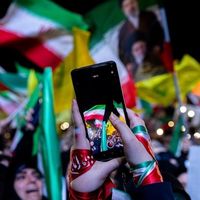
Traditional celebration of bonfire night (Charshanbeh Suri) in Iran

Authorities in Tehran have issued sweeping warnings ahead of Iran’s annual fire festival, Chaharshanbeh Suri, framing the centuries-old celebration as a potential flashpoint for unrest during wartime.

The festival has long been a source of friction between the public and the state, but this year officials appear particularly concerned amid U.S.-Israeli strikes and fresh calls for mass participation, including appeals this week from exiled Prince Reza Pahlavi.

Judicial and security bodies have sent text messages directly to citizens. One such message, reportedly from a provincial justice department, warned that any “noise, commotion or unconventional behaviour” that disrupts public order could result in punishments including imprisonment and flogging.

On Tuesday, chief justice Gholam-Hossein Mohseni-Ejei warned dissenters and repeated orders to confiscate the assets of those deemed “collaborators with the enemy,” again raising the possibility of capital punishment.

“We warn all elements who intend to threaten public security that if they act, they will face firm legal action, and there will be no leniency,” he said.

The Revolutionary Guards (IRGC) spokesman, Brigadier General Ali-Mohammad Naeini, used even sharper language, describing the day as a “Charshanbeh of burning enemies.”

He vowed that attacks on Israel and U.S. bases in the region would intensify while “symbols of monarchists, separatist terrorists and mercenaries inside the country” would be set ablaze.

Ahmad-Reza Radan, Iran’s police commander, appeared Monday at a pro-establishment gathering in Tehran and urged supporters “not to leave the arena” to the opposition, calling the night “a decisive night” for the state.

Marked by bonfires, fireworks and rituals rooted in pre-Islamic traditions, Charshanbeh Suri has frequently drawn official scrutiny since the 1979 revolution, with clerical leaders often dismissing it as incompatible with religious norms.

Despite repeated enforcement efforts involving police, paramilitary Basij forces and vigilante groups, the celebration has persisted.

Restrictions have also altered how the festival is observed: traditional practices such as jumping over small fires and spoon-banging at doors have, over time, given way in many areas to the use of homemade explosives, often resulting in injuries and property damage.

In recent years — especially following the 2022–23 “Woman, Life, Freedom” protests — the festival has taken on a more overtly political dimension, with young people chanting slogans and at times confronting security forces with firecrackers and improvised devices.

The wave of warnings followed messages by Iran’s exiled Prince Reza Pahlavi in recent days addressed to Iranians and the “international community and friends of Iran.”

He urged citizens to celebrate Charshanbeh Suri in “alleys and neighborhoods across the country” and called on global observers to keep their eyes on Iran and “not to allow the regime to use violence against the people determined to celebrate life, light and hope in the face of darkness.”

In a separate message, he directly urged Donald Trump and Benjamin Netanyahu to closely monitor developments on the night of the festival.

In a further video message posted Tuesday, he urged Iranians to avoid confrontation with government forces while warning security personnel to leave people in peace.

“These malevolent agents intend to drag your festival of light, purity and life into darkness, filth and death. Do not give them this opportunity,” he said.

Online reactions suggest the calls for participation are resonating with some younger Iranians, who frame the festival as both a national tradition and a symbol of resistance.

One user wrote that holding Charshanbeh Suri this year would mean “turning a national ritual into a symbol of standing against the regime and honoring those who gave their lives for the homeland.”

Another post declared: “Tomorrow night we will witness the largest Charshanbeh Suri in Iran’s history. I dare you to touch even a hair on the heads of our compatriots.”

Most Viewed

Larijani rebukes UAE, other Islamic states for not backing Iran during war
1

Larijani rebukes UAE, other Islamic states for not backing Iran during war

2

Iran does not seek ceasefire but war must end, FM says

3

UN report says Iran crushed protests with force, arrests and digital curbs

4

Arab states urge US not to stop short in war on Iran

5
ANALYSIS

Iran shields its oil exports as Hormuz flows falter

Banner
Banner

Spotlight

  • Tehran warns of crackdown ahead of annual fire festival
    INSIGHT

    Tehran warns of crackdown ahead of annual fire festival

  • Son of FBI agent missing in Iran says US strikes are step toward justice

    Son of FBI agent missing in Iran says US strikes are step toward justice

  • Tehran press turn to survival as war upends Iranian New Year
    INSIGHT

    Tehran press turn to survival as war upends Iranian New Year

  • Grief crossed the border: How Iranians abroad lived the January massacre
    INSIGHT

    Grief crossed the border: How Iranians abroad lived the January massacre

  • Iran shields its oil exports as Hormuz flows falter
    ANALYSIS

    Iran shields its oil exports as Hormuz flows falter

  • Iran’s security agents gang rape two nurses detained for aiding protesters
    EXCLUSIVE

    Iran’s security agents gang rape two nurses detained for aiding protesters

•
•
•

More Stories

Iran braces for fire festival under shadow of war

Mar 17, 2026, 10:32 GMT
•
Arash Sohrabi

As dusk falls across Iran on Tuesday, bonfires, fireworks and street gatherings are expected to mark Chaharshanbeh Suri, an ancient fire festival that has also become a public act of defiance, this year unfolding under war, heavy security and fears of bloodshed.

Iranian authorities have issued stark warnings ahead of Chaharshanbeh Suri as officials point to what they describe as wartime conditions and the risk of unrest.

Police commander Ahmadreza Radan said this year’s celebrations come under “different circumstances,” adding that the country is effectively in a state of war and that emergency and medical services are on high alert.

He warned that adversaries could exploit the night’s gatherings, saying there is a possibility that “agents” could blend into crowds celebrating the festival and trigger incidents or casualties to inflame the situation.

In a separate notice, the Intelligence Ministry urged citizens to remain vigilant, claiming that “a small number of Israeli soldiers” may attempt sabotage during the festivities and calling on people to report suspicious activity.

The messaging has been reinforced by a broader security buildup. Reports indicate increased coordination among police, intelligence, and judicial bodies, alongside threats of decisive action against what officials describe as dangerous behavior.

In some areas, people have been encouraged to hold events in mosques and controlled spaces rather than in the streets.

An Iranian man lights a firework during the Wednesday Fire celebration (Chaharshanbeh Suri in Persian) at a park in Tehran, Iran. (2024)

Contest over public space, culture and control

Yet Chaharshanbeh Suri has rarely stayed contained.

Celebrated on the eve of the last Wednesday before Nowruz, the festival – marked by bonfires, fireworks, and the ritual of jumping over flames – predates Islam and has endured for centuries. In recent years, it has taken on an added meaning, evolving into one of the few nights when large numbers of people gather spontaneously in public spaces.

That scale has made it difficult to control. It has also turned the festival into a recurring flashpoint.

Last year, crowds across multiple cities poured into the streets despite heavy security presence. Clashes broke out in several areas, leaving at least 19 dead and thousands injured. Videos showed bonfires lighting up neighborhoods as music, chanting, and fireworks filled the air.

In earlier years, the night has gone further, with young people using firecrackers and homemade devices to confront security forces, chanting slogans, and in some cases burning symbols of power.

The pattern has become familiar: warnings ahead of the night, followed by mass turnout, and then confrontation.

This year, however, the backdrop is markedly different.

Iran is in the midst of an escalating conflict, with the United States and Israel striking targets linked to military and security structures. A strike announced on Tuesday killed the IRGC Basij commander Gholamreza Soleimani, a key figure in crowd control and repression.

Against that backdrop, officials have framed the festival not only as a safety concern but as a potential security threat.

As night falls, celebration may again tip into bloodshed

At the same time, voices outside the political establishment have encouraged people to mark the occasion.

Exiled Prince Reza Pahlavi, in an interview with Iran International earlier this week, said the festival carries a deeper meaning beyond tradition.

“When we celebrate Chaharshanbeh Suri today, it is not only to preserve our culture,” he said. “It is a powerful message to those who have always tried to erase our identity… an opportunity to show that we exist – to ourselves and to the world.”

He also pointed to a broader generational shift, saying: “Today everyone has reached the conclusion that a secular system is needed… a system built on ideology has, from the beginning, imposed discrimination on society.”

At the same time, he framed the preservation of cultural traditions as central to Iran’s resilience, adding that the country has endured “because of the courage of its people and the preservation of Iranian culture.”

His call to mark the night has been echoed among parts of the diaspora, including appeals for gatherings outside Iranian embassies, while inside the country officials have warned that participation could carry consequences.

The tension between these two narratives – celebration and control – is not new.

As analyst Morad Vaisi has noted, the confrontation over festivals like Nowruz and Chaharshanbeh Suri reflects a deeper struggle.

These traditions, he wrote, have endured not because of official backing, but because of people’s resistance to cultural pressure, becoming a symbol of identity and continuity beyond political systems.

Each year that people gather despite restrictions, the act itself sends a message that Iran’s cultural life extends beyond those in power.

That dynamic is expected to be on full display again tonight.

But this year, the familiar sounds of celebration will unfold alongside something heavier: a country under bombardment, a heightened security presence, and warnings that frame even small gatherings as a potential threat.

In past years, Chaharshanbeh Suri has often blurred the line between festivity and confrontation.

As darkness falls, that line may once again be tested – raising expectations of large turnouts, and concern that the night could end, as it has before, with violence and more lives lost.

Tehran press turn to survival as war upends Iranian New Year

Mar 17, 2026, 04:23 GMT
•
Behrouz Turani

In a normal year, Iranian newspapers would now be filled with stories celebrating Nowruz, the Persian New Year beginning March 20. But with war raging across Iran, front pages are instead dominated by headlines about security and survival.

After two weeks of upheaval — including the death of a supreme leader, the appointment of a successor and a war that has touched much of the country — Tehran’s newspapers are increasingly focused on the daily struggle of Iranians trying to make ends meet under fire.

Across the press, economic anxiety is now front and center.

The economic daily Donya-ye Eghtesad warned of a “red alert for the economic situation,” while Jomhouri Eslami struck a more pragmatic tone with the headline: “The need to be honest with the people in an emergency situation,” urging officials to “separate people’s livelihoods from politics.”

Coverage of the Strait of Hormuz also featured prominently on Monday’s front pages. The hardline Kayhan, whose editor is appointed by the Office of the Supreme Leader, vowed that “Iran’s response will make the enemies regret their actions in this war of wills.”

Ettela’at, another newspaper linked to that office, called on the government to “prevent looming famine and scarcity of goods,” taking a markedly different line from Kayhan’s “jihad economy” — a concept long promoted by the late leader Ali Khamenei.

It even suggested rationing essential goods during the Nowruz holidays, which typically last up to two weeks.

Economists quoted in several papers attributed part of the market turmoil to conflicting political signals and the Central Bank’s efforts to stabilize prices in the final days of the year.

Two key articles published Sunday, in Ettela’at and Jomhouri Eslami, captured the broader mood.

Ettela’at argued for “the priority of bread and ethics over political disputes,” criticizing political factions for turning people’s livelihoods into a battleground even during wartime. It urged officials and media to end factional infighting and focus on stabilizing prices to prevent further erosion of social trust.

Jomhouri Eslami, for its part, advised officials to remove advisers who mislead them and distract from the public’s real problems.

Three broad camps emerged in the press over the weekend.

Hardline outlets like Kayhan blamed the crisis on the war and called for resistance. Reformist papers including Etemad and Sharq described a deadlock and urged major change, including national reconciliation.

More centrist titles such as Ettela’at and Jomhouri Eslami framed the moment as a test of governance, calling for transparency, responsiveness and effective market control.

Despite their differences, nearly all newspapers agree on one point: the coming Iranian year, beginning March 20, is likely to be decisive for the country’s economy, its leadership and its social stability.

Iran’s internet chokes under wartime clampdown

Mar 17, 2026, 02:11 GMT
•
Maryam Sinaiee

Iran has imposed new restrictions on internet access, further limiting VPN connections and reportedly targeting Starlink users, leaving even fewer people able to access global networks.

Seventeen days after the outbreak of war, connectivity in the country has fallen to about one percent of normal levels, leaving most people unable to reach the global internet.

Some users initially managed limited access using specialized VPN configurations, but many say those options have largely stopped working since Sunday.

Asked in a CBS interview why he was able to conduct a Zoom call while ordinary citizens could not access the internet, Foreign Minister Abbas Araghchi said he had access because he is “the voice of Iranians” and must defend their rights.

The comment drew criticism from Iranians still able to briefly connect.

“People of Iran are not voiceless themselves, and this man is not their voice,” one user wrote. “Open the internet so you can hear the real voice of the people from inside the country.”

‘No picture, no voice’

Even among the few who can still connect, the internet is barely usable. Users say images and videos on social media often fail to load, and in many cases, core features of platforms have stopped functioning.

“Direct messages practically don’t open, and mentions disappear quickly if I try to answer them,” one user said. “Videos and voice messages are basically inaccessible because they consume too much data.”

Another described the experience in stark terms: “The internet feels more like a dying breath than a means of communication these days,” adding that data-limited connections have become extremely slow and prices have sharply increased.

The internet monitoring group NetBlocks said Monday that disruptions to telecommunications infrastructure were further reducing VPN availability and sending some whitelisted users and services offline, it said.

The restrictions appear to be affecting domestic networks as well. Some users say even Iranian websites are difficult to access, while customers of certain banks have temporarily lost access to their accounts.

Reports of disruptions have also surfaced in mobile banking apps, payment cards and Iranian messaging platforms such as Bale, suggesting that parts of Iran’s internal network are also experiencing instability.

Experts say the cause of the broader disruptions remains unclear.

Starlink crackdown

At the same time, warnings have spread widely online urging owners of Starlink satellite internet devices to turn them off.

According to posts circulating on social media, Iranian security forces may be actively searching for Starlink kits and detaining users, with some claims of arrests in cities including Tehran and Kermanshah.

The warnings say patrol vehicles equipped with signal scanners are being used to detect radio emissions from Starlink equipment and pinpoint their location.

A Starlink user told Iran International he has taken multiple precautions to avoid detection but said the risk remains constant.

“I’m afraid all the time that a neighbor might report it,” he said. “They might accuse Starlink users of espionage and sentence them to heavy punishment as a warning to others.”

He added that the restrictions have forced ordinary users to learn complex technical workarounds simply to stay connected.

Not everyone believes the warnings about Starlink detection are accurate.

Some users say the reports may be part of a psychological campaign to frighten people into turning off their devices, noting that locating satellite terminals at scale would require capabilities authorities may not widely possess.

But amid the uncertainty, many say they are preparing for the possibility that their last remaining connection to the outside world could disappear entirely.

Grief crossed the border: How Iranians abroad lived the January massacre

Mar 16, 2026, 14:55 GMT
•
Arash Sohrabi

The killings of protesters in January did not end when the shooting stopped. For many Iranians living thousands of kilometers from the streets where the bullets fell, the event did not remain on their screens.

It entered their bodies – in sleepless nights, stomach illness, obsessive counting of the dead, and a persistent sense that something in their relationship to Iran had been permanently altered.

Now, two months later, as the United States and Israel wage war against the Islamic Republic and another far stricter internet blackout grips the country, that earlier rupture is returning with renewed force.

Images of death, the disappearance of communication, and the uncertainty surrounding Iran’s future have reopened a wound many in the diaspora say never fully closed.

A new qualitative study by researcher Nazanin Shahbazi, a PhD student at the University of Manchester, helps explain why.

Based on eight in-depth interviews with politically engaged members of the Iranian diaspora conducted shortly after the January killings and end of internet shutdown, the research explores how people far from the violence nevertheless experienced the uprising and massacre as a personal rupture – one that reshaped their bodies, their sense of time, and even what it meant to say “I am Iranian.”

“The protests, the killings, the internet blackout and the blocked funerals were not separate chapters,” Shahbazi told Iran International. “For the people I spoke with they formed one continuous shock that reorganized their lives.”

Human rights organizations have documented the repression in detail – the shootings, the arrests, the intimidation of families and the pressure placed on relatives of the dead. What those reports cannot capture is how such violence lives on in those who witness it from afar.

“They can tell us what was done to people and roughly how many were killed,” Shahbazi said. “But they can’t show what it feels like to live with that in your body, your sleep, your relationships and your sense of future.”

  • Iranians catalog tragedies blamed on the regime to counter antiwar narrative

    Iranians catalog tragedies blamed on the regime to counter antiwar narrative

  • Iran’s security agents gang rape two nurses detained for aiding protesters

    Iran’s security agents gang rape two nurses detained for aiding protesters

Body keeps the score

One of the most striking patterns in the interviews is how often the experience of the massacre appeared in the body.

Participants described vomiting after seeing images of burned bodies, sudden weight gain, eczema, IBS flare-ups, breathlessness, grinding teeth and persistent insomnia. Some lost their appetite entirely. Others said their ordinary routines collapsed into constant monitoring of news from Iran.

“When words ran out, people kept returning to their bodies,” Shahbazi said. “Sudden vomiting, weight gained in twenty days, neck spasms or grinding teeth were how they registered what they could not yet fully think or articulate.”

The body, in this sense, became both witness and container.

Political violence was not simply something they analyzed or debated. It was something that settled into digestion, sleep, muscles and skin.

Shahbazi believes those reactions reveal dimensions of suffering that familiar categories like trauma or PTSD sometimes fail to capture.

“Diagnostic labels can flatten experience into symptom lists,” she said. “What people described were very concrete bodily dramas tied to images and events in Iran.”

  • Dancing for the dead: How protest massacre is rewriting Iran’s mourning rituals

    Dancing for the dead: How protest massacre is rewriting Iran’s mourning rituals

  • Pay for bullets: How Iran pressures families after killing protesters

    Pay for bullets: How Iran pressures families after killing protesters

Safe but summoned

Another recurring theme was the strange moral position created by exile.

The interviewees were physically safe – living in UK, Europe, North America or elsewhere outside Iran – yet many said they did not experience themselves as distant observers.

“I would describe their condition as safe but summoned,” Shahbazi said. “They lived outside the field of bullets but inside a field of responsibility.”

Again and again participants returned to a painful question: why am I here while others were killed?

Exile did not reduce the emotional weight of the uprising. In many cases it intensified it.

“Safety, mobility and an intact body were experienced not simply as privileges,” Shahbazi said. “They were felt as a kind of unpaid debt to those who stayed and faced lethal risk.”

That sense of symbolic debt helps explain why many interviewees described weeks in which work, sleep and daily routines collapsed into constant monitoring of events in Iran.

Some called friends inside the country repeatedly. Others spent hours tracking death tolls or watching newly emerging videos.

They were not simply following the news. They were trying to answer a moral demand they felt placed upon them.

  • Over 36,500 killed in Iran's deadliest massacre, documents reveal

    Over 36,500 killed in Iran's deadliest massacre, documents reveal

  • 36,500 deaths in context: How Iran’s toll compares with wars and crackdowns

    36,500 deaths in context: How Iran’s toll compares with wars and crackdowns

Language at its limit

The scale of the violence also strained language itself. Participants repeatedly reached for extreme words – “catastrophe,” “slaughter,” or “something like a Holocaust” – because ordinary vocabulary seemed incapable of holding what they had seen.

“Everyday language felt too small,” Shahbazi said. “So people borrowed the biggest words they could find.”

Even those words felt insufficient.

Many interviewees hesitated as they spoke, qualifying their descriptions with phrases like “something like” or “nothing else really covers it.”

Numbers became another way of trying to grasp the event.

Several participants described compulsively tracking death tolls or attempting rough calculations of how many people might have been killed.

“Counting was a way of making the killings halfway thinkable,” Shahbazi said.

A different Iranian-ness

Despite the suffering described in the interviews, the research also uncovered something unexpected. Several participants said the uprising had changed how they understood their own identity.

For years, many had associated being Iranian internationally with embarrassment tied to the Islamic Republic’s image abroad. After the protests, that feeling began to shift.

Shahbazi said several participants described a “partial lifting of shame” when saying they were Iranian.

“In its place they spoke about pride in the courage and sacrifices of protesters,” she said.

Some described renewed attachment to Iranian culture, language and land. Others spoke about admiration for the mothers who stood at the forefront of demonstrations.

Shahbazi believes this shift may have political consequences as well.

“It recenters being Iranian around equality, justice and shared humanity,” she said, “rather than around the state’s ideology.”

That transformation remains fragile.

The war now unfolding and the renewed blackout mean that images of violence are again entering Iranian homes and diaspora communities alike.

But if the interviews reveal anything, it is that the event did not remain confined to the streets where it began.

As Shahbazi put it: “For many Iranians in the diaspora, the massacre did not stay on their screens; it cut into their bodies, their sense of time, and even the way they dare to say, ‘I am Iranian.’”

Military adviser appointment by Khamenei Jr draws online mockery

Mar 16, 2026, 13:37 GMT
•
Hooman Abedi

The appointment of a military adviser by Iran’s new Supreme Leader triggered a wave of ridicule on Iranian social media, with users mocking both the decision and the figure chosen for the role.

Users on X and Instagram circulated the announcement with laughing emojis and sarcastic commentary, questioning the move and turning it into a fresh round of online satire.

“I first thought this was a joke, but the news is real,” one user wrote shortly after the reports appeared online.

The adviser named in the decree was former Revolutionary Guards commander Mohsen Rezaei, a longtime political figure who has repeatedly run for Iran’s presidency but never succeeded.

Another post mocked the circumstances of the appointment: “This is good news. Apparently, no one else is left alive, so Mohsen Rezaei has been appointed military adviser.”

Mohsen Rezaei holds a banknote during a televised debate in Iran.

Some users played with the language of the announcement itself, replacing official terms with parody.

“Mohsen Rezaei has been appointed military adviser to the command of recycled and non-recycled cardboard,” one comment read, using a pun aimed at Mojtaba Khamenei, the son of Supreme Leader Ali Khamenei, whom critics refer to sarcastically as a “cardboard leader.”

The nickname reflects jokes online that he has rarely been seen publicly since assuming power, with supporters sometimes carrying cardboard cutouts of him at gatherings.

  • Power vs piety: Khamenei Jr inherits legitimacy dilemma of Iran's theocracy

    Power vs piety: Khamenei Jr inherits legitimacy dilemma of Iran's theocracy

  • Satire spreads online as Iranians await new leader unveiling

    Satire spreads online as Iranians await new leader unveiling

Others suggested the appointment reflected heavy losses within the security establishment.

“The fact that Mohsen Rezaei got a position means every Guards commander must have been wiped out and they had to bring him back,” another user wrote.

Several comments also mocked Rezaei personally.

“You’re making fun of him, but the only reason Mohsen Rezaei is still alive is that belt buckle,” one user wrote, referring to a widely shared meme about the former commander.

“For drones, the angle of the belt buckle makes them think he’s coming when he’s actually going,” the user joked.

Reaction to remarks at funeral ceremony

The ridicule intensified after a video circulated of Rezaei speaking at the funeral of former senior adviser and Defense Council Secretary Ali Shamkhani.

In the remarks, Rezaei said Iran was already winning in multiple arenas.

“Even now we are in victory. Politically, defensively and economically we are victorious at this very point,” Rezaei said in the speech.

He argued that the United States had weakened itself through confrontation with Iran.

“America attacked Iran and made itself smaller while making us bigger,” he said, adding that Iran would emerge from the conflict with greater influence in the region.

Online reactions to the remarks were swift, with many users reposting clips of the speech alongside sarcastic captions or parody edits.

One post read: “Someone admit this man to a psychiatric hospital.”

Longstanding subject of online satire

Rezaei has repeatedly run for president over the past two decades.

He entered the presidential race in 2005, 2009, 2013 and 2021 but failed to win in any of the contests.

In recent years, his repeated candidacies and public statements have turned him into a recurring subject of humor among Iranian internet users.

A recurring joke on Persian social media is that whenever an election is held anywhere in the world, users comment that “Mohsen Rezaei Mir-Ghaed is also a candidate,” a meme referencing his repeated appearances on Iranian presidential ballots.

Mohsen Rezaei shows his identification after registering to run in Iran’s presidential election.

Some of his television appearances and campaign debates also generated viral moments online, particularly when he outlined ambitious economic plans or discussed new “unknown military tactics.”

For many users, the latest appointment simply revived a familiar online pattern. As one post put it: “Looks like Mohsen Rezaei is finally getting closer to his dreams.”