Iranian women shop at the Tajrish Bazaar, ahead of Nowruz, the Iranian New Year, in Tehran, Iran March 15, 2023.
Nowruz is approaching with far less of its usual energy across Iran this year, as many families abandon long-standing New Year preparations while war, economic strain and an atmosphere of uncertainty dampen the festive mood.
Several Iranians told Iran International that familiar rituals that normally fill homes with activity in the weeks before the holiday have stalled.
“This year we did nothing,” Leila, a 38-year-old resident of Tehran, told Iran International. “We didn’t wash carpets and we didn’t do the house cleaning. Every year I would start from early February, but this year we are just looking at the sky, waiting for the fall of this regime.”
Nowruz, the Persian New Year marking the arrival of spring, has been celebrated for more than 3,000 years across Iran and parts of Central Asia and the Middle East.
The holiday usually falls on March 20 or 21 and begins nearly two weeks of family visits, meals and gatherings.
An Iranian person washes a carpet during traditional spring cleaning, known as khaneh-Tekani, ahead of the Nowruz new year celebrations.
‘Shaking the house’
In most years, the weeks before Nowruz transform daily life across Iran. Families traditionally begin with Khaneh Tekaani, a deep spring cleaning whose name literally means “shaking the house.” Carpets are washed, cupboards reorganized and homes refreshed to symbolically welcome the new year.
Another essential ritual is planting Sabzeh — dishes of sprouting wheat, lentils or barley that represent renewal and rebirth and are later placed on the Haft-Seen table, the centerpiece of the celebration alongside candles, colored eggs, a mirror and often a red goldfish.
But this year, some residents say even modest traditions feel out of reach.
“Planting Sabzeh is something we Iranians do every year, but this year with all the news about war we completely forgot about it. God damn the Islamic Republic for ruining everything,” Kamran, a 42-year-old office worker in Hamedan, told Iran International.
An Iranian man installs curtains at home as part of preparations ahead of the Nowruz new year celebrations.
‘No money, no mood’
Markets that normally bustle in the run-up to Nowruz — with families buying sweets for visiting relatives, decorative items for Haft-Seen tables and new clothes for children — have also been quieter this year, residents say.
Some cite the worsening economic situation as a key reason holiday traditions have faded.
“Every year despite inflation we bought at least a few things,” said Golnaz, a 35-year-old shop owner in Karaj. “But this year we had neither the money nor the mood. We are waiting for that final moment.”
Golnaz described how rising prices have weighed heavily on households and small businesses.
“Even if we wanted to prepare and had the energy, prices are so high we simply cannot afford it. Everything has become several times more expensive. I run a small cosmetics shop and this month I have not even earned the rent for the store,” she said.
Her husband, who drives for a ride-hailing service, is working less frequently amid fears of bombings and falling demand as more people stay home.
People look at goldfish displayed for sale at a street market ahead of Nowruz celebrations in Tehran.
‘No ordinary time’
On social media, many Iranians say the emotional tone of the season has shifted sharply compared with previous years.
“If things were normal, I should be excited for next week and finishing my preparations. The scent of night-blooming flowers would be filling the house and the holiday sweets would already be in the refrigerator,” one user wrote.
Another reflected on the contrast with childhood memories: “What burns me is that it is the New Year season. People should now have the mood of buying for the holiday and welcoming the new year in Iran. I remember how excited I was as a child. But those feelings slowly died inside me.”
For generations, the approach of Nowruz has filled Iranian homes with cleaning, cooking and preparations symbolizing renewal. This year, residents say those rituals — once a nationwide signal of spring’s arrival — have been overshadowed by war, rising prices and uncertainty about what the new year will bring.
A traditional Haft-Seen table is arranged at a home ahead of Nowruz, the Persian New Year.
Photo of slain secretary of Iran's Supreme National Security Council Ali Larijani along with his son Morteza and his chief bodyguard General Vahid Fateminejad, all killed in the airstrike early Tuesday.
The Israeli killing of Ali Larijani marks another blow to the Islamic Republic’s capacity for coordination, weakening an already fragmented system and raising the risk of miscalculation under pressure.
Iran confirmed on Tuesday that Larijani—Secretary of the Supreme National Security Council and one of the regime’s central security coordinators— was killed in a morning strike on Tehran.
The strike inevitably recalls the killing of Qassem Soleimani in 2020: another precise removal of a figure who linked diplomacy, intelligence and military power.
Soleimani’s death did more than eliminate a commander. It weakened the regime’s ability to calibrate risk. Radical in purpose, cautious in execution, he pushed proxies forward without inviting existential retaliation.
His absence left a gap no successor fully filled. Coordination frayed, misjudgments mounted and responses grew less predictable. The network endured, but its timing became erratic and its restraint thinner.
Larijani’s role must be understood against that backdrop.
According to a source cited by Christiane Amanpour, Larijani had, as recently as September 2025, been viewed in some Western and Israeli assessments as a potentially acceptable transitional figure before becoming a target by early February 2026.
The account attributes the shift to his role in pressing for domestic crackdowns, adopting a more confrontational posture toward the United States and Israel and assuming a central role in shaping IRGC military operations.
The claims remain unverified but highlight how Larijani straddled internal consolidation and external escalation at a moment of acute pressure.
His career began during the Iran-Iraq War, where he rose within the Islamic Revolutionary Guard Corps to brigadier general, later serving as Speaker of Parliament (2008–2020), where he advanced a hard-line agenda aligned with the consolidation of power in the Office of the Supreme Leader.
In the years that followed, he moved from battlefield to bureaucracy, helping consolidate the regime’s coercive and ideological infrastructure.
As head of Islamic Republic of Iran Broadcasting (1994–2004), Larijani oversaw more than a media organization. The state broadcaster worked closely with the intelligence services and the IRGC, shaping narratives that reinforced loyalty and narrowed the space for dissent.
The 1996 Hoviyyat (Identity) series publicly branded intellectuals and professionals as traitors, airing coerced confessions and drawing sharp limits around permissible thought. At the same time, official memory of the Iran-Iraq War was recast into doctrine: martyrdom elevated, endurance framed as victory.
Over time, this messaging helped consolidate a narrower but more disciplined base embedded across Basij and IRGC networks. Its purpose was not persuasion but enforcement: to secure the regime against a broader, often unwilling society.
That framework endured. It underpinned repression during the 2009 Green Movement, resurfaced during the Woman, Life, Freedom protests in 2022 and shaped the violence of January 2026.
Beyond Iran, the same logic informed Hezbollah’s campaign in Syria, Hamas operations culminating in October 7 and the IRGC’s maritime doctrine of asymmetric pressure.
Despite tensions within the political elite, Larijani remained firmly inside the core leadership. Loyal and disciplined, he embodied continuity across institutions.
Following the death of Supreme Leader Ali Khamenei in the February 28 strike that opened the current phase of war, Larijani’s experience and connections positioned him as a potential stabilizing figure.
His 2025 reappointment as Iran’s security chief reinforced that role. From there he coordinated nuclear policy, crisis management and relations among the regime’s core institutions.
Larijani’s removal would introduce immediate disruption: friction in command and pressure for retaliation. The deeper consequence may be fragmentation.
The Islamic Republic now operates less as a unified state than as a dispersed system under sustained pressure from Israel and the United States. Authority increasingly runs through provincial clerical networks, IRGC commanders and Basij structures. Resources are mobilized locally, repression enforced locally and survival managed locally.
Larijani belonged to the shrinking circle still capable of linking these fragments to a central command. His loss risks accelerating the incoherence the system is already struggling to contain.
Soleimani’s precedent is instructive: decapitation weakens coordination and invites miscalculation, even as the structure endures.
Missile infrastructure remains dispersed across hardened and subterranean sites. Fast naval craft and unmanned vessels continue to threaten shipping in the Strait of Hormuz. Proxy militias operate through channels designed to outlast leadership losses.
What appears as resilience may instead reflect dispersal without coordination — a system that survives but no longer acts as one.
Larijani’s killing tests not only the state’s durability but its capacity to function as a coherent force under sustained pressure. The war may not bring immediate collapse. But without figures such as Soleimani and Larijani, adaptation may hasten, rather than forestall, its demise.
Traditional celebration of bonfire night (Charshanbeh Suri) in Iran
Authorities in Tehran have issued sweeping warnings ahead of Iran’s annual fire festival, Chaharshanbeh Suri, framing the centuries-old celebration as a potential flashpoint for unrest during wartime.
The festival has long been a source of friction between the public and the state, but this year officials appear particularly concerned amid U.S.-Israeli strikes and fresh calls for mass participation, including appeals this week from exiled Prince Reza Pahlavi.
Judicial and security bodies have sent text messages directly to citizens. One such message, reportedly from a provincial justice department, warned that any “noise, commotion or unconventional behaviour” that disrupts public order could result in punishments including imprisonment and flogging.
On Tuesday, chief justice Gholam-Hossein Mohseni-Ejei warned dissenters and repeated orders to confiscate the assets of those deemed “collaborators with the enemy,” again raising the possibility of capital punishment.
“We warn all elements who intend to threaten public security that if they act, they will face firm legal action, and there will be no leniency,” he said.
The Revolutionary Guards (IRGC) spokesman, Brigadier General Ali-Mohammad Naeini, used even sharper language, describing the day as a “Charshanbeh of burning enemies.”
He vowed that attacks on Israel and U.S. bases in the region would intensify while “symbols of monarchists, separatist terrorists and mercenaries inside the country” would be set ablaze.
Ahmad-Reza Radan, Iran’s police commander, appeared Monday at a pro-establishment gathering in Tehran and urged supporters “not to leave the arena” to the opposition, calling the night “a decisive night” for the state.
Marked by bonfires, fireworks and rituals rooted in pre-Islamic traditions, Charshanbeh Suri has frequently drawn official scrutiny since the 1979 revolution, with clerical leaders often dismissing it as incompatible with religious norms.
Despite repeated enforcement efforts involving police, paramilitary Basij forces and vigilante groups, the celebration has persisted.
Restrictions have also altered how the festival is observed: traditional practices such as jumping over small fires and spoon-banging at doors have, over time, given way in many areas to the use of homemade explosives, often resulting in injuries and property damage.
In recent years — especially following the 2022–23 “Woman, Life, Freedom” protests — the festival has taken on a more overtly political dimension, with young people chanting slogans and at times confronting security forces with firecrackers and improvised devices.
The wave of warnings followed messages by Iran’s exiled Prince Reza Pahlavi in recent days addressed to Iranians and the “international community and friends of Iran.”
He urged citizens to celebrate Charshanbeh Suri in “alleys and neighborhoods across the country” and called on global observers to keep their eyes on Iran and “not to allow the regime to use violence against the people determined to celebrate life, light and hope in the face of darkness.”
In a separate message, he directly urged Donald Trump and Benjamin Netanyahu to closely monitor developments on the night of the festival.
In a further video message posted Tuesday, he urged Iranians to avoid confrontation with government forces while warning security personnel to leave people in peace.
“These malevolent agents intend to drag your festival of light, purity and life into darkness, filth and death. Do not give them this opportunity,” he said.
Online reactions suggest the calls for participation are resonating with some younger Iranians, who frame the festival as both a national tradition and a symbol of resistance.
One user wrote that holding Charshanbeh Suri this year would mean “turning a national ritual into a symbol of standing against the regime and honoring those who gave their lives for the homeland.”
Another post declared: “Tomorrow night we will witness the largest Charshanbeh Suri in Iran’s history. I dare you to touch even a hair on the heads of our compatriots.”
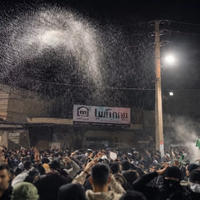
People celebrating Chaharshanbeh Suri in Tehran (file photo)
As dusk falls across Iran on Tuesday, bonfires, fireworks and street gatherings are expected to mark Chaharshanbeh Suri, an ancient fire festival that has also become a public act of defiance, this year unfolding under war, heavy security and fears of bloodshed.
Iranian authorities have issued stark warnings ahead of Chaharshanbeh Suri as officials point to what they describe as wartime conditions and the risk of unrest.
Police commander Ahmadreza Radan said this year’s celebrations come under “different circumstances,” adding that the country is effectively in a state of war and that emergency and medical services are on high alert.
He warned that adversaries could exploit the night’s gatherings, saying there is a possibility that “agents” could blend into crowds celebrating the festival and trigger incidents or casualties to inflame the situation.
In a separate notice, the Intelligence Ministry urged citizens to remain vigilant, claiming that “a small number of Israeli soldiers” may attempt sabotage during the festivities and calling on people to report suspicious activity.
The messaging has been reinforced by a broader security buildup. Reports indicate increased coordination among police, intelligence, and judicial bodies, alongside threats of decisive action against what officials describe as dangerous behavior.
In some areas, people have been encouraged to hold events in mosques and controlled spaces rather than in the streets.
An Iranian man lights a firework during the Wednesday Fire celebration (Chaharshanbeh Suri in Persian) at a park in Tehran, Iran. (2024)
Contest over public space, culture and control
Yet Chaharshanbeh Suri has rarely stayed contained.
Celebrated on the eve of the last Wednesday before Nowruz, the festival – marked by bonfires, fireworks, and the ritual of jumping over flames – predates Islam and has endured for centuries. In recent years, it has taken on an added meaning, evolving into one of the few nights when large numbers of people gather spontaneously in public spaces.
That scale has made it difficult to control. It has also turned the festival into a recurring flashpoint.
Last year, crowds across multiple cities poured into the streets despite heavy security presence. Clashes broke out in several areas, leaving at least 19 dead and thousands injured. Videos showed bonfires lighting up neighborhoods as music, chanting, and fireworks filled the air.
In earlier years, the night has gone further, with young people using firecrackers and homemade devices to confront security forces, chanting slogans, and in some cases burning photos of late Supreme Leader Ali Khamenei.
The pattern has become familiar: warnings ahead of the night, followed by mass turnout, and then confrontation.
This year, however, the backdrop is markedly different.
Iran is in the midst of an escalating conflict, with the United States and Israel striking targets linked to military and security structures. A strike announced on Tuesday killed the IRGC Basij commander Gholamreza Soleimani, a key figure in crowd control and repression.
Against that backdrop, officials have framed the festival not only as a safety concern but as a potential security threat.
‘A symbol of resilience’
Exiled Prince Reza Pahlavi, in an interview with Iran International earlier this week, said the festival carries a deeper meaning beyond tradition.
“When we celebrate Chaharshanbeh Suri today, it is not only to preserve our culture,” he said. “It is a powerful message to those who have always tried to erase our identity… an opportunity to show that we exist – to ourselves and to the world.”
He also pointed to a broader generational shift, saying: “Today everyone has reached the conclusion that a secular system is needed… a system built on ideology has, from the beginning, imposed discrimination on society.”
At the same time, he framed the preservation of cultural traditions as central to Iran’s resilience, adding that the country has endured “because of the courage of its people and the preservation of Iranian culture.”
His call to mark the night has been echoed among parts of the diaspora, including appeals for gatherings outside Iranian embassies, while inside the country officials have warned that participation could carry consequences.
The tension between these two narratives – celebration and control – is not new.
As analyst Morad Vaisi has noted, the confrontation over festivals like Nowruz and Chaharshanbeh Suri reflects a deeper struggle.
These traditions, he wrote, have endured not because of official backing, but because of people’s resistance to cultural pressure, becoming a symbol of identity and continuity beyond political systems.
Each year that people gather despite restrictions, the act itself sends a message that Iran’s cultural life extends beyond those in power.
That dynamic is expected to be on full display again tonight.
But this year, the familiar sounds of celebration will unfold alongside something heavier: a country under bombardment, a heightened security presence, and warnings that frame even small gatherings as a potential threat.
In past years, Chaharshanbeh Suri has often blurred the line between festivity and confrontation.
As darkness falls, that line may once again be tested – raising expectations of large turnouts, and concern that the night could end, as it has before, with violence and more lives lost.
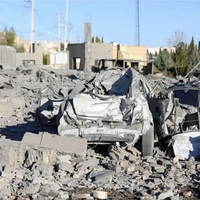
Explosions were reported in multiple cities across Iran early on Tuesday, including Tehran, Karaj, Shiraz and Abadan, according to witness accounts sent to Iran International.
Several blasts were heard around 05:15 local time in Karaj, while an explosion was reported earlier at 05:00 in Hashtgerd, west of Tehran.
In northern Tehran areas including Tajrish, Darband and Jamaran, loud explosions were heard between 02:45 and 03:05, with no fighter jet activity reported.
Further south, residents in Abadan and Khorramshahr reported dozens of explosions around 04:00.
In Shiraz, several blasts were heard starting at 03:40, with continued explosions reported in the nearby city of Sadra. Multiple explosions were also reported in Lar in Fars province.
In southeastern Iran, a strong explosion in Chabahar at 05:34 shook buildings, witnesses said.
Smoke rises in the Fujairah oil industry zone, amid the US-Israel conflict with Iran, United Arab Emirates, March 14, 2026
President Donald Trump was briefed before launching strikes on Iran that Tehran could retaliate against US allies in the Persian Gulf, Reuters reported Monday, citing a US official and several people familiar with intelligence assessments.
Prewar intelligence did not say retaliation was certain, but it was “on the list of potential outcomes,” one source said, speaking on condition of anonymity.
Two additional sources said Trump was also warned Iran might attempt to close the Strait of Hormuz, a vital global oil transit route.
Trump said twice on Monday that Iran’s retaliatory strikes on Qatar, Saudi Arabia, the United Arab Emirates, Bahrain and Kuwait had been unexpected.
“They weren’t supposed to go after all these other countries in the Middle East,” he said at a White House event. “Nobody expected that. We were shocked.”
The remarks came as the Pentagon sought to underscore the scale of the campaign. US Central Command said it had hit more than 7,000 targets across Iran by the end of Monday, including missile sites, naval assets and command facilities.
Israel’s military issued similarly sweeping claims, asserting in a post on its Persian X account that it had inflicted heavy losses on Iranian forces and leadership and caused declining morale — claims that could not be independently verified.
Yet a report by The Washington Post the same day cited US intelligence assessments suggesting the campaign has not destabilized Iran’s political system and that the Islamic Revolutionary Guard Corps is consolidating power, with no signs of major defections or internal fractures.
Trump defended the decision to join Israel in launching airstrikes on February 28, arguing the economic fallout was justified. He called the war’s impact on markets “a very small price to pay,” adding: “You want to see the stock market go down? Start letting them hit you with nukes.”
Major stock indexes have fallen since the campaign began, while oil prices surged as shipping through the Strait of Hormuz slowed sharply. Markets recovered somewhat Monday as oil prices eased.
Trump also argued the war was necessary to prevent a wider conflict, saying that “had we not done this, you would have had a nuclear war that would have evolved into World War III.”