Tehran metro breakdown sparks anti-Khamenei chants

Passengers on Tehran’s subway shouted anti-government slogans on Tuesday after a major service disruption left commuters stranded between stations, according to videos sent to Iran International.
Passengers on Tehran’s subway shouted anti-government slogans on Tuesday after a major service disruption left commuters stranded between stations, according to videos sent to Iran International.
Footage from the Tehran–Karaj line showed frustrated passengers exiting carriages through emergency doors and walking along the tracks after a train broke down on Line 5, which links the capital with its western suburbs.
Some could be heard chanting “Death to Khamenei,” “Death to the dictator,” and “Reza Shah, bless your soul,” a reference to the founder of Pahlavi dynasty and Shah of Iran from 1925 to 1941.
Local news site DidbanIran reported that train services on Line 4, running east–west through central Tehran, were also disrupted earlier in the morning after a train stopped between two stations due to a technical failure. The stoppage caused long delays as following trains were held up along the line.
Tehran Metro’s public relations office said in a statement that technical teams resolved the issue completely, and service has returned to normal.
City Council Chairman Mehdi Chamran described the incident as unavoidable, saying “such disruptions can always happen” and that parts of the metro network are in urgent need of overhaul.
Similar outbursts of protests have occurred before. in August, passengers at Aliabad and Khazaneh stations shouted slogans against the Islamic Republic following long delays.






“The foreign minister announced that Ms. Esfandiari was placed in the exchange framework, and we have prepared a political and consular package that both countries must carry out,” Jalalzadeh said.
“We hope this will happen soon and that we will see Ms. Esfandiari back in our beloved country.”
Jalalzadeh said Iran had pursued legal and consular measures in Esfandiari’s case, including appointing a lawyer and holding ten consular meetings since her detention.
He accused France of holding her over “support for the Palestinian people,” saying her case was politically motivated.
Esfandiari, a student in Lyon, was arrested earlier this year over social media posts that prosecutors said violated counterterrorism laws.
Foreign Ministry spokesman Esmaeil Baghaei also said on Monday that Iran was seriously pursuing the issue of detainees with France and that “both sides have the necessary will to resolve it,” according to state media.
Similar remarks were made in September, when Foreign Minister Abbas Araghchi told state television that talks on a prisoner swap with France were “in their final stages.”
The comments came amid continuing diplomatic friction between Tehran and Paris over detained nationals in both countries.

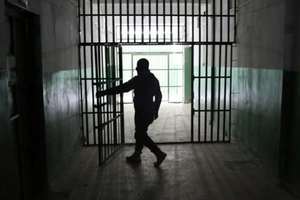
France last week condemned lengthy prison sentences handed to citizens Cécile Kohler and Jacques Paris, who were convicted in Iran of espionage. French officials called the charges baseless and their detention arbitrary.
Foreign Minister Jean-Noël Barrot said there were “strong prospects” for bringing the two home following a meeting last month between President Emmanuel Macron and Iranian President Masoud Pezeshkian in New York.
Iranian officials have suggested that Esfandiari’s case could be part of a broader dialogue with France on consular matters, but no timetable has been announced.
Speaking to Iran International, 22-year-old Arya Ostad Ebrahimi described how he was gravely wounded by security forces during protests in the Kurdish city of Mahabad in November 2022 and forced to flee the country after repeated threats against him and his family.
“I was injured by the oppressive forces of the Islamic Republic,” he said. “That day, I helped a woman and her little son escape when they attacked the crowd. I saved their lives — but I was shot at close range and severely injured.”
Ebrahimi said both of his legs were struck by shotgun pellets.
“They took me to a village instead of a hospital because Mahabad was under military rule,” he told Iran International. “They removed some of the bullets, but around 80 are still inside my body.”
Doctors, he said, later confirmed that many of the pellets were lodged near his knees and arteries, making surgery impossible.
“The pain never stops,” Ebrahimi said. “When I sleep, if I roll onto my side or put my hand under my head, I wake up from the pain. It’s like someone is pressing a syringe into my wrist.”
From protest to exile
Before the uprising, Ebrahimi was a boxer and runner preparing to study law. His life changed the day he attended the funeral of slain protester Zanyar Abubakri — one of the bloodiest days of the Mahabad demonstrations.
“The people of Mahabad were brutally beaten and shot,” he recalled. “I couldn’t stand by and do nothing.”
After being shot, he hid in safe houses to avoid arrest.
Security forces raided his family home several times, threatening to kidnap his nine-year-old sister if he failed to surrender. “They came in the middle of the night with guns,” he said. “My little sister still hasn’t recovered from the fear of those nights.”
Eventually, he fled Iran and sought refuge in Turkey. But even there, he said, he has not found safety. His asylum status has been revoked, and he must regularly report to authorities — a process he fears could lead to his arrest and deportation.
“The Turkish government took away my residence and asylum status,” he explained. “Now, through a lawyer, I’m just buying time. I have to go every few weeks to sign at the immigration office, and I’m terrified each time. I’ve seen how others like me — political refugees — have been arrested while signing and sent back to Iran.”
He said that fear has made daily life unbearable. “I can’t sleep. I’m afraid they’ll come to my house one day and take me away. If they send me back, it will be a death sentence. I know what will happen to me in Iran.”
A growing crisis for Iranian refugees
Ebrahimi’s ordeal is part of a wider crisis facing Iranian asylum seekers in Turkey. Iran International has previously reported on how political dissidents and protesters who fled Iran are being detained, mistreated, and in some cases prepared for deportation.
In January, Iran International profiled 35-year-old Iranian refugee Sina Rostami, held in a Turkish deportation camp.
Also a former protester in the “Woman, Life, Freedom” movement, Rostami said he was routinely awakened by guards striking him with batons and forced to live in overcrowded, filthy quarters.
“The way they treat us here is like we’re not humans,” Rostami said at the time.
In February, Iran International reported on Iranian refugee and LGBTQ+ activist Nahid Modarresi, who lost her protected-person status after the United Nations handed asylum responsibilities to Ankara.
“I hide myself because I am too afraid to go outside,” she said.
Legal advocates estimate that thousands of Iranians once under UN protection have had their status revoked, leaving them at risk of detention and deportation.
Together, these cases reveal a growing pattern of pressure on Iranian refugees in Turkey. Human rights groups warn that political exiles are being left without protection and face possible repatriation to Iran, where they risk torture, imprisonment, or execution
Despite his injuries and uncertainty, Arya Ostad Ebrahimi remains determined to keep speaking out.
“I didn’t commit any crime,” he said softly. “I just wanted freedom.”




