Iran's enriched uranium stored at known nuclear sites, Grossi says
International Atomic Energy Agency (IAEA) Director General Rafael Grossi
The UN nuclear watchdog's inspectors do not believe that Iran has hidden large quantities of its highly enriched uranium at different locations, International Atomic Energy Agency (IAEA) chief told the Swiss daily Neue Zürcher Zeitung.
Rafael Grossi said information available to the agency indicates that most of the material is stored at known nuclear facilities in Isfahan and Fordow, and to a lesser extent in Natanz, though a small amount could have been taken elsewhere.
In the interview published on Saturday, he said inspectors would gain access to these sites only “when Iran perceives a national interest” in allowing it.
The IAEA estimates Iran possesses more than 400 kilograms of highly enriched uranium — enough for several nuclear weapons if further refined.
Grossi added that the three facilities had been severely damaged in Israeli and US strikes in June.
While Tehran denies pursuing nuclear weapons, the UN nuclear watchdog's chief said concerns over its potential capabilities “have not been fully dispelled.”
He urged renewed diplomacy, saying, “Sitting together at one table would save us the danger of another round of bombardments and attacks.”
Israel and the United States attacked Iranian nuclear sites in a 12-day June war, setting back the nuclear program but leaving its fate unresolved.
Tehran has since declined to allow IAEA inspectors to resume their inspections.
Last month, foreign minister Abbas Araghchi said Iran's inventory of highly enriched uranium is buried under rubble following US and Israeli strikes on the country's nuclear facilities.
US President Donald Trump said the killing of Iranian commander Qassem Soleimani in 2020 and US strikes on Iran’s nuclear sites in June paved the way for the Gaza peace deal between Israel and Hamas.
“It started probably with Soleimani. He was a mastermind who did a lot of bad things,” Trump said in a Fox News interview, referring to the late Quds Force commander.
“He’s the father of the roadside bomb that would blow up and maim so many of our great soldiers,” he added.
Soleimani was killed in a US drone strike near Baghdad International Airport in January 2020 on Trump’s orders.
The US president said the turning point that paved the way for the Gaza peace earlier this month came in June when US B-2 bombers carried out what he called a “beautiful military operation” against Iran’s nuclear facilities.
“They flew for 37 hours, went into Iran’s airspace, and bombed the hell out of it,” he said. “When we destroyed their nuclear capability, they no longer became the bully of the Middle East.”
He said the US operation, along with Israeli strikes on Iran, made possible what he described as peace beyond Gaza.
“We wouldn’t have been able to make the deal we just made, which is basically peace in the Middle East beyond Gaza,” Trump said.
The ceasefire mediated in early October by the United States, Egypt, Turkey and Qatar put an end to over two years of Israeli attacks on Gaza, which started in response to Hamas's October 7 attack.
Iranian Foreign Minister Abbas Araqhchi looks on during a press conference in Istanbul, Turkey, June 22, 2025.
Russia and China agree with Tehran that UN sanctions on Iran have not been automatically reimposed and that the Security Council resolution endorsing the 2015 nuclear deal has now expired on October 18, Iran’s Foreign Minister Abbas Araghchi said on Saturday.
“The view of the Islamic Republic of Iran and countries such as Russia and China, which are permanent members of the Security Council, is that contrary to the position of the United States and some European countries, the snapback mechanism has not been triggered and resolution 2231 has formally expired,” Araghchi said in remarks published by ISNA.
“With the resolution’s expiration, all restrictions imposed by the Security Council on the Islamic Republic of Iran have been completely lifted and the issue of Iran is no longer on the council’s agenda.”
The position, Araghchi said, had gained broad support. “More than 120 countries adopted this view in the final document of the Non-Aligned Movement foreign ministers’ meeting in Uganda,” he said.
“The Russian Federation, as a permanent member and the current president of the Security Council, has also issued an official statement rejecting the return to previous resolutions.”
The relationship between Tehran and Moscow strengthened through the signing of a 20-year cooperation agreement, the foreign minister added.
“The comprehensive partnership between Iran and Russia provides a firm basis for expanding cooperation in all fields and safeguarding the common interests of the two countries,” Araghchi said.
“This relationship is rooted in mutual trust, shared interests and a long-term strategic outlook.”
He also confirmed that Iran, Russia and China had exchanged joint communications with the UN Security Council and the secretary-general over recent months expressing a common stance on the expiration of the resolution and rejection of the European move to revive sanctions.
Russian UN envoy Mikhail Ulyanov wrote on X on Saturday that under paragraph 8 of resolution 2231, “the UN Security Council has concluded today the consideration of the Iranian nuclear issue and the item ‘Non-proliferation’ is removed from the list of matters of which the Council is seized.”
Response to European action
In a letter to the UN secretary-general and the council president, Araghchi said the termination of the resolution was “in full accordance with its explicit provisions.”
He wrote that Iran had “implemented the JCPOA in good faith and with full precision,” while accusing the United States of “grossly violating international law” by withdrawing from the accord in 2018.
The European powers’ decision in August to trigger the snapback mechanism, he said, had “no legal, procedural or political basis,” adding that any comment to reinstate expired resolutions was “null and void.”
Iran and its partners would “focus on strengthening their collective stance at the Security Council and maintaining national unity to advance the country’s higher interests,” Araghchi concluded.
Iran will no longer implement any of its commitments under the 2015 nuclear deal, which expired on Saturday, the country’s foreign minister told the United Nations, once again refusing to acknowledge the reimposition of UN sanctions triggered by European powers last month.
Foreign Minister Abbas Araghchi said in a letter to the UN secretary-general and the president of the Security Council that the resolution’s termination on October 18 was “in full accordance with its explicit provisions.”
He added that all related restrictions on Iran’s nuclear program had now lapsed and that the Council’s involvement in Tehran’s peaceful nuclear activities had formally ended.
Araghchi said Iran had “implemented the JCPOA in good faith and with full precision” while the United States “grossly violated international law” by withdrawing in 2018 and reimposing unilateral sanctions.
The three European signatories, he wrote, “failed to meet their obligations and instead imposed additional unlawful measures.”
Referring to the European decision in August to trigger the deal’s snapback mechanism—which reimposed UN sanctions on Iran without the possibility of a veto—Araghchi called the move “unilateral and arbitrary” and said it had “no legal, procedural, or political basis.”
He warned that any claim to reinstate expired resolutions was “null and void.”
The same position was echoed on Saturday by Foreign Ministry spokesperson Esmail Baghaei, who said Iran believes “no decision has been taken in the Security Council to bring back the lifted resolutions,” citing opposition from Russia, China, and several other Council members.
Moscow’s foreign ministry said Western efforts to restore UN sanctions were “legally null and void,” adding that after the expiration of Resolution 2231, Iran’s nuclear program should be treated like that of any other non-nuclear-weapon state under the Non-Proliferation Treaty.
Russian Foreign Minister Sergei Lavrov earlier described Iran’s acceptance of the snapback clause in 2015 as “a legal trap,” but said Moscow remained firmly committed to a political and diplomatic settlement of the dispute.
A new and far deadlier conflict between Israel and Iran looms, former Israeli intelligence official Danny Citrinowicz told Eye for Iran, warning that Tehran has learned from past clashes and is rapidly improving its missile capabilities.
Citrinowicz, a former head of the Iran branch within Israel's military intelligence, said the United States still seeks a negotiated deal with Tehran while Israel remains focused on weakening or toppling the Islamic Republic — a fundamental imbalance he warned makes escalation “almost inevitable.”
“The starting point of the next war will be the ending point of the previous one,” he said.
Now a nonresident fellow with the Atlantic Council’s Middle East program, Citrinowicz also serves as a research fellow at the Institute for National Security Studies (INSS) in Tel Aviv.
“It will be very violent from the get-go. And I really think that there won’t be a mechanism that will allow us to close it, because unlike previously when the US forced the sides to close it, now the Iranians will not be willing to close it until they feel they have balanced the equation of deterrence with Israel."
"That is why I think the next will be much more violent and longer,” he added. "It will lead to more civilian casualties."
Citrinowicz’s warning comes as President Donald Trump continues to frame the 12-day Iran–Israel war as a decisive victory. Trump has repeatedly maintained US B-2 bomber strikes "obliterated" Iran’s key nuclear sites, forcing Tehran to accept a ceasefire and halting its nuclear ambitions.
Critics, however, say the claim is largely rhetorical and that the strikes likely delayed, not ended, Iran’s nuclear advancements, leaving the conflict’s root cause unresolved.
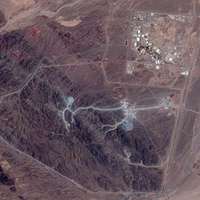
Satellite imagery taken in recent months shows that Iran is continuing construction at the Natanz “Pickaxe” mountain or Mount Kolang Gaz-La, consistent with activity seen before the June war.
The mountain complex south of Natanz includes another older tunnel network associated with Iran’s main enrichment site, which also shows signs of ongoing work, particularly reinforcement of tunnel entrances.
'Israel didn't win anything'
After the 12-day war between Israel and Iran, many in Israel came away with the impression that Israel had won the war. Iran was hit hard, and Israeli operations left Tehran no longer viewed as a threshold nuclear state, as US and Israeli officials say. But Citrinowicz argues that this is a dangerous misconception.
“In Israel we have the wrong perception. We are saying we won — we didn’t win anything,” he said. “We had major achievements, but from the Iranian standpoint, they really believe they had major achievements too. Both sides think they won, and that’s what makes another clash inevitable.”
Citrinowicz says Israel must not underestimate Iran’s capacity to recover. He noted that Tehran has rapidly replaced assassinated commanders, resumed missile testing “almost daily,” and is seeking Russian and Chinese air defense systems to harden its skies.
“If there’s one lesson from recent history,” he said, “it’s that the regime is stronger than many believed.”
Another confrontation, he said, is likely within weeks or months as Washington’s demands — on uranium enrichment, missile limits and even some talk of joining normalization deals with Israel — meet flat Iranian refusals.
He argued that US advisers continue to misread Iran’s ideology and decision-making, while Tehran is rapidly rebuilding and testing capabilities at Natanz and Fordow, and acting bolder at sea — all of which may prod Israel into striking again.
Israel, he added, is unlikely to enjoy the same US military umbrella it had during the last war, when Washington deployed advanced interceptors and coordinated air operations. With Trump now juggling multiple crises, Citrinowicz said, “Israel could face a far tougher fight — and far less help.”
Just over a year ago, Iran launched Operation True Promise II against Israel — part of a steady escalation in which each confrontation has become more intense.
'Growing gap' between US and Israel on Iran
In his October 13 address to the Knesset, Trump declared that Iran had been “two months away” from a bomb before the US strikes in June and that he “terminated” its nuclear program afterward. “They’re not starting anything,” he said. “They just want to survive.”
Those lines, Citrinowicz cautioned, project misplaced confidence.
“Despite the fact that both sides basically want to reach an agreement, their present stances are not allowing one to be reached,” he said.
“What President Trump said in Israel actually highlights that misunderstanding — about Iran’s behavior and ideology — that will probably lead to another confrontation. Definitely, we are reaching another round of escalation.”
US President Donald Trump and Russian President Vladimir Putin shake hands during a press conference following their meeting to negotiate an end to the war in Ukraine, at Joint Base Elmendorf-Richardson, in Anchorage, Alaska, August 15, 2025.
Russia said on Friday it was ready to help resolve the impasse over Iran’s nuclear program after Russian President Vladimir Putin said this month he was receiving messages from both Israel and Iran.
“Moscow remains firmly committed to a political and diplomatic settlement around the Iranian nuclear program and calls on all parties involved to focus their efforts on finding the necessary solutions to avoid a new uncontrolled escalation of tensions,” the Russian foreign ministry said in a statement.
“We are ready to assist in this endeavor in any way possible," it added.
Iranian security chief Ali Larijani met Putin on Thursday and announced later he had delivered a message from Supreme Leader Ali Khamenei. Its contents were not disclosed.
Putin said earlier this month that Israel had reached out to enlist Moscow's aid in transmitting to Tehran its desire to avoid further clashes.
“We continue our trusted contacts with Israel and are receiving signals from the Israeli leadership asking us to convey to our Iranian friends that Israel is focused on further settlement and is not interested in any form of confrontation,” Putin said, according to Russian state news agency TASS.
US President Donald Trump announced on Thursday that he would soon meet Putin in the Hungarian capital to discuss ending the war in Ukraine, though a date has yet to be set. It was unclear if Iran would be a topic of discussion.
'Brute force'
The Russian foreign ministry statement was released on the eve of the expiration of UN Security Council Resolution 2231, which endorsed a 2015 nuclear deal, officially known as the JCPOA.
Last month, UN sanctions were reimposed on Iran after France, Germany and the United Kingdom triggered the so-called snapback mechanism under the resolution, after they accused Tehran of spurning diplomacy and nuclear inspections.
Tehran rejects the powers' standing to invoke the sanctions and denies seeking any nuclear arms.
Russia said earlier this month the restoration of UN sanctions on Iran was "legally null and void and cannot impose any legal obligations on other states."
Moscow added on Friday that following the resolution’s expiry, Iran’s nuclear program should now be treated like that of any other non-nuclear weapon state under the Treaty on the Non-Proliferation of Nuclear Weapons (NPT).
The ministry said Western states had rejected a joint Russian-Chinese proposal to extend the technical aspects of the deal by six months, showing what it called “an inability to negotiate and a reliance on illegal methods and brute force.”
Earlier this week, Russian Foreign Minister Sergei Lavrov said Moscow was surprised by Iran's agreement to the so-called UN snapback sanctions mechanism of the JCPOA, describing it as a legal trap for Tehran.
“To be honest, we were surprised. But if our Iranian partners accepted this formulation - which, frankly, was a legal trap - we had no grounds to object,” Lavrov told reporters in Moscow on Monday.
The snapback provision allowed any JCPOA signatory, including the five permanent members of the UN Security Council plus Germany, to reimpose UN sanctions on Iran in the event of alleged violations without the possibility of a veto.