A boy gazes at color pencils on display in Tehran’s Grand Bazaar, September 20, 2025.
Iran is sliding into stagflation that could spark unrest, economists warn, as official data reveal the first economic contraction in four years on the eve of the UN sanctions returning.
Several Iranian economists say the downturn is already entrenched and that officials are underestimating the severity of the crisis.
Tehran University professor Albert Boghozian argued last week that Iran now shows the classic symptoms of stagflation—negative growth, high inflation, and rising unemployment.
“Officials must not ignore the danger of deepening stagflation, which is likely to intensify if the snapback proposed by the UK, France, and Germany is implemented,” he cautioned.
The Statistical Center of Iran reported that GDP shrank by 0.1% in the spring.
Excluding the petroleum sector, the contraction deepened to -0.4%. Agriculture was the hardest hit, with output falling 2.7%. This downturn marks the first time since 2021 that Iran’s economy has posted negative quarterly growth.
'Worse to come’
The reversal is striking given the 3.0% expansion recorded in the last full calendar year ending March 2025. That period, supported by high oil revenues and relative stability, allowed for modest but steady growth.
Ali Ghanbari, a macroeconomist and former deputy agriculture minister, predicted conditions will deteriorate further in the coming months.
“Iran is heading toward a more difficult economic period in the second half of the Iranian year (September 2025 to March 2026),” he told reporters in Tehran.
He forecast a contraction of 1–2% by March 2026 and inflation climbing above 54%.
“The downturn had been anticipated due to sanctions and political tensions,” he added, “but the scale of inflation will place even greater strain on household budgets.”
Such levels of inflation would erode real incomes and fuel social discontent — a sensitive issue for the government as it braces for renewed sanctions.
‘Sanctions hinder development’
The Majles Research Center has argued that renewed UN sanctions would be less damaging than existing US restrictions, which already limit Iran’s access to global markets and financial channels.
But economists such as Boghozian believe Tehran has few tools left to cushion the blow.
“The Iranian government cannot do much about the UN sanctions,”he warned. “Continued stubbornness will only deepen the suffering.”
Sweeping UN sanctions are set to be reimposed on September 27 following the end of the 30-day snapback period.
Boghozian warned that their return could have consequences far beyond economic hardship, setting the scene for more confrontation with Iran’s foes.
“With the threat of war, Iran cannot realistically pursue development,” he said. “War and sanctions will rob the country of opportunities. If we fail to take initiative, the other side will dictate the terms.”
Workers move stacked barrels of oil products at a storage site in Iran, September 2025
Iran’s economy has slipped into its first contraction in more than four years and now faces mounting debt and record capital flight, official data show, days before UN sanctions are due to return.
According to the Statistical Center of Iran, GDP shrank by 0.1% in the spring, ending 17 straight quarters of expansion. Industrial and mining output, which grew 5.9% last spring, fell to -0.3% this year, while agriculture plunged from +2.3% to -2.7%.
Severe water and electricity shortages disrupted production across both sectors, hitting farms and factories alike.
With the so-called snapback of international sanctions due on September 2, Iran faces a narrowing path to growth—and a worrying prospect of rising unemployment and public discontent.
Mounting debt
A separate Central Bank report shows government debt to the bank surged 63% year-on-year as of June, reflecting the administration’s failure to meet revenue targets.
Officials say only 60% of projected revenues were generated in the first five months of the year, worse than in previous years and well short of the levels needed to stabilize public finances.
Since 2018, when President Donald Trump withdrew the United States from a 2015 nuclear deal and reimposed sanctions, about a third of Iran’s annual budget has gone unrealized.
The IMF now estimates public debt at 37% of GDP and climbing. This trend is likely to accelerate if sanctions further limit oil revenues.
Record capital flight
The Central Bank also reported a net capital account of -$21.7 billion for the last fiscal year—the highest on record and 2.5 times greater than in 2020.
Capital flight has been accelerating since 2020, as businesses and households move assets abroad to escape currency depreciation and political uncertainty.
The scale of outflows highlights both a collapse in investor confidence and the inability of the banking system to hold foreign exchange inside the country.
Oil gains vanished
Iran earned $66 billion from oil, petroleum products and natural gas exports last year, a 17% increase. Including non-oil goods, total exports reached $115 billion, $27 billion more than imports.
On paper, that left the goods trade in surplus.
But the services sector recorded a record $12 billion deficit, dragging the overall trade balance for goods and services down to just $13 billion.
Combined with the $21.7 billion in capital flight, much of the hard currency generated by oil exports is effectively leaving the country.
The result is sustained pressure on Iran’s already fragile foreign reserves and further instability in the rial, which hit a record low of 1.08 million to the dollar on Thursday.
The bottom line is that Tehran’s extremely hard-gained oil cash is being wiped out by falling output, runaway debt and unprecedented capital flight—leaving the country perilously exposed just as fresh sanctions loom.
President Masoud Pezeshkian showing photos of Iranians killed in Israeli attacks
President Masoud Pezeshkian’s speech at the United Nations drew an unusual split in Tehran: while conservatives and hardliners rallied behind him, many of his moderate supporters voiced sharp disappointment.
Parliament Speaker Mohammad Bagher Ghalibaf hailed Pezeshkian on X, saying he conveyed “the dignity and power of the Iranian nation at the UN” and exposed Israel as “child-killers.”
Ultra-hardliner Amir-Hossein Sabeti thanked him for recalling “the Zionist regime’s crimes,” while fellow lawmaker Hamid Rasaei called the address “worthy, good and influential.”
“His duty was to deliver the nation’s positions to the world,” one pro-government user commented on Ghalibaf’s post. “Thank God he passed this test of Western charlatanism.”
‘Wish you didn’t go’
Moderates and reformists, by contrast, were left underwhelmed.
Former Chamber of Commerce head Hossein Selahvarzi dismissed the trip as pointless. “So far, the outcome of the New York trip can be summed up in one sentence: ‘Being there so that we weren’t absent.’”
Prominent academic Sadegh Zibakalam directly addressed Pezeshkian: “Mr. President, after the Leader’s speech yesterday, what was left for you to say in New York? I wish you hadn’t gone—unless you intended to say something different.”
Others offered a more tempered defense.
Prominent centrist and former editor Mohammad Atrianfar compared Pezeshkian’s remarks to former president Khatami’s early UN addresses, calling them “clear, meaningful, and forward-looking … consistent with the Leader’s instructions.”
Maziar Balaei of the Etemad Melli Party said that given recent Israeli and US military actions, “it was in fact a good address.”
‘Not our representative’
Some critics also objected to the president’s choice of symbolism.
By holding up photos of Iranians killed in the 12-day war with Israel, they argued, he ignored violence inside Iran.
“I wish the Iranian people also had a representative at the UN who held up the pictures of the children Khamenei killed and showed them to the world,” one user wrote.
A viewer told Iran International in a video message: “Who killed Kian Pirfalak, Hamidreza Rouhi, Hadis Najafi and the Zahedan worshippers? If there is justice, it must first be applied for the people of Iran before you talk about Lebanon and Palestine.”
‘Little impact’
Outside observers were skeptical of the speech’s significance.
Turkey-based analyst Rouhollah Rahimpour described it as “a softer and more diplomatic version of Khamenei’s harsh stance,” noting that Pezeshkian avoided taking a position on negotiations with the US.
On X, he added: “What is left unsaid matters as much as what is said … rejecting talks with one hand while reaching for them with the other.”
Germany-based analyst Ahmad Pourmandi was harsher, calling Khamenei’s remarks ahead of the trip “the final blow to fading hopes of resolving the snapback crisis.”
Pezeshkian’s mission, Pourmandi added, “was the final nail in the coffin of normalization—deepening Iran’s crisis and its march toward war.”
A view shows oil pump jacks outside Almetyevsk in the Republic of Tatarstan, Russia June 4, 2023.
Indian officials have told the Trump administration that any significant reduction in Russian oil imports would require Washington to allow purchases from sanctioned suppliers Iran and Venezuela, Bloomberg reported.
A delegation in Washington this week voiced New Delhi’s position in meetings with US officials, stressing that simultaneously cutting Russian, Iranian and Venezuelan flows would risk driving up global prices, the reported cited people familiar with the talks as saying.
India, the world’s third-biggest crude importer, meets nearly 90% of its oil needs from abroad. Its refiners have relied on discounted Russian barrels to ease costs after sanctions curbed Moscow’s wider trade, while Iranian and Venezuelan oil could offer similar discounts.
Commerce Minister Piyush Goyal said this week India wanted to increase US oil and gas purchases, but added that “our energy security goals will have a very high element of US involvement.”
India halted Iranian oil imports in 2019 and stopped buying Venezuelan crude this year as US sanctions tightened.
Replacing those supplies with Middle Eastern barrels would be more expensive, officials said.
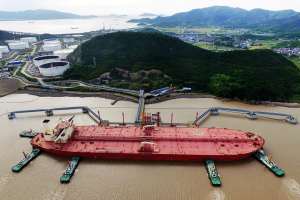
A China Ocean Shipping Company (COSCO) vessel is seen near oil tanks at the China National Petroleum Corporation (CNPC)'s Dalian Petrochemical Corp in Dalian, Liaoning province, China October 15, 2019.
China has sharply increased crude imports declared from Indonesia in recent months, an unusual surge that points to possible new workarounds for Iranian oil exports, Bloomberg reported on Wednesday.
Customs data show 2.7 million tons of Indonesian crude -- around 630,000 barrels per day -- arrived in August, far exceeding Indonesia’s average output of 580,000 bpd in 2024, most of which was consumed domestically. The flows followed a sharp jump in July.
China, the biggest buyer of Iranian oil, officially reported no imports from Tehran since mid-2022. In the meantime, it buys more oil from Malaysia than the country produces. In the past two months, shipments from Malaysia -- often used for ship-to-ship transfers and rebranded cargoes -- have dropped more than 30%.
Analysts say operators are now shifting tactics.
“This is just part of a continuing evolution of the operators’ tactics, hiding what they’re doing,” said Charlie Brown, a senior adviser at United Against Nuclear Iran. “They’re still doing ship-to-ship transfers in the same area off Malaysia; the basic trade pattern remains the same.”
Vessel-tracking data show tankers including the Aquaris, Yuhan, Pola and Pix signaled calls at Indonesia’s Kabil port near Singapore -- a hub not connected to crude exports but close to established transfer zones off Malaysia. These tankers later discharged cargoes in Chinese ports such as Qingdao, Rizhao and Dalian.
Bloomberg cited the Aquaris as receiving Iranian crude from the sanctioned Sorion tanker before unloading in Qingdao in June. The Yuhan and Pola followed similar patterns, according to data from Vortexa and Kpler.
Queries to Indonesia’s energy ministry, Pertamina, Kabil port, and China’s foreign ministry went unanswered, Bloomberg reported.
China’s reliance on Iranian oil has provided Tehran with a crucial economic lifeline as US sanctions continue to target the trade.
The looming return of UN sanctions on Iran is unlikely to curb its oil exports but could boost China’s refiners, who already take nearly 80% of Tehran’s 1.6 million barrels per day at steep discounts, Reuters reported on Wednesday.
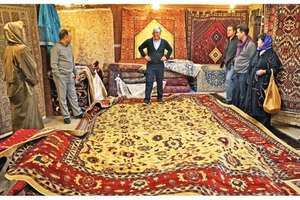
Iran’s centuries-old carpet industry, once a symbol of cultural prestige and a $2 billion export powerhouse, is unraveling under US sanctions, shifting consumer tastes and rising competition, industry officials and traders say.
Exports of handmade rugs, which stood at more than $400 million in 2017, fell to just $41.7 million in the year to March 2025, according to customs data -- a drop of over 95% from their peak in the early 1990s, AFPreported.
The collapse followed Washington’s 2018 reimposition of sanctions, cutting off the US market that once bought more than 70% of Iranian carpets.
“During the unkind and cruel US sanctions, we lost our biggest buyer,” said Zahra Kamani, head of Iran’s National Carpet Center.
Germany, the UAE, Japan and China are now Iran’s top destinations, but volumes remain a fraction of past levels.
Rivals including India, China, Nepal, Turkey and Pakistan have captured global market share, with some rugs even imported back into Iran, traders said.
At least two million Iranians, many of them rural women, depend on carpet-weaving but earn only a few dollars a day. “We are losing even part of our domestic market due to imports,” Tehran trader Hamed Nabizadeh told AFP.
With tourism also in decline, fewer foreign visitors buy rugs, and even those who do are deterred by price tags of $30,000 or more for silk carpets.
Officials insist revival is possible. Trade Minister Mohammad Atabak said in June that new trade and currency policies could help resuscitate exports.
Analysts argue adapting designs to modern décor trends, using social media for sales and branding carpets more effectively may be key.
But with Iran’s currency plunging, many families at home are turning to cheaper factory-made rugs, and a centuries-old craft risks fading into a relic of the past.