Iran shifts from confrontation to caution over Zangezur Corridor - Daily Sabah
US President Donald Trump, Azerbaijan's President Ilham Aliyev, and Armenia's Prime Minister Nikol Pashinyan pose with their documents during a trilateral signing event at the White House, in Washington, D.C., August 8, 2025.
Iran has toned down its opposition to the proposed Zangezur Corridor linking Azerbaijan to its exclave of Nakhchivan, adopting a more cautious stance after years of confrontation, Turkish newspaper Daily Sabah said in an opinion article on Thursday.
The project, part of the August 8 peace agreement signed in Washington between Azerbaijan and Armenia with US mediation, has long been opposed by Tehran.
According to Daily Sabah, Iranian officials feared the corridor could sever Iran’s land link to Armenia, weaken its regional transit role and strengthen Turkish and Azerbaijani influence in the South Caucasus.
In the past, Iran reinforced border positions, staged military drills and issued sharp warnings against what one adviser to Supreme Leader Ali Khamenei called an “American corridor.”
But President Masoud Pezeshkian and his government have recently struck a more measured tone.
Government spokesperson Fatemeh Mohajerani said the Iran-Armenia border would remain intact, while Pezeshkian told reporters that Tehran’s “core concerns had been taken into account” and welcomed the peace deal as a positive step.
Pezeshkian visited Yerevan soon after the agreement, where Armenian Prime Minister Nikol Pashinyan reassured him that Armenia’s sovereignty would not be compromised and no foreign troops would be stationed in the corridor.
Analyst Mustafa Caner wrote that Iran’s new approach reflects limited capacity to confront multiple crises at once. Unlike conservative figures in Tehran who warn of foreign interference, the government has refrained from military escalation and is pursuing diplomacy to secure its position.
An aerial view of the Strait of Hormuz, a critical global oil chokepoint
Iran retains the ability to endanger freedom of navigation in the Strait of Hormuz, where about one-fifth of the world’s oil exports pass, an Israeli security think tank said after Tehran’s latest naval drills.
Persian Gulf exercise as warning
In August, Iran staged its first major naval exercise since the June war with Israel. The two-day drill covered the Strait of Hormuz, the Gulf of Oman and the Indian Ocean. State media showed launches of Qadir and Nasir anti-ship missiles, Ababil drones and electronic warfare systems.
“Iran used this exercise to demonstrate that it can target both military and commercial vessels,” Alma Research and Education Center wrote in a report. Footage of a drone tracking a container ship was described as a direct warning to global shipping companies.
The assessment comes after a representative of Supreme Leader Ali Khamenei urged restrictions on Western shipping in the strait. Hossein Shariatmadari, editor of the hardline Kayhan newspaper, told the state broadcaster last week that such a move could drive oil prices to $200.
“We can impose restrictions against the United States, France, Britain and Germany in the Strait of Hormuz and not allow them to navigate,” Shariatmadari said. “Just by announcing such a restriction, the oil price will surge to $200, and the biggest economic blow will be dealt to the enemy.”
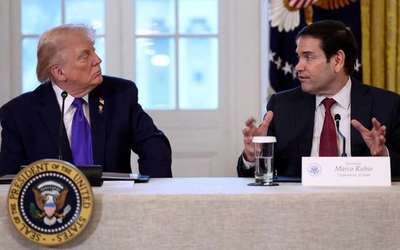
Western governments have said any closure would have severe consequences. US Secretary of State Marco Rubio said in June that it would be “economic suicide” for Iran.
European Union foreign policy chief Kaja Kallas called the idea “extremely dangerous,” while British Foreign Secretary David Lammy said it would be “a monumental act of self-harm.”
Iran has never attempted a full closure of the Strait of Hormuz, but it has repeatedly seized merchant ships in the Persian Gulf. Security analysts say its mines, fast boats, missiles, and special forces give it multiple options to disrupt global commerce.
Iran’s top security official Ali Larijani and British national security adviser Jonathan Powell discussed nuclear talks and handling the snapback sanctions process in a phone call, domestic media reported on Wednesday, adding that both sides agreed to keep negotiations going.
Both sides agreed to pursue discussions aimed at addressing nuclear disputes, including the snapback mechanism, according to domestic outlets.
At the same time, Iranian newspapers highlighted that Tehran insists on security assurances before entering a new round of negotiations.
Deputy foreign minister Majid Takht-Ravanchi told a Turkish outlet: “Before starting new talks with the United States, we must be sure we will not face similar attacks again.”
Referring to recent Israeli and American strikes, he said such actions were “a betrayal of diplomacy.”
“We do not want to see the same play staged again. The United States must convince us this time that it will not act in this way.”
Disputes over enrichment and sanctions
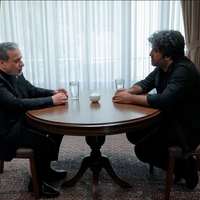
Takht-Ravanchi described a recent meeting with the European troika, saying the talks were held at deputy-minister level and focused on nuclear technical issues and sanctions relief.
“Enrichment is an inseparable part of any agreement, and zero enrichment is unacceptable to us,” he said, saying Iran’s program is peaceful and could be explained to the international community.
He also said that recent attacks had caused serious damage to nuclear facilities, though assessment was the Atomic Energy Organization’s responsibility.
First, Iran sharply increased its stockpile of uranium enriched to 60%, holding 440.9 kilograms before Israel’s June 13 attack, well above the 42 kilograms the agency says could, if further enriched, provide material for a bomb.
The report also noted Iran’s overall enriched uranium stockpile reached nearly 10,000 kilograms, an increase of more than 600 kilograms since May.
Second, the agency said inspectors have not been able to verify Iran’s near bomb-grade material for over two months, which it described as “a matter of serious concern.” Since July, when President Masoud Pezeshkian signed a law suspending all cooperation, the only inspected site has been the Bushehr power plant.
Third, the report said Iran has offered a “new arrangement” that would limit inspections to case-by-case approvals and delay access to bombed sites. IAEA chief Rafael Grossi warned Tehran that any such arrangement must conform with its safeguards obligations under the Non-Proliferation Treaty.
European contacts falter
In parallel, a call by Foreign Minister Abbas Araghchi with the three European countries ended without progress.
Iranian media reported that negotiations with the European trio will continue, though the timing and venue are undecided. Takht-Ravanchi called Turkey a preferred location, thanking Ankara for hosting previous sessions.
The IAEA report circulated just as France, Germany and the United Kingdom began the snapback process on August 28, which could reimpose UN sanctions within a month.
European governments said they may extend the deadline if Iran resumes direct talks with Washington, allows inspectors access, and clarifies its stockpiles. For now, those conditions remain unmet.
US Senator Tom Cotton on Wednesday called on the FBI and Defense Department to investigate what he called an Iranian campaign to influence US policy, branding it a serious national security concern.
The Arkansas Republican cited a joint investigation by Semafor and Iran International into the Iran Expert Initiative (IEI), an effort by Tehran's foreign ministry to cultivate ties with academics and think tank analysts to advance the Islamic Republic’s interests.
Cotton's letter focused on Ariane Tabatabai, a former aide to former US Special Envoy for Iran, Robert Malley. Her next post was as Pentagon Chief of Staff for the Assistant Secretary of Defense for Special Operations and Low-Intensity Conflict.
Cotton said in his letter that Tabatabai “is still working with the US intelligence community.”
"Tabatabai and other IEI affiliates should not have been in a position to influence US policy decisions and access our nation's most sensitive intelligence," Cotton wrote.
"While the Biden administration ignored repeated calls from Republicans to remove officials affiliated with IEI and the Iranian government, the Federal Bureau of Investigation (FBI) and the Department of Defense (DoD) should now correct this mistake."
It was not clear what spurred the senator, an outspoken Iran hawk, to issue the call.
"I urge the FBI and DoD to review this matter thoroughly for counterintelligence concerns and potential criminality, given that national security information may have been provided to a foreign government," Cotton continued.
He also called on the FBI and Pentagon to “investigate all current and former government officials affiliated with IEl and take appropriate actions to ensure such officials are no longer able to assist Tehran in damaging US national security.”
Last October, The Free Press reported that Tabatabai had taken on a new role in the defense department which gave her reduced access to intelligence, according to a former Pentagon official.
The Iranian-American academic in her new role oversaw force education and training within the defense secretary's office.
It is not clear if Tabatabai is still working in the same position under the Trump administration.
US President Donald Trump has repeatedly faulted his predecessors for perceived policy failings on Iran but has not explicitly alighted on the IEI in his criticisms.
Fellow Republican lawmakers have cast Iran as an implacable enemy after a justice department indictment sealed last year accused the country's Islamic Revolutionary Guard Corps of a plot to assassinate Trump - charges Tehran denies.
Former president Hassan Rouhani vists a Revolutionary Guards' base, Tehran, Iran, September 2015
Former Iranian president Hassan Rouhani has called for the exit of intelligence and security forces from the economy in a rare sweeping call for reform by a former key player in Tehran's political and security establishment.
“To fulfill the people’s will, let the armed forces stick to their core duties—nothing else. The economy isn’t their job. Propaganda, domestic politics or foreign policy aren’t either,” Rouhani said in a video message posted on his official website on Wednesday.
Rouhani argued that if the Islamic Republic expected its people's support against American and Israeli foes, it must deliver on its promises and avoid corruption.
“An intelligence agency involved in business or trade isn’t intelligence,” Rouhani said.
Reform attempts
The state dominates the economy through oil, banking, and strategic industries, while the IRGC plays a major role in commerce, limiting private sector freedom.
Calls for reform gained the fore during the presidency of Mohammad Khatami from 1997 to 2005, but the momentum waned and gave way to the rise of hardline governments such as that of Mahmoud Ahmadinejad.
Rouhani, his successor, adopted a more pragmatic stance and championed a 2015 nuclear deal which earned him the ire of hardliners and has been shut out of high-profile politics since.
A protege of Akbar Hashemi Rafsanjani, a founding father of the Islamic Revolution, Rouhani was a longtime head of Iran's powerful Supreme National Security Council before his presidency.
Despite his fall from favor, Rouhani is among the few figures considered a potential successor of 86-year-old Supreme Leader Ali Khamenei, though his chances have likely ebbed in recent years amid opposition by conservatives.
Popular will
Rouhani also suggested Iran's courts were beholden to entrenched interests, undermining society.
“People want an independent judiciary," he added. "To strengthen domestic governance, this is the path.”
In Iran, the judiciary is closely aligned with theocratic principles, often prioritizing state ideology and well-connected figures over impartiality.
Courts enforce strict Islamic laws, regulate social behavior, mandate the Islamic veil and police public expression.
Rouhani said solidarity between Tehran and its people he says was won in a brief war this summer could be deepened if authorities pursued a measured foreign policy.
“If we do all this and avoid unnecessary foreign policy conflicts or enmities, we’ll have a strong, unified nation standing behind its leadership,” he added.
Since the June 24 ceasefire between Iran and Israel following 12 days of conflict, Tehran has increasingly embraced nationalist symbols, including imagery and figures from the pre-Islamic era, both in public and during state broadcasts.
International Atomic Energy Agency (IAEA) Director General Rafael Grossi addresses the media during their Board of Governors meeting in Vienna, Austria, September 9, 2024
The UN nuclear watchdog says Iran’s inventory of highly enriched uranium is “a matter of serious concern" as it has no visibility on the country's activities since Israeli strikes in June.
In a confidential report leaked to reporters on Wednesday, the International Atomic Energy Agency (IAEA) said Iran's stock of near-weapons grade uranium increased almost eight percent before Israel attacked its nuclear facilities on June 13.
The report shows Iran had 440.9 kilograms (972 pounds) of uranium enriched up to 60%, marking a 7.9% increase since the UN nuclear watchdog’s previous report in May.
"During this reporting period, the Agency lost continuity of knowledge in relation to the current inventories of nuclear material in Iran ...which urgently needs to be addressed," the report said.
It also confirmed for the first time that two of its inspectors took documents from the Fordow site back to Vienna, calling it an "error" that led to Iran withdrawing their designation.
"The incident did not involve any breach of confidentiality," IAEA asserted, lamenting Tehran's decision to bar the inspectors involved from returning to the country.
"While these pages contained some description of the interior of the facility, they did not include content that compromised the security of the facility," the report added.
'Can't wait for months'
IAEA chief Rafael Grossi told Reuters on Wednesday that another round of talks with Iran is due in Vienna this week and emphasized the need to investigate and verify Iran’s highly enriched uranium stockpile.
"It’s not something that can drag on for months,” Grossi told Reuters. “It would be ideal to reach an agreement before next week."
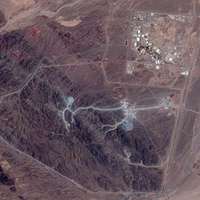
Since US military strikes on three major Iranian nuclear sites on June 22, IAEA inspectors have only accessed another site that was left unscathed - the Bushehr nuclear power plant.
Following Israeli and other military strikes on Iran, the Iranian parliament passed a bill imposing restrictions on inspection and access cooperation with the IAEA.
Any new cooperation mechanism must now be approved by Iran’s Supreme National Security Council, and no agreement for inspections or resumption of IAEA work has been reached.
"We have reminded our Iranian counterparts that domestic laws create obligations for Iran, not the IAEA," Grossi said.
Grossi stressed the need to investigate Iran’s highly enriched uranium stockpile, saying no evidence suggests significant movement of the material.
“I believe there is a general understanding that the material is likely still there, but it must be verified. Some could have been lost,” he said. “We have no indications of major material movement.”
Following the activation of the UN sanctions snapback mechanism by France, Germany and the United Kingdom last week, Tehran warned of an unspecified response.